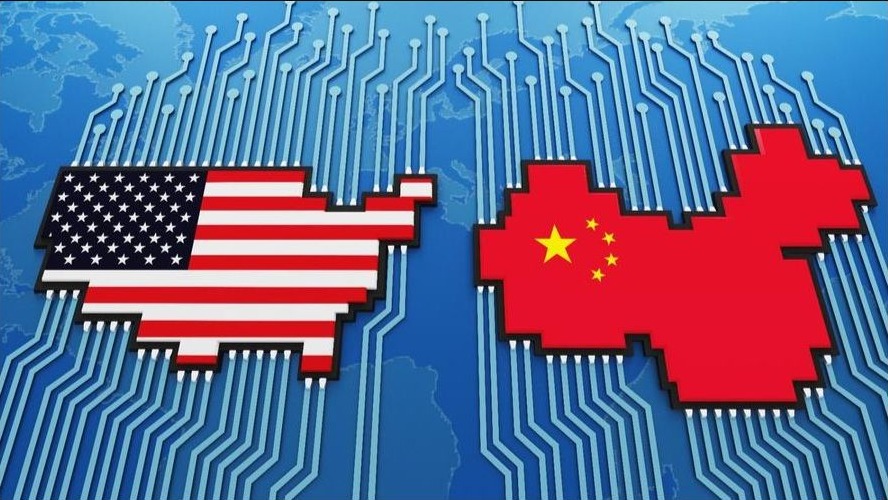
A Strategic Analysis of Two Important National Approaches to AI-Powered Education from K-12 Through Research Universities
Source Documents:
- White Paper on China's Smart Education - China, Ministry of Education MOE, May 2025
- Winning the Race: America's AI Action Plan - US White House, April and July 2025
- Abbreviated Version of Report (1500 words, no appendices): https://www.linkedin.com/pulse/ai-education-global-competition-cognitive-capital-uzwyshyn-ph-d--epvuc
Executive Summary: The Contemporary Competition for Global AI Education Capabilities
The transformative 2022 advancement of AI and large language models fundamentally altered the established foundations of global technological influence, initiating what may prove to be one of the most momentous transformations in human capital cultivation since the Industrial Revolution of the 19th Century. Two pivotal policy documents released in 2025—China's comprehensive Smart Education White Paper and America's ambitious AI Action Plan—now reveal profoundly divergent approaches to continuing educational transformation that will significantly influence how societies develop in terms of cognitive capabilities and technological competencies in the coming century.
The Geopolitical Significance and International Implications: This educational competition carries profound geopolitical weight. New cognitive skills and capabilities increasingly determine national power in an interconnected global economies. Nations that successfully integrate AI across their comprehensive educational ecosystems—from kindergarten classrooms to cutting-edge research university laboratories, from vocational workshops to workforce retraining centers—will likely possess substantial advantages in economic productivity, technological innovation capabilities, scientific research innovation and corporate discovery, invention and acceleration, and social cohesion through shared digital fluency and societal wide AI literacies for upcoming generations. Those societies that encounter difficulties in this fundamental transition will find themselves increasingly dependent on more adaptive competitors for technological solutions, educational resources, and cognitive and ethical frameworks, with cascading consequences affecting international standing, diplomatic influence, and long-term strategic socio-economic and geopolitical positioning.
The Central Question in Educational Governance: Whether China's systematic state coordination in their April 2025 Education mandates (links above) or America's new AI Action plan of market-driven innovation will prove more effective for the exponential challenges ahead remains open and consequential questions as we move forward globally and on civilizational levels. China has deliberately chosen comprehensive state coordination to achieve unprecedented scale and rapid implementation across its vast educational infrastructures. America has consciously selected market-driven innovation, creativity and institutional diversity to preserve individual agency, democratic deliberation, and breakthrough paradigm discovery potential. This report seeks to compare both approaches objectively, examining their respective strengths, affordances and limitations, while attempting synthesis toward constructive recommendations that might capture the advantages of each model while mitigating inherent constraints or gaps that comparative optics may provide.
An abbreviated version of the entire report is also available here: (1500 words): https://www.linkedin.com/feed/update/urn:li:activity:7357923469864456194/
The Historical Inflection Point: 2025 and Educational Transformation
The AI Paradigm Shift and Its Profound Pedagogical Implications
The significant 2022 emergence of competent AI systems demonstrating human-level performance across cognitive tasks created what economists classify as a "general purpose technology"—those transformative innovations that fundamentally reshape entire civilizations and restructure society's institutional foundations. Like the gradual emergence of electricity or the democratizing development of the printing press, AI's educational applications are parallel and perhaps greater extending now to both Nobel Prizes, great discovery and considerably beyond workforce efficiency enhancements to comprehensive reconstruction of how global society will operate and knowledge will be transmitted, transformed, processed, personalized in the 21st century. Like electricity or 'the book' and these implications, AI will practically be applied across every level of human learning and institutional endeavor and this accompanying resonance.
The Exponential Educational Trajectory and Its Implications: Current AI systems demonstrate cognitive capabilities advancing exponentional approximately every six months in mathematical precision, linguistic sophistication, and reasoning complexity, suggesting that by 2030, AI tutors and teaching assistants may substantially enhance or potentially surpass human educators in numerous academic subjects, while AI research collaborators could catalyze and accelerate scientific discovery by multiple orders of magnitude. Collaboration with AI and these new methodologies and infrastructures will be imperative. Educational systems still designed exclusively for 19th century industrial revolution factory model gril classroom and traditional human-centered learning environments may also require substantial paradigm shift and adaptation to remain effective and relevant, much as transportation systems evolved from horse-drawn cart and buggy to automotive to aviation technologies across successive technological transitions. New roads, vehicles and regulation on multiple similar analogic levels will be required.
The Strategic Window of Educational Opportunity: Democratic and centralized nations alike possess approximately five to ten critical years at most —a single presidential or leadership term, a brief moment in institutional time—to thoughtfully restructure older paradigm educational architectures or lag irretrievably behind before exponentially advancing AI capabilities render current pedagogical approaches potentially obsolete or significantly less effective. The countries that complete this comprehensive transformation most creatively, thoroughly and strategically will likely possess first mover advantage and other foundational advantages in developing subsequent generations of human workforces and even more sophisticated AI systems, creating beneficial, self-reinforcing cycles of technological advancement that develop and strengthen over extended periods.
The Geopolitical Context: Education as Essential National Infrastructure and International Influence
Educational technology transformation in 2025 has emerged as a significant domain of contemporary international competition and technological leadership, with implications extending far beyond domestic policy to global influence and strategic positioning. Unlike previous innovation cycles—nuclear energy, space exploration, semiconductor manufacturing—AI-powered education directly influences a nation's fundamental human resource capacity to develop future technological capabilities while simultaneously shaping international relationships through educational cooperation, technology transfer, and standards development and levels of societies with accompanying possibilities but also consequences.
The Geopolitical Importance of Educational AI Leadership: Educational technology increasingly functions as a form of soft power projection, where nations that develop superior educational and learning systems naturally attract international students, influence global pedagogical standards, and create technological dependencies that strengthen diplomatic relationships. Countries with advanced educational AI capabilities become natural partners for developing nations seeking to modernize their educational systems, creating networks of influence that extend across generations of internationally educated leaders, researchers, and professionals.
The Strategic Chinese Perspective and International Positioning: Having systematically observed educational performance trends across developed nations over the past two decades, China's leadership recognizes a substantial opportunity to achieve sustained technological advantage through methodical, comprehensive investment in superior human capital development systems in terms of geopolitical directions. The Smart Education initiative Report (see link) represents perhaps the most substantial peacetime commitment of state resources to educational transformation in contemporary history—a calculated national and geopolitical investment in systematic coordination that simultaneously serves domestic development goals and international influence objectives through educational diplomacy.
The American Strategic Response and Alliance Building: The US White House Winning the Race: AI Action Plan also reflects growing recognition among American policymakers that the nation's traditional strengths in entrepreneurial innovation, world-class higher education, and competitive research universities may require substantial adaptation and coordinated enhancement to remain globally and geopolitically competitive against systematic international investment in AI-powered learning systems operating at population scale. The document's emphasis on reducing regulatory constraints for AI, streamlining institutional processes, opening Open Source directions similar to China (i.e. DeepSeek R1, Kimi K2, Qwen 3) and enabling private sector innovation suggests awareness that American institutional pluralism—historically a source of creative strength and international attraction—now requires more thoughtful coordination to maintain global educational leadership and technological influence.
The Great Divergence: Two Distinct Civilizational Approaches to Educational Innovation
China's Systematic Coordination Model: The Centralized State as Comprehensive Educational Orchestrator
China has constructed and deployed what may constitute history's most ambitious, comprehensive, and methodical approach to systematic human capital development and cognitive cultivation. The Smart Education of China platform, commanding an impressive 164 million registered users generating a remarkable 61.3 billion page views, represents not merely technological achievement but a sophisticated demonstration of state capacity to coordinate, orchestrate, and synchronize educational transformation across truly continental dimensions—from metropolitan Beijing classrooms to remote rural villages across China's vast territorial expanse.
The Comprehensive Integration Achievement: Where democratic societies consistently encounter institutional fragmentation, regulatory complexity, and competitive inefficiencies, China report tries to unify four fundamentally distinct educational domains—basic K-12 education, vocational training institutes, prestigious higher education universities, and lifelong learning centers—into a single, coordinated, and continuously optimizing system. This systematic integration seeks to eliminate costly interoperability challenges and duplicative efforts that chronically constrain Western educational technology adoption while simultaneously creating powerful data network effects and algorithmic advantages that remain practically difficult for fragmented competitors to replicate or match through voluntary coordination alone.
The Substantial Scale Achievement: With over 110,000 curated educational resources spanning academic discipline, plus mandatory AI curriculum implementation across all educational levels beginning September 2025, China is conducting the world's most extensive and most systematic experiment in AI-powered learning and cognitive enhancement. Every educational interaction—every click, pause, replay, completion, and assessment—generates behavioral data that continuously improves system performance and personalization for all users simultaneously, creating mathematical and algorithmic advantages that develop incrementally with each student session, each learning moment, each pedagogical interaction.
The Thoughtful Equity Approach: China's systematic methodology explicitly and effectively addresses the persistent urban-rural educational divide that market-driven systems consistently struggle to resolve through economic incentives alone. Through carefully coordinated university partnerships and strategic resource sharing agreements, 252 previously underserved rural schools now receive over 10,000 hours of premium instruction and sophisticated educational content that would remain economically challenging and financially complex through market mechanisms alone, achieving meaningful equity objectives while strengthening national educational coherence and technological integration.
America's Innovation Ecosystem: The Competitive Market as Educational Laboratory and Discovery Mechanism
America's strategic approach reflects fundamentally different philosophical assumptions and democratic principles about how transformative technological change occurs, spreads, and ultimately succeeds in complex tech-centric capitalist societies. Rather than systematic state coordination and centralized direction, the White House AI Action Plan deliberately emphasizes reducing regulatory constraints for corporate partners, minimizing bureaucratic friction, and enabling distributed innovation across thousands of competing institutions, private enterprises, research universities, and entrepreneurial ventures, Adam Smith's invisible hand and the market and will of the people, incentivized to compete.
The Innovation Premise and Democratic Foundation: The US document's clear call to "innovate faster and more comprehensively than our competitors" embodies a foundational assumption that breakthrough educational technologies and paradigm-shifting discoveries emerge most effectively from competitive experimentation, creative diversity, and entrepreneurial incentivized initiative rather than centralized planning, bureaucratic coordination, or state-directed research priorities and organization. Regulatory sandboxes, AI Centers of Excellence, and university-industry partnerships represent systematic attempts to accelerate this organic startup and incubator investment centered creative discovery process while maintaining democratic oversight, competitive pressure, and institutional autonomy.
The Adaptive Flexibility Strength: America's deliberately distributed approach enables rapid pivots and strategic adaptation when unexpected breakthroughs occur in AI capabilities, pedagogical research, or technological applications among competitors. Rather than committing substantial resources to specific predetermined technologies or rigid educational frameworks, the system consciously maintains institutional capacity for strategic shifts when new capabilities emerge—potentially valuable during periods of exponential technological change where established certainties become rapidly obsolete assumptions.
The Strategic Private Sector Collaboration: By systematically leveraging established technology leaders, innovative startup ecosystems, and sophisticated venture capital networks, America seeks to harness market incentives, competitive dynamics, and profit motives for transformative educational innovation while carefully maintaining democratic governance structures, academic freedom, and institutional diversity across K-12 districts, state university systems, private colleges, and workforce development programs.
Strategic Assessment: The Three Critical and Decisive Dimensions of Educational AI Leadership
1. The Data Sovereignty Question: The Most Critical Strategic Consideration (Highest International Priority)
China's substantial stewardship of 164 million active users represents considerably more than impressive scale statistics—these users constitute the world's most extensive, comprehensive, and strategically valuable dataset on human learning behavior, cognitive patterns, and educational effectiveness across every age cohort, academic discipline, and skill development level. This substantial data repository trains increasingly sophisticated AI systems that meaningfully improve educational outcomes, creating mathematical and algorithmic advantages that may prove extremely challenging for democratic competitors to achieve through fragmented, voluntary, and privacy-conscious data collection approaches.
The Strategic Reality of Learning Intelligence: Educational AI systems require extensive datasets—millions of learning interactions across diverse populations, subjects, and pedagogical contexts—to achieve human-equivalent tutoring performance, personalized instruction capabilities, and adaptive assessment precision. China now possesses exclusive access to population-scale learning data spanning elementary mathematics to doctoral research, from vocational technical training to advanced theoretical physics, systematically developing increasingly sophisticated AI educational systems that enhance their competitive positioning continuously.
The Democratic Data Challenge: Western democracies encounter substantial and complex challenges in aggregating comparable datasets while carefully preserving privacy rights, individual consent, institutional autonomy, and competitive market structures. The deliberately distributed approach that thoughtfully preserves individual choice, democratic participation, and institutional diversity may inadvertently constrain collective competitiveness in the global pursuit of technological leadership, creating subtle tensions between cherished democratic principles and strategic necessities.
Educational Implications Across Institutional Levels: This data advantage influences every tier of human development—K-12 systems that can predict and prevent student difficulties before they manifest, undergraduate programs that adapt continuously to individual learning preferences, graduate research that accelerates discovery through AI collaboration, and workforce development that precisely aligns training with evolving economic demands. China's unified data collection across these educational levels creates synergistic effects unavailable in fragmented institutional systems.
2. The Innovation vs. Implementation Balance: The Core Strategic Consideration (Second Critical Priority)
China demonstrates remarkable and undeniable reverse-engineering implementation capability for validated educational interventions and proven pedagogical approaches, while America maintains distinctive capacity for breakthrough discoveries, paradigm-shifting research and creativity, and transformative educational innovations. The essential strategic question that will shape long-term outcomes: Will future challenges require systematic optimization and precise execution of current methodologies, or will success depend on paradigm-shifting innovations and revolutionary discoveries that transcend existing educational frameworks entirely?
China's Implementation Excellence Across Educational Domains: The systematic and coordinated rollout of comprehensive AI education across 23 provincial regions, 184 designated AI Education Bases, and mandatory curriculum implementation from elementary through graduate levels demonstrates coordination capacity that democratic systems struggle to achieve through voluntary cooperation and market mechanisms alone. When educational best practices are identified, researched, and validated through rigorous testing, centralized systems can deploy them more rapidly, comprehensively, and efficiently across vast populations spanning diverse geographic, economic, and cultural contexts.
America's Innovation Capacity and Discovery Potential: The strategic emphasis on open-source AI development, competitive university research partnerships, entrepreneurial experimentation, and systematic peer review maintains essential capacity for breakthrough discoveries. Revolutionary pedagogical approaches, and paradigm-shifting educational technologies can be completely lost opportunities for centralized, risk-conscious systems that they might also inadvertently suppress, bureaucratically overlook, or systematically filter before they can demonstrate their transformative potential through practical application. The reality of the situation geopolitically though is that the US is currently behind in Open Source innovation compared to China. For the world's population that does not have the capital for the US proprietary best in class AI models, second choice for China is not a a bad alternative if there is no income base and the price is ideological adherence to a minimal extent. The trajectory here though is unforeseen and being set for decades not the next year. While OpenAI is not open source and Meta's Llama are distinctively seen as second class behind both proprietary models and best in class Chinese models (i.e. DeepSeek, Qwen 3, Kimi K2), this could change with the recent US official turns towards open source incentives.
Educational Innovation Requirements Across Institutional Levels: Different educational domains demand carefully calibrated innovation approaches—K-12 systems benefit significantly from systematic implementation of validated methods, undergraduate education requires thoughtful balance between standardization and creative exploration, graduate research thrives on revolutionary creativity and breakthroughs and paradigm shifts, and workforce development needs rapid adaptation to changing socio-economic realities and new technological demands. China is currently ahead with AI humanoid robots and associated workforce training. The optimal strategic approach must carefully calibrate innovation emphasis versus implementation focus across these diverse educational contexts and institutional requirements.
Critical US Talent Development Challenges: America faces substantial challenges in developing sufficient AI engineering talent domestically. AI engineers are experiencing exceptional demand in 2025, with average salaries ranging from $142,000 to $175,000 annually, with specialized roles reaching $300,000+ at top technology companies—increases of $20,000-$50,000 reflecting acute talent scarcity. Meta's recent stratospheric salary hiring strategy also necessarily incorporated best in class Chinese engineers to attempt to raise their rankings with regards to open source methodologies through salary incentives. Despite this market signal, China still produces exponentially more bachelor's and doctoral degrees from STEM and other disciplines than the United States in AI-relevant fields, while traditional H-1B visa pathways face significant constraints, though recent policy enhancements have improved O-1A visa processing for AI professionals and added AI to the Critical and Emerging Technologies List for expedited EB-1 and EB-2 permanent residency applications.
Interdisciplinary Integration Disparities: China also demonstrates more systematic integration of AI education across non-STEM disciplines. Major institutions like Remin, Nanjing, and Fudan Universities have rolled out general-access AI courses and degree programs that are open to all students, not reserved for computer science majors, with Tsinghua establishing a new undergraduate general education college to train students in AI plus another traditional discipline, like biology, healthcare, science, or humanities. This comprehensive approach contrasts with more fragmented US efforts to integrate AI literacy across diverse academic disciplines and workforce preparation programs with largely alienated humanities faculties and cohorts and social scientist researchers ambivalent towards AI.
3. The International Standards Development: The Competition for Global Educational Influence (Third Strategic Priority)
Both nations clearly recognize that establishing influential global educational technology standards and higher education workforce directions creates profound, long-term institutional relationships and technological interdependencies that extend considerably beyond immediate educational outcomes to questions of geopolitical and cultural influence, intellectual framework transmission, and sustained civilizational alignment. China's steadily expanding World Digital Education Alliance (115 committed members from 43 countries) versus America's alliance-focused export strategy represent fundamentally different approaches to global technological governance, democratic versus centralized educational futures, and the ultimate trajectory of international human cognitive development and intellectual cooperation among nations which must also be discussed.
China's Sophisticated Standards Diplomacy and Technological Influence: By strategically providing complimentary access to its comprehensive educational platform internationally, offering high-quality content and validated pedagogical approaches, China creates substantial switching costs and technological interdependencies that systematically encourage countries toward Chinese educational technology ecosystems, pedagogical frameworks, and intellectual orientations. Success in this patient, methodical diplomatic campaign would establish Chinese educational approaches, assessment methodologies, and cognitive frameworks as influential global references, shaping how entire generations worldwide approach learning, critical thinking, and knowledge construction.
America's Democratic Alliance Strategy and Values-Based Collaboration: The strategic emphasis on exporting comprehensive "full-stack AI packages" to democratic allies and willing international partners seeks to create beneficial technological relationships oriented toward American innovation and democratic principles rather than centralized authoritarianism, but this approach necessarily requires voluntary adoption, democratic deliberation, and market-based selection rather than systematic state coordination, centralized resource deployment, or coordinated diplomatic initiatives—potentially slower but ultimately more sustainable and internationally legitimate methods of educational influence.
Educational Sovereignty and Global Implications: The nation that establishes influential standards for AI-powered education will shape not merely what students learn but how they approach thinking, what they prioritize as valuable, and how they understand complex global challenges. This represents sophisticated influence projection on unprecedented scale, affecting everything from K-12 curricula to doctoral research methodologies, from workforce training priorities to lifelong learning opportunities that guide entire societies' cognitive development, intellectual frameworks, and cultural evolution over generational timescales.
Contemporary Talent Flow Dynamics and Strategic Implications: Recent evidence suggests shifting patterns in global AI talent mobility that may fundamentally alter competitive dynamics. American companies continue hiring Chinese interns with strong engineering capabilities for AI projects, yet many are choosing to return to China rather than pursue full-time opportunities in Silicon Valley. As one Chinese AI researcher at a leading U.S. tech company noted, "Chinese students do very solid work," but when given full-time offers, many have chosen to return to China to join companies like DeepSeek rather than navigate increasingly complex visa processes and security screenings. This represents a potentially significant reversal of the traditional "brain drain" pattern that has historically benefited American technological leadership, particularly given that China produced 47 percent of the top AI talent in 2022, far surpassing the United States at 18 percent, according to research methodology tracking elite conference publications and academic achievements.
The Synthesis: Coordinated Innovation Networks and Our Contemporary AI Era
The Fundamental Challenge in Democratic Educational Governance
Democratic societies encounter a complex strategic question: how might we develop coordination capabilities sufficient to compete effectively with increasingly effective centralized education systems while preserving the individual agency, institutional diversity, and innovation capacity that constitute Western institutions fundamental strengths and international appeal? Whether pure market mechanisms or centralized state control proves more effective for AI era requirements remains an open question requiring careful analysis and thoughtful synthesis.
The Coordinated Innovation Networks Model: A Third Approach
Drawing thoughtfully from both strategic approaches, an optimal synthesis might successfully combine systematic coordination capabilities with innovation diversity through enhanced democratic governance mechanisms and international cooperation frameworks.
1. Federated Platform Architecture and Institutional Data Coordination Could democratic societies create regional educational technology coordination hubs that achieve beneficial data scale effects and aggregation while carefully preserving institutional autonomy and competitive dynamics? Multiple platforms might compete meaningfully on innovation and pedagogical approaches while coordinating data systematically on educational infrastructure development and effectiveness, data sharing standards, and resource allocation—enabling both efficiency gains and creative diversity across K-12 systems, higher education institutions, and workforce development programs.
2. Enhanced Democratic AI Governance and Participatory Planning Might established democracies develop more sophisticated participatory mechanisms for educational AI policy at transnational levels that enable sustained strategic planning while maintaining essential public accountability and democratic legitimacy? Educational technology decisions affect entire generations, nations and multiple institutional levels, suggesting the importance of democratic governance principles and structures that can balance long-term strategic thinking with responsive adaptation to changing circumstances and stakeholder needs.
3. Innovation-Equity Integration and Strategic Market Design Could thoughtful policy design create market incentives that systematically reward open educational technology development serving disadvantaged populations while maintaining competitive pressure for breakthrough innovations and paradigm-shifting discoveries? Strategic public-private partnerships might address market inefficiencies and coordination challenges without eliminating the competitive dynamics that drive continuous improvement and revolutionary advances across educational levels from elementary through graduate research.
Critical Talent Development Considerations: The synthesis approach must address fundamental talent development challenges that current approaches inadequately resolve. The United States faces a domestic AI talent shortage, with H-1B visa approval rates declining precipitously while demand drives AI engineer salaries to $206K annually—a $50K increase reflecting acute scarcity. Simultaneously, China's systematic integration of AI education across humanities and social sciences—exemplified by universities like Tsinghua establishing "AI plus traditional discipline" programs spanning biology, healthcare, science, and humanities—suggests more comprehensive workforce interdisciplinary integration and preparation than America's predominantly STEM-focused cloistered approach where the two societies form separate pieces of academic research elite's. Whether democratic societies can develop comparable interdisciplinary AI literacy while maintaining institutional diversity and individual choice represents a critical coordination challenge that market mechanisms alone may not adequately address.
Strategic Implementation Framework: A Phased Approach
Phase 1: Democratic Coordination Infrastructure Development (2025-2027)
- Establish voluntary interstate compacts and international agreements for educational technology coordination that respect institutional autonomy and boundaries while enabling resource and data sharing and standard development to loosely progress forward
- Create interoperable standards and protocols that allow diverse platforms to share data, resources, and best practices while preserving competitive innovation and institutional identity
- Develop sophisticated democratic data research and data governance mechanisms for long-term educational AI policy and infrastructure that balance stakeholder participation with strategic coherence and adaptive capacity
Phase 2: Competitive Innovation Networks Implementation (2027-2030)
- Deploy federated AI platform architectures that achieve meaningful scale effects through voluntary data cooperation rather than centralized mandate or bureaucratic control
- Implement carefully designed innovation incentives that address equity objectives alongside breakthrough discovery priorities and educational methodologies across K-12, higher education, and workforce development domains
- Build sustained international educational AI alliances and international organizations based on AI Education 2.0 and shared democratic principles rather than technological dependence or coercive coordination
Phase 3: Global Democratic Leadership and Standards Development (2030-2035)
- Demonstrate measurably superior outcomes through review, assessment and evidence-based democratic coordination and continuous international institutional learning, conferences and adaptation
- Establish democratic educational technology AI standards as globally attractive alternatives to centralized models through voluntary adoption, participation and proven effectiveness and innovation with the for profit sector
- Create sustainable competitive advantages through continuous innovation, adaptive governance, and international cooperation that maintains democratic legitimacy while achieving strategic objectives
Strategic Recommendations: Pathways for Democratic Educational Leadership
For Democratic Societies and Their Educational Institutions:
1. Enhanced Coordination Imperative and Institutional Adaptation: Democratic nations might consider establishing sophisticated mechanisms for educational technology coordination that achieve beneficial scale effects and resource efficiency without compromising democratic governance principles, innovation diversity, or institutional autonomy. This could involve voluntary coordination protocols, shared infrastructure development, and collaborative standard-setting processes that respect national sovereignty while enabling effective international cooperation aligned with workforce and industry needs.
2. Strategic Innovation Investment and Research Prioritization: Policymakers might prioritize educational AI research that maintains democratic competitive advantages while systematically addressing coordination challenges that individual institutions or market mechanisms alone cannot resolve effectively. This includes investment in open-source educational technologies, interoperability standards, and democratic governance innovations that enable sustained strategic planning within pluralistic political systems.
3. International Democratic Alliance Building and Values-Based Cooperation: Democratic societies could develop comprehensive technology-sharing agreements and educational cooperation frameworks that promote democratic principles in global educational technology development while preventing excessive dependence on any single nation's educational infrastructure or pedagogical frameworks or AI data piles. Such alliances might offer developing nations attractive alternatives to centralized models through voluntary partnership and mutual benefit rather than dependence relationships.
4. Addressing Critical Talent Development and Interdisciplinary Integration Gaps: Democratic nations must confront fundamental workforce development challenges that threaten long-term competitiveness. The United States currently faces acute AI talent shortages—with engineer salaries ranging from $142,000 to $175,000 annually, with specialized roles reaching $300,000+ due to scarcity—while immigration policies create complex barriers for international talent acquisition. Recent policy enhancements include improved O-1A visa guidance for AI professionals (January 2025) and addition of AI to the Critical and Emerging Technologies List, facilitating EB-1 and EB-2 permanent residency pathways, yet processing delays and security screenings continue to constrain talent flow. More significantly, America's predominantly STEM-focused approach to AI education contrasts sharply with China's systematic interdisciplinary integration across humanities and social sciences, where universities actively encourage AI use in law, communications, and liberal arts curricula. Democratic societies might consider incentivized comprehensive interdisciplinary AI literacy initiatives that ensure all students—regardless of academic focus—develop competencies for human-AI collaboration, while simultaneously reforming immigration policies to attract and retain global AI talent that complements domestic development efforts.
Specific Policy Considerations Across Educational Levels:
K-12 Education Systems: Democratic coordination might focus on infrastructure sharing, comprehensive AI literacy development beyond traditional computer science, and equity-oriented technology access while preserving local curriculum control and pedagogical diversity that reflects community values and educational philosophies. and wider science, technology, society perspectives (Hayles, Latour, Barad etc.) China's implementation of mandatory AI curriculum across all K-12 levels beginning September 2025, with 80% of job openings for fresh graduates now listing AI-related skills as advantages, demonstrates the workforce preparation implications of early, systematic AI integration.
Higher Education and Research Universities: International cooperation could emphasize research collaboration, student exchange programs, and shared standards for AI-enhanced research while maintaining institutional independence and competitive academic excellence that drives breakthrough discoveries. The shifting talent dynamics—where many Chinese students now choose to return to companies like DeepSeek rather than pursue Silicon Valley opportunities—suggests that democratic societies must enhance their value proposition for international talent retention while developing stronger domestic AI capabilities across all academic disciplines.
Workforce Development and Lifelong Learning: Coordinated approaches might address rapid economic change through flexible, responsive training systems that combine market efficiency with social support for displaced workers and emerging skill requirements across diverse economic sectors. The reality that 68% of AI professionals in China have less than 5 years of experience, creating intense competition for senior talent, suggests that democratic nations possess opportunities to attract experienced professionals through strategic immigration reform and competitive working environments.
Interdisciplinary AI Integration and Liberal Arts Preparation: Democratic societies must address the systematic integration gap exemplified by China's comprehensive approach where "AI was an unprecedented opportunity for humanities and social sciences," with major universities rolling out general-access AI courses open to all students, not reserved for computer science majors. This contrasts with predominantly STEM-focused AI education in democratic countries and specialized STEM focused grant and Center incentives, potentially creating workforce preparation disparities in an era where AI competency becomes essential across all professional domains and intellectual disciplines, disenfranchising elites with still larger unthought out consequences.
The Central Question for Democratic Educational Policy
The fundamental question facing democratic societies may be whether they can develop coordination capabilities that achieve systematic transformation benefits while preserving the individual agency, institutional diversity, and innovation capacity that historically constitute their primary advantages in international competition and their essential appeal to global audiences seeking educational excellence and democratic development.
Conclusion: The Strategic Choice and Its Long-Term Implications
The Contemporary Moment and Its Historical Significance
The comparison between China's systematic coordination approach and America's distributed innovation strategy represents more than educational policy analysis—it constitutes a natural experiment in how different governance and evolved civilizational level systems adapt to transformative technological change with profound implications for international development, democratic governance, and technological leadership in an increasingly interconnected global world.
The Question of Democratic Adaptation: Whether democratic institutions can develop sufficient coordination capabilities to compete effectively with centralized systems while maintaining their essential characteristics remains an open and consequential question. Success in this adaptation may determine not only educational outcomes but the continued viability and international attractiveness of democratic governance models in an AI-enhanced global environment.
The Synthesis Imperative and Strategic Opportunity: The analysis suggests that optimal outcomes may require synthesis approaches that thoughtfully combine China's systematic coordination capabilities with America's innovation diversity through enhanced democratic governance mechanisms and international cooperation frameworks. Such synthesis could potentially deliver both the systematic benefits of coordinated implementation and the adaptive advantages of distributed innovation while maintaining democratic legitimacy and international appeal.
Long-Term Strategic Implications for Global Development: The nations and alliances that successfully develop this synthesis—coordinated innovation networks that achieve scale efficiency while preserving creative diversity—may well determine global educational technology standards and human capital development approaches for subsequent decades and upcoming new AI century. The implications extend considerably beyond educational policy to fundamental questions about governance effectiveness, international cooperation, and technological leadership that will shape human development and global stability throughout the AI era.
Contemporary Competitive Dynamics and Talent Flow Reversals: Recent developments suggest traditional assumptions about global talent flows may require reconsideration. While more than 50,000 Chinese visa-holders who earned doctorates at American universities in STEM fields have remained in the U.S. over the past 25 years, creating substantial "brain drain" benefits for American innovation, current patterns show concerning reversals. Companies like Meta now offer multimillion-dollar packages to attract AI talent, yet many Chinese researchers are choosing opportunities with Chinese companies over Silicon Valley positions, suggesting that systematic domestic investment in AI education and research infrastructure can successfully compete with traditional immigration-based talent acquisition strategies.
The Path Forward for International Educational Cooperation: Rather than viewing this as a zero-sum competition between incompatible systems, the international community might consider how different approaches can inform and strengthen each other through sustained dialogue, careful observation, and mutual learning that advances human educational potential while preserving the diversity of governance approaches that serves different societies' needs and values. The success of DeepSeek's young researchers, many trained in China's systematic AI education programs, reverse engineering the best in the West and then synthesizing the best frontier papers with facility to create best in class open source models demonstrates that comprehensive domestic talent development can effectively compete with immigration-dependent strategies, suggesting that democratic societies must enhance both domestic AI education across all disciplines and immigration policies that attract and retain global talent.
The ultimate measure of success will not be which single approach proves superior, but whether the global community can develop educational frameworks that harness AI's transformative potential while preserving human agency, cultural diversity, and democratic governance—ensuring that technological advancement serves human flourishing across all societies and educational contexts.
#AIEducation #FutureOfEducation #AIPolicy #ChinaUSRelations #TechDiplomacy #EducationalTechnology #AITalent #DigitalLearning #STEMEducation #GeopoliticalTrends #InnovationStrategy #EducationPolicy #TechCompetition #GlobalEducation #ArtificialIntelligence #WorkforceDevelopment #HigherEducation #EdTech #AILiteracy #TalentPipeline #InternationalEducation #TechTalent #EducationReform #AIResearch #SmartEducation #HumanCapital #TechnologyTrends #PolicyAnalysis #EducationLeadership #GlobalCompetitiveness
Appendices
Appendix A: Detailed Platform Comparisons and Technological Architectures
(See report links above for further specifics of both plans)
China's Smart Education Platform: Comprehensive Integration Analysis
Architectural Foundation and System Design: The Smart Education of China platform represents a sophisticated technological achievement that integrates multiple educational domains through unified infrastructure and coordinated data management. The platform's architecture demonstrates several noteworthy characteristics that merit careful analysis for their strategic implications and potential applications in diverse governance contexts.
Scale Metrics and User Engagement Patterns:
- 164+ million registered users across educational levels from elementary through lifelong learning
- 61.3 billion page views indicating sustained engagement and systematic utilization
- 220+ countries and regions with platform access, suggesting significant international appeal and soft power projection
- 110,000+ basic education resources covering comprehensive K-12 curriculum requirements
- 31,000+ higher education courses spanning undergraduate through graduate level instruction
- 11,300+ vocational training courses addressing workforce development and technical skill advancement
Integration Across Educational Domains: The platform's ability to coordinate four distinct educational sectors—basic education, vocational training, higher education, and lifelong learning—through unified data management and resource sharing represents a significant coordination achievement. This integration enables cross-level data analysis, personalized learning pathways that span multiple educational phases, and resource optimization that might prove difficult to achieve through market-based coordination alone.
International Platform Extension and Global Reach: China's deployment of international platform versions offering 1,000+ courses globally suggests strategic thinking about educational technology as diplomatic instrument and cultural influence mechanism. This approach creates opportunities for developing nations to access high-quality educational content while potentially creating technological dependencies and pedagogical alignment with Chinese educational frameworks and assessment methods.
America's Distributed Innovation Ecosystem: Market-Based Coordination Analysis
Institutional Architecture and Governance Structure: The American approach emphasizes coordination through market mechanisms, regulatory frameworks, and voluntary institutional cooperation rather than centralized platform development. This distributed architecture presents both advantages and challenges for systematic AI integration across educational levels.
Innovation Infrastructure and Research Coordination:
- National AI Research Resource (NAIRR) pilot connecting researchers to advanced computing resources through public-private partnerships
- AI Centers of Excellence enabling rapid deployment and testing of educational AI tools through regulatory sandbox approaches
- University research partnerships leveraging private sector computing, models, and data resources for academic advancement
- Domain-specific initiatives in healthcare, energy, and agriculture through NIST coordination and industry collaboration
Federal Coordination Mechanisms and Strategic Planning: The AI Action Plan emphasizes coordination through existing federal agencies and new institutional mechanisms while preserving state and local autonomy in educational governance. The Chief Artificial Intelligence Officer Council (CAIOC) serves as primary coordination venue, while agencies like NIST, NSF, and DOE provide research leadership and standard development.
Private Sector Integration and Market Dynamics: America's approach systematically leverages existing technology companies, startup ecosystems, and venture capital networks to drive educational innovation. This includes "full-stack AI export packages" for international cooperation and regulatory reform to enable private sector leadership in educational technology development.
Comparative Platform Analysis: Strategic Implications
Data Management and Privacy Approaches: China's unified platform enables comprehensive data collection and analysis across all educational levels, creating substantial advantages for AI system training and personalized learning development. America's distributed approach preserves individual privacy and institutional autonomy while potentially constraining data aggregation benefits that enhance AI system effectiveness.
Scalability and Implementation Efficiency: China's centralized architecture demonstrates superior capability for rapid, systematic deployment of educational innovations across vast populations and diverse geographic contexts. America's market-based approach enables innovation diversity and local adaptation while facing coordination challenges for systematic implementation of proven educational technologies.
International Cooperation and Standards Development: Both approaches seek global influence through different mechanisms—China through direct platform provision and standards setting, America through alliance building and technology export. The effectiveness of each approach may depend on partner nation preferences for centralized versus distributed educational governance models.
Critical Workforce Development and Talent Pipeline Analysis
US AI Talent Shortage and Immigration Dependencies: The United States faces acute challenges in developing sufficient AI engineering talent domestically while simultaneously constraining access to international talent through restrictive immigration policies. AI engineers are experiencing exceptional demand in 2025, with average salaries reaching $206K annually—a $50K increase reflecting severe talent scarcity. However, H-1B visa approval rates have declined dramatically from 46.1% in fiscal year 2021 to just 14.6% in fiscal year 2024, creating significant barriers for international talent that has historically driven American AI innovation.
Comparative Talent Production and Educational Output: Data from the Council of Economic Advisers reveals that China produces more bachelor's and doctoral degrees in AI-relevant fields than the United States, with nearly half the world's top AI researchers completing undergraduate studies in China according to MacroPolo research. This educational pipeline advantage, combined with China's systematic domestic investment, has enabled talent retention that reverses traditional "brain drain" patterns, with many Chinese students now choosing domestic opportunities over Silicon Valley positions.
Interdisciplinary Integration Disparities and Liberal Arts AI Literacy: China demonstrates significantly more systematic integration of AI education across non-STEM disciplines, with universities like Tsinghua establishing comprehensive "AI plus traditional discipline" programs spanning biology, healthcare, science, and humanities. Major institutions including Remin, Nanjing, and Fudan Universities have implemented general-access AI courses open to all students rather than computer science majors exclusively. This contrasts with America's predominantly STEM-focused approach, potentially creating workforce preparation gaps in an era where AI competency becomes essential across all professional domains and intellectual disciplines.
Appendix B: Implementation Metrics and Strategic Timelines
China's Implementation Schedule and Systematic Deployment
Immediate Implementation Priorities (2025-2026):
- September 2025: Mandatory AI curriculum implementation across all educational levels nationally
- 184 designated AI Education Bases serving as research and development centers for educational innovation
- 23 provincial regions implementing coordinated AI education programs with standardized assessment and curriculum frameworks
- 252 rural schools receiving enhanced instruction through Digital Teaching Assistance programs connecting university resources to underserved areas
Medium-Term Strategic Objectives (2026-2028):
- Integration of 9 domestic large language models into educational platforms, reducing dependence on foreign AI technologies
- Expansion of international platform adoption through World Digital Education Alliance partnerships and bilateral cooperation agreements
- Development of AI-powered assessment systems enabling personalized evaluation and adaptive learning pathway recommendation across educational levels
- Teacher training and professional development programs ensuring educator proficiency with AI-enhanced pedagogical tools and methodologies
Long-Term Vision and Systemic Transformation (2028-2035):
- "Future Elements" implementation including AI-assisted teaching, "teacher-student-machine" collaboration models, and fully integrated AI governance systems
- International standards leadership through formal adoption of Chinese educational technology frameworks by partner nations and international organizations
- Comprehensive workforce preparation for AI-dominated economic sectors through coordinated vocational, higher education, and lifelong learning programs
America's Phased Implementation Strategy and Market Development
Immediate Regulatory and Infrastructure Priorities (2025-2026):
- Regulatory barrier removal through federal agency review and state-level coordination on AI-friendly policy frameworks
- Computing resource access expansion through NAIRR pilot program and private sector partnerships for academic research enhancement
- Workforce development initiatives including AI skill integration into career and technical education, apprenticeships, and federal training programs
- Federal government AI adoption through streamlined procurement processes and agency-specific implementation strategies
Medium-Term Innovation and Coordination Development (2026-2028):
- AI evaluation ecosystem development through NIST leadership and industry collaboration on assessment standards and measurement frameworks
- International export program establishment for full-stack AI technology packages through Commerce Department coordination with private sector consortia
- Defense and security integration including AI adoption in military education, cybersecurity enhancement, and national security research priorities
- Scientific research acceleration through automated laboratory systems, enhanced data sharing, and AI-enabled discovery processes
Long-Term Strategic Positioning and Global Leadership (2028-2035):
- Global alliance consolidation through technology sharing agreements, educational cooperation frameworks, and democratic standards promotion
- Market-driven scaling of successful educational AI innovations through competitive mechanisms and voluntary adoption by educational institutions
- Continuous adaptation capacity enabling response to unexpected technological breakthroughs and changing international educational competition dynamics
Comparative Timeline Analysis: Strategic Advantages and Constraints
Implementation Speed and Coordination Efficiency: China's centralized approach enables more rapid systematic deployment of educational innovations across comprehensive populations, while America's distributed approach requires longer coordination periods but maintains adaptive capacity for unexpected technological developments and local customization.
Resource Allocation and Strategic Investment: China's state-directed investment model allows sustained, substantial resource commitment to educational transformation without political or market constraints, while America's market-based approach depends on private sector investment decisions and democratic political support for sustained federal coordination efforts.
International Influence Development and Standards Competition: China's timeline emphasizes rapid international expansion and standards establishment through direct provision and partnership agreements, while America's approach focuses on alliance building and technology export that requires voluntary adoption and democratic deliberation by partner nations.
Appendix C: International Standards Competition and Global Educational Governance Analysis
China's Standards Development Strategy and International Influence
World Digital Education Alliance: Structure and Strategic Positioning The alliance's composition of 115 members from 43 countries including international organizations, universities, research institutions, and educational enterprises suggests sophisticated diplomatic strategy that combines educational cooperation with technological influence projection. Member nations gain access to advanced educational resources while potentially accepting Chinese pedagogical frameworks and assessment standards.
Standards Leadership and Regulatory Influence: China reports leading development of 10 international standards with 7 officially released and 100% approval rate, indicating either exceptional technical quality or effective diplomatic coordination with international standard-setting bodies. This standards leadership creates opportunities for long-term influence over global educational technology development and assessment methodologies.
International Platform Strategy and Technological Diplomacy: The provision of 1,000+ courses globally through international platform versions represents strategic use of educational content as diplomatic instrument. Partner nations receive valuable educational resources while potentially developing technological dependencies and pedagogical alignment that strengthens China's international influence and soft power projection.
Regional Focus and Strategic Partnerships: China's emphasis on cooperation with developing nations, particularly through educational resource sharing and technology transfer, creates opportunities for sustained diplomatic influence while addressing genuine educational development needs in partner countries through systematic resource provision and technical assistance.
America's Alliance Strategy and Democratic Standards Development
Democratic Alliance Architecture and Values-Based Cooperation: The AI Action Plan emphasizes building partnerships with nations that share democratic governance principles and market-oriented economic systems. This approach seeks to create technological cooperation networks based on voluntary participation and mutual benefit rather than dependence relationships or centralized coordination.
Export Strategy and Technology Transfer Framework: America's "full-stack AI export packages" approach involves industry consortia developing comprehensive technological solutions for partner nations, combining private sector innovation with government coordination for international deployment. This method preserves market dynamics while enabling strategic cooperation and democratic influence projection.
International Standards Competition and Alternative Framework Development: The emphasis on countering authoritarian influence in international governance bodies suggests awareness that standards competition carries significant strategic implications. American strategy focuses on promoting innovation-friendly frameworks and democratic governance principles in global standard-setting processes.
Alliance Sustainability and Long-Term Cooperation: America's approach depends on sustained democratic cooperation and market-based incentives for technology adoption, potentially creating more sustainable but slower-developing international partnerships compared to centralized resource provision and systematic coordination models.
Comparative Standards Analysis: Strategic Implications for Global Educational Governance
Standards Adoption Mechanisms and International Influence: China's approach emphasizes direct provision and partnership agreements that create immediate benefits for partner nations while potentially establishing long-term technological dependencies. America's approach relies on voluntary adoption and market attractiveness, potentially creating more sustainable but competitive international relationships.
Technological Sovereignty and Educational Independence: The standards competition raises important questions about educational sovereignty and technological independence for developing nations choosing between different educational technology frameworks. Partner nations must balance immediate educational benefits against long-term strategic autonomy and governance alignment considerations.
Global Educational Equity and Development Implications: Both approaches offer developing nations opportunities for educational advancement through technology access, but with different implications for long-term development trajectories, governance models, and international relationship patterns. The choice between centralized coordination and market-based innovation may significantly influence partner nations' domestic educational development approaches.
Future Standards Evolution and Technological Adaptation: The effectiveness of different standards approaches may depend on their adaptability to rapid technological change and their ability to incorporate breakthrough innovations while maintaining systematic implementation capabilities across diverse national contexts and governance systems.
Multilateral Cooperation Opportunities and Constructive Competition: Rather than viewing standards competition as zero-sum conflict, the international community might explore opportunities for constructive cooperation that advances global educational development while preserving diverse governance approaches and technological innovation through sustained dialogue and mutual learning between different educational technology development models.
Current Competitive Realities and Strategic Shifts: Recent developments suggest fundamental changes in global AI talent dynamics that affect standards competition. The success of companies like DeepSeek, built primarily with Chinese-educated talent, demonstrates that systematic domestic AI education can effectively compete with immigration-dependent strategies. As one analysis noted, "Chinese students do very solid work," yet when offered full-time positions in Silicon Valley, many now choose to return to China rather than navigate increasingly complex visa processes. This talent flow reversal, combined with China's systematic integration of AI across all academic disciplines—including humanities and social sciences where American institutions lag—suggests that standards competition increasingly depends on comprehensive domestic talent development rather than traditional international talent acquisition strategies.
Implications for Democratic Educational Strategy: The changing talent dynamics require democratic societies to reconsider their approach to both domestic AI education and international talent attraction. China's systematic approach to interdisciplinary AI integration—where universities actively encourage AI use across law, communications, and liberal arts curricula—provides a model that democratic institutions might adapt while preserving their core values of intellectual diversity and individual choice. The challenge lies in achieving comparable systematic integration without sacrificing the innovation advantages that emerge from institutional diversity and competitive academic environments.
#ArtificialIntelligence #FutureOfEducation #TechnologyTrends #AIEducation #GlobalEducation #STEMEducation #EdTech #ChinaUSRelations #WorkforceDevelopment #InnovationStrategy