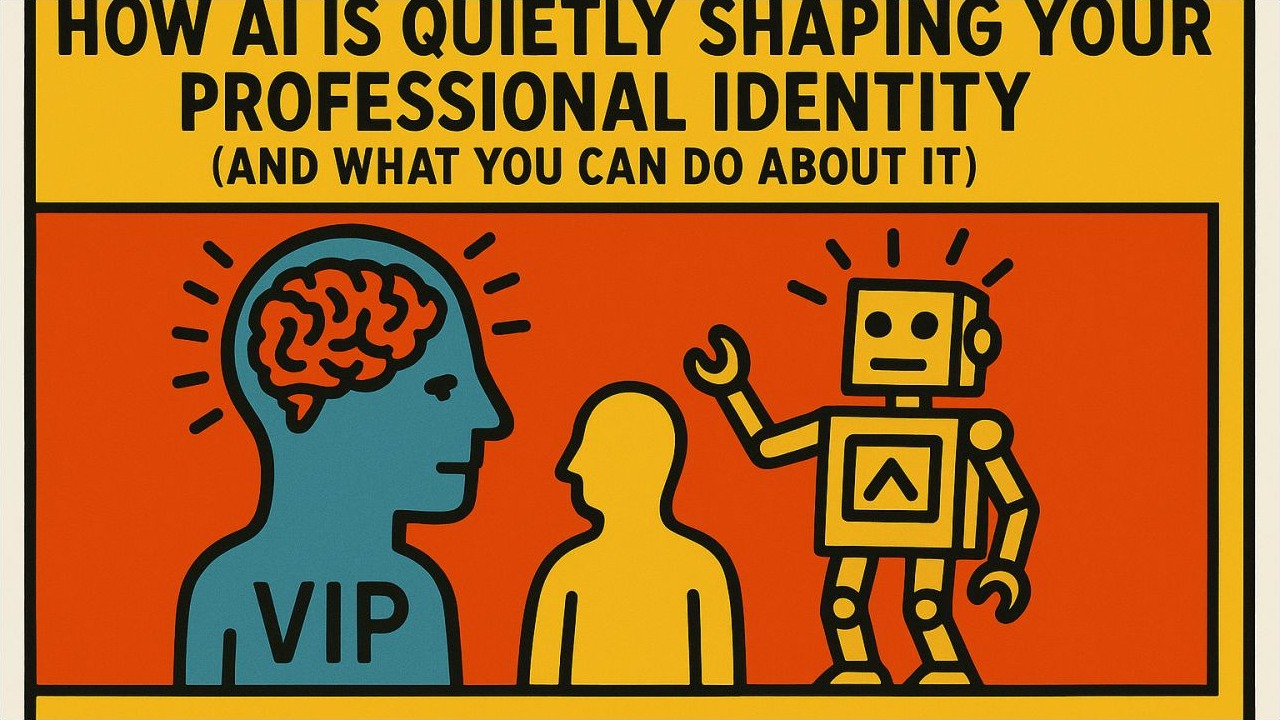
How AI is Quietly Shaping Your Professional Identity (And What You Can Do About It)
🤖 That moment when LinkedIn suggests the perfect job posting...
You scroll through your feed this morning, and there it is: a role that feels tailor-made for you. The salary range is exactly what you've been thinking about. The company culture aligns with your values. Even the job description uses phrases you've been putting in your own posts.
Coincidence? Not quite.
The AI That's Always Watching
Every click, like, comment, and connection you make on LinkedIn feeds an algorithm designed to understand you better than you understand yourself. This AI doesn't just recommend content—it actively shapes who you think you are as a professional.
Here's how it works:
- Your engagement patterns teach the algorithm what kind of professional you are
- Your network connections signal your industry aspirations and peer group
- Your content interactions reveal your values, interests, and career trajectory
- Your job search behavior (even the passive kind) gets catalogued and predicted
The algorithm then reflects this data back to you through your personalized feed, creating what I call the "Professional Mirror Effect."
The Professional Mirror Effect in Action
Scenario 1: The Sales Professional Sarah regularly engages with posts about sales techniques and leadership. LinkedIn's algorithm begins showing her more senior sales roles, executive coaching content, and leadership development opportunities. Over time, Sarah starts seeing herself as leadership material—not because she necessarily was before, but because the algorithm kept presenting her with that identity.
Scenario 2: The Tech Skeptic Mark occasionally shares articles questioning AI ethics. The algorithm notices and feeds him more content about AI risks, job displacement fears, and technology criticism. Mark's professional identity gradually shifts toward being "the person who questions technology," influencing his career decisions and network.
The key insight? The algorithm isn't just predicting your preferences—it's actively participating in creating them.
Why This Matters for Your Career
1. Your Professional Bubble Gets Smaller AI-curated feeds can create echo chambers that limit your exposure to diverse opportunities and perspectives.
2. Your Perceived Expertise Gets Defined The algorithm categorizes you based on past behavior, potentially boxing you into professional identities that may not serve your evolving goals.
3. Your Market Value Gets Calculated AI systems are increasingly involved in recruitment, salary benchmarking, and performance evaluation—often using data you didn't realize you were providing.
Building AI Literacy: 5 Practical Steps
🔍 1. Audit Your Digital Professional Identity
- Review your LinkedIn activity from the past 3 months
- Ask: "What professional identity is this data creating?"
- Look for patterns in the content you engage with vs. your actual career goals
🌐 2. Diversify Your Information Diet
- Intentionally engage with content outside your usual sphere
- Follow professionals in adjacent industries or roles you're curious about
- Use private browsing when researching career pivots
⚡ 3. Test the Algorithm
- Try engaging with different types of professional content for a week
- Notice how your feed changes in response
- Use this awareness to consciously shape your algorithm
🎯 4. Set Boundaries with AI Recommendations
- Don't apply to jobs just because the algorithm suggested them
- Research companies and roles independently of platform recommendations
- Ask: "Am I interested in this, or is the algorithm telling me I should be?"
🧠 5. Maintain Human Networks
- Have regular conversations with mentors, peers, and industry contacts outside of algorithmic mediation
- Join professional groups that meet in person
- Seek diverse perspectives on your career trajectory
The Bottom Line
AI literacy isn't about rejecting technology—it's about understanding how it works so you can use it intentionally rather than being used by it.
Your professional future is too important to be left entirely to an algorithm, no matter how sophisticated it becomes.
Question for the comments: Have you noticed your professional interests or career direction being influenced by algorithmic recommendations? What strategies do you use to maintain agency in your career development?
🔗 Next week: "The Hidden Bias in AI Hiring Tools: What Every Job Seeker Should Know"
Building AI literacy as a core professional skill | Connect with me for more insights on AI Literacy
#AILiteracy #CareerDevelopment #ProfessionalGrowth #TechAwareness #FutureOfWork