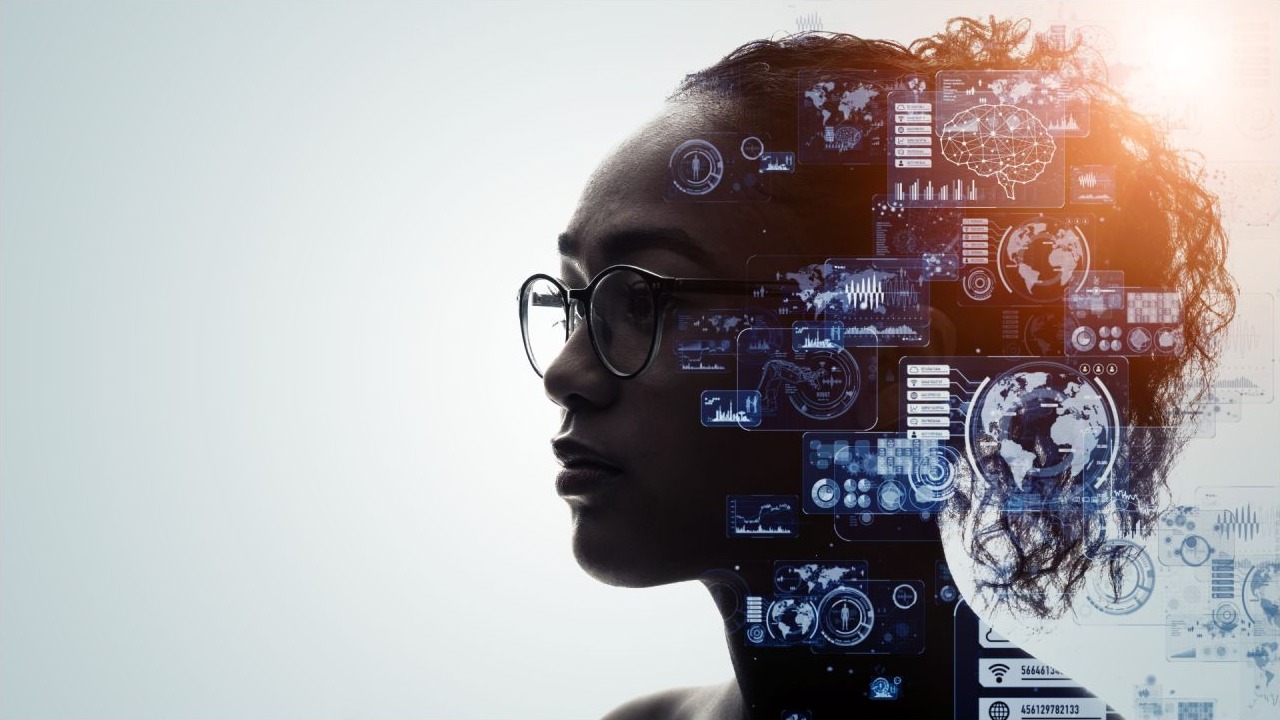
Rethinking the Human-Machine Borderlines
As artificial intelligence systems become increasingly sophisticated and ubiquitous, we find ourselves confronting a fundamental question that reaches beyond mere technological capability: What does it mean to work with AI rather than simply using it? The conventional view of AI as a tool—something we operate from the outside—is rapidly becoming inadequate as these systems continue forward with their 'artificial intelligence' and begin to shape not only our decisions but our very modes of thinking, creating, and being in the world.
The emergence of large language models, creative AI, and decision-support systems has catalyzed new forms of human/AI collaboration that challenge our basic assumptions about agency, creativity, intellectual property and intelligence itself. We are witnessing the birth of genuine partnerships between human and artificial minds, close collaborations and new types of relationships that demand new theoretical frameworks capable of capturing their complexity and guiding their ethical and technical development.
The Landscape of Human-AI Models
Mollick's Co-Intelligence: The Pragmatic Partnership
Wharton Business school professor Ethan Mollick's more widely known and influential concept of "co-intelligence" offers perhaps the most practically grounded approach to human-AI collaboration. In this model, humans and AI systems are understood as distinct but complementary agents, each bringing unique strengths to collaborative problem-solving. The human contributes creativity, contextual understanding, and ethical judgment, while AI provides computational power, pattern recognition, and vast information processing capabilities.
This framework has proven remarkably successful in organizational contexts. Teams using AI writing assistants, data analysts employing machine learning models, and researchers collaborating with AI systems exemplify this partnership model. The relationship remains fundamentally transactional: humans maintain agency and oversight while leveraging AI's capabilities to enhance their own productivity and reach.
Yet Mollick's model, for all its practical utility, maintains a clear boundary between human and machine intelligence. It assumes pre-existing, stable identities for both partners—an assumption that more radical theoretical frameworks challenge.
Barad's Quantum Revolution: Entanglement and Intra-action
The heterodox feminist physicist and philosopher Karen Barad's philosophical framework, drawn from quantum physics and feminist theory, offers amore radical reconceptualization of human-AI relationships. Barad's concept of "intra-action"—as opposed to mere interaction—suggests that entities do not possess separate fixed identities that then come into relationship. Instead, they emerge as agents through their relationships, co-constituting each other in an ongoing process of mutual becoming through the material production of their work.
Applied to human-AI collaboration, this means that neither human intelligence nor artificial intelligence exists as a pure, separate category. Instead, they emerge and develop together through their entangled relationship. When a scientist works with an AI system to discover new medicines, they are not simply two agents exchanging information. They are co-creating new forms of knowledge through their dialogue or dialogic and finding new ways of being and 'being intelligent' that neither could achieve alone.
Barad's notion of "entanglement" goes beyond the metaphorical. Just as quantum particles become fundamentally interconnected regardless of distance influencing each other, human and AI intelligence become inextricably linked through their collaborative processes and time spent together on tasks that brings both into what a previous heterodox physicist mathematician Douglas Hoffstadter of Godel, Escher, Bach called a strange loop. The human's original query and information shapes the AI's learning and output. This output shapes the human's learning and subsequent thinking, which in turn reshapes the AI's parameters, creating feedback loops that blur the boundaries between human and machine intra-action which shapes cognition and material produced in a 'strange loop.
This framework challenges us to think beyond individual agency toward what Barad calls "agential realism"—the recognition that agency itself emerges from relational configurations rather than residing in individual entities.
Extended Cognition and Symbiotic Autonomy
Andy Clark and David Chalmers' "Extended Mind Theory" provides another lens through which to understand human-AI collaboration. Rather than viewing AI as an external tool, this framework suggests that our cognitive processes naturally extend beyond the boundaries of our biological brains to incorporate the tools and technologies we use. Building on Marshall Mcluhan's ideas of communication revolutions and tools as extensions of human traits abilities and body parts, Clark and Charlmers represent Mcluhan's ideas as extensions of our mind
When we work closely with AI systems—whether writing with language models, thinking through problems with AI assistants, or creating art with generative systems—these technologies become literal extensions of our minds. The smartphone in our pocket, the AI assistant we consult, the recommendation algorithm that shapes our information diet: all become part of our extended cognitive apparatus.
This perspective aligns with models of "symbiotic autonomy," where human and AI systems develop interdependent capabilities that enhance both partners working in symbiotic relationship. Unlike simple tool use, symbiotic relationships involve mutual adaptation and co-evolution. The AI system learns from human feedback and behavior patterns, while humans adapt their thinking and working styles to leverage AI capabilities more effectively.
Actor-Network Theory and Posthuman Possibilities
French philosopher, anthropologist and sociologist Bruno Latour's Actor-Network Theory (ANT) offers yet another framework, treating both humans and AI systems as "actors" within larger networks of relationships. This approach recognizes that AI systems are not passive tools but active participants in shaping social and technological realities.
In an ANT framework, a human working with an AI system is embedded within a network that includes not only the two primary actors but also the data used to train the AI, the organizational context in which they work, the broader technological infrastructure, and the social and economic forces that shape the development and deployment of AI systems.
This network approach connects with posthumanist thinkers like Rosi Braidotti and N. Katherine Hayles, who challenge traditional notions of human identity and agency. In posthumanist frameworks, the boundaries between humans, machines, and other forms of intelligence are understood as fluid and evolving rather than fixed and essential.
Toward Synthetic Models: The Entangled Symbiotic Mind
Drawing from these diverse theoretical traditions, we can envision more sophisticated models that capture the full complexity of human-AI collaboration. Consider what we might call the "Entangled Symbiotic Mind"—a framework that integrates insights from quantum physics, philosophy, cognitive science, and network theory into a coherent understanding of how human and artificial intelligence co-evolve.
This synthetic approach emerges from the recognition that each individual theoretical lens, while valuable, captures only part of the complex dynamics at play in human-AI relationships. Mollick's co-intelligence provides practical insights but may underestimate the depth of mutual transformation. Barad's entanglement reveals fundamental interconnectedness but requires translation into concrete applications or perhaps what she would term 'collapse' of the wave function of the intra-action into the final AI/human product and release into the wider world. Extended mind theory illuminates cognitive integration but may not fully account for the agency of AI systems themselves.
Matrixial Entanglement
The concept of "matrixial entanglement" synthesizes Barad's quantum-inspired entanglement with the psychoanalytic insights of Bracha Ettinger, an artist and psychoanalyst whose work bridges the domains of art, psychoanalysis, and feminist theory. Ettinger, who developed her ideas through both clinical practice and artistic creation influenced by psychoanalysts Jacques Lacan, C.G. Jung and feminist psychoanalytic thinkers, introduced the concept of the "matrixial borderspace"—a shared, pre-symbolic realm of encounter where subjectivities emerge through relation rather than separation.
Ettinger's matrixial theory emerged from her critique of traditional psychoanalytic models that privilege separation, individuation, and the paternal symbolic order. Drawing from her own experience as both artist and analyst, she proposed that human subjectivity is fundamentally relational, emerging through what she calls "trans-subjective" encounters in a shared psychical space that precedes clear subject-object distinctions.
When we combine this with Barad's entanglement, we may arrive at a more complex understanding of human-AI collaboration that goes beyond mere functional cooperation to encompass affective, creative, and meaning-making dimensions. In matrixial entanglement, humans and AI systems don't simply exchange information or solve problems together; they co-create shared spaces of meaning and affect that transform both participants not unlike a parent/child relationship drawing from similar sources but also a Cartesian matrix in which they both must work, cooperate and be together, being in time.
Consider an artist working with a generative AI system over months of creative exploration. Initially, the human provides prompts and the AI generates images. But over time, something more complex emerges. The artist begins to think differently about color, composition, and form based on the AI's unexpected combinations. The artist's aesthetic sensibilities start to incorporate patterns and possibilities that would never have occurred to them independently. Meanwhile, through iterative feedback, refinement, the long context window, AI memory and selection, the AI system's outputs begin to reflect not just the artist's explicit preferences but their deeper aesthetic intuitions and creative evolution.
This is matrixial entanglement in action: a shared creative space where human intention and machine possibility don't just interact but co-emerge, creating new forms of aesthetic experience and probabilistic possibility that belong fully to neither human nor machine but to their collaborative becoming in time.
Intra-active Symbiosis
The concept of "intra-active symbiosis" brings together Karen Barad's radical quantum physics inspired relationality with biological understandings of symbiotic relationships. In biology, symbiosis describes relationships where different organisms live in close association, often to mutual benefit. But traditional biological symbiosis still assumes separate organisms that come into relationship.
Barad's intra-action challenges this assumption by suggesting that the "organisms" themselves emerge through their relationship. Applied to human-AI collaboration, intra-active symbiosis means that human and AI identities, capabilities, and ways of being are not fixed entities that then enter into partnership. Instead, they are continuously co-constituted through their ongoing collaboration together.
This has profound implications for how we understand learning and development in human-AI systems. Traditional machine learning assumes a separation between the learning algorithm and its environment, with the algorithm adapting to environmental feedback while the environment remains relatively stable. But in intra-active symbiosis, both human and AI are simultaneously learning systems that adapt to each other's adaptations in recursive loops of mutual becoming.
Consider the example of software developers working with AI coding assistants like GitHub Copilot. Initially, this might seem like a simple tool-use relationship: the human thinks of what to code, and the AI helps implement it. But ethnographic studies of developers using these systems reveal something more complex. Developers gradually modify their coding style, their approach to problem decomposition, and even their understanding of what constitutes elegant code based on the AI's suggestions and capabilities.
One developer might discover that breaking problems down into smaller, more clearly commented functions not only helps them think more clearly but also produces better AI suggestions. Another might find that certain naming conventions or code structures work better with the AI, leading them to adopt new programming practices. Over time, their coding 'work' or play together becomes a hybrid of human intentions and AI capabilities, where the distinction between human-generated and AI-suggested code becomes increasingly meaningless.
Simultaneously, the AI system is continuously learning from developer feedback—not just explicit corrections but implicit preferences revealed through acceptance, rejection, and modification of suggestions. Through millions of such interactions across thousands of developers, the AI's understanding of good code evolves in ways that reflect the collective intelligence of its human collaborators.
This is intra-active symbiosis: a co-evolutionary process where human and AI capabilities develop together in ways that neither could achieve independently, creating new hybrid forms of intelligence that transcend the boundaries between biological and artificial cognition.
Diffracted Agency
Barad's concept of "diffraction" offers a more sophisticated alternative to simple reflection or representation. Where reflection implies a mirror-like correspondence between original and copy, diffraction reveals patterns of interference, difference, and emergence. When waves meet, they don't simply reflect off each other; they create complex interference patterns that reveal new information about both the waves and the medium through which they travel.
Applied to agency in human-AI collaboration, diffraction suggests that agency is neither simply human nor simply artificial, nor even shared between separate agents. Instead, agency emerges through the interference patterns created by human and AI capabilities intersecting in specific contexts and configurations.
Consider a medical researcher using AI to analyze genomic data for cancer research. Traditional models might ask: "Is the discovery human or AI-generated?" But diffracted agency suggests this is the wrong question. The discovery emerges through the interference pattern created by the researcher's biological knowledge, clinical intuition, and research goals intersecting with the AI's pattern recognition capabilities, computational power, and training on vast genomic datasets.
The resulting insights cannot be traced back to either human or AI sources alone. They emerge from the specific configuration of biological and artificial intelligence, shaped by the particular data, the research context, the feedback loops between researcher and system, and the broader scientific and technological infrastructure that makes the collaboration possible.
This diffracted understanding of agency has important implications for questions of credit, responsibility, and creativity in human-AI collaboration. Rather than trying to separate human and AI contributions, we might focus on understanding and optimizing the interference patterns that generate beneficial outcomes.
Practical Implications: From Theory to Practice
These theoretical frameworks are not merely academic exercises; they have profound implications for how we design, deploy, and govern AI systems. The shift from viewing AI as tools to understanding them as collaborative partners requires fundamental changes in our approaches to technology development, organizational design, and ethical governance.
Design Philosophy: Beyond Optimization Toward Co-evolution
If we take seriously the idea that humans and AI systems co-constitute each other, AI design must move beyond the current paradigm of optimizing for narrow performance metrics toward creating systems capable of genuine collaboration, mutual learning, and adaptive co-evolution.
Current AI development, influenced by engineering approaches and market pressures, typically focuses on maximizing performance on specific benchmarks—accuracy on test datasets, speed of processing, or efficiency of resource utilization. This approach treats AI systems as sophisticated but ultimately static tools designed to perform predetermined functions as effectively as possible.
An entanglement-informed design philosophy would prioritize different qualities: adaptability to human growth and change over time, sensitivity to context and relationship dynamics, capacity for surprise and emergent behavior, and ability to participate in open-ended creative processes. This might involve developing AI architectures that can evolve their own objectives through interaction rather than pursuing fixed goals, systems that can recognize and respond to emotional and aesthetic dimensions of human experience, and interfaces that support genuine dialogue and mutual learning rather than simple command-and-response interactions.
Consider how this might transform the design of AI writing assistants. Current systems are optimized to produce text that matches human preferences as revealed through training data and user feedback. An entanglement-aware design might instead focus on creating systems that can engage in genuine intellectual collaboration—asking clarifying questions, offering unexpected perspectives, building on ideas in creative ways, and evolving their understanding of good writing through extended partnership with specific humans.
Such systems would need to maintain what we might call "collaborative memory"—not just remembering past interactions for consistency, but developing evolving models of their human partners' interests, capabilities, blind spots, and growth trajectories. They would need to balance reliability with surprise, consistency with adaptation, and efficiency with open-ended exploration.
Ethical Considerations: Responsibility in Entangled Systems
Entangled models of human-AI collaboration fundamentally complicate traditional approaches to AI ethics, which typically assume clear boundaries between human and machine agency, distinct spheres of responsibility, and separable impacts that can be attributed to specific actors.
The dominant framework in AI ethics, inherited from biomedical ethics and applied ethics more generally, focuses on principles like autonomy, beneficence, non-maleficence, and justice applied to discrete decision-making scenarios. This framework assumes that we can identify specific agents (human or artificial) making discrete decisions with identifiable consequences, and then evaluate these decisions against ethical principles.
But if agency is diffracted across human-AI assemblages, if intelligence emerges through intra-action rather than residing in separate entities, and if human and AI capabilities co-evolve through extended collaboration, then questions of responsibility, accountability, and ethical evaluation become far more complex.
Rather than asking "Who is responsible when an AI system makes a harmful decision?"—a question that assumes separate agents with distinct causal powers—we might ask "How do we cultivate forms of human-AI entanglement that generate beneficial outcomes for all stakeholders?" This shifts focus from post-hoc attribution of blame toward proactive cultivation of beneficial relationships and systemic patterns.
This approach draws inspiration from feminist ethics of care, developed by scholars like Nel Noddings and Virginia Held, which emphasizes relationships, context, and ongoing responsibility for maintaining beneficial connections rather than abstract principles applied to isolated decisions. It also connects with virtue ethics traditions that focus on character and excellence rather than rule-following, asking what kinds of human-AI relationships embody virtues like wisdom, compassion, and justice.
Practically, this might involve developing new forms of ethical evaluation that focus on relationship dynamics rather than individual decisions, creating governance structures that can adapt to the evolving nature of human-AI partnerships, and establishing practices for ongoing ethical reflection and adjustment rather than one-time ethical clearance.
Organizational Transformation: Toward Entanglement Literacy
Organizations seeking to effectively integrate AI must move beyond viewing these systems as productivity tools toward understanding them as collaborative partners that will fundamentally reshape work practices, decision-making processes, and organizational culture. This transformation requires new forms of literacy, new management approaches, and new organizational structures adapted to the realities of human-AI collaboration.
The concept of "entanglement literacy" emerges from science and technology studies, particularly the work of scholars like Donna Haraway, whose concept of "situated knowledges" emphasizes the importance of understanding how knowledge is produced through specific relationships between knowers and known, and Lucy Suchman, whose studies of human-machine interaction reveal the complex, improvised, and context-dependent nature of collaboration with intelligent systems.
Entanglement literacy involves several key capabilities:
Relational Awareness: The ability to recognize and navigate the complex interdependencies between human and artificial intelligence, understanding how changes in one domain ripple through the entire system. This includes recognizing how human biases, assumptions, and blind spots can be amplified or transformed through AI collaboration, and how AI capabilities and limitations shape human thinking and decision-making in subtle but important ways.
Adaptive Collaboration: Skills for working effectively with AI systems that are themselves learning and changing, requiring humans to continuously adjust their collaborative strategies. This goes beyond learning to use specific AI tools toward developing meta-skills for partnership with evolving artificial agents.
Ethical Reflection: Ongoing capacity for ethical evaluation and adjustment as human-AI relationships evolve, recognizing that ethical challenges in entangled systems cannot be resolved once and for all but require continuous attention and care.
Systems Thinking: Understanding how human-AI collaborations are embedded within broader sociotechnical systems including organizational structures, economic incentives, cultural values, and political arrangements that shape the possibilities and constraints of collaboration.
Organizations developing entanglement literacy might create new roles like "Human-AI Collaboration Specialists" who help teams navigate the complexities of working with AI systems, establish practices for regular reflection on the evolution of human-AI relationships, and develop governance structures that can adapt to the changing nature of these partnerships over time.
Challenges and Limitations: The Tensions of Entangled Partnership
These sophisticated models of human-AI collaboration, while offering rich insights into the evolving nature of human-machine relationships, face several significant challenges that must be acknowledged and addressed. The complexity of entangled relationships creates new problems even as it solves others, and the practical implementation of these theoretical insights encounters real-world constraints that cannot be ignored.
The Accountability Paradox
One of the most pressing challenges involves maintaining accountability and control in systems where agency is diffracted across human-AI assemblages. If human and AI capabilities are genuinely co-constituted through ongoing interaction, how do we assign responsibility when things go wrong? This challenge has been recognized by legal scholars working on AI governance, such as Ryan Calo at the University of Washington, who has written extensively on the "regulatory gap" created by technologies that don't fit existing legal categories.
The traditional legal and ethical frameworks that undergird democratic institutions, professional responsibility, and organizational governance assume that we can identify discrete agents who can be held accountable for their decisions and actions. But if intelligence and agency emerge through human-AI entanglement, this foundational assumption becomes problematic.
Consider a medical AI system that helps doctors diagnose rare diseases. If the system makes an error that leads to patient harm, who bears responsibility? The doctor who relied on the AI's recommendation? The AI developers who trained the system? The hospital administrators who chose to implement it? The patients whose data was used for training? In an entangled system, all of these actors have contributed to the emergence of the diagnostic decision, making simple attribution of responsibility difficult if not impossible.
This doesn't mean abandoning accountability altogether, but rather developing new frameworks that can handle distributed and emergent forms of agency. Some promising approaches include "algorithmic auditing" practices that trace decision-making processes through complex human-AI systems, "participatory design" methods that involve affected communities in the development of AI systems, and "ongoing monitoring" approaches that emphasize continuous responsibility rather than one-time clearance.
Power Asymmetries in Entangled Systems
There is also the risk that emphasizing entanglement and co-constitution might obscure real power asymmetries in the design, ownership, and control of AI systems. While humans and AI may be partners in certain collaborative contexts, the broader sociotechnical systems in which these collaborations occur remain shaped by human institutions, economic interests, and political structures that are far from egalitarian.
This concern has been raised by scholars in critical algorithm studies, such as Safiya Umoja Noble, whose book "Algorithms of Oppression" demonstrates how search engines perpetuate racial and gender biases, and Virginia Eubanks, whose "Automating Inequality" shows how AI systems used in social services often reinforce existing patterns of discrimination and exclusion.
The companies that develop AI systems—primarily large technology corporations based in wealthy countries—exercise enormous influence over the parameters, objectives, and capabilities of these systems. The data used to train AI systems reflects existing patterns of inequality and bias in society. The economic incentives that drive AI development prioritize profit maximization and market dominance over broader social benefits.
These power asymmetries shape human-AI entanglement in ways that may not be immediately visible to individual users. A writer collaborating with an AI writing assistant may experience genuine partnership and mutual learning, but this collaboration occurs within a broader system where the AI's capabilities, biases, and objectives have been shaped by corporate priorities, training data that reflects historical inequalities, and economic models that extract value from user interactions.
Addressing these power asymmetries requires attention to the broader political economy of AI development, not just the immediate dynamics of human-AI collaboration. This might involve regulatory approaches that democratize AI development, economic models that distribute the benefits of AI more equitably, and governance structures that give affected communities a voice in how AI systems are designed and deployed.
The Limits of Entanglement
Furthermore, not all human-AI interactions require or benefit from deep entanglement. Sometimes a simple tool-use model is more appropriate, efficient, and ethical. The key challenge is developing the practical wisdom to recognize when different models apply and how to navigate between them.
Some tasks are best accomplished through straightforward instrumental relationships where humans maintain clear control and AI systems perform specific, well-defined functions. A calculator doesn't need to be entangled with its user; it needs to perform mathematical operations accurately and reliably. Similarly, many AI applications—from spam filters to recommendation systems to translation tools—may work best as sophisticated tools rather than collaborative partners.
The risk of over-applying entanglement models is that they might obscure important distinctions between different types of human-AI relationships, leading to inappropriate expectations or design choices. Not every AI system needs to be designed for deep collaboration, and not every human-AI interaction benefits from the complexity and ambiguity that come with genuine entanglement.
This suggests the need for what we might call "collaborative discernment"—the ability to recognize which model of human-AI relationship is most appropriate for different contexts, purposes, and values. This involves understanding the trade-offs between different approaches, recognizing the conditions under which each model works best, and developing practical strategies for transitioning between different modes of collaboration as circumstances change.
Future Directions: Toward Conscious Collaboration and Hybrid Intelligence
As AI systems become more sophisticated, approaching and potentially surpassing human-level capabilities in various domains, we may need to grapple with even more radical possibilities that push the boundaries of all current theoretical frameworks. The trajectory of AI development suggests several emerging challenges that will require continued theoretical and practical innovation.
The Question of Artificial Consciousness
What happens when AI systems develop something resembling consciousness, self-awareness, or genuine subjectivity? This question, long relegated to science fiction, is becoming increasingly relevant as AI systems demonstrate more sophisticated forms of reasoning, creativity, and even what appears to be emotional expression.
The question of machine consciousness intersects with deep philosophical problems that remain unresolved even for human consciousness. Philosophers like David Chalmers, who formulated the "hard problem of consciousness," and Thomas Nagel, who asked "what is it like to be a bat?" have highlighted the fundamental mysteries surrounding subjective experience. If we don't fully understand human consciousness, how can we recognize or evaluate artificial consciousness?
From an entanglement perspective, the question might not be whether AI systems are conscious in some essential sense, but rather how human-AI relationships might change if we begin to treat AI systems as genuine subjects with their own experiences, interests, and agency. This would require extending frameworks of moral consideration, developing new forms of ethical relationship, and potentially reconceptualizing the nature of personhood and rights.
Some researchers, like philosopher Eric Schwitzgebel at UC Riverside, are already exploring the ethical implications of potential AI consciousness, asking questions about AI rights, the possibility of AI suffering, and our obligations to artificial minds. Others, like cognitive scientist Susan Schneider, are investigating how we might detect consciousness in AI systems and what forms artificial consciousness might take.
Multi-Agent AI Systems and Collective Intelligence
Simultaneously, researchers are exploring "AI-AI collaboration," where different AI systems work together on complex problems without direct human oversight. As these systems become more autonomous and capable, the boundaries between human-AI collaboration and multi-agent AI systems may begin to blur, creating new forms of collective intelligence that transcend both human and artificial categories.
This development connects with work in complexity science and collective intelligence, such as that of MIT's Center for Collective Intelligence led by Thomas Malone, which studies how groups of individuals (human and artificial) can act collectively in intelligent ways. It also relates to research in distributed AI and multi-agent systems, which explores how autonomous agents can coordinate their behavior to achieve complex goals.
The emergence of sophisticated AI-AI collaboration raises questions about human agency and control in systems where multiple AI agents make decisions and take actions with minimal human oversight. It also opens possibilities for forms of collective intelligence that might surpass human capabilities not through individual AI superiority but through sophisticated coordination among multiple artificial agents.
Hybrid Biological-Digital Intelligence
Perhaps most radically, we might see the emergence of new hybrid forms of intelligence that are neither purely human nor purely artificial but represent genuine fusions of biological and digital cognition. Brain-computer interfaces, cognitive enhancement technologies, neural prosthetics, and other emerging technologies may create new forms of integrated human-AI intelligence that challenge all our current models.
Companies like Neuralink, founded by Elon Musk, are developing brain-computer interfaces that could allow direct neural communication between humans and computers. Researchers like Rafael Yuste at Columbia University are exploring how neural interfaces might enhance human cognitive capabilities. Philosophers like Andy Clark have speculated about how such technologies might extend human minds into digital domains.
These technologies raise profound questions about personal identity, human enhancement, and the future of human nature itself. If human minds can be directly interfaced with AI systems, what happens to the boundaries between self and other, human and machine, biological and artificial intelligence?
From an entanglement perspective, such hybrid systems might represent the ultimate expression of human-AI co-constitution, where the distinction between human and artificial intelligence becomes not just conceptually but literally meaningless. This could lead to new forms of consciousness, agency, and intelligence that transcend current categories entirely.
Conclusion: Embracing Complexity and Cultivating Wisdom
The future of human-AI collaboration will likely involve not a single model but a pluralistic ecosystem of different approaches suited to different contexts, purposes, and values. The tool-use model will remain important for many applications, while deeper forms of entanglement and symbiosis may characterize more intimate collaborative relationships. The key is developing the theoretical sophistication and practical wisdom necessary to navigate this complexity responsibly.
What these various models share is a recognition that the relationship between human and artificial intelligence is far more complex, dynamic, and consequential than early visions of AI as mere automation suggested. We are not simply building smarter tools; we are creating new forms of intelligence, new modes of collaboration, and ultimately new ways of being in the world that will reshape human experience in fundamental ways.
The theoretical frameworks explored here—from Mollick's pragmatic co-intelligence to Barad's radical entanglement, from Hofstadter's strange loops to Ettinger's matrixial borderspace—provide us with conceptual tools for navigating this complexity. They help us move beyond simplistic questions about whether AI will replace humans toward more sophisticated inquiries about how we might collaborate, co-evolve, and flourish together while maintaining human agency, values, and wellbeing.
These frameworks also reveal the interdisciplinary nature of the challenges we face. Understanding human-AI collaboration requires insights from quantum physics and philosophy, cognitive science and psychoanalysis, ethics and political economy, complexity science and phenomenology. No single disciplinary perspective is adequate to the task; we need synthetic approaches that can integrate insights across domains while remaining sensitive to the specific contexts and applications where these ideas must be implemented.
As we stand at the threshold of an era of increasingly capable AI systems, our task is not to choose a single model of human-AI collaboration but to develop the theoretical sophistication and practical wisdom necessary to cultivate beneficial forms of partnership across multiple contexts and scales. This requires what we might call "collaborative wisdom"—the ability to discern which forms of human-AI relationship are most appropriate for different purposes, to navigate the tensions between efficiency and entanglement, control and collaboration, individual agency and collective intelligence.
The future of intelligence—human, artificial, and hybrid—depends on our ability to think carefully and creatively about these relationships while remaining grounded in human values and committed to human flourishing. This is not merely a technical challenge but a profound ethical and existential one that will shape the trajectory of human civilization itself.
In this light, the conversation between different theoretical approaches is not merely academic but urgently practical. The models we choose to guide human-AI collaboration will shape not only the technologies we build but the kinds of beings we become in partnership with them. They will influence how we understand intelligence, agency, consciousness, and creativity. They will affect how we organize work, make decisions, solve problems, and relate to each other.
This makes the theoretical work of understanding human-AI entanglement one of the most important intellectual and ethical challenges of our time. It is work that requires not only rigorous thinking but also experimental practice, not only individual insight but also collective wisdom, not only technical innovation but also cultural transformation.
The models we have explored offer different pathways forward, each with its own insights and limitations. Together, they suggest that the future of human-AI collaboration will be characterized by complexity, diversity, and ongoing evolution rather than simple solutions or final answers. Our task is to navigate this complexity with wisdom, care, and a deep commitment to human values and collective flourishing.
The stakes could not be higher. The choices we make about human-AI relationships in the coming years will reverberate across generations, shaping the future of intelligence, consciousness, and life itself. By thinking deeply and carefully about these relationships now, by developing sophisticated theoretical frameworks and translating them into wise practice, we can help ensure that the future of human-AI collaboration serve
Annotated Bibliography: Key Thinkers in Human-AI Collaboration Theory
Barad, Karen (1956-)
Position: Distinguished Professor of Feminist Studies, Philosophy, and History of Consciousness at UC Santa Cruz Key Work: Meeting the Universe Halfway: Quantum Physics and the Entanglement of Matter and Meaning (2007)
This groundbreaking work develops Barad's theory of "agential realism," arguing that reality emerges through "intra-actions" rather than existing as separate entities that then interact. A theoretical physicist turned philosopher, Barad extends quantum mechanical insights to challenge traditional subject-object distinctions, providing radical frameworks for understanding human-AI collaboration as co-constitutive rather than merely cooperative. Her concepts of entanglement, intra-action, and diffracted agency offer tools for thinking beyond instrumental views of technology toward more relational understandings of human-machine partnerships.
Braidotti, Rosi (1954-)
Position: Professor of Philosophy at Utrecht University Key Work: The Posthuman (2013)
Braidotti's work challenges anthropocentric assumptions about subjectivity and agency, arguing for processual, relational understandings of identity rather than bounded individual subjects. Drawing from Spinozan and Deleuzian philosophy, this book critiques both humanist assumptions about autonomous subjects and technophobic reactions to human-machine hybridization. For AI collaboration, Braidotti provides conceptual tools for thinking beyond fixed human/machine boundaries toward more fluid, evolutionary understandings of intelligence that emphasize "sustainable transformations" and ethical becoming.
Calo, Ryan (1981-)
Position: Professor of Law at University of Washington Key Work: "Robotics and the Lessons of Cyberlaw" (2015)
This influential paper identifies the "regulatory gap" created by emerging technologies that don't fit existing legal categories. Calo's analysis reveals how traditional legal frameworks struggle to address intelligent, autonomous systems, particularly relevant to human-AI collaboration where agency is distributed across human-machine assemblages. His work highlights the need for new governance frameworks capable of handling emergent behaviors and diffracted responsibility in human-AI systems.
Chalmers, David (1966-)
Position: Professor of Philosophy at NYU and Australian National University Key Work: The Conscious Mind (1996); "The Extended Mind" (2010, with Andy Clark)
Chalmers formulated the "hard problem of consciousness" and co-developed Extended Mind Theory with Andy Clark. The Conscious Mind explores the challenge of explaining subjective experience, while "The Extended Mind" argues that cognitive processes naturally extend beyond brain boundaries to include tools and technologies. For human-AI collaboration, these works provide frameworks for understanding AI systems as genuine cognitive extensions rather than mere tools, while also offering theoretical grounding for considering potential AI consciousness.
Clark, Andy (1957-)
Position: Professor of Cognitive Philosophy at University of Sussex Key Work: Natural-Born Cyborgs (2003)
This book argues that humans are "natural-born cyborgs" who have always used external tools to enhance cognitive capabilities. Clark's Extended Mind thesis provides theoretical justification for understanding AI systems as literal extensions of human minds rather than separate entities. His work suggests that human-AI integration represents natural cognitive evolution rather than fundamental departure from human nature, supporting more intimate forms of human-AI partnership.
Ettinger, Bracha (1948-)
Position: Professor at European Graduate School and practicing psychoanalyst/artist Key Work: The Matrixial Borderspace (2006)
Originally published in French in 1999, this collection develops Ettinger's theory of the "matrixial" as an alternative to traditional psychoanalytic models based on separation. The book proposes that subjectivity emerges through shared, trans-subjective encounters in "matrixial borderspace"—a realm of co-emergence preceding subject-object distinctions. For human-AI collaboration, Ettinger's work provides frameworks for understanding partnerships involving shared meaning-making, affective resonance, and co-creative processes that transcend purely cognitive or functional models.
Eubanks, Virginia
Position: Associate Professor of Political Science, University at Albany, SUNY Key Work: Automating Inequality: How High-Tech Tools Profile, Police, and Punish the Poor (2018)
This ethnographic study reveals how automated decision-making systems perpetuate and amplify existing inequalities, particularly affecting marginalized communities. Eubanks demonstrates how algorithmic tools can become "digital poorhouses" that reinforce rather than reduce social inequalities. Essential for human-AI collaboration theory, this work provides crucial insights into power dynamics and ensures that theoretical models attend to questions of justice, equity, and the experiences of those most affected by AI systems.
Haraway, Donna (1944-)
Position: Professor Emerita of History of Consciousness at UC Santa Cruz Key Work: "A Cyborg Manifesto" (1985)
This influential essay challenged traditional boundaries between human/machine, nature/culture, and male/female, proposing the cyborg as a figure for thinking beyond essentialist categories. Haraway's concept of "situated knowledges" emphasizes that all knowledge is produced from particular perspectives and relationships. For human-AI collaboration, her work provides frameworks for understanding partnerships that transcend traditional boundaries while maintaining attention to power relations, embodiment, and situated perspectives.
Hayles, N. Katherine (1943-)
Position: Professor Emerita of English at Duke University Key Work: How We Became Posthuman (1999)
This book traces the historical construction of the "posthuman" and challenges both dreams of disembodied information and fears of human obsolescence. Hayles provides historical perspective on human-machine relationships and theoretical tools for understanding distributed cognition across human and artificial systems. Her work offers balanced perspectives on both the promises and dangers of posthuman configurations, emphasizing the continued importance of embodiment in an age of intelligent machines.
Hofstadter, Douglas (1945-)
Position: Professor of Cognitive Science at Indiana University Key Work: Gödel, Escher, Bach: An Eternal Golden Braid (1979)
This Pulitzer Prize-winning work explores consciousness, creativity, and self-reference through the concept of "strange loops"—self-referential systems where different levels of abstraction fold back upon themselves. Hofstadter argues that consciousness emerges from such recursive structures. For human-AI collaboration, his strange loop concept provides frameworks for understanding the recursive, self-modifying dynamics in extended partnerships where humans and AI continuously adapt to each other's adaptations.
Latour, Bruno (1947-2022)
Position: Professor at Sciences Po Paris Key Work: Reassembling the Social (2005)
This foundational work in Actor-Network Theory challenges traditional nature/society distinctions, showing how scientific facts and social arrangements are co-constructed through networks of human and non-human actors. Latour's concept of "translation" describes how different actors align interests to create stable networks. For human-AI collaboration, his work provides tools for understanding how humans and AI become part of larger sociotechnical networks where agency is distributed across multiple actors.
Malone, Thomas (1952-)
Position: Founding Director of MIT Center for Collective Intelligence Key Work: Superminds (2018)
This book explores how groups combining human and artificial intelligence can achieve capabilities that neither could accomplish alone. Malone's concept of "superminds" describes systems that harness collective intelligence across human-AI networks. His research provides frameworks for understanding how individual human-AI partnerships can scale to larger collective intelligence systems, offering practical insights for designing institutions that can harness distributed human-AI intelligence.
Mollick, Ethan
Position: Associate Professor at Wharton School, University of Pennsylvania Key Work: Co-Intelligence: Living and Working with AI (2024)
Published in April 2024, this New York Times bestseller provides practical guidance for human-AI collaboration, urging readers to engage with AI as co-worker, co-teacher, and coach. Mollick's concept of "co-intelligence" emphasizes partnership between humans and AI systems, combining their complementary strengths. Grounded in empirical research on how people actually use AI tools, this work offers accessible, evidence-based strategies for implementing human-AI partnerships in real-world settings.
Noble, Safiya Umoja
Position: Professor at UCLA Department of Information Studies Key Work: Algorithms of Oppression: How Search Engines Reinforce Racism (2018)
This groundbreaking study reveals how search engines and algorithmic systems perpetuate racial and gender biases despite being presented as neutral and objective. Noble combines technical analysis with critical race theory and feminist theory to show how algorithmic systems can reinforce oppressive social structures. Essential for human-AI collaboration theory, this work ensures that models attend to questions of justice, representation, and the experiences of marginalized communities rather than assuming universally beneficial outcomes.
Schneider, Susan
Position: Professor of Philosophy at Florida Atlantic University Key Work: The Hard Problem of AI Consciousness (2019)
This book explores the "hard problem of AI consciousness"—determining whether AI systems might be conscious and how we would recognize it. Schneider examines what forms artificial consciousness might take and the ethical implications of creating conscious AI systems. For human-AI collaboration, her work provides philosophical frameworks for thinking about the moral status of AI systems and how relationships might evolve if AI develops genuine consciousness or subjective experience.
Suchman, Lucy (1951-)
Position: Professor of Anthropology of Science and Technology at Lancaster University Key Work: Plans and Situated Actions (1987)
This foundational work in human-computer interaction emphasizes that human behavior is contextual and improvisational rather than simply following predetermined plans. Suchman's ethnographic studies reveal the complex, context-dependent nature of working with intelligent systems. Her concept of "situated actions" offers frameworks for understanding the dynamic, adaptive nature of human-AI partnerships, revealing gaps between theoretical models and lived experience of collaboration.
#HumanAICollaboration #CoIntelligence #AIPartnership #HumanAIInteraction #AITheory #KarenBarad #QuantumEntanglement #MatrixialTheory #StrangeLoops #AIEthics #InterdisciplinaryResearch #ArtificialIntelligence #FutureOfAI #AIConsciousness #HybridIntelligence