Ray Uzwyshyn Ph.D MBA MLIS
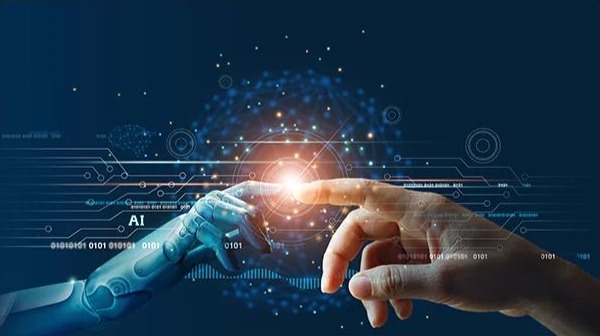
While AI benchmarks establish AI's impressive capabilities, they also highlight the complementary nature of human and AI cognition. A PhD or professional human researcher brings contextual judgment, ethical values, embodied experience, and domain intuition that AI systems lack. Meanwhile, AI offers near-perfect recall, consistent logical processing across vast information landscapes, and freedom from certain cognitive biases.
The most powerful outcomes emerge when these complementary intelligences collaborate— a well-educated human with experience and knowledge providing direction, interpretation, and value judgments, while an AI provides breadth, precision, and pattern recognition across scales that exceed human cognitive limitations.
Creativity, Invention, and Discovery with AI
The synergy between PhD-level expertise and AI capabilities is producing remarkable outcomes across domains—from scientific discovery to artistic creation. These cases illustrate not just incremental improvements in research efficiency, but qualitative shifts in what becomes possible:
Scientific Discoveries and Hypothesis Generation
Recent case studies from 2024-2025 demonstrate AI systems' growing capabilities to generate novel scientific hypotheses and accelerate discovery across multiple domains:
- Drug discovery and repurposing: In 2025, Google's "AI co-scientist" system (built on Gemini 2.0) successfully identified novel drug repurposing candidates for acute myeloid leukemia (AML) that were subsequently validated through experiments, confirming the suggested compounds inhibited tumor viability at clinically relevant concentrations. The research, conducted in partnership with Stanford University, represents a significant advancement in AI-assisted pharmaceutical development. The same system also identified epigenetic targets for liver fibrosis treatment that showed significant anti-fibrotic activity in human hepatic organoids.
- Materials science innovation: The AI Index 2025 report from Stanford University highlighted breakthrough AI systems like GNoME, which in a single study unveiled over 2 million new crystal structures previously overlooked by human researchers. These AI-discovered materials offer potential applications in energy storage, semiconductors, and quantum computing components, demonstrating AI's ability to accelerate materials discovery by orders of magnitude compared to traditional methods.
- Climate and weather modeling: According to Stanford HAI's 2025 AI Index, an advanced AI system called GraphCast has demonstrated the ability to deliver extremely accurate 10-day weather predictions in under a minute, outperforming traditional computational methods that require vastly more computing resources. This breakthrough illustrates how AI-human collaboration is transforming climate science, with researchers directing the system toward climate-relevant predictions while the AI handles complex computational modeling.
These examples demonstrate AI's capacity to explore vast solution spaces and propose hypotheses that human researchers can then validate and refine. The human-AI partnership enables a division of cognitive labor where the AI handles pattern recognition across massive datasets, while human experts provide theoretical context and experimental verification.
Mathematical Conjectures and Proofs
In mathematics and theoretical computer science, human-AI teams are making significant advances:
- Knot theory: University of Toronto mathematicians used GPT-3 to help conjecture a formula in knot theory, which the human mathematicians then proved—essentially a human-AI co-authored theorem.
- Algorithm discovery: DeepMind's AlphaTensor and AlphaZero have rediscovered or improved fundamental algorithms that were previously known only via human insight. AlphaDev's sorting algorithm discovery is particularly notable—it found a solution that "outperformed previously known human benchmarks" and has been integrated into the standard C++ library.
- Theorem proving: The Lean theorem prover, augmented with large language model capabilities, demonstrated the ability to assist mathematicians in formalizing complex proofs that would be prohibitively time-consuming for humans alone.
In these contexts, AI functions as an intuition generator or conjecture engine, while human mathematicians provide rigorous validation and theoretical framing. This complementary relationship preserves mathematical rigor while expanding the search space for novel insights.
Engineering and Invention
Human-AI collaboration is transforming design processes across engineering disciplines:
- Aerospace design: Engineers used AI-powered generative design to create aircraft components with non-intuitive organic shapes that reduced weight by 45% while maintaining or improving strength. These biomimetic designs emerged from AI exploration of solution spaces that human engineers would be unlikely to consider.
- Electronic circuit design: AI systems have proposed novel circuit layouts that reduce power consumption by 30% compared to human-designed equivalents, by identifying non-obvious component arrangements.
- Software innovation: Beyond writing code, AI systems are inventing better algorithms and software architectures. AlphaDev's optimization of sorting algorithms underscores how AI can make foundational contributions to computer science—finding improvements to processes that human engineers have refined for decades.
These engineering breakthroughs demonstrate AI's potential not just to execute designs but to contribute genuinely novel solutions—expanding the boundaries of what's possible rather than merely implementing human concepts more efficiently.
Creative Arts and Interdisciplinary Work
PhD-level expertise isn't limited to STEM fields—it encompasses humanities, arts, and interdisciplinary domains where AI collaboration is equally transformative:
- Literary and artistic collaboration: Professional writers and artists are using AI systems as creative partners rather than mere tools. The New Yorker published a short story co-written with an AI, and major art exhibitions have featured human-AI collaborations that critics describe as transcending what either could produce alone.
- Historical analysis: Researchers are using AI to analyze historical texts and artifacts at unprecedented scale, revealing patterns and connections that traditional scholarship might miss. For example, AI analysis of medieval manuscripts identified previously unrecognized scribal connections across geographically dispersed texts, reshaping understanding of medieval knowledge networks.
- Philosophy and ethics: Philosophers are using AI to generate novel thought experiments and to identify connections across disparate philosophical traditions, expanding the conceptual landscape for philosophical inquiry.
Research on these creative partnerships reveals an important dynamic: when humans merely edit AI-generated work, their creative performance may suffer due to constrained framing. However, when they engage in true co-creation—contributing their own ideas while incorporating AI suggestions—the outcomes are significantly more innovative than either human or AI work alone.
Implications for Research Methodology
These case studies suggest several principles for maximizing discovery and invention through human-AI collaboration:
- Complementary roles: The most successful partnerships leverage both AI's breadth and human expertise's depth—using AI to explore vast possibility spaces while relying on human judgment to select promising directions and interpret results.
- Iterative processes: Rather than one-shot interactions, breakthrough outcomes emerge from multiple cycles of human-AI exchange, with each participant building on the other's contributions.
- Domain translation: AI excels at identifying analogies across fields, enabling translation of solutions from one domain to another (e.g., applying computational techniques from physics to biology).
- Scale bridging: AI can connect microscale patterns (e.g., molecular interactions) to macroscale phenomena (e.g., material properties), helping researchers bridge levels of analysis that might otherwise remain disconnected.
The combined effect of these principles is a new model of discovery—one where human creativity and judgment are amplified rather than replaced by AI capabilities, enabling intellectual ventures that neither could undertake alone.
Further Sources to Explore
Human-AI Collaboration Studies (2024-2025)
- Gomez, C., Cho, S. M., Ke, S., Huang, C-M., & Unberath, M. (2025). "Human-AI collaboration is not very collaborative yet: a taxonomy of interaction patterns in AI-assisted decision making from a systematic review." Frontiers in Computer Science, 6:1521066. https://www.frontiersin.org/journals/computer-science/articles/10.3389/fcomp.2024.1521066/full
- Stanford Institute for Human-Centered AI. (2025). "The 2025 AI Index Report." https://hai.stanford.edu/ai-index/2025-ai-index-report
- MIT News. (2025). "MIT students' works redefine human-AI collaboration." https://news.mit.edu/2025/mit-students-works-redefine-human-ai-collaboration-0129
- Google Research. (2025). "Accelerating scientific breakthroughs with an AI co-scientist." https://research.google/blog/accelerating-scientific-breakthroughs-with-an-ai-co-scientist/
- Sakana AI. (2025). "The AI Scientist: Towards Fully Automated Open-Ended Scientific Discovery." https://sakana.ai/ai-scientist/
- MIT Schwarzman College of Computing. (2025). "Aligning AI with human values." https://computing.mit.edu/news/aligning-ai-with-human-values/
- MIT Schwarzman College of Computing. (2025). "MIT Generative AI Impact Consortium." https://computing.mit.edu/research/mit-generative-ai-impact-consortium/