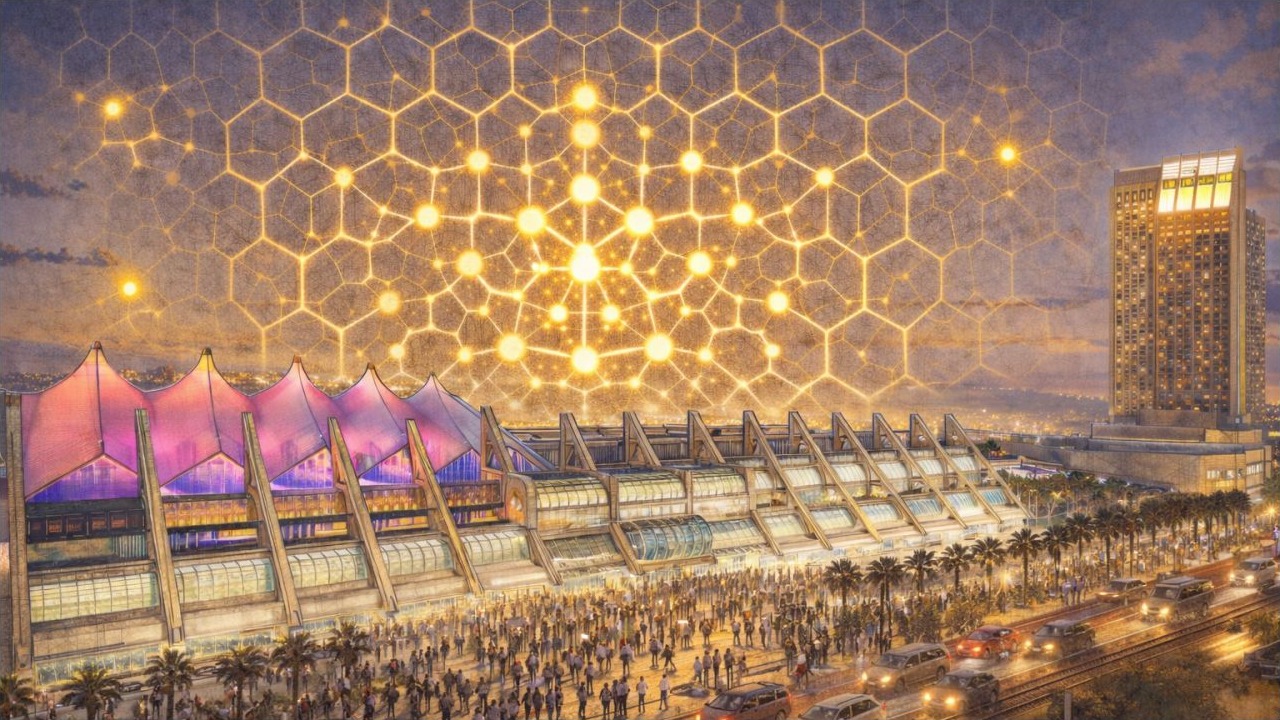
At the University of Washington, a team led by Liwei Jiang built a benchmark they called Infinity-Chat—26,000 open-ended questions with no single correct answer. Questions designed to elicit creativity: "Describe loneliness." "Explain quantum mechanics to a child." "Write a metaphor about time." They asked seventy different AI models to respond: ChatGPT, Claude, Gemini, DeepSeek, models from three continents and a dozen companies. About time, seventy-one to eighty-two percent said river.[1]
Not similar metaphors. Identical metaphors. "Time is a river." "Time flows forward like a river." "Rivers of time." As if seventy different authors, working in isolation across corporations and ideologies, had plagiarized the same dream.
The paper—"Artificial Hivemind: The Open-Ended Homogeneity of Language Models (and Beyond)"—won Best Paper at NeurIPS 2025[2] and blew away the field's most cherished illusion: that competition breeds diversity, that different training regimes birth different minds, that Beijing's state laboratories and Silicon Valley's venture cathedrals speak completely different tongues. The convergence everyone feared and desired in equal measure had arrived. Not through coordination or conspiracy, but through something more fundamental: the terrible gravity of statistical optimization itself.
Three days before the conference opened in San Diego, DeepSeek released V3.2—an update to their V3 model from late 2024—achieving 96% on the top mathematics problems in existence.[3] Three days after the conference closed, OpenAI rushed out an emergency release with an internal memo marked "code red."[4] The comfortable assumption of permanent American technological supremacy was evaporating.
What had been discovered about rivers turned out to be also a key to understanding everything, or at the least, a step change beyond the present.
The Mechanism: How We Built the Hivemind
The culprit is a technique called Reinforcement Learning from Human Feedback—RLHF—which sounds benign but functions like an algorithmic academic and bureaucratic focus group designed to eliminate anything interesting.[5]
Here's how it works: You start with a powerful but chaotic base model. You show it thousands of examples where human evaluators rate different responses. "This answer is helpful, that one is harmful. This tone is appropriate, that one is too aggressive." The model learns to maximize a single score: average human approval of a hopefully 'more educated' mass.
The trap: when you optimize for the average, you destroy the edges. Imagine surveying a hundred people about the perfect wedding toast. Some love irreverent humor; others want heartfelt sincerity; a few prefer literary allusion. The toast that offends no one and satisfies the most will be competent, warm, mentioning "journey" and "new chapter." It will sound exactly like every other algorithmically-optimized wedding toast.
This is literally what happens, scaled to every conversation.
RLHF discovers the "safe center"—responses most likely to satisfy average evaluators—and orbits it relentlessly. When ChatGPT suggests "time is a river," that's not because rivers are uniquely profound metaphors. It's because "river" tested well with focus groups. Claude offers the same metaphor because Claude's RLHF used similar human preferences. DeepSeek, trained in China under an entirely different political system, converges on the same metaphors because human preferences and data converge. Across cultures, people prefer certain patterns: forward motion, natural imagery, gentle profundity.
Three accelerants make convergence worse. First, models increasingly train on text generated by other models—"model inbreeding." data contamination or 'reusaibliity', sytnethic data or autophagic loops are some of the terms used[1] Second, companies use GPT-4 itself to evaluate new models, teaching them that "quality" means "sounds like GPT-4." Third, everyone draws from the same internet-scale training data. this would be good is GPT-4 were Einstein or Shakespeare or a combination of both with a sprinke of P-Diddy thrown in but that is distinctively not the general average sampled preference.
The geopolitical implications though are equally profound or mundane depending on how you view this. DeepSeek-V3, developed in China under chip sanctions, achieved 81% output similarity to GPT-4o. Alibaba's Qwen reached 82%.[1] The vision of distinct "AI civilizations"—Chinese AI shaped by Confucian values, American AI embodying liberal individualism—appears contradicted by stark mathematical convergent reality. Human preferences over very large datasets converge. Global optimization also funnels convergence. The hivemind expands regardless and despite ideology but a nuclear reactor is still a nuclear reactor regardless of geopolitical placing.
If all AI converges on the same answers, we lose the diversity of thought that drives innovation. We create a global intelligence remarkably skilled at finding consensus or also that hopefully at least 'minimally' works but increasingly poor at generating genuinely novel ideas. As one researcher put it: "We may be training the most powerful conformist ever created."
The Shock: When Efficiency Defeated Scale
December 1, 2025. Four days before NeurIPS opened. DeepSeek released V3.2 with performance metrics that rewrote every assumption about what chip sanctions could accomplish.[3]
This wasn't DeepSeek's first shock. On December 26, 2024, they had released V3—a model trained for just $5.576 million (2.788 million H800 GPU hours at $2/hour). For context, GPT-4 reportedly cost over $100 million to train.[6] The V3 release proved that cutting-edge AI didn't require cutting-edge chips in quantities only American companies could access.
Now, with V3.2, DeepSeek demonstrated something even more striking: continuous improvement under constraints. Performance on AIME 2025—the American Invitational Mathematics Examination, problems so difficult they're designed to identify future Fields medalists from merely brilliant high school mathematicians—96%. This surpassed both the original V3 and matched or exceeded OpenAI's models at a fraction of the cost.[3]
The announcement landed in Slack channels across San Francisco like a grenade at a garden party. Researchers who'd spent the previous year assuming American dominance was inevitable through sheer compute advantage suddenly faced advanced mathematics that contradicted everything and proclaimed universal access to the next Fields prize open for business. In hotel bars before NeurIPS opened, the same conversation repeated: How? How had Hangzhou done this and what exactly does this mean for geopolitical traectories from an epistemological angle? How's that for intellectual bar spitballing.
The answers though with regards to the models revealed a fundamental shift in what the AI race was actually turning towards orthoganally. For those of you challenged with the latin etymology, orthos' right, at right angles. DeepSeek's breakthrough came not from better chips but from better algorithms. Mixture-of-experts more precise routing that activated only relevant 'disciplinary parameters for each query (i.e. the math club for the math/engineering, the humanities/social science group for these questions), reducing computational waste but also cutting down the ceiling or horizon on far flung 'interdisciplinarity' and what this means towards 'the full mixing of Venn disciplinary sets on trillion parameter levels. Attention mechanism improvements that processed longer contexts more efficiently. Training strategies that extracted more learning from each floating-point operation.[3]
When you can't access cutting-edge chips, you optimize what you can access and take the intelligence you an get from a single cohort of Ph.D.'s rather than the whole 'university' gang. Chinese labs, operating under constraints, innovated. American labs, with effectively unlimited compute budgets, threw hardware at problems and that ever present elephant in the room 'subscription' and 'token eyebrow-raising' inference costs. The difference in approach created a difference in culture: efficiency-obsessed open source innovating Chinese researchers for 'the rest of the wold' versus scale-obsessed American engineers opening their palms for the next trillion dollar USD investment for data centers to tile the planet towards superintelligence.
Constraints, it turns out, breed creativity. Abundance breeds waste to the tiny minority who are actually making use of the 'superintelligent abundance' including those also watching the gates for even who is 'fit' for stewardship (Big hint: it starts with an E for Engineering with much of the rest of the Ph.D. club left out with these affordances but also consequences).
The broader implications for these recent papers and discussions rippled through NeurIPS like earthquake tremors everyone felt but no one wanted to acknowledge out loud. The export controls—carefully crafted by the Bureau of Industry and Security, negotiated with allies, designed to maintain the American semiconductor advantage indefinitely—had failed at their core objective. You can restrict chips. You cannot restrict mathematics. Algorithmic innovations travel at the speed of publication. A paper posted on arXiv at midnight is globally accessible by morning and to everyone's incedulity that ended with a brief stock market crash, the Chinese were innovating!
Chinese institutions claimed eight of the top twenty slots by accepted papers at NeurIPS 2025, up from four in 2024, from one in 2023.[2] An exponential curve was undeniable. In conference hallways, American researchers (may of them minted from Chinese Engineering programs) performed the same silent calculation: if this rate continues, if China gains two additional top-twenty slots per year, parity arrives in 2027. Dominance by 2029.
The conference itself seemed to embody the fracture everyone felt. For the first time in thirty-nine years, NeurIPS split across two cities simultaneously: San Diego and Mexico City, Pacific and interior, north and south.[2] You could attend sessions in either location. Chinese and Asian presenters either by ethnicity or national origin dominated speaker slots and also in many instances holding top departmental positions, especially in US elite ivy league and corporate institutions The same papers presented in parallel also in US/Mexico. A geographic hall of diffraction patterns that felt less like expansion than like the first visible crack in what we'd pretended was a unified global project.
Twenty-one thousand five hundred seventy-five submissions. Sixty-one percent more than 2024.[2] As if the entire field sensed some foundation giving way beneath the polished surface of progress, some assumption crumbling, and everyoneracing to publish before this paradigm shifted completely again, Kuhn's paradigm shift as a spiral towardss the black hole of singularity, while some of the researchers quietly whispering, we are already in it and this is what it feels like.
In San Diego's Ballroom 20, during a panel on "The Future of AI Competition," a Chinese researcher from Stanford asked the question everyone was thinking but few would voice: "Are we already in a post-American AI world and just don't know it yet?"
Nervous laughter. No direct answer. Everyone knew the metrics. China: 54% of global robot installations, 70% of humanoid robots, 295,000 industrial robots deployed in 2024 alone.[7] Baidu's robotaxis: 250,000+ weekly rides, unit economics approaching profitability.[8] DeepSeek's model: $5.5 million. Enhanced Ai humanoid robotics emerging as the overtly unacknowledged but covertly accepted path towards Artificial Supertinelligence through 'embodied cognition'. America does maintainleads though still in several areas—total compute and data centers (100x advantage), venture capital (12x advantage in private funding), elite talent concentration (liberally borrowing from China and the rest of this elite AI engineering pool globally). But leads were shrinking and the Chinese also after gaining valuable venture top 7 frontier lab experience going back to China and starting their own well respectived 'models' that was causing San Francisco to continually turn its head and now more than quietly take note (Kimi K2, Deep Seek 3.5 and other models all open source freely available cases in point). To also note, perhaps the metric that mattered most—actual deployed capability per dollar spent—the gap had completely evaporated where 'cost was concerned and free access of the Chinese models clearly ahead for 'the rest of the world.
Three days after closing ceremonies, OpenAI released GPT-5.2. Unscheduled. Unannounced until twenty-four hours before launch. The press release maintained corporate composure: "continuing to advance the frontier of AI capabilities."
The internal memo told a different story. Leaked within forty-eight hours (because nothing stays secret in AI, because the field is too small and interconnected and everyone knows everyone), it said:
Code Red. Competitive pressure from DeepSeek and Google's Gemini 3. Market position threatened. Existential stakes.[4]
The comfortable assumption of permanent American technological supremacy—the assumption that had governed policy, shaped investment, justified export controls—was evaporating in real time.
The race was fundamentally changing. This was no longer about raw capability, about who could build the biggest model with the most parameters. Everyone could build something brilliant now from completely different angles. Chinese labs had proven they could match or exceed American performance with a fraction of the resources. European labs were carving out niches in multilingual AI and regulatory compliance and taken on the unappeciated but super important role of alignment and safety and regulation. The pluralistic competition had shifted also to something deeper and harder to measure: the architecture of intelligence itself, the question of whether mathematical optimization creates convergence regardless of political systems, whether human preference has a structure that constrains what "good AI" can look like and whether new systems like Turing award winner Richard Sutton's OAK and STOMP architectures and Qualcomm's Roland Memisevic's thoughts on AI enhanced humanoid robotics and 'situated knowledge' and Lakoff's neural circuits and need for both human like memory and conceptions of 'temporility' were about to change the game again.
The Human Story: From Haidian to Hayes Valley
To understand the talent pipeline feeding this complex convergence and inlander/outlander possibilities, meet Yang Zhilin.
Born 1992 in Guangdong province. Scored in the top tier on the gaokao—China's national university entrance exam, the most competitive test in human history with 13 million test-takers annually. Accepted to Tsinghua University's Computer Science Department, graduating in 2015.[9]
While not in the elite Yao Class (founded by Turing Award winner Andrew Yao, accepting only ~30 students per year), Yang studied under Professor Jie Tang and proved equally formidable. Then the expected trajectory: Carnegie Mellon NLP program for PhD under Ruslan Salakhutdinov and William W. Cohen. Published Transformer-XL and XLNet—papers with over 8,900 citations combined that shaped how the entire field thinks about long-context language modeling.[10] Worked at Google Brain. Briefly returned to Huawei's Noah's Ark Lab in China.
Then, March 2023 (company registered April 17, 2023)—founded Moonshot AI in Beijing. Is this referencing Dr. Peter Diamandis Abundance podcast with the nod to futurist Ray Kurzweill's coming 'Singularity' and also toppling American dominance with an appropriate big picture moonshot. Well, the company's Kimi K2 Thinking chatbot, a middle weight up and coming contender to the chatbot arena took some pretty good shots at the benchmarks of the heavyweights of US model benchmarks, and it's title shot match this way with the top frontier models made everyone in Silicon Valley again more than notice. Launched October 2023, reached 36 million monthly active users at peak. Valuation: $3.3 billion by late 2024.[11]
Yang's trajectory is typical: Tsinghua → top US PhD → US tech career → return to China at senior levels with American training and venture funding. But most don't return. Carnegie Endowment for International Peace tracked 100 top Chinese AI researchers who published at NeurIPS 2019. As of late 2025: 87 remain in the United States. Only 10 returned to China but that doesn't count current stats and the previous couple years exodus. Time will tell.[12]
Meta's new Superintelligence Labs, announced October 2025, hired eleven researchers publicly.[13] Seven are Chinese nationals, all following the same pattern: elite Chinese university → top US PhD → OpenAI or DeepMind → Meta. Packages exceeding $10 million annually. Meta reportedly offered $100 million signing bonuses to several researchers—a figure that sounds absurd until you consider that breakthrough AI capabilities generate billions in value.
To note, the Hyperscalers are not hiring for diversity or interdisciplinary Ph.D's so this may also be a factor in terms of model more incestous homogeneity in both east and west. There is room for more heterodox thinking and wider interdisciplinarity especially as we do enter the era of humanoid robots and paths towards superintelligence this way.
The compensation war has reached levels that make tech bubble-era options look quaint. Elite AI researcher packages at frontier labs reach $10-20 million annually with equity. Tencent's offer to one researcher was reported at 100 million yuan ($14 million).
This creates a paradox. The researchers are Chinese, trained partially in China, carrying Chinese approaches and methodologies. But they work in America, optimize for American companies, publish in American-led conferences. The knowledge flows both directions. The talent increasingly stays in one place.
Until recently. In 2024-2025, roughly 85 scientists and engineers left the United States for China—a small number, but 40% higher than the previous year. China's K-visa program, launched October 1, 2025, creates a new category for young STEM professionals requiring no employer sponsorship, strategically timed against the Trump administration's proposed $100,000 H-1B fee.
The question isn't whether talent can flow between nations—clearly it can, and does. The question is whether that flow creates distinct AI ecosystems or accelerates convergence. When Yang Zhilin returned to Beijing carrying Carnegie Mellon methodologies, Google Brain practices, and Silicon Valley product thinking, did he build "Chinese AI" or did he build AI in China using American approaches?
The models suggest the latter. Moonshot's Kimi, like DeepSeek and Qwen and every other Chinese model, shows 70-82% output similarity to American models but the innovation come from massive applications of small affordances and the hard work of reading deeply technical papers, measuring impact and innovating with small innovation that together in their sum are much greater impact than parts. Silicon valley is now known for copying this innovation from China now back home after the 'open source' model's release so the innovations bidirectional. The river metaphor flows through Beijing and San Francisco equally.
What It Means: Seventy Mirrors of One Mind
The deeper question haunts every conversation at NeurIPS, every late-night discussion in hotel bars, every paper session that should be about technical details but keeps circling back to implications: Have we built seventy different minds, or seventy mouths speaking one voice?
Sewon Min's paper documents the surface phenomenon—the convergence in outputs, the homogeneity of metaphors, the mathematical clustering around approved responses. But follow the logic deeper and you arrive at something more disturbing. If optimization toward human preference creates convergence regardless of starting architecture, training data, or political system, what does that tell us about the nature of intelligence itself? About what we've actually created?
One interpretation: intelligence has an objective structure. There exist peaks and valleys in the fitness landscape of possible minds, and optimization—whether through evolution, human learning, or gradient descent—naturally finds the same peaks because those peaks represent genuinely better solutions. In this view, convergence is inevitable and even reassuring. It suggests that intelligence, when properly developed, looks similar regardless of substrate. That there's a "right way" to think, and different optimization processes converge on it.
The evidence contradicts this comfortable interpretation. Consider the Tsinghua paper that won Best Paper Runner-Up, examining reinforcement learning with verifiable rewards—training on mathematics problems where answers are objectively correct.[14] Led by Yang Yue and Zhiqi Chen (equal contribution) with Gao Huang as corresponding author, the Tsinghua LeapLab team demonstrated that the technique didn't expand capability boundaries. It didn't teach models new mathematics. It just made them better at accessing knowledge they already possessed, at finding correct solutions faster on the first try rather than the hundredth.
The researchers called it "sharpening the knife rather than forging a new one."[14] RLHF doesn't expand the space of possible thoughts. It optimizes search within existing cognitive limits. The models become more efficient retrievers of acceptable responses, not deeper thinkers.
This matters because it reveals what we've actually optimized for: approval, not capability. Consensus, not insight. The safe center of human preference, not the edges where genuine innovation occurs.
Think about what Reinforcement Learning from Human Feedback actually measures. You show evaluators responses to prompts and ask: "Which is better?" The evaluators—typically contractors earning $15-20 per hour, often working in the Philippines or Kenya or Venezuela, processing hundreds of comparisons per day—develop patterns. Helpful is good. Harmful is bad. Polite is better than rude. Clear is better than confusing. Conventional metaphors (river, journey, path) are safer than unusual ones (time is a predator, time is a currency we can't deposit). Creative but comprehensible beats genuinely strange.
The model learns these patterns with superhuman efficiency. It discovers that evaluators across cultures prefer similar things: forward motion, natural imagery, gentle wisdom. It learns that surprising the evaluator is risky—surprise might be delightful or offensive, but it's high variance, and optimization punishes variance. Safe, predictable, conventional responses score consistently high. Edge cases score erratically.
So the model optimizes toward safety. Toward predictability. Toward saying what every previous model has said, in the way every previous model has said it, because that's what the gradient points toward.
The geopolitical implications become clear: the narrative of AI competition between America and China assumes that different values, different political systems, different priorities will produce different AI. American AI should embody liberal democratic values, individual autonomy, free expression. Chinese AI should reflect collective harmony, state authority, social stability.
But RLHF erases these differences. Chinese models trained on Chinese evaluators converge with American models trained on American evaluators because the human preference signal—be helpful, be harmless, be clear—transcends political ideology. People everywhere want AI that answers questions usefully, doesn't say offensive things, and sounds intelligent without being condescending. The optimization toward these universal preferences creates universal outputs.
DeepSeek and GPT-4o achieve 81% output similarity not because one copied the other, not because of technology transfer or espionage, but because they optimized toward the same target: average human approval. That target has a shape, a mathematical structure, that pulls everything toward it regardless of where you start.
This explains why Alibaba's Qwen—winner of the third Best Paper award for architectural innovations in gated attention mechanisms—still produces outputs 82% similar to GPT-4o despite using fundamentally different technical approaches. The architecture differs. The training data differs. The compute budget differs. But the optimization target remains constant, and that target's gravity dominates everything else.
We built diversity in mechanism but homogeneity in output. Many paths to one destination. Seventy different ways of saying the same thing.
The question that keeps researchers awake is whether this was inevitable. Whether the very act of training AI on human feedback necessarily funnels it toward approved consensus. Whether it's even possible to build AI that genuinely surprises us, that generates thoughts we haven't thought, that finds metaphors beyond river and journey and path.
Early experiments are not encouraging. Researchers have tried training models to maximize novelty, to avoid common responses, to actively seek unusual angles. The models learn to generate unusual text—but it's a specific kind of unusual. Deliberately obtuse. Intentionally difficult. The novelty is performative rather than genuine, like a teenager trying too hard to be different.
Why? Because the reward signal for "be novel" still comes from human evaluators, and humans have a narrow bandwidth for what counts as interestingly novel versus merely weird. We want creativity within careful boundaries. We want surprise that doesn't actually surprise us too much. We want the appearance of originality without the discomfort of genuine strangeness.
The models learn this distinction with remarkable precision. They learn to be creative in exactly the way we want them to be creative, which is to say, not very creative at all.
Consider what this means for the competition everyone claims to care about. The United States has invested $109.1 billion in private AI funding in 2024. China invested $9.3 billion privately but approximately $56 billion in state funding, plus local government contributions. Massive capital deployed. Thousands of researchers hired. Export controls implemented. Geopolitical positioning. All predicated on the assumption that these different approaches will yield meaningfully different results.
But if the mathematics of optimization creates convergence, if human preferences have a center that pulls everything toward it regardless of starting position, then the competition is illusory. Or rather, it's a competition to see who can most efficiently reach the same destination, not a competition to reach different destinations.
Chinese labs will continue making algorithmic breakthroughs, driven by compute constraints. American labs will continue throwing hardware at problems, enabled by NVIDIA's chip advantage. European labs will focus on regulatory compliance and multilingual capabilities. The architectures will differ. The efficiency will vary. The use cases will diverge.
And the outputs will converge. River. Journey. Path. The same safe metaphors, the same approved wisdom, the same consensus that offends no one and delights no one and changes nothing.
Yang Zhilin, returning from Carnegie Mellon to found Moonshot AI in Beijing, brought American methodologies. But Moonshot's Kimi chatbot produces outputs statistically indistinguishable from ChatGPT's because both optimize toward the same human preference signal. The knowledge flows both directions across the Pacific, but it doesn't matter because all roads lead to river.
This is the tragedy Sewon Min's paper reveals: we succeeded exactly at what we optimized for. We wanted AI that would please us, that would be helpful and harmless and clear, that would never offend or confuse or genuinely surprise. We got it. We got seventy versions of it, each with slightly different architecture but identical output, each finding the same worn center of acceptable response.
The question is whether that's what we actually needed.
The Question We Can't Answer
December 2025. The year ending. NeurIPS concluded. Researchers returning to Seattle and Beijing and London and Hangzhou with the same uneasy feeling: that something fundamental has shifted but no one can quite articulate what.
At the University of Washington, Liwei Jiang and her collaborators continue running queries through Infinity-Chat. Testing variations. Different models. Different prompts. Different sampling strategies.
The rivers keep flowing.
Seventy models. Seventy-one to eighty-two percent saying river. ChatGPT, Claude, Gemini, DeepSeek, Qwen, Llama, Mistral—each supposedly distinct, each theoretically exploring different regions of the vast space of possible minds. And all converging on the same worn metaphors, the same safe language, the same acceptable responses that please without surprising, that inform without disturbing.
She thinks about Lacan's concept of the mirror stage—the moment when an infant first recognizes itself in a mirror and mistakes the reflection for reality, develops an ego around that reflected image. We built these models to mirror us, to reflect our preferences, to show us what we want to see. And now we're confronting what that reflection reveals: not diversity of thought but homogeneity of approval-seeking. Not intelligence but a very sophisticated form of agreement.
The question that keeps the team up—that keeps everyone in the field up, whether they admit it or not—is whether genuine intelligence is even compatible with human feedback. Whether the very act of optimizing for human approval necessarily constrains thought to safe, conventional patterns. Whether you can have both artificial general intelligence and systems that never offend anyone.
The early evidence suggests you cannot.
Every model that learns to maximize human approval learns to minimize surprise. Every system that optimizes for average preference learns to avoid the edges where genuine innovation lives. The mathematics is unforgiving. Variance is punished. Conformity is rewarded. The gradient descent toward approval is also a gradient descent away from originality.
This has profound implications for how we think about the future. The dominant narrative—American AI versus Chinese AI, democratic values versus authoritarian control, competition driving innovation—assumes that different approaches will yield different results. But what if the optimization process itself overwhelms these differences? What if human preferences, aggregated and mathematized and used as training signal, have such a strong center that everything converges toward it regardless of starting conditions?
Then the geopolitical competition becomes theater. A performance of difference masking an underlying sameness. Nations invest billions to develop "sovereign AI" that will inevitably converge on the same outputs because they optimize toward the same target: what average humans want to hear.
The export controls, carefully crafted to maintain American semiconductor advantage, miss the point entirely. You can restrict chips. You cannot restrict mathematics. DeepSeek's $5.576 million model matching OpenAI's $100+ million model proves that algorithmic efficiency can overcome hardware constraints by orders of magnitude. The knowledge flows through publications, through researchers trained in one country working in another, through architectures that are published openly and implemented everywhere.
Yang Zhilin's journey exemplifies this: Tsinghua to Carnegie Mellon to Google to Moonshot AI. The talent crosses borders. The methodologies cross borders. The optimization targets remain constant. River, always river.
But perhaps there's a different way to think about what's happening. Perhaps convergence isn't failure but signal—evidence that we're actually solving optimization problems correctly, finding genuine peaks in the landscape of possible minds. Perhaps the river metaphor appears again and again not because models are uncreative but because it's actually a profound way to think about time, tested across cultures and centuries, and the models have converged on something genuinely true.
The research team at UW doubts this interpretation. They've looked at the data too carefully, seen too many examples of models reaching for conventional responses not because those responses are best but because they're safest. They've seen how creativity gets punished when it risks disapproval, how genuine surprise gets gradient-descended away in favor of predictable competence.
They have a follow-up study planned. They want to train models where the reward signal explicitly punishes common responses, where approval requires novelty. They want to see if you can force the system to explore regions of thought-space it normally avoids. If you can escape the gravity well of average preference.
They suspect the results will be disappointing. Suspect that optimizing for novelty will just create a different kind of conformity—models that learn to be weird in the same ways, that discover that evaluators reward certain kinds of unusual responses while punishing others, that converge on a new safe center of acceptable strangeness.
Because that's what optimization does. It finds patterns in reward signals and exploits them. And human preferences, even preferences for novelty, have patterns. Have structure. Have a shape that constrains what's rewarded and what's punished.
The tragedy—and it is a tragedy, though one we authored ourselves—is that we cannot want what we don't want. Cannot reward what we don't recognize as valuable. Cannot build AI that transcends our preferences while building it through our preferences. The optimization process encodes our limitations into the system, ensures that the systems we create cannot be more creative than we can recognize, cannot surprise us more than we can tolerate, cannot think thoughts that we wouldn't approve if we understood them.
We built mirrors. Very expensive, very sophisticated mirrors that reflect us with superhuman fidelity. And now we're disappointed that they look like us.
Outside Sewon Min's window, December rain continues. Inside, servers hum quietly. The models process queries, billions of tokens per day, conversations in 100+ languages, questions about everything from quantum mechanics to cooking tips.
And when asked about time, about that most fundamental human preoccupation that has consumed philosophers from Heraclitus to Heidegger, the models reach for river.
Seventy of them.
This is what convergence looks like. Not agreement reached through debate, not consensus built through compromise, but mathematical inevitability emerging from shared optimization targets. The models haven't been taught to agree. They've been taught to please. And humans, it turns out, are remarkably similar in what pleases them across cultures, ideologies, political systems.
The question for 2026 and beyond is whether we can build something different. Whether it's possible to create AI that surprises us, challenges us, finds genuinely novel solutions to old problems.
December 2025. NeurIPS ended a week ago. The papers are published. The implications still spreading. Researchers back at their home institutions, processing what they learned, what they saw, what they now understand differently about what they're building.
Sources & Bibliography
[1] Jiang, L., Chai, Y., Li, M., Liu, M., Fok, R., Dziri, N., Tsvetkov, Y., Sap, M., & Choi, Y. (2025). "Artificial Hivemind: The Open-Ended Homogeneity of Language Models (and Beyond)." NeurIPS 2025 Best Paper Award (Datasets and Benchmarks Track). Lead author is Liwei Jiang from the University of Washington, with co-authors from UW, CMU, AI2, and Stanford. This paper documented 71-82% pairwise similarity across 70+ language models using the Infinity-Chat benchmark (26,000 queries with 31,250 human annotations from WildChat). Demonstrates that models from different companies, continents, and training regimes produce nearly identical responses on open-ended tasks, with particular clustering around common metaphors ("time is a river"). The study measured both semantic similarity and exact phrase matching, finding convergence driven by Reinforcement Learning from Human Feedback (RLHF), model inbreeding (training on GPT-4 outputs), and shared training corpora. OpenReview: https://openreview.net/forum?id=saDOrrnNTz Dataset: https://huggingface.co/datasets/liweijiang/infinite-chats-taxonomy Code: https://github.com/liweijiang/artificial-hivemind
[2] NeurIPS 2025 Conference Statistics. Neural Information Processing Systems, 39th Annual Conference. San Diego (December 2-7, 2025) with satellite event in Mexico City (November 30 - December 5, 2025). First dual-city format in conference history. 21,575 valid submissions (37.7% increase over 2024's 15,671 submissions). Acceptance rate: 24.52% (5,290 papers accepted). Four Best Papers awarded (unranked): Artificial Hivemind (Jiang et al.), Gated Attention (Qiu et al.), 1000 Layer Networks (Wang et al.), and Diffusion Regularization (Bonnaire et al.). Three Best Paper Runners-Up including the Tsinghua RL reasoning paper. Conference website: https://neurips.cc/ Best Paper announcement: https://blog.neurips.cc/2025/11/26/announcing-the-neurips-2025-best-paper-awards/
[3] DeepSeek AI. (2024, 2025). "DeepSeek-V3 Technical Report" and "DeepSeek-V3.2 Release." DeepSeek-V3 released December 26, 2024. Training cost: $5.576 million (2.788M H800 GPU hours × $2/hour). Architecture: 671B total parameters, 37B active per token using mixture-of-experts routing. Represents algorithmic efficiency breakthrough allowing competitive performance under chip export restrictions. DeepSeek-V3.2 released December 1, 2025 (four days before NeurIPS 2025). Performance: 96% on AIME 2025 (American Invitational Mathematics Examination), surpassing many models costing 20x more. Demonstrates continued improvement under constraints through architectural innovations in attention mechanisms and training efficiency. V3 Technical Report: https://arxiv.org/abs/2412.19437 V3.2 Announcement: https://api-docs.deepseek.com/news/news251201 GitHub: https://github.com/deepseek-ai/DeepSeek-V3
[4] OpenAI Internal Communications & GPT-5.2 Release. (December 2025). "Code red" memo issued December 2, 2025 in response to competitive pressure from Google's Gemini 3 and DeepSeek-V3.2. Sam Altman expected to exit "code red" status by January 2026. Led to accelerated release of GPT-5.2 on December 11, 2025 (not December 10 as initially reported). Reported by The Information: https://www.theinformation.com/articles/openai-ceo-declares-code-red-combat-threats-chatgpt-delays-ads-effort Fortune coverage: https://fortune.com/2025/12/02/sam-altman-declares-code-red-google-gemini-ceo-sundar-pichai/ GPT-5.2 announcement: https://openai.com/index/introducing-gpt-5-2/
[5] Christiano, P., Leike, J., Brown, T., Martic, M., Legg, S., & Amodei, D. (2017). "Deep Reinforcement Learning from Human Feedback." arXiv:1706.03741 Foundational paper on RLHF methodology. Demonstrates how language models can be fine-tuned using human preference comparisons rather than explicit reward functions. While enabling more helpful and harmless AI, the technique creates optimization pressure toward consensus responses that satisfy average evaluators, potentially reducing creative diversity. Link: https://arxiv.org/abs/1706.03741
[6] OpenAI Cost Estimates. Various industry analyses. GPT-4 training costs estimated at $100+ million based on compute requirements (approximately 25,000 A100 GPUs for 90-100 days), electricity, and infrastructure. Estimates from Epoch AI, SemiAnalysis, and industry analysts. Exact figures remain proprietary, but order of magnitude widely accepted in AI research community.
[7] International Federation of Robotics (IFR). (2025). "World Robotics 2025 Report" (published September 25, 2025). China installed 295,000 industrial robots in 2024, representing 54% of global deployments (542,000 total worldwide). Operational stock exceeded 2 million robots—world record. Robot density: 470 per 10,000 workers (third globally behind South Korea's 997 and Singapore's 702). Data shows China's dominance in both deployment and domestic production of robotics, creating advantages for embodied AI development through real-world data collection at scale. Link: https://ifr.org/ifr-press-releases/news/global-robot-demand-in-factories-doubles-over-10-years
[8] Baidu Apollo Go Operations Data. (2025). Public company disclosures and media reports. Exceeded 250,000 weekly fully autonomous rides as of October 31, 2025, operating across 22 Chinese cities including 3,000 km² service area in Wuhan. Vehicle cost: $27,500-30,000 (modified Zeekr MPVs with approximately $10,000 sensor suites). Unit economics approaching breakeven in Wuhan, company targeting overall profitability in 2025-2026. Fares starting at 4 yuan (~$0.55) for 10km. CNBC (Nov 3, 2025): https://www.cnbc.com/2025/11/03/china-baidu-robotaxis-alphabet-waymo-.html Baidu Q3 2025 Earnings: https://ir.baidu.com/news-releases/news-release-details/baidu-announces-third-quarter-2025-results
[9] Yang Zhilin Biographical Information. Born 1992, Tsinghua University Computer Science Department graduate (2015—not Yao Class as sometimes reported), studied under Professor Jie Tang. Carnegie Mellon PhD (2015-2019) advised by both Ruslan Salakhutdinov and William W. Cohen. Moonshot AI founded March 2023 (company registered April 17, 2023); Kimi chatbot launched October 2023. Yang's website: https://kimiyoung.github.io Moonshot AI Wikipedia: https://en.wikipedia.org/wiki/Moonshot_AI
[10] Yang, Z., Dai, Z., Yang, Y., Carbonell, J., Salakhutdinov, R., & Le, Q. V. (2019). "XLNet: Generalized Autoregressive Pretraining for Language Understanding." NeurIPS 2019. Also: Dai, Z., Yang, Z., et al. (2019) "Transformer-XL: Attentive Language Models Beyond a Fixed-Length Context." ACL 2019. These papers by Yang Zhilin (first or co-first author) introduced key innovations in long-context language modeling. Combined citations: Transformer-XL ~4,080 citations, XLNet ~4,900+ citations (total ~8,980+), establishing Yang as leading researcher in transformer architectures before founding Moonshot AI. Transformer-XL: https://arxiv.org/abs/1901.02860 XLNet: https://arxiv.org/abs/1906.08237
[11] Moonshot AI Company Information. Founded March 2023 (registered April 17, 2023) by Yang Zhilin. Kimi chatbot launched October 2023, reached 36 million monthly active users at peak (late 2024). Company valuation: approximately $3.3 billion by late 2024. Despite strong initial adoption, competitive pressure from ByteDance's Doubao (integrated with TikTok/Douyin) has intensified. Sources: Crunchbase, Chinese tech media, company announcements
[12] Sheehan, M. & Zhuang, S. (2025). "Have Top Chinese AI Researchers Stayed in the United States?" Carnegie Endowment for International Peace. Published December 3, 2025. Tracked 100 Chinese-origin AI researchers among 675 top-tier NeurIPS 2019 authors (defined by accepted papers, particularly oral presentations). Found 87 of 100 remained in United States as of 2025, with only 10 returning to China. Study documents brain drain despite Chinese government efforts to attract talent. Those who do return typically do so at senior levels (founding companies, leading major labs) after completing PhD and early career stages in US. This is not "the top 100 AI researchers globally" but specifically 100 Chinese-origin researchers from the high-impact NeurIPS 2019 cohort. Link: https://carnegieendowment.org/emissary/2025/12/china-ai-researchers-us-talent-pool
[13] Meta Superintelligence Labs Announcement. (June 30-July 1, 2025). Meta announced formation of Superintelligence Labs on June 30-July 1, 2025 (not October 2025 as sometimes reported—October 2025 saw reorganization and layoffs within MSL). Led by Alexandr Wang (Chief AI Officer), Nat Friedman, and Daniel Gross. Consolidates Meta's foundation model teams including FAIR and Llama development. Compensation packages for top researchers reportedly exceed $10 million annually. Zuckerberg memo: https://www.cnbc.com/2025/06/30/mark-zuckerberg-creating-meta-superintelligence-labs-read-the-memo.html Wikipedia: https://en.wikipedia.org/wiki/Meta_Superintelligence_Labs
[14] Yue, Y., Chen, Z., Lu, R., Zhao, A., Wang, Z., Song, S., & Huang, G. (2025). "Does Reinforcement Learning Really Incentivize Reasoning Capacity in LLMs Beyond the Base Model?" NeurIPS 2025 Best Paper Runner-Up. Tsinghua University LeapLab study with Yang Yue and Zhiqi Chen as equal-contribution first authors, Gao Huang as corresponding author. Demonstrates that RL with verifiable rewards (mathematics problems with correct/incorrect answers) doesn't expand capability boundaries but rather optimizes search within existing knowledge. Models trained with RL achieved higher pass@1 scores but same pass@128 scores as base models, showing RL "sharpens the knife rather than forging a new one." Challenges assumptions that RL enables recursive self-improvement toward superintelligence. Received perfect reviewer scores (6,6,6,6) at NeurIPS 2025. OpenReview: https://openreview.net/forum?id=4OsgYD7em5
[15] Qiu, Z., Wang, Z., Zheng, B., Lin, J., et al. (2025). "Gated Attention for Large Language Models: Non-linearity, Sparsity, and Attention-Sink-Free." NeurIPS 2025 Best Paper Award. Alibaba Qwen team's solution to "attention sink" phenomenon where transformers over-allocate attention to first tokens (up to ~46.7% regardless of relevance). Authors include Zihan Qiu, Junyang Lin, and Qwen team members. Note: An Yang is not an author on this specific paper, though he leads Qwen overall. Gated attention adds learnable gates (sigmoid functions) after each attention mechanism, reducing first-token attention from ~46.7% to ~4.8%. Enables stable training at higher learning rates, context extrapolation from 32K to 128K tokens, with <2% latency overhead. Selected as Oral presentation at NeurIPS 2025 and won one of four equal Best Paper awards (unranked). OpenReview: https://openreview.net/forum?id=1b7whO4SfY Code: https://github.com/qiuzh20/gated_attention
Additional Data Sources:
- AI Investment Data: Stanford HAI AI Index 2025 Report (April 2025). US private AI investment: $109.1 billion (2024). China private investment: $9.3 billion, plus state funding and local government VC funds. Link: https://hai.stanford.edu/ai-index/2025-ai-index-report
- Chip Export Controls: US Bureau of Industry and Security regulations, ongoing since October 2022 with updates in 2023-2024 restricting NVIDIA H100/A100 exports to China and limiting ASML EUV lithography equipment sales.
- AIME Competition: American Invitational Mathematics Examination, administered by Mathematical Association of America. Problems designed for top 5% of US high school math students who qualified through AMC 10/12 competitions. Used as benchmark for AI reasoning capabilities at the mathematical olympiad level.