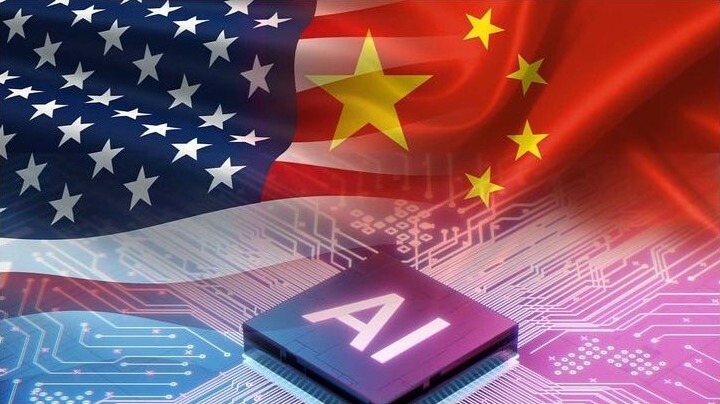
DeepSeek: Open Innovation or Geopolitical AI Power Play?
In the video documentary brief "How A Chinese Villager Shook Silicon Valley", Liang Wenfeng, founder of DeepSeek introduces to the AI landscape an innovative new open-source model, cost-efficient training, and cutting-edge architectural affordances. His approach now being widely copied challenged the assumption that only billion-dollar investments can produce state-of-the-art AI. But do recent moves to ban DeepSeek ranging from the US to Taiwan, South Korea, Italy and Australia seek to throw shade on DeepSeek’s technical breakthroughs or point to valid deeper geopolitical narrative beyond technological self-sufficiency and AI sovereignty in an increasingly fragmented global AI race? Let's examine some of the pros and cons, technological and geopolitical valences.
Key Innovations That Set DeepSeek Apart:
- Open-Source AI with Global Accessibility Unlike many AI firms guarding their models, DeepSeek has embraced open-source AI development, making its models and code publicly available but also for the very first time making the model's 'chain of thought' thinking transparent to the entire globe. This look into the actual thinking process of the largest and most advanced AI models and open code together centrally challenges the closed, proprietary approaches of OpenAI and Google, positioning DeepSeek as an alternative for those seeking transparent, decentralized AI.
- Mixture of Experts (MoE) for Efficiency DeepSeek’s MoE architecture enables models going far beyond OpenAIs original implementation and now activating only a subset of a new division of 256 experts and larger parameters section heads per task, dramatically only activitating 37B slices or 'appropriate interdisciplinary groupings of a 768B model through a more precise selection of experts (think groupings of Ph.D. tiger team subject experts cobbled together) which reduces compute costs (27x) and model energy consumption while maintaining stellar performance as evidenced by STEM benchmarks (see other postings here) . This lean approach signals a shift toward cost-efficient, sustainable AI and rocked the world in terms of the unexpected innovation unseen from an open source model.
- Building Cutting-Edge AI on a Fraction of the Budget While OpenAI and Google spend hundreds of millions on model training, DeepSeek developed its DeepSeek-R1 model for under $6 million—a remarkable feat that raises questions about the efficiency of traditional AI funding models but also warranted a deeper look into the vectors of microprocessors - not just flops (floating point operations per second) but other important overlooked vectors, connect and memory and what this context window and fast connect does for AI LLM's.
- Strategic Positioning Amid U.S.-China Tech Tensions U.S. sanctions have restricted China’s access to Nvidia’s most advanced AI chips, yet DeepSeek anticipated this and stockpiled GPUs, ensuring continued development and went innovative and creative as noted above. This highlights how Chinese AI firms are adapting to geopolitical pressures, securing resources before restrictions tighten.
Geopolitical & Ideological Undercurrents
- China’s AI Self-Sufficiency Drive DeepSeek’s rise aligns with China’s broader national strategy to reduce dependence on Western AI models and build a parallel AI ecosystem that has been variously profiled in our Western Media, the party's 2030 AI plan (See PBS Frontline Documentary, In the Age of AI, 2019, In the Age of AI. https://www.youtube.com/watch?v=5dZ_lvDgevk
- Open-Source: A Tactical Choice? While DeepSeek’s commitment to open-source AI appears altruistic, it also serves a strategic purpose. By offering accessible, high-quality AI alternatives, DeepSeek can severely undercut Western AI firms corporate imperatives, making China’s AI technology more widely adopted internationally, particularly in regions wary of U.S. tech influence or more open to alternative pathways.
- Ideological AI: Competing AI Philosophies The global AI landscape is increasingly divided between Western AI, shaped by corporate interests and regulatory oversight, and China’s AI, which prioritizes national self-reliance, state alignment, and strategic control. DeepSeek operates in this ideological tension—offering open models while also serving China’s long-term technological sovereignty goals.
The Challenges Ahead:
- Scaling Beyond China’s AI Ecosystem While DeepSeek thrives in China, its open-source model could help it gain traction globally. However, political and regulatory barriers could hinder adoption in the U.S. and Europe.
- Can Efficiency Compete with Scale? DeepSeek proves that big budgets aren’t necessary for AI breakthroughs—but competing with OpenAI and Google at scale will require more than cost efficiency.
- Is Open-Source Enough to Win? Open-source AI fosters innovation, but the biggest breakthroughs still require proprietary data, custom hardware, and institutional backing. DeepSeek must balance openness with competitive advantage to avoid being just a feeder for larger AI firms.
Final Verdict: A Disruptor with a Bigger Mission
DeepSeek isn’t just an underdog AI startup—it’s a strategic player in China’s AI ambitions. By proving that low-cost, open-source AI can rival closed, billion-dollar models, DeepSeek challenges Silicon Valley’s AI monopoly. However, its success will depend on its ability to scale beyond China, navigate geopolitical headwinds, and continue innovating beyond efficiency gains. If it succeeds, DeepSeek could reshape the AI playing field—not just technically, but geopolitically.
📺 Liang Wenfeng Profile: https://www.youtube.com/watch?v=hd1-CKDyHXE. In a world where AI dominance equates to geopolitical power, DeepSeek is part of a larger effort to ensure China doesn’t fall behind in the AI arms race.
#AI, #DeepSeek, #OpenAI, #OpenSource, #Geopolitics