III. The Acceleration Crucible
The compression of evolutionary timeframes represents perhaps the most significant challenge to human adaptation in the algorithmic age. Previous technological transitions—while disruptive—unfolded across generational timescales that allowed both individual and institutional adaptation. The transition from hunter-gatherer to agricultural societies occurred over thousands of years; industrialization transformed economies over centuries; computerization restructured workplaces over decades. By contrast, the capabilities gap between GPT-3 and GPT-4 emerged in less than two years, creating what cognitive scientists estimate as a 30-40 IQ point leap in AI capabilities from average human to over the high end of the Ph.D population (less than 2%). The AI's beat advanced Ph.D.'s in domain disciplines easily from the 57 discipline MMLU test to the high end STEM (Science, Technology, Engineering Math) GPQA tests to Gold level competency in Mathematics Olympiads. Our best mathematical minds on the planet including UCLA Fields medal winner Terrence Tao just scratch their heads in awe about what is occurring. This gap also continually widening between the the vast majority of the global population of humans and those AI's at the far right tail of the human distribution and would be called the fourth standard deviation on the bell curve, the top 0.1%.
This AI capability differential demands reconceptualizing intelligence itself. When psychologist Alfred Binet developed the first IQ tests in 1905, intelligence was conceived as an inherent human capacity varying within relatively narrow bands. Today's algorithmic systems demonstrate capabilities that exceed human performance in a range of our most advanced knowledge domains in our global civilizations while lagging dramatically in others—creative a patchy, uneven cognitive landscape that defies traditional measurement. As AI researcher Melanie Mitchell notes, this creates a paradox: systems that can instantly derive complex mathematical theorems that Turing or Fields medal mathematicians struggle with for weeks yet fail at tasks any five-year-old masters without effort.
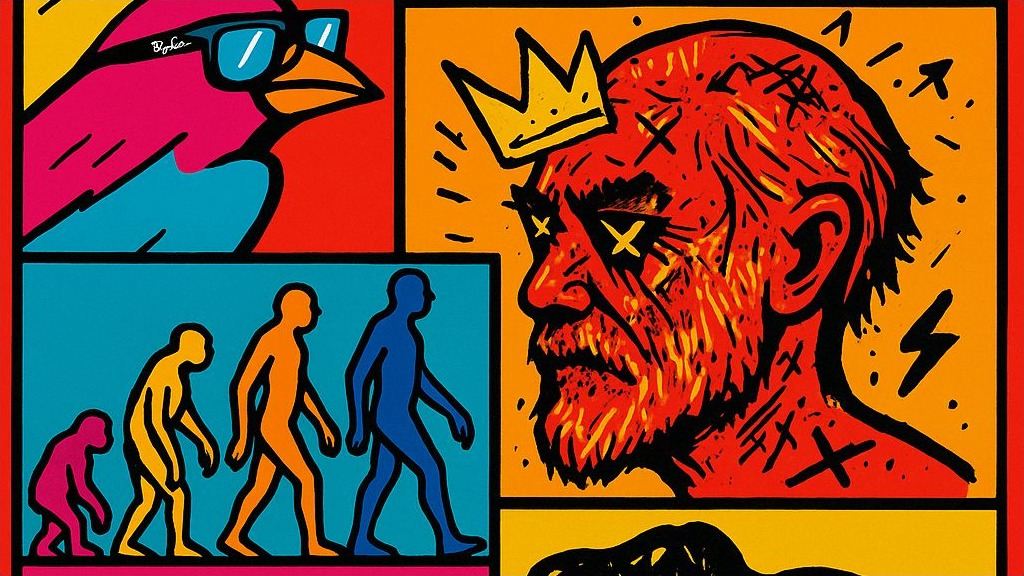
Nature offers few parallels for such compressed adaptation timeframes. The Cambrian Explosion—a period when most major animal groups appeared in the fossil record - occurred over 25 million year. It demonstrates how sudden environmental shifts can accelerate evolutionary processes by orders of magnitude. The prevailing theory suggests that increased atmospheric oxygen crossed a threshold that enabled new metabolic possibilities, much as computational threshold-crossing now enables previously impossible cognitive processes. McLuhan would recognize both as examples of how environmental changes precede and shape adaptation rather than following it. We don't first dream of AI capabilities and then build environments to support them; rather, computational environments evolve in ways that enable emergent capabilities we neither predicted nor initially valued.
Human evolutionary history shows similar patterns of accelerated adaptation under intense selection pressure. The emergence of lactase persistence (the ability to digest milk into adulthood) offers a particularly relevant analogy for AI adaptation. This trait spread through Northern European populations once dairy farming created selective advantage for it, but crucially, the selective advantage wasn't merely biological but technological and economic. Those who could digest milk gained access to a consistent, portable, calorie-dense food source especially valuable during winter months when other foods were scarce. The parallel to AI is striking: the selective advantage goes not merely to those with innate ability to work with AI but to those who gain reliable access to AI capabilities during "cognitive winters"—periods when human capabilities alone prove insufficient for economic survival.
Today's knowledge economy creates similarly intense selection pressures, but compressed into timeframes that challenge biological and social adaptation mechanisms. The industrial revolution selectively favored traits like punctuality, consistency, and tolerance for repetitive tasks because these aligned with mechanical production requirements. By contrast, the algorithmic revolution inverts these selection pressures. Punctuality becomes less valuable when asynchronous collaboration spans time zones; consistency loses advantage when contextual adaptation proves more valuable; tolerance for repetition becomes disadvantageous when machines excel precisely at consistent repetition.
The traits now gaining selective advantage include:
- Cognitive flexibility—the ability to rapidly switch between conceptual frameworks
- Improvisational intelligence—generating novel responses to unprecedented situations
- Contextual judgment—knowing which AI capabilities to deploy in specific circumstances
- Error detection—identifying when algorithmic systems produce unreliable outputs
- Frame-setting—determining the boundaries and objectives of problems before algorithmic processing
Consider three adaptive strategies that emerged in response to previous technological transitions, now transformed by compressed timeframes:
First, intergenerational adaptation—where parents prepare children for changed economic circumstances—faces unprecedented challenges when technological capabilities evolve faster than educational curricula. The traditional parental strategy of guiding children toward stable professions falters when no profession remains stable across a generation. Parents who push children toward coding as a secure career path may find that by graduation, entry-level programming has been largely automated. A more adaptive strategy involves cultivating what developmental psychologist Alison Gopnik calls "variability and exploration"—the capacity to playfully experiment with possibilities rather than optimizing for specific economic niches. The parent who encourages broad exploration of AI-human complementarities rather than mastery of specific technical skills creates better adaptive capacity for children facing unknown future selection pressures.
Second, mid-career retraining—historically a reliable adaptation to technological change—struggles when the half-life of professional skills shrinks below the length of a typical career. The traditional pattern of mastering a domain through deliberate practice faces disruption when mastery itself becomes ephemeral. The software developer focused on mastering Python syntax may find less adaptive advantage than one developing metacognitive awareness of when to leverage AI for coding versus when to code manually. The selective advantage shifts from knowledge possession to knowledge navigation—knowing how to access, evaluate, and apply information rather than internally storing it.
Third, institutional adaptation—where organizations buffer individuals against external change—weakens when institutions themselves face existential disruption. Universities that evolved over centuries to transmit expert knowledge suddenly face AI systems that can simulate that expertise instantaneously. The adaptive advantage shifts to institutions that select for complementary rather than competitive capabilities—developing distinctly human traits that enhance rather than duplicate algorithmic functions.
IV. Education's Evolutionary Crisis
If workplaces represent the immediate selection environment, educational systems constitute the developmental environment that shapes adaptive capacities. Today's educational institutions—from elementary schools to universities—face what evolutionary biologists call a "mismatch problem": they evolved to optimize fitness in an information-scarce environment but now function in an information-abundant one.
The 19th century factory model of education—standardized curricula delivered to age-sorted cohorts with credential-based advancement—emerged during industrialization to prepare workers for standardized production processes. This model created fitness advantages when information access required institutional mediation and professional success demanded content mastery. When teachers served as information gatekeepers and testing measured factual retention, the system selected for adaptive traits in that specific environment.
Today's algorithmic environment inverts these selection pressures. Content mastery provides diminishing fitness advantage when LLMs can instantly simulate expertise across domains. Standardized assessment loses predictive value when AI systems can generate passing responses to even advanced assignments. Credential-based advancement weakens when employers prioritize demonstrated capability over institutional certification.
What now provides educational adaptive advantage? Pierre Bourdieu's concept of "cultural capital" offers insight. In his landmark work "Distinction," Bourdieu demonstrated how taste—the ability to discriminate between cultural products—functions as a form of capital that creates social advantage. In algorithmic environments, the ability to discriminate between information sources, evaluate output quality, and determine appropriate AI application becomes similarly advantageous. Libraries and information science—disciplines previously considered ancillary to "real" academic subjects—suddenly emerge as central to developing these discriminative capacities. The librarian's traditional skills of source evaluation, information organization, and retrieval strategy provide templates for the critical AI literacy now gaining selective advantage.
The evolutionary crisis facing education goes beyond technological disruption to question fundamental assumptions about knowledge development and transmission. When London's Natural History Museum displayed early hominid fossils in the 1860s, Victorian audiences recoiled at what Darwin's contemporary Thomas Huxley called "the question of questions for mankind...the place which Man occupies in nature." Today's educational institutions face a similarly existential question: what function do human teachers serve when machines can transmit information more efficiently?
Successful educational adaptation requires shifting from content delivery to what cognitive scientists call "epistemic coaching"—developing students' capacity to evaluate information quality regardless of source. This represents what evolutionary theorists call a "niche construction" strategy—deliberately engineering the selection environment rather than merely responding to it.
Consider how Harvard University adapted its CS50 introductory computer science course in response to generative AI. Rather than banning AI tools, professor David Malan redesigned assessments to focus on problem decomposition and algorithm design—skills complementary to but distinct from code generation. The course explicitly teaches students decision frameworks for determining when to leverage AI versus when to rely on human reasoning:
- Use human reasoning when the problem requires novel conceptualization—determining what should be built and why
- Use human reasoning for initial system architecture—determining major components and their relationships
- Use AI assistance for repetitive implementation once the framework is established
- Use human evaluation to verify AI-generated solutions against both technical requirements and ethical considerations
By teaching this decision framework explicitly, the course prepares students for collaborative intelligence rather than competition with or dependence on algorithmic systems.
Similar adaptation appears in K-12 education through what educator Will Richardson calls "authentic assessment"—evaluation based on application rather than recitation. When Washington state's Bellevue School District shifted from standardized testing to project-based assessment, they deliberately selected for students' ability to integrate machine and human intelligence. This integration involves specific capacities:
- Problem definition—framing questions in ways machines can process meaningfully
- Prompt engineering—formulating queries to elicit optimal algorithmic responses
- Output evaluation—critically assessing machine-generated content
- Synthesis—combining algorithmic outputs with human judgment to create novel solutions
- Attribution—properly citing both human and machine contributions
These adaptations reflect medium specificity—identifying uniquely human capabilities worth developing rather than competing directly with machine capabilities. Educational biologist Alison Gopnik's research on childhood cognition reveals that human learning differs fundamentally from machine learning in its exploratory rather than confirmatory nature. While algorithms optimize against known objectives, human learners engage in what Gopnik calls "lantern consciousness"—broad exploration without predetermined goals that facilitates novel discovery.
Educational institutions that select for these distinctly human capacities—causal reasoning, counterfactual thinking, integrative judgment—create adaptive advantage by developing complementary rather than competitive capabilities. The complementary human capacities gaining selective advantage include:
- Ethical reasoning—determining what should be done rather than how to do it
- Novel question formulation—asking questions no one has previously formulated
- Cross-domain synthesis—connecting insights across disparate fields
- Contextual sensitivity—understanding how knowledge applies differently across situations
- Purpose identification—determining meaningful objectives worth pursuing
This transition requires what evolutionary theorist David Sloan Wilson calls "multilevel selection"—adaptation that involves both individual and group-level change. Individual teachers must develop new pedagogical approaches while institutions simultaneously evolve assessment systems, credentialing mechanisms, and organizational structures to support those approaches.
The fitness landscape emerging from this educational evolution favors what cognitive scientist Ken Robinson called T-shaped knowledge—depth in specific domains combined with breadth across domains. This knowledge structure enables what economist Joseph Schumpeter termed "recombinant innovation"—the ability to connect previously unrelated concepts that characterizes distinctly human creativity. The vertical bar of the T represents deep expertise in a specific domain—enough to understand its foundational assumptions and limitations—while the horizontal bar represents sufficient literacy across multiple domains to recognize connection possibilities.
For knowledge workers with traditional educational paths—the BA/MA/PhD progression followed by professional specialization like MBA or MLIS—this T-shaped model offers both challenge and opportunity. The challenge lies in recognizing that credential accumulation itself provides diminishing adaptive advantage when machines can simulate domain expertise. The opportunity emerges in leveraging this multidisciplinary background to develop unique combinatorial insights machines cannot generate. The polymathic knowledge worker doesn't compete with AI through greater specialization but through unusual combinations—connecting philosophical frameworks with business applications, applying information science principles to creative projects, or linking theoretical knowledge with practical implementation.
The most selective educational institutions now face their own adaptation crisis. Traditional admissions filters—standardized testing, GPA, credential accumulation—lose predictive value for success in algorithmic environments. Institutions like Stanford and MIT have begun selecting for different traits: demonstrated ability to frame novel problems, capacity for cross-disciplinary synthesis, and evidence of collaborative intelligence rather than individual achievement. The Stanford Future of Work and AI Lab specifically studies how educational selection might better identify candidates with high "collaborative intelligence"—the ability to work effectively with both human and artificial systems.
Educational institutions that evolve toward developing these capacities create selection advantage for students navigating algorithmic environments. Just as natural selection shaped beaks suited to specific food sources, educational selection increasingly shapes cognitive architectures suited to algorithmic collaboration—capable of leveraging machine capabilities while maintaining distinctly human judgment about their application and limitations.
Annotated Bibliography
Author, David H. "Why Are There Still So Many Jobs? The History and Future of Workplace Automation." Journal of Economic Perspectives 29.3 (2015): 3-30.
- Economist Author examines automation's complex effects on labor markets, providing key insights into which job categories face displacement versus enhancement from technological change.
Bourdieu, Pierre. Distinction: A Social Critique of the Judgement of Taste. Harvard University Press, 1984.
- Bourdieu's analysis of how aesthetic discrimination functions as cultural capital provides a framework for understanding how information discrimination similarly functions in algorithmic environments.
Clark, Gregory. A Farewell to Alms: A Brief Economic History of the World. Princeton University Press, 2007.
- Clark's analysis of differential fertility patterns during the Industrial Revolution demonstrates how economic structures create selection pressures that shape population characteristics over time.
Gopnik, Alison. The Gardener and the Carpenter: What the New Science of Child Development Tells Us About the Relationship Between Parents and Children. Farrar, Straus and Giroux, 2016.
- Gopnik contrasts human learning mechanisms with computational approaches, highlighting the evolutionary advantages of exploratory learning in environments with high uncertainty.
Gould, Stephen Jay, and Elisabeth S. Vrba. "Exaptation—A Missing Term in the Science of Form." Paleobiology 8.1 (1982): 4-15.
- Gould and Vrba introduce the concept of exaptation to explain how traits evolved for one purpose can be repurposed for entirely different functions when environments change.
Kozhevnikov, Maria, et al. "Cognitive Style as Environmentally Sensitive Individual Differences in Cognition: A Modern Synthesis." Psychological Bulletin 140.3 (2014): 769-796.
- This research examines how different cognitive styles provide adaptive advantages in specific environmental contexts, offering a framework for understanding which cognitive traits may provide fitness in algorithmic environments.
Laland, Kevin N., and Michael J. O'Brien. "Niche Construction Theory and Archaeology." Journal of Archaeological Method and Theory 17.4 (2010): 303-322.
- Laland and O'Brien explain how humans actively modify their selection environments rather than merely responding to them, providing a theoretical framework for understanding intentional adaptation strategies.
Malan, David J. "CS50 and Generative AI: Pedagogical Approaches and Assessment Strategies in the Age of Large Language Models." Proceedings of the 54th ACM Technical Symposium on Computer Science Education (2023).
- Malan documents specific adaptations in computer science education in response to generative AI, offering concrete examples of educational evolution in response to technological change.
McLuhan, Marshall. Understanding Media: The Extensions of Man. McGraw-Hill, 1964.
- McLuhan's analysis of how media environments shape human cognition and social organization provides a framework for understanding how algorithmic environments similarly shape adaptive pressures.
Mitchell, Melanie. Artificial Intelligence: A Guide for Thinking Humans. Farrar, Straus and Giroux, 2019.
- Mitchell examines the uneven landscape of AI capabilities, highlighting the paradox of systems that excel at tasks humans find difficult while failing at tasks humans find trivial.
Robinson, Ken, and Lou Aronica. Creative Schools: The Grassroots Revolution That's Transforming Education. Viking, 2015.
- Robinson outlines educational approaches that develop distinctly human creative capabilities, providing a framework for educational adaptation to technological change.
Schumpeter, Joseph A. The Theory of Economic Development. Harvard University Press, 1934.
- Schumpeter's theory of creative destruction and recombinant innovation helps explain how human cognitive capabilities might maintain adaptive advantage in rapidly changing technological environments.
Vygotsky, Lev S. Mind in Society: The Development of Higher Psychological Processes. Harvard University Press, 1978.
- Vygotsky's zone of proximal development concept explains how guided learning accelerates adaptation, offering insight into how educational systems might maximize adaptive capacity.
Wilson, David Sloan. Does Altruism Exist? Culture, Genes, and the Welfare of Others. Yale University Press, 2015.
- Wilson's multilevel selection theory explains how adaptation requires coordination between individual and group-level change, providing a framework for understanding institutional adaptation.
Part V-VI (Conclusion) https://www.linkedin.com/pulse/digital-selection-darwins-ghost-machine-raymond-uzwyshyn-ph-d--9haqc
Part I and Part II (Introduction): https://www.linkedin.com/pulse/digital-selection-darwins-ghost-machine-raymond-uzwyshyn-ph-d--pg54c