The Disruptive Pricing of DeepSeekl
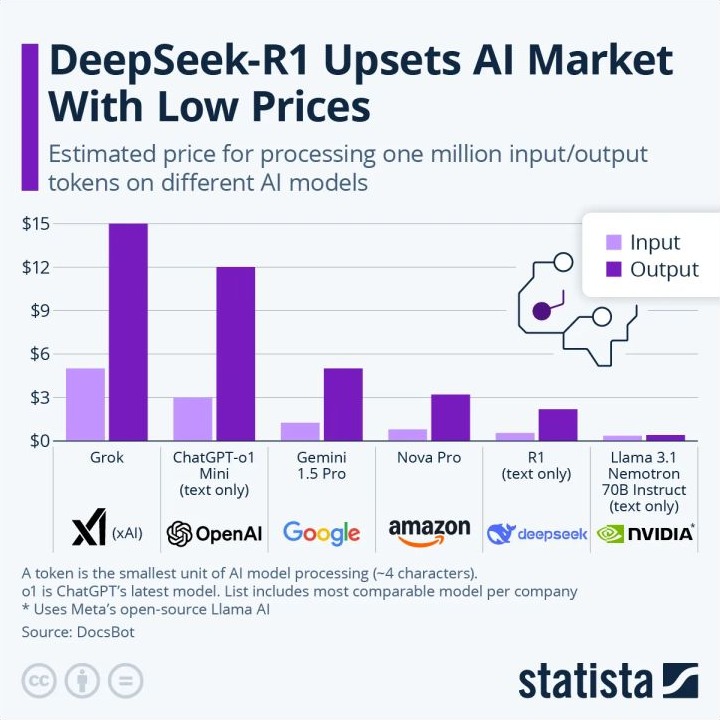
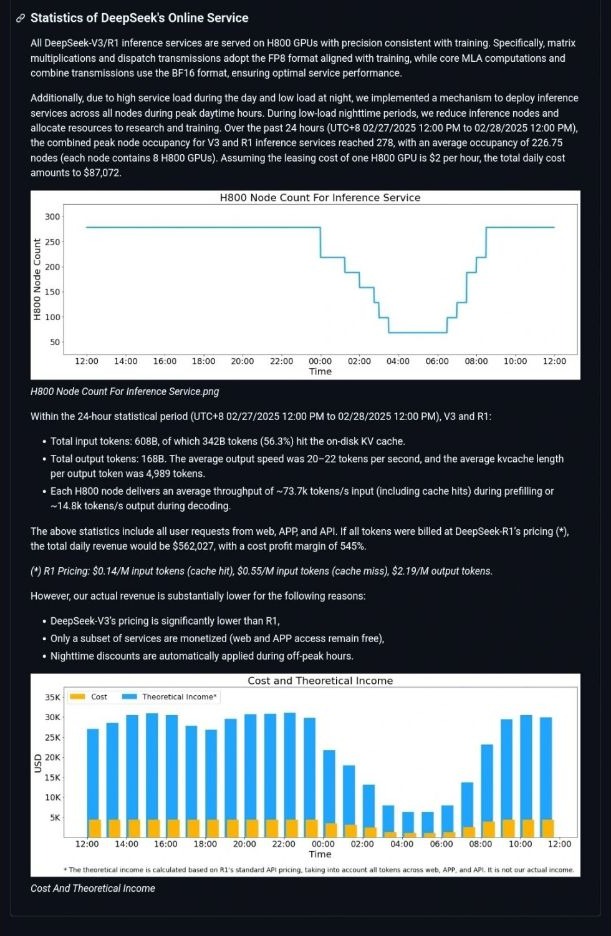
In a market where billions of dollars have traditionally been spent on training and operating high-end language models, DeepSeek’s emergence has upended conventional wisdom and Large Language model AI market economics. With its R1 model, DeepSeek has demonstrated that cutting‐edge AI doesn’t necessarily require astronomical costs upending current model pricing strategies. According to recent disclosures (See diagram below) , DeepSeek is pulling in roughly $205 million in annualized revenue while operating at a theoretical 545% cost profit margin—remarkably, by charging only $2.19 per million output tokens. This aggressive pricing is nearly 30 times lower than what OpenAI’s GPT-4o demands ($10 per million output tokens) and an astounding 68 times less than OpenAI's GPT-4.5 offering ($150 per million output tokens), prohibitively expensive by DeepSeek Standards and comparative benchmarking against OpenAI's o1 reasoning model.
The following comparative chart encapsulates the current token pricing landscape among leading models:
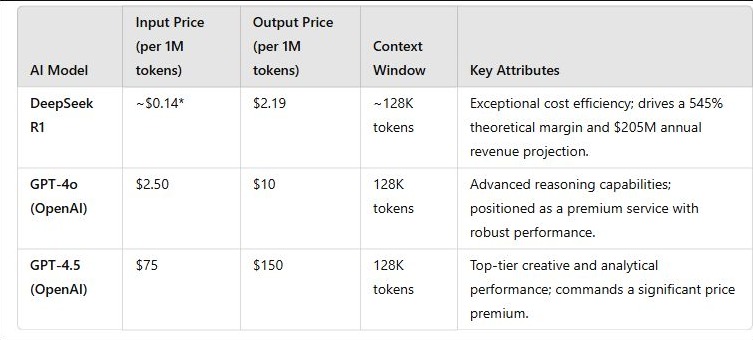
*Note: While exact input pricing for DeepSeek R1 is subject to slight variations in published reports, recent comparisons suggest it is dramatically lower than its American counterparts.
Strategic Insights and Market Implications
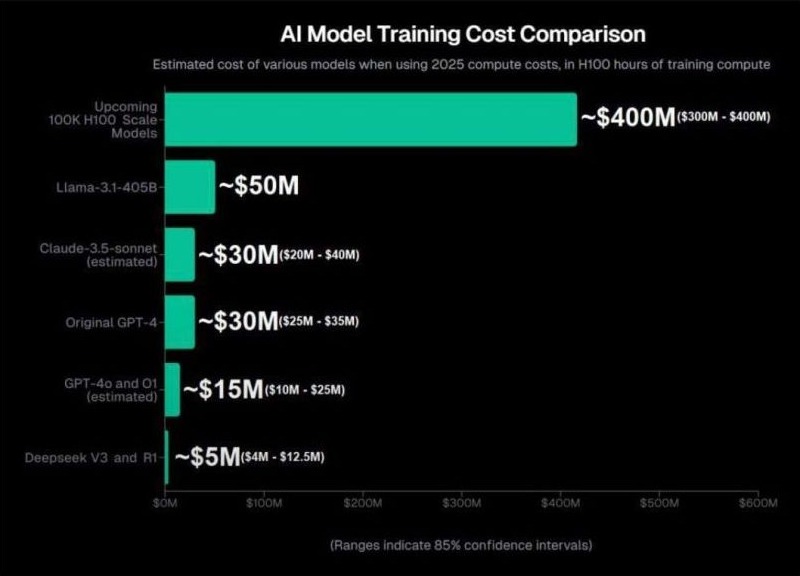
Efficiency as a Competitive Edge: DeepSeek’s cost structure is a testament to innovative resource optimization. By leveraging less-powerful, yet efficient Nvidia H800 GPUs—and employing sophisticated techniques such as distillation and a series of innovation ironically necessitated by previous US export bans—the company has achieved a cost structure that allows for both aggressive pricing and impressive profitability. For investment bankers and market strategists, this signals a potential seismic shift or at least a couple raised eyebrows when thinking further about the economics of AI model development and scaling laws.
Pressure on Established Players: The stark difference in pricing not only disrupts the current competitive landscape but may also force incumbent players like OpenAI and Google to revisit their cost structures. Noticeably, even influences that derive larger Youtube revenues have been slow to review OpenAi's GPT 4.5 because of the high inference cost many noting that their reviews are based on speculation as they do not wish to pay the high cost of inference for testing. Notably, influencer David Ondrej took the plunge in paying for GPT4.5 while calling out fellow Youtube AI influencers. Having said that, Ondrej's review of the GPT 4.5 was favorable even while noting it's lesser scores on reasoning tasks compared to cheaper reasoning models o1/o3 and especially DeepSeek. Ondrej did also point out that GPT 4.5 does a very good job at 'coding' but also questions the price and whether this is worth it to the next best but much cheaper model Anthropic's 3.7 As investors scrutinize the sustainability of high-margin business models in an era of cost compression, there is growing concern that premium pricing might be increasingly difficult to justify.
Broader Economic and Investment Considerations: For investors, the emergence of a model like DeepSeek R1 introduces both opportunities and risks. On one hand, the low-cost model and subsequent releases in the works (Deep Seek R2 is already being talked about) could democratize access to advanced AI, spurring adoption across various sectors—from customer service automation to advanced analytics. On the other, if such disruptive pricing becomes the norm, it could compress margins across the industry, potentially leading to a revaluation of tech stocks and a recalibration of capital allocation in AI infrastructure building.
Future Trajectories: Looking ahead, the industry is likely to see further segmentation. High-end, proprietary models may continue to command premium prices for niche, high-stakes applications, while cost-efficient models like DeepSeek R1 could drive volume in consumer and enterprise markets. The resulting competitive dynamics may mirror earlier disruptions seen in cloud computing, where scale and cost-efficiency eventually became the dominant forces.
Conclusion
DeepSeek’s breakthrough in delivering high-performance AI at a fraction of the cost is not merely a technological curiosity—it is a market signal. For sophisticated investors, this development underscores the importance of reassessing the economics behind AI investments. As the pricing war heats up, stakeholders across the board—from chip manufacturers to tech giants—will need to navigate a landscape where efficiency and scale may soon trump traditional benchmarks of innovation.
This analysis provides a glimpse into an evolving market where deep technical ingenuity and strategic cost management converge to reshape the future of AI.
#AIEconomics, #LLMEconomics, #DeepSeekR1, #GPT4.5,