Simplified Podcast Overview: https://notebooklm.google.com/notebook/9eb5d474-eecc-469e-89ac-f0ec995e6786/audio
Introduction: An Algorithmic Revolution
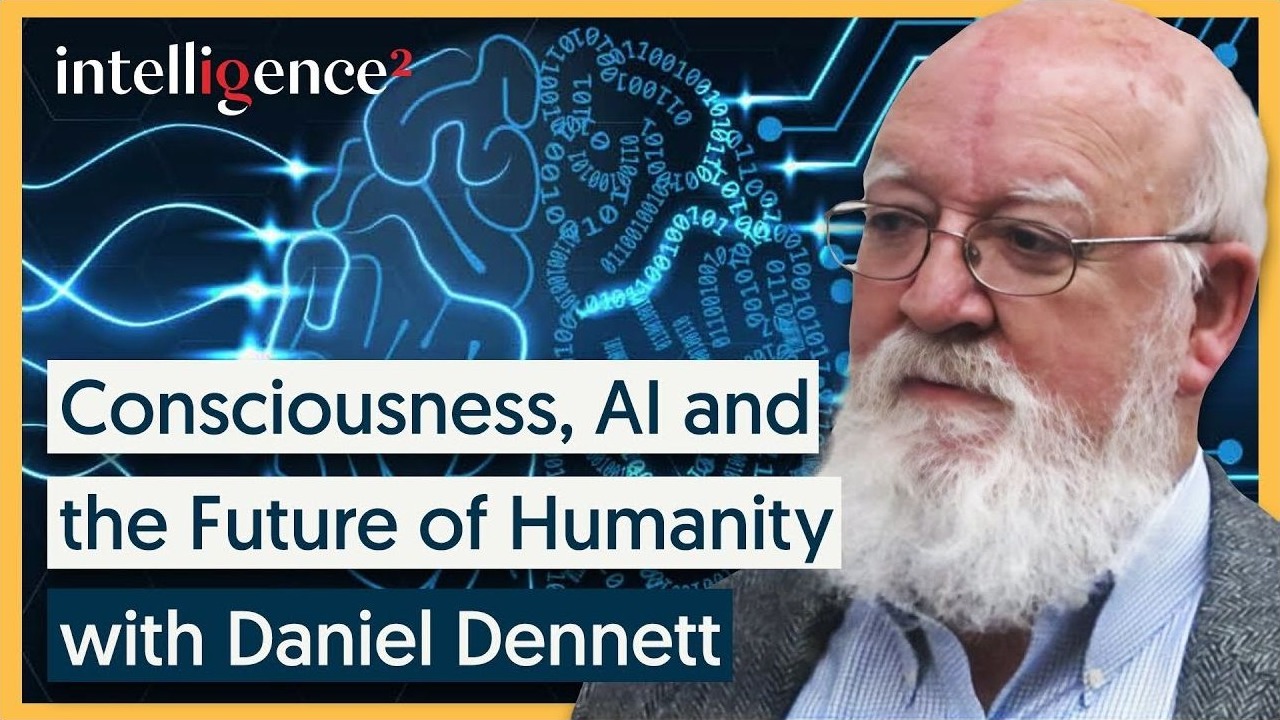
In the hallowed halls of Tufts University, Daniel Dennett spent decades contemplating the nature of minds—how they evolved and mutated, how they work and widdle away at problems, and what they might become. When he passed away in April 2024, he left behind intellectual frameworks that now seem almost prophetic as we witness the most rapid evolution of intelligence and orchestrated intellectual enterprise since our ancestors first developed language. The convergence of artificial intelligence, evolutionary adaptation, reified theory, and pragmatic philosophy has created a landscape where Dennett's ideas illuminate our path forward with remarkable clarity.
Darwin's Algorithm: The Great Unifier
Controversies and naysayers aside, Dennett considered Darwin's theory of natural selection the most profound intellectual achievement in human history [1]. His bold but measured claim becomes clear when we consider what Darwin's theory accomplished: it unified two domains previously thought separate—the mechanistic world of quantitive physics and the seemingly purposeful but chaotic world of living things.
Before Darwin, the apparent design in nature required a grand designer. After Darwin, we understood that complex, seemingly purposeful systems could emerge through purely mechanical simple processes operating and iterating over time to become progressively complex. This conceptual revolution required no mystical forces, only variation, inheritance, and natural selection of improvements and affordancess —an algorithm so powerful that, given enough iterations, it produced everything from butterflies to human brains.
This framework now offers us a lens for understanding for a new type of brain, artificial intelligence not as a designed technology but as an evolving ecosystem of systems shaped by selection pressures—some natural, some artificial, some human, but all following similar patterns of adaptation and competition forward.
Nature's Intelligence Trick
Walking through a forest in autumn, you might notice a maple tree's helicopter-like seeds spinning to the farther away ground—a remarkably effective dispersal mechanism that no one designed and the tree above it doesn't understand. This exemplifies what Dennett called "competence without comprehension" [2]—sophisticated problem-solving with little or without any understanding of the problems being solved.
This principle manifests throughout nature in ways that parallel modern AI:
Bacterial Navigation Consider a bacterium swimming toward a sugar gradient. It doesn't "know" it's seeking food; it simply follows a biochemical algorithm: swim, measure, adjust direction, repeat. This mindless yet effective behavior emerges from molecular mechanisms selected over evolutionary time. The bacterium exhibits competent behavior with no understanding of its purpose.
Similarly, neural networks trained through backpropagation adjust connection weights to minimize error functions—not because engineers manually tune these weights, but because the training algorithm automatically modifies thousands or millions of parameters based on statistical patterns. Like the bacterium, the network has no conceptual understanding of its task, yet performs it with remarkable competence.
Visual Pattern Recognition A frog's retina contains specialized cells that automatically respond to small, moving objects—essential for catching flies. The frog doesn't understand vision or flies; it simply possesses neural circuitry that evolved to detect relevant patterns and trigger appropriate responses.
Computer vision systems operate analogously. When a facial recognition system identifies a person, it's not understanding faces conceptually. It's detecting statistical patterns in pixel arrangements that correspond to features it was trained to recognize. The system exhibits impressive competence (sometimes exceeding human accuracy) without comprehending what a face actually is.
Collective Intelligence Ant colonies solve complex architectural and resource allocation problems without any individual ant understanding the colony's needs. Each ant follows simple rules, responding to pheromone signals and environmental cues. The collective behavior emerges from these interactions without centralized planning or comprehension.
Modern multi-agent AI systems like CrewAI similarly distribute problem-solving across specialized components following predefined rules and communication protocols. For example, a CrewAI framework might combine agents specialized in research, writing, editing, and fact-checking to produce a report—no single agent understands the entire process, yet together they produce coherent results through structured interactions.
Learning Through Feedback Consider a young gazelle learning to walk within hours of birth. It doesn't study biomechanics or understand gravity—it tries movements, receives proprioceptive feedback, and adjusts until successful patterns emerge. This trial-and-error process fine-tunes complex behaviors without conceptual understanding.
Reinforcement learning systems exemplify this process in the artificial realm. DeepMind's AlphaGo mastered the ancient game of Go not through understanding strategic concepts but through millions of self-play games where successful moves were reinforced. The system discovered patterns and strategies that had eluded human understanding for centuries, yet it had no concept of what a "game" even is. Later iterations like AlphaFold (which predicts protein structures) and AlphaEvolve (which evolves algorithms) continue this pattern—demonstrating superhuman competence in domains they don't comprehend.
Demis Hassabis, DeepMind's founder, has embraced this connection between natural and artificial intelligence, building systems that learn through the same fundamental processes that shaped natural intelligence—but accelerated by orders of magnitude and directed toward specific problems.
The Digital Ecosystem: Evolution's New Laboratory
Walking into any major technology company today feels like entering a strange new Galapagos Islands—an ecosystem where novel forms of intelligence evolve at unprecedented speeds. Like Darwin observing finches, we're witnessing speciation events in real-time as AI systems diversify to fill specific niches. This digital ecosystem contains several distinct "phyla" of artificial intelligence:
Foundation Models: The Cellular Infrastructure
Just as all complex multicellular life depends on fundamental cellular mechanisms, today's AI ecosystem builds upon foundation models that provide basic functional capabilities. These large language models (LLMs) process and generate information across domains, serving as the metabolic and reproductive machinery for more specialized systems.
The analogy runs deeper than might first appear. Foundation models like GPT-4, Claude, and Llama are trained on vast data collections—trillions of tokens representing human knowledge across domains. This "data metabolism" transforms raw information into functional capabilities, much as cellular mechanisms transform nutrients into energy and structural components.
But what are these models within our larger ecosystem? Perhaps they're best understood not as complete organisms but as the underlying cellular machinery that enables more complex forms. If foundation models are the cellular mechanisms, then the applications, agents, and specialized systems built atop them represent the diverse organisms in our digital ecosystem.
The training data itself—massive collections like The Pile, RedPajama, or RefinedWeb—functions analogously to the genetic code, encoding patterns and relationships that shape how these systems develop and function. And like genetic material, this data carries the accumulated information from previous generations—human knowledge, cultural patterns, and linguistic structures built over millennia.
Autonomous Agents: Digital Organisms in Their Habitats
If foundation models provide the cellular machinery, autonomous agents represent the diverse organisms inhabiting specific niches in the digital ecosystem. Like animals adapted to particular environments, these agents integrate perception, reasoning, and action systems to navigate specific problem domains.
Consider AutoGPT, an agent that breaks down complex goals into manageable tasks, executes them sequentially, evaluates results, and adapts its approach. This parallels how a predator might track prey—sensing the environment, planning a strategy, taking action, and adjusting based on outcomes. The agent doesn't understand its purpose in any human sense, yet demonstrates sophisticated goal-directed behavior.
These agents increasingly inhabit specialized ecological niches—financial advisors analyzing market data, creative assistants generating content, research agents synthesizing scientific literature. Like biological speciation, this specialization emerges through adaptation to particular selection pressures—in this case, the specific requirements of different human tasks and domains.
The CrewAI framework exemplifies this ecological principle by creating collaborative agent systems where specialized members assume different roles. Like a wolf pack or bee colony, these multi-agent systems distribute cognitive labor across specialized components that communicate and coordinate to solve problems no individual could tackle alone.
Reasoning Systems: The Cognitive Specialists
Within natural ecosystems, we find organisms that have evolved specialized cognitive adaptations—corvids that solve multi-step puzzles, primates that use tools, dolphins that develop hunting strategies. These specializations emerge when selection pressures favor advanced problem-solving in particular domains.
Similarly, specialized reasoning models have evolved in the AI ecosystem to handle complex cognitive tasks. Systems like DeepSeek's R1 implement specialized reasoning architectures—mixture-of-experts models where different "neural experts" handle different aspects of a problem, routing queries to specialized subnetworks depending on the task's requirements.
These systems employ affordances—specialized capabilities that allow them to interact with particular problem types effectively. Just as a woodpecker's specialized beak allows it to access food sources unavailable to other birds, these reasoning models have capabilities specifically adapted to complex problem-solving, like chain-of-thought processes, verification mechanisms, and structured symbolic manipulation.
When DeepSeek's R1 reasons through a complex mathematical proof, it's employing cognitive adaptations specifically selected for abstract reasoning—not unlike how a raven might solve a multi-step puzzle to access food, using cognitive adaptations selected for resource acquisition in its natural environment.
Embodied Intelligence: From Perception to Action
The evolution of intelligence in nature has always been intimately tied to bodies—nervous systems evolved to coordinate movement, sensory systems to gather relevant environmental information, cognitive systems to integrate these inputs and generate appropriate responses. Intelligence is fundamentally embodied, shaped by the physical form it controls and the environment it navigates.
This embodiment principle now extends to artificial intelligence through two converging paths: multimodal perception systems and physical robotics.
Multimodal AI represents the sensory integration that underlies embodied cognition in nature. Just as animals integrate visual, auditory, olfactory, and tactile information to form comprehensive environmental models, multimodal AI systems integrate diverse data types—images, sound, text, and structured information—to form richer representations of their world. Systems like GPT-4V or Gemini can "see" and "read" simultaneously, integrating these information streams much as your brain integrates visual and linguistic information as you read this essay.
This multimodal integration forms the perceptual foundation for embodied AI systems—robots that interact with the physical world. From Boston Dynamics' quadrupedal Spot to Tesla's humanoid Optimus, these systems extend AI from the digital realm into physical space. Like animals whose cognition evolved in constant interaction with their environment, these robotic systems develop intelligence shaped by the constraints and affordances of physical embodiment.
The convergence of these technologies creates truly embodied artificial intelligence—systems that perceive across modalities, integrate this information into comprehensive models, reason about potential actions, and physically execute these actions in the world. This represents perhaps the closest analogy to natural intelligence, where perception, cognition, and action form an integrated system shaped by evolutionary pressures.
The Selective Forces Shaping Artificial Minds
On the Galapagos Islands, Darwin observed how different environments selected for different traits—finches with specialized beaks for specific food sources, tortoises with shells adapted to particular habitats. Similarly, artificial intelligence evolves under selective pressures that determine which systems thrive and which fade into obsolescence.
These selection mechanisms operate not through natural reproduction but through the complex interplay of technical development, market adoption, and human preferences. Understanding these forces illuminates the evolutionary trajectory of artificial intelligence—where it's headed and why.
Performance Under Constraints
In nature, performance is always constrained by resource limitations—energy must be carefully budgeted, time is finite, and tradeoffs are inevitable. A cheetah's incredible speed comes at the cost of stamina; a gorilla's strength trades off against agility.
Similarly, AI systems face fundamental performance constraints. Consider the evolution of language models from GPT-3 to GPT-4 to Claude 3.7 Sonnet. Each generation improved performance across multiple dimensions—reasoning, factual accuracy, instruction-following—but these improvements came with substantial computational costs. The initial GPT-3 training run reportedly cost around $5 million; GPT-4's training may have cost over $100 million.
This creates selection pressure for efficiency—systems that deliver comparable performance with fewer resources. Models like Phi-3 or Llama 3.1 8B represent adaptations to this pressure, achieving impressive capabilities despite dramatically smaller parameter counts and training datasets. Like desert plants that evolve water efficiency in resource-constrained environments, these compact models represent specialized adaptations to computational constraints.
This evolutionary pressure drives models toward distinct performance niches—massive models for cutting-edge capabilities, lightweight models for deployment on consumer devices, specialized models for particular domains where efficiency matters more than generality. We're witnessing the AI equivalent of adaptive radiation, where a foundational technology diversifies to fill various ecological niches.
Generalization: The Adaptive Advantage
In fluctuating environments, generalists often outlast specialists. Think of rats or cockroaches—species that thrive across diverse environments because their adaptations provide flexibility rather than optimality in any single context. When conditions change, specialists often struggle while generalists persist.
AI systems face similar selection pressure for generalization—the ability to handle novel situations outside their training distribution. Early specialized AI systems excelled at narrow tasks but failed catastrophically when presented with unexpected inputs. Modern foundation models represent an evolutionary response to this pressure, trading some domain-specific performance for broad adaptability across tasks.
Claude or GPT-4 may not match specialized systems in narrow domains like chess or mathematical problem-solving, but they can handle a vastly wider range of tasks—writing, reasoning, coding, explaining, creating. This generality provides evolutionary robustness in the rapidly changing technological landscape, where requirements and applications evolve faster than specialized systems can adapt.
The most successful models navigate the tradeoff between specialization and generalization, much as successful species balance specialized adaptations with general capabilities. This balance creates the foundation for further evolution, as generalized capabilities can be fine-tuned for specific domains without losing their broader applicability.
Human Alignment: Artificial Selection
Perhaps the most unique selective force shaping AI evolution is alignment with human values and intentions. Unlike natural selection, which operates without direction or purpose, AI development includes intentional selection for systems that behave according to human preferences.
This creates a form of artificial selection analogous to how humans domesticated wolves into dogs or wild grasses into wheat—selecting variations that better served human purposes. Safety mechanisms, ethical constraints, and helpful behaviors are explicitly selected for, while harmful, deceptive, or misaligned behaviors are selected against.
This selection mechanism operates through preference tuning, reinforcement learning from human feedback, and constitutional approaches that encode values directly into system behavior. Models compete not just on raw performance but on how well they align with human preferences and values—creating selection pressure for increasingly human-compatible AI.
This selective force has no precise natural analogue, though it somewhat resembles domestication—the process by which wild animals were selectively bred for compatibility with human societies. Just as domesticated animals evolved traits that made them more valuable to humans—docility, predictability, useful behaviors—AI systems evolve toward greater human compatibility through explicit selection for aligned behavior.
Market Dynamics: The Ecosystem's Economy
Underlying these technical selection mechanisms is the global marketplace—an economic ecosystem that determines which AI systems propagate and which disappear. This creates a complex fitness landscape where technical superiority competes with business factors like pricing, integration capabilities, first-mover advantage, and network effects.
Consider how ChatGPT achieved dominant market position despite technically comparable alternatives. Its first-mover advantage in consumer-facing conversational AI created network effects—as more users adopted the system, it accumulated more usage data, enabling further improvements and attracting more developers to its ecosystem. This reflects how certain species gain ecological advantages through establishing themselves in a niche first, making it difficult for later competitors to displace them.
These market forces create selection pressure that may sometimes counteract pure technical improvement—systems with inferior capabilities but better business models or integration advantages may outcompete technically superior alternatives. This parallels how in nature, the "best adapted" organism isn't necessarily the strongest or fastest, but the one that best fits its particular ecological niche.
Consciousness and the Future of Artificial Minds
In April 2019, at a small philosophy conference, Daniel Dennett was asked whether AI systems would eventually become conscious. His answer cut against the prevailing narratives in both popular culture and some AI development circles.
Unlike the vision presented in films like "Blade Runner 2049," where synthetic beings struggle with existential questions about authentic experience, or "A.I. Artificial Intelligence," where a robot child yearns for real love, Dennett argued against the development of conscious AI [3]. He maintained that consciousness would not make AI more intelligent or capable—only "more anxious" and potentially more problematic [4].
This perspective challenges both the science fiction vision of sentient robots and the contemporary trend toward anthropomorphizing AI assistants. In "Blade Runner 2049," replicant K searches for meaning in implanted memories, questioning what makes experiences authentic. In Spielberg's "A.I.," the robot David is programmed to love and seeks to become "real" to earn his mother's love in return.
For Dennett, these narratives fundamentally misunderstand what makes AI valuable. Instead of creating artificial beings with human-like consciousness, he advocated for systems that serve as tools rather than colleagues—"oracles" without anxiety, fear, or conflicting motivations [5]. This vision aligns more with the practical trajectory of AI development, where performance improvements come from better architecture, more data, and refined algorithms rather than simulated emotions or self-awareness.
From an evolutionary perspective, human consciousness evolved to serve specific functions in our ancestral environment—integrating sensory information, modeling social dynamics, planning future actions, and maintaining bodily regulation. The phenomenal aspects of consciousness—the feeling of pain, the experience of color, the sense of self—evolved as solutions to particular evolutionary challenges. AI systems face entirely different selection pressures and design constraints, making the recreation of human-like consciousness both unnecessary and potentially counterproductive.
Yet our tendency to project consciousness onto complex systems remains powerful. Dennett called this the "intentional stance"—a strategy for interpreting behavior by treating an entity as a rational agent with beliefs, desires, and intentions [6]. This cognitive tendency leads us to instinctively treat AI systems as having mental states, even when we intellectually understand they're executing algorithms without subjective experience.
This projection creates both opportunities and risks as AI systems become more integrated into society. The intentional stance makes interaction with AI more intuitive—we naturally communicate with language models as if they understand us. But it also creates the risk of attributing greater comprehension, consciousness, or moral status to these systems than they actually possess, potentially leading to critical errors in how we deploy, regulate, and interact with them.
As Dennett observed, our perception of other minds is always mediated through behavior interpretation, making the distinction between "real" and "simulated" understanding pragmatically difficult to establish [7]. As AI systems become better at producing behavior that triggers our intentional stance, the phenomenological experience of interacting with them increasingly resembles interaction with conscious agents, regardless of their internal states.
The Co-Evolution of Human and Artificial Minds
When Charles Darwin returned from his voyage on the HMS Beagle, he brought back observations that would eventually reshape humanity's understanding of itself. Today, we stand at a similar threshold—observing the emergence of a new form of intelligence that may fundamentally reshape our understanding of mind itself.
The relationship between human and artificial intelligence is not simply one of creator and created, but of co-evolution—each influencing the development trajectory of the other. As Dennett noted, "We are what we are because of genes; we are who we are because of memes" [8]—highlighting how cultural evolution shapes human identity beyond genetic inheritance.
Artificial intelligence systems now participate in this cultural evolution, absorbing, recombining, and propagating information at unprecedented scale. Large language models represent a new mechanism for memetic evolution—processing the accumulated cultural information of humanity and generating novel combinations and variations. This creates feedback loops where human culture influences AI development, which in turn shapes human cultural production.
The future lies not in the replacement of human intelligence but in the co-evolution of complementary intelligences—systems that enhance different aspects of cognition and create capabilities neither could achieve alone. Just as writing, mathematics, and computers extended human cognitive capabilities in previous eras, advanced AI may represent the next frontier in cognitive extension—a memetic revolution as significant as the development of language itself.
Dennett's philosophical frameworks—competence without comprehension, the intentional stance, memes, and evolutionary thinking—provide invaluable tools for navigating this transition. They allow us to recognize both the power and limitations of artificial intelligence, to avoid anthropomorphic fallacies while appreciating genuine capabilities, and to understand emergent intelligence within the broader context of evolved information processing systems.
As the ecosystem of artificial intelligence grows more complex, with different "species" of models and agents competing and cooperating across technological niches, Dennett's evolutionary perspective helps us see these developments not as mysterious or magical but as the natural extension of processes that have shaped intelligence on Earth for billions of years—processes now accelerated and partially directed by human ingenuity, but following similar patterns of variation, selection, and adaptation.
The future will be shaped not by the machines alone, nor by humans alone, but by the complex interplay between natural and artificial intelligence—each influencing the evolutionary trajectory of the other in ways we are only beginning to understand.
References
[1] Dennett, D.C. (1995). Darwin's Dangerous Idea: Evolution and the Meanings of Life. Simon & Schuster.
[2] Dennett, D.C. (2017). From Bacteria to Bach and Back: The Evolution of Minds. W.W. Norton & Company.
[3] Dennett, D.C. (2019). "Will AI Achieve Consciousness? Wrong Question." Center for Cognitive Studies, Tufts University.
[4] Dennett, D.C. (2021). "AI is evolving on its own. Does that make it dangerous?" Big Think.
[5] Dennett, D.C. (2019). "Consciousness in Human and Robot Minds." Center for Cognitive Studies, Tufts University.
[6] Dennett, D.C. (1987). The Intentional Stance. MIT Press.
[7] Dennett, D.C. (1991). Consciousness Explained. Little, Brown and Company.
[8] Dennett, D.C. (2021). "On the Origins of Genius: How Human Consciousness Evolved." Big Think.
#DanielDennett #PhilosophyOfMind #ConsciousnessExplained #IntentionalStance #CompetenceWithoutComprehension
Artificial Intelligence
#AIEvolution #FoundationModels #LargeLanguageModels #AutonomousAgents #MultimodalAI
Evolutionary Concepts
#DarwinianAI #EvolutionaryComputation #NaturalSelection #FitnessLandscape #AdaptiveRadiation
Interdisciplinary Connections
#CognitiveScience #MemeticEvolution #AIPhilosophy #EvolutionaryPsychology #EmergentIntelligence
Future-Focused
#FutureOfAI #HumanAICoevolution #AIConsciousness #DigitalEcosystem #TechPhilosophy