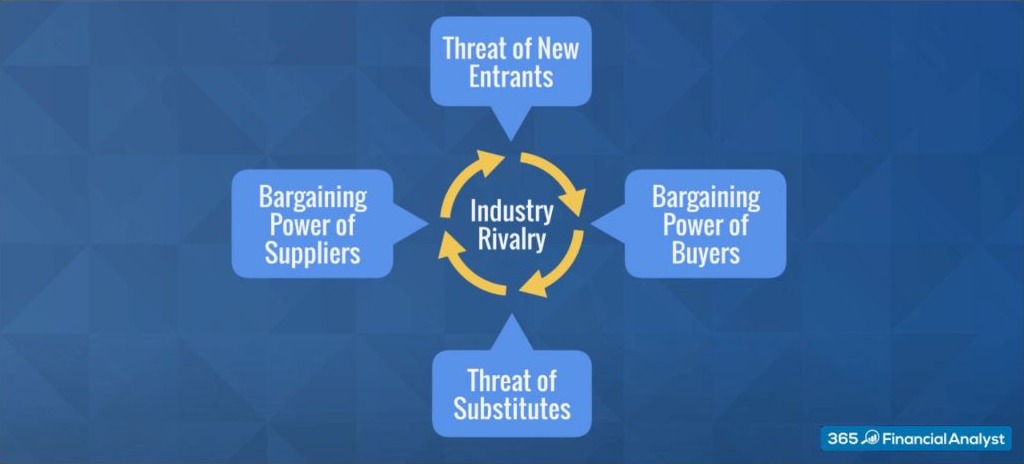
The new global AI LLM market presents a perfect crucible to discuss industry competition and rivalry through Harvard Professor Michael Porter's famous Five Forces Model: Competitive Rivalry, Bargaining Power of Buyers, Bargaining Power of Suppliers, Threat of New Entrants, and Threat of Substitute Products. The rapidly changing global AI industry presents a dynamically complex and very competitive industry. This article takes a deeper dive into the new AI industry through Porter's powerful business optic examining power dynamics between existing AI competitors, customers, suppliers and special attention to potential new entrants, and substitute products available to consumers globally
Key Article Points
- The AI model market is highly competitive, with research suggesting intense rivalry among existing and upcoming US and Chinese players like OpenAI, Google Anthropic, DeepSeek, Ali Baba, Grok and other new entrants.
- The evidence leans toward moderate to high threat of new entrants, as open-source and other innovative models enter the new landscape with cheaper hardware, high quality models lowering barriers and changing market dynamics.
- Research suggests global buyers now have high bargaining power due to multiple global options and vociferous price competition, while suppliers, especially hardware manufacturers, have moderate power where previously there was almost monopoly.
- The threat of substitutes appears low to moderate, with a small group of AI models currently becoming superior in many tasks, but simpler solutions may still quickly arise or become newly viable for some uses with new innovation appearing almost weekly.
Market Overview
The AI model market, as of March 2, 2025, is rapidly growing, with projections estimating it could reach trillions of dollars by 2030 (Global AI market size 2030 | Statista). Major players include OpenAI, Google, Microsoft, and emerging competitors like DeepSeek and Ali Baba offering models for tasks like natural language processing and image recognition. Open source Models also like Llama3 or Mistral offer different angles on pricing and product placement placing orthogonal ideas into this market place
Competitive Dynamics
DeepSeek's R1 model, priced at $2.19 per million output tokens, is significantly lower than competitors like OpenAI's GPT-4o ($10), o1 ($60.00 and GPT-4.5 ($150), creating extreme price pressure (Models & Pricing - DeepSeek API Docs). This competition is driving high stakes innovation, with new entrants and existing players constantly launching new models and forced to innovate on unprecedented levels.
Unexpected Angles: Geopolitical Influence
A major unexpected angle and effect is how US export bans on high-end GPUs have ironically pushed Chinese companies like DeepSeek to innovate with less powerful hardware finding new unexpected affordances for the entire industry and in large ways potentially shifting balances of global economic power with geopolitical ramifications never on the table previously, now considered as something that must be considered (DeepSeek R1 vs OpenAI o1 Pricing Discussion - Reddit).
Analysis of the Current AI Model Market Through Michael Porter's Five Forces Model
Introduction and Context
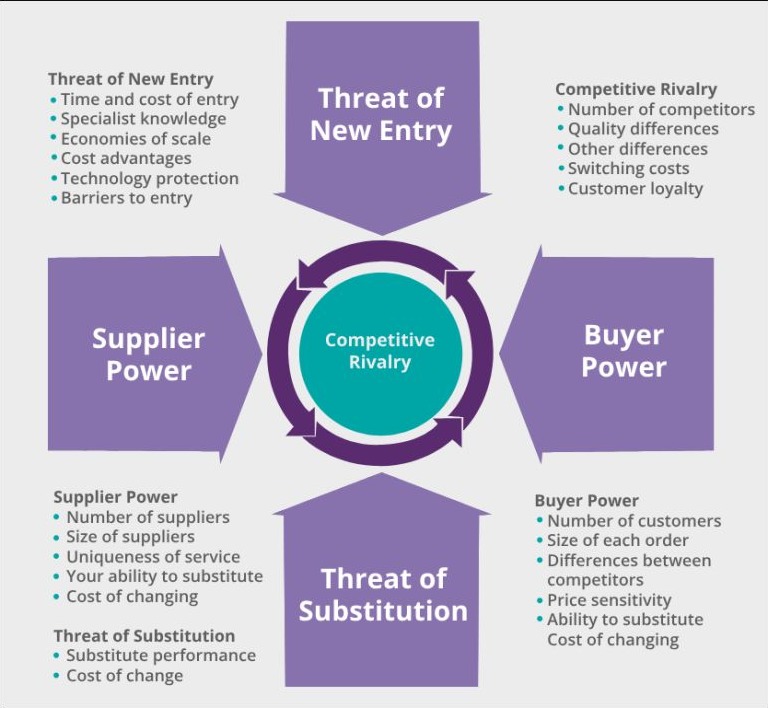
As of March 2, 2025, the artificial intelligence (AI) model market is experiencing unprecedented growth and dynamism, with projections estimating it could reach $826 billion by 2030 (Global AI market size 2030 | Statista). This market, driven by generative AI and large language models, is characterized by intense global competition among established players like OpenAI, Google, Microsoft, and Anthropic and emerging disruptors like DeepSeek and a suite of Chinese entrants ranging from Ali Baba and Qwen 2.5 Max to other innovative AI video models (Minimax) . To analyze the competitive dynamics, we apply Harvard Business school professors celebrated Michael Porter's Five Forces Model, which examines the threat of new entrants, threat of substitutes, bargaining power of buyers, bargaining power of suppliers, and rivalry among existing competitors. This robust framework provides a comprehensive view of this emerging 21st century market's structure and potential profitability.
Threat of New Entrants: Moderate to High
The threat of new entrants in the AI model market is moderate to high, driven by lowering barriers to entry. Developing a high-quality AI model traditionally requires significant resources, including vast computational power (compute), huge data repositories (data piles) , and Ph.D. level expertise in the nuances of the fairly new academic discipline of machine and Deep learning with an emphasis on Neural Nets and high level mathematics and programming skills. However, recent advancements, such as advanced open-source models released freely with code and model weights open and cheaper hardware, have reduced these barriers. For instance, DeepSeek's R1 model, which leverages less powerful Nvidia H800 GPUs and techniques like distillation, and taking advantage of other GPU microprocessor features such as interconnect and memory and aggregated micrological innovation from other models demonstrates that aggregated innovation and different pathways can overcome resource constraints (How much does it cost to run DeepSeek-R1 locally? - Medium Article).

Additionally, the open-source nature of some models, as noted in comparisons with OpenAI (DeepSeek R1 vs OpenAI o1 Cost Comparison - Notta AI Blog), allows new entrants to build upon existing frameworks, further facilitating market entry. Reports indicate a 600% increase in AI companies in the UK over the past decade, underscoring the growing ease of entry (77 AI Statistics & Trends to Quote in 2025 + Own Survey Results - Planable). However, initial costs, such as training a model like GPT-3 reportedly costing around $4.6 million a few years ago, remain a challenge, though costs are declining with technological advancements and entrants such as Deepseek demonstrating that model training does not have to be prohibitive to a few capable of raising now almost billions.
Threat of Substitutes: Low to Moderate
The threat of substitutes is low to moderate, as AI models are becoming increasingly superior in tasks like natural language processing, image recognition, video, predictive analytics and robotics which will take advantage of AI LLM's as both linguistic but also semiotic processors. Previous substitutes would include traditional rule-based systems or manual processes or humans, which are much less efficient for complex tasks. For example, AI models are now integral to sectors like banking and healthcare, reducing human intervention and enhancing productivity (Artificial Intelligence [AI] Market Size, Growth & Trends, 2032 - Fortune Business Insights). However, for certain applications, especially those not requiring high performance, simpler, non-AI solutions might still be viable and cheaper, such as basic customer service scripts. The evidence leans toward AI models being difficult to replace for advanced use cases, but simpler alternatives may persist for niche, low-cost applications, suggesting a moderate threat for specific segments.

Bargaining Power of Buyers: High
Buyers in the AI model market, including companies, institutions, consumers and individual developers, have high bargaining power due to the increasing number of providers and price competition. With multiple options available, customers can choose based on price, performance, and ease of integration. DeepSeek's pricing strategy, offering output tokens at $2.19 per million compared to OpenAI's $10 for GPT-4o and $150 for GPT-4.5, exemplifies this competition (Models & Pricing - DeepSeek API Docs). This disparity, as discussed in recent analyses, gives buyers leverage to demand lower prices or better terms (DeepSeek R1 vs OpenAI o1 Pricing Discussion - Reddit) and forces direct competitors suchas OpenAI, Anthropic and Google to reassess their pricing models, competition and also current 'scaling' pathways . Additionally, as AI becomes more commoditized, with performance converging across models, customers are likely to prioritize cost and user experience, further enhancing their bargaining power. A survey found that 87% of global organizations believe AI technologies will give them a competitive edge, indicating a buyer-driven market (77 AI Statistics & Trends to Quote in 2025 + Own Survey Results - Planable).
Bargaining Power of Suppliers: Moderate
Suppliers in the AI model market include hardware manufacturers (e.g., Nvidia, AMD), data providers, and software libraries and suppliers of manufacturers (notably, TSMC). Their bargaining power is moderate, primarily due to the concentration in the hardware sector. Nvidia, for instance, dominates the GPU market, which is critical for training and running AI models, giving them significant influence (AI stock shock could spark broader gains in US market | Reuters). However, diversification is occurring and the all consuming need of scaling for training models at least decreased from a total previous hegemony with competitors doing more with less GPU's (Deepseek et al) and companies like Intel and AMD manufacturing AI chipsets to compete, reducing supplier power (Artificial Intelligence Market Size & Trends, Growth Analysis, Forecast [2032] - MarketsandMarkets). For data, while specific datasets may give providers leverage, the availability of public datasets, multimodal data ranging from video to audio to other sensory varieties including notably synthetic data generation mitigates this. Overall, the evidence leans toward moderate supplier power, with hardware manufacturers and notably Nvidia an early entrant in the market still holding the most influence but facing increasing competition, prices pressure and unexpected innovation within an expanding market.
Rivalry Among Existing Competitors: High
Rivalry among existing competitors is currently very high, characterized by intense competition and rapid breakneck innovation. Major players like OpenAI, Google, Anthropic, Meta, Microsoft, and DeepSeek are vying for market share, with constant launches of new models with innovators like Elon Musk's Grok 3 moving from dark horse outsider status to major model enhancement and worthy competitor with new reasoning features and innovators such as Perplexity and Mistral and other new entrants expanding the market in different directions. For example, Google introduced Gemini in December 2023, offering multimodal capabilities and a multi-agent Co-Scientist (Febrary 2025), while OpenAI launched Deep Research in February 2025 (Artificial Intelligence Market Size, Share | CAGR of 30% - Market.us). DeepSeek's low-cost model, generating $205 million in annualized revenue with a 545% profit margin, has intensified price competition, as noted in recent discussions (How much does it cost to run DeepSeek-R1 locally? - Medium Article). This rivalry is further evidenced by stock market reactions, with tech giants like Nvidia and Broadcom experiencing extreme volatility due to AI pricing disruptions (AI stock shock could spark broader gains in US market | Reuters). The market's dynamism, with a projected CAGR of 35.7% from 2024 to 2030, underscores the high level of competition (Artificial Intelligence Market Size & Trends, Growth Analysis, Forecast [2032] - MarketsandMarkets).
Comparative Analysis of Pricing and Competition
To illustrate the competitive landscape, consider the following table comparing pricing among key players, based on available data:
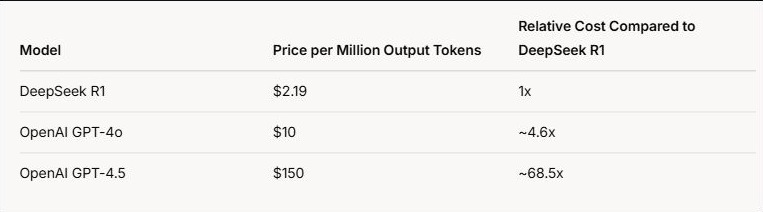
This table, derived from DeepSeek's API documentation and industry analyses, highlights the price competition driving buyer power and market rivalry (Models & Pricing - DeepSeek API Docs).
Conclusion
The AI model market in 2025, analyzed through Porter's Five Forces, reveals a highly competitive landscape with moderate to high threats of new entrants, low to moderate threats of substitutes, high buyer bargaining power, moderate supplier power, and intense rivalry among competitors. This dynamic environment, fueled by innovation and price competition, suggests significant opportunities for growth but also challenges for profitability. Stakeholders, including policymakers and investors, must navigate data privacy, intellectual property, and workforce implications to harness AI's potential, as noted in recent economic impact studies (AI’s impact on income inequality in the US - Brookings Article).
In the wake of DeepSeek's disruptive pricing strategy, the AI model market is at a pivotal juncture, with far-reaching implications that extend beyond the realm of technology into the very fabric of our global society. From a socio-economic perspective, the widespread adoption of affordable AI is set to redefine labor markets, potentially leading to a scenario where job roles are transformed or replaced by AI. Those who can adapt to working with AI stand to benefit, while those who cannot may be left behind. Reskilling and upskilling will ensure that global workforces are prepared for an AI-driven economy and innovative social policies may need to be adopted potentially fostering a more culturally rich and diverse society but also other scenarios may be possible or likely.
Geopolitically, the rise of other cost-effective or innovative AI models from emerging markets, exemplified by DeepSeek and other recent entrant could alter the balance of larger socio-economic power constellations. This shift may lead to either a unipolar or differently oriented multipolar world where technological leadership is distributed among several nations or something beyond the fairly recent phenomena of the nation state to influence trade agreements, security alliances, and the governance of AI itself. The United States, in particular, must reassess its export control policies and technological strategies to maintain its competitive edge, while also fostering international collaboration to address the ethical and security challenges posed by AI as AI moves to AGI (Artificial General Intelligence.
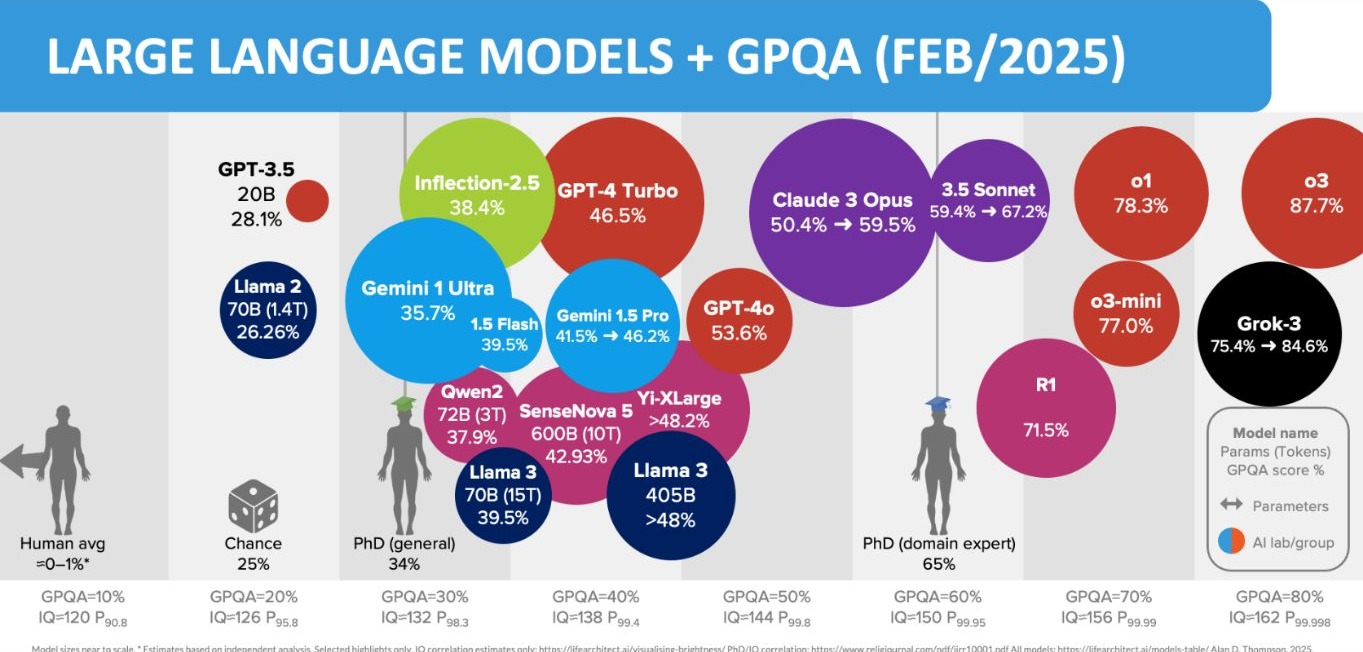
In conclusion, DeepSeek's pricing strategy is not just a business move; it's a catalyst for a profound transformation in the global economy and society. As we stand on the cusp of this new era, it is imperative for all stakeholders—policymakers, business leaders, educators, and citizens—to engage actively and thoughtfully with the opportunities and challenges that lie ahead. The future that AI promises is one of unprecedented potential, but it requires careful stewardship to ensure that its benefits are equitably distributed and its risks are mitigated.
Key Citations
- AI Will Transform the Global Economy. Let’s Make Sure It Benefits Humanity. - IMF
- What do we know about the economics of AI? - MIT News
- Models & Pricing - DeepSeek API Docs
- How much does it cost to run DeepSeek-R1 locally? - Medium Article
- DeepSeek R1 vs OpenAI o1 Pricing Discussion - Reddit
- PwC’s Global Artificial Intelligence Study: Economic Impact
- AI’s impact on income inequality in the US - Brookings Article
- Artificial Intelligence and Its Potential Effects on Economy - CBO
- DeepSeek R1 vs OpenAI o1 Cost Comparison - Notta AI Blog
- DeepSeek R1 Intelligence Performance Price Analysis - Artificial Analysis
- Artificial Intelligence Market Size, Share, Growth Report 2030 - Grand View Research
- Artificial Intelligence [AI] Market Size, Growth & Trends, 2032 - Fortune Business Insights
- Artificial Intelligence Market Size, Share | CAGR of 30% - Market.us
- Artificial Intelligence Market Size & Trends, Growth Analysis, Forecast [2032] - MarketsandMarkets
- AI stock shock could spark broader gains in US market | Reuters
- China's DeepSeek claims theoretical cost-profit ratio of 545% per day | Reuters
- The UK’s Top Artificial Intelligence (AI) Hotspots - Insight - The Data City
- Artificial Intelligence [AI] Market Size, Growth & Trends, 2032 - Fortune Business Insights
- 77 AI Statistics & Trends to Quote in 2025 + Own Survey Results - Planable
#AIMarketAnalysis #PortersFiveForces #AILLMMarketAnalysis #AIMarketAnalysis