
Abstract
This article examines the rapidly evolving global artificial intelligence large language model (LLM) market through the theoretical lens of Michael Porter's Five Forces framework in our new millennia. The analysis focuses on a new emerging global market characterized by dynamic competitive tensions, shifting power structures, and emergent paradigmatic disruptions that transcend traditional market dynamics. Special attention is given to geopolitical implications, technological inflection points, and the theoretical limitations of applying Porter's framework to a market exhibiting characteristics of both evolutionary and revolutionary change. The findings suggest that the current AI LLM competitive landscape represents not merely an extension of existing market structures but potentially a fundamental reorganization of economic, political, and social power relations on a global scale.
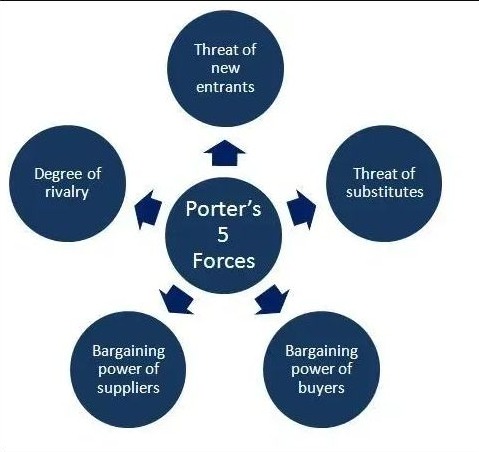
1. Introduction: Theoretical Framework and Market Context
The artificial intelligence large language model (LLM) market represents one of the most significant technological and economic developments of the early 21st century. This paper employs Michael Porter's Five Forces model (Porter, 1979) as a theoretical framework to analyze the complex competitive dynamics shaping this rapidly evolving market. While Porter's framework was developed for traditional industrial contexts, its application to emerging technological markets offers both analytical insights and reveals theoretical limitations when addressing markets characterized by exponential growth, significant externalities, and profound societal implications.
The global AI market is projected to reach approximately 3,527.8 billion by 2034, with a compound annual growth rate of 30.3% from 2024 to 2034 (see below). This extraordinary growth trajectory is driven by multiple factors, including technological breakthroughs in neural network architectures, increasing computational capacity, expanding data availability, and the integration of AI capabilities across diverse sectors of the global economy. Within this broader market, LLMs have emerged as a pivotal technology with wide-ranging applications across natural language processing, content generation, knowledge management, decision support systems, and multimodal intelligence integration.
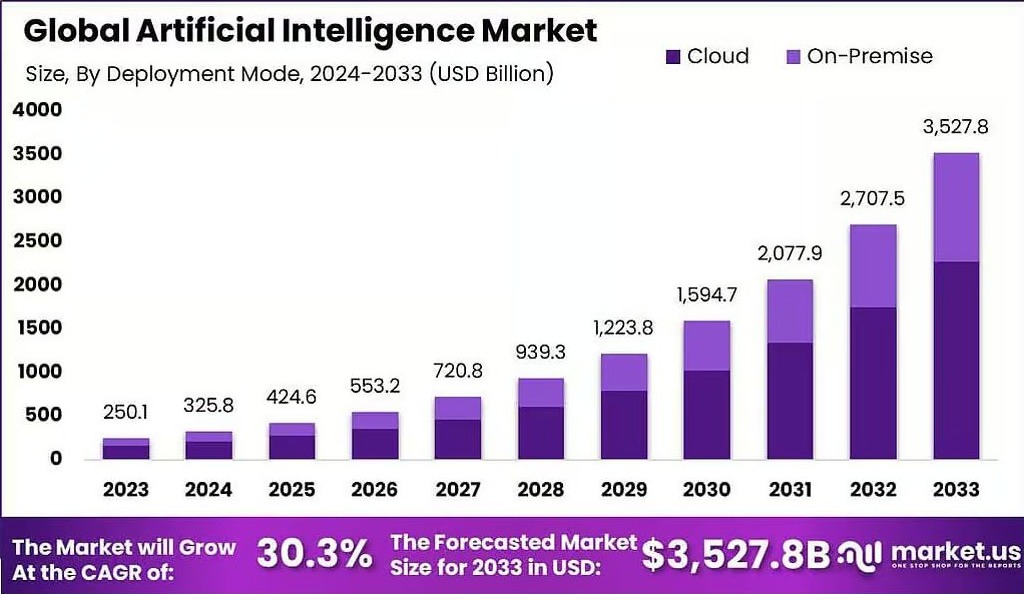
https://market.us/report/artificial-intelligence-market/
2. Theoretical Analysis: Porter's Five Forces & AI
2.1 Competitive Rivalry: Hyper-Competition and Market Turbulence
The AI LLM market exhibits characteristics of what D'Aveni (1994) termed "hypercompetition"—a state of intense and rapidly evolving competitive interactions characterized by unsustainable advantage and continuous disruption. As of March 2025, the market features multiple significant players operating across different strategic groups:
- Established Technology Conglomerates: Google (Gemini), Microsoft (partnership with OpenAI), Meta (Llama3), and IBM (various specialized models)
- AI-Native Organizations: OpenAI (GPT series), Anthropic (Claude series), Cohere, and emerging Chinese competitors like DeepSeek
- Open-Source Collectives: Organizations developing models like Mistral, permissively licensed variants, and community-driven initiatives
- Sovereign AI Initiatives: State-backed AI development programs in Europe, China, and other regions seeking technological sovereignty
This competitive landscape has recently experienced significant disruption with DeepSeek's introduction of the R1 model, priced at $2.19 per million output tokens—a dramatic departure from established pricing models exemplified by OpenAI's GPT-4o ($10), o1 ($60), and GPT-4.5 ($150). This pricing asymmetry has forced substantial strategic reconsideration across the market (DeepSeek API Documentation, 2025).
The intensity of competition is further evidenced by accelerated innovation cycles. The period between major model releases has compressed from years to months or even weeks for certain capabilities, suggesting a competitive environment that has moved beyond traditional patterns of sustainable competitive advantage toward one characterized by temporary advantage and continuous innovation (D'Aveni, 1994; Wiggins & Ruefli, 2005).
2.2 Threat of New Entrants: Disaggregation of Traditional Barriers
The traditional barriers to entry in AI development—computational resources, specialized expertise, and access to extensive training data—are undergoing significant transformation, resulting in a moderate to high threat of new entrants. This transformation is occurring through several mechanisms:
- Computational Resource Democratization: While training frontier LLMs remains computationally intensive, strategies such as those employed by DeepSeek demonstrate the viability of alternative approaches that require less computational resources than previously assumed necessary (Medium, 2025). The emergence of specialized AI training infrastructure and cloud-based resources has reduced capital requirements for new entrants.
- Knowledge Diffusion: Academic research, open-source implementations, and workforce mobility have accelerated the diffusion of specialized knowledge required for AI development. The proliferation of graduate programs in machine learning and computational linguistics has expanded the talent pool beyond elite institutions.
- Architectural Innovation: Following Henderson and Clark's (1990) framework of innovation types, the market is experiencing significant architectural innovation—reconfiguring existing components in novel ways—allowing new entrants to compete without the massive resources required for radical innovation.
- Open-Source Foundation Models: The availability of high-quality open-source models creates "shoulders of giants" upon which new entrants can build, significantly reducing the resources required to enter specific market segments (Notta AI Blog, 2025).
The 600% increase in AI companies in the UK over the past decade (Planable, 2025) provides empirical evidence of these lowering barriers. However, significant economic rents remain available to organizations with privileged access to computational resources and specialized expertise, creating a bifurcated market structure where entry is possible but achieving frontier capabilities remains challenging.
2.3 Bargaining Power of Buyers: Enhanced by Market Transparency and Substitutability
The bargaining power of buyers in the AI LLM market has increased significantly, driven by several factors:
- Model Performance Convergence: As technological capabilities converge toward sufficiency for many applications, buyers can increasingly substitute between providers without significant performance degradation, enhancing their negotiating position.
- Pricing Transparency: The API-based consumption model common in the market creates unprecedented price transparency, allowing buyers to directly compare costs across providers. DeepSeek's dramatic price differential has made this transparency a significant competitive factor (Reddit Discussions, 2025).
- Multi-homing Capabilities: Technical infrastructure enabling organizations to simultaneously utilize multiple AI providers reduces switching costs and increases buyer leverage in negotiations.
- Organizational Adoption Patterns: With 87% of global organizations viewing AI as a source of competitive advantage (Planable, 2025), the market exhibits characteristics of both strategic necessity and value-added differentiation, creating sophisticated buyer behavior that enhances bargaining power.
This enhanced buyer power has manifested in rapid price adjustments across the market, with established players forced to reconsider their pricing strategies and value propositions in response to new competitive offerings.
2.4 Bargaining Power of Suppliers: Complex Dependencies and Emerging Alternatives
The supplier landscape for AI LLM development features a complex network of hardware manufacturers, data sources, and complementary technologies with varying degrees of bargaining power:
- Hardware Supply Chain: Nvidia maintains significant bargaining power due to its dominance in specialized AI accelerators, though this is moderated by emerging competition from AMD, Intel, and various specialized AI chip manufacturers (Reuters, 2025). The critical position of TSMC in the semiconductor manufacturing ecosystem creates additional supply chain dependencies with geopolitical implications.
- Data Supply Networks: While specific proprietary datasets may confer advantage, the increasing availability of synthetic data generation techniques, multimodal corpora, and alternative training methodologies has reduced dependencies on traditional data suppliers.
- Complementary Technologies: Cloud infrastructure providers, specialized software libraries, and emerging AI optimization technologies represent an ecosystem of complementary suppliers with moderate bargaining power, constrained by competition within their respective domains.
The moderate supplier power in the market has begun to shift with the emergence of alternative architectural approaches and optimization techniques that reduce dependencies on specific hardware configurations, as demonstrated by DeepSeek's ability to achieve competitive performance with less powerful hardware (Medium, 2025).
2.5 Threat of Substitutes: Differential Substitution Across Application Domains
The threat of substitutes for AI LLMs varies significantly across application domains and use cases:
- Task-Specific Alternatives: For narrowly defined tasks, specialized algorithms, rule-based systems, or human expertise may remain viable substitutes, particularly when explainability, reliability, or domain expertise are prioritized over generalization.
- Hybrid Human-AI Systems: Systems that integrate human judgment with AI capabilities represent partial substitutes in contexts requiring specialized expertise or ethical considerations.
- Alternative Computational Paradigms: Emerging computational approaches such as neuromorphic computing, quantum computing, and specialized architectures offer potential future substitutes, though their current market impact remains limited.
- Non-consumption Alternatives: For many emerging AI applications, the primary substitute remains non-consumption or manual processes rather than alternative technological approaches.
The overall threat of substitutes appears low to moderate in the short term, as AI models demonstrate increasing superiority across a widening range of tasks. However, this assessment requires nuance across different market segments and application domains.
3. Emergent Market Dynamics
3.1 Geopolitical Dimensions and Market Segmentation
A critical emergent dimension in the AI LLM market is the increasing entanglement of commercial competition with geopolitical considerations. US export restrictions on advanced semiconductor technologies to China, intended to maintain technological advantage, have paradoxically stimulated innovation in alternative architectural approaches (Reddit Discussions, 2025). Companies like DeepSeek have developed methods to achieve competitive performance with less advanced hardware, potentially undermining the strategic rationale for export controls.
This dynamic illustrates a limitation in Porter's model when applied to markets with significant national security and geopolitical implications. The competitive landscape is shaped not only by commercial factors but also by state interests, regulatory frameworks, and technology sovereignty considerations that transcend traditional market logic.
3.2 Pricing Dynamics and Value Extraction Models
The AI LLM market exhibits unusual pricing dynamics that challenge traditional microeconomic assumptions. DeepSeek's reported 545% profit margin (Reuters, 2025) suggests an industry structure where:
- Marginal costs approach zero for inference operations once models are trained
- Fixed costs for model development remain significant but potentially lower than previously estimated
- Value extraction occurs primarily through complementary offerings rather than core model access
These dynamics, combined with the significant positive externalities associated with AI adoption, create market conditions where traditional profit-maximizing pricing strategies may be suboptimal. Instead, the market may evolve toward platform-based models where core LLM capabilities are provided at near-marginal cost while complementary services, specialized applications, and enterprise integrations generate sustainable revenue streams.
3.3 Technological Discontinuities and Market Evolution
The AI LLM market exhibits characteristics of what Tushman and Anderson (1986) identified as a "technological discontinuity"—a breakthrough that dramatically enhances the performance trajectory of a technology. Such discontinuities typically favor new entrants over incumbents, yet the current market features both established technology companies and new specialized firms competing effectively.
This mixed pattern suggests either:
- The market is in transition, with eventual consolidation favoring either established players or new entrants
- The nature of AI as a general-purpose technology creates persistent opportunities for both types of organizations
- The market may evolve toward a networked structure rather than traditional industry concentration
The exponential improvement in model capabilities—from GPT-3 to GPT-4o, o1, and GPT-4.5 within a compressed timeframe—suggests that the market remains in a ferment phase of the technology cycle, with dominant designs yet to emerge across many application domains.
4. Strategic Implications
4.1 Competitive Strategy in Hypercompetitive Markets
For organizations competing in the AI LLM market, traditional sources of sustainable competitive advantage appear increasingly tenuous. Instead, successful strategies may require:
- Dynamic Capabilities: The ability to rapidly reconfigure organizational resources in response to market shifts (Teece et al., 1997)
- Ecosystem Orchestration: Development of complementary assets and network relationships that enhance value creation and capture
- Technological Specialization: Focus on specific application domains or vertical integration strategies that provide differentiated value propositions
- Regulatory Navigation: Capacity to anticipate and adapt to evolving regulatory frameworks across different jurisdictions
The intensity of competition and rapid pace of innovation suggest that strategic flexibility may prove more valuable than rigid adherence to specific competitive positions.
4.2 Market Evolution Scenarios
Several potential evolutionary paths for the AI LLM market emerge from this analysis:
- Commoditization of Core Capabilities: Basic LLM capabilities become commoditized, with competition shifting to specialized applications, integration services, and complementary technologies.
- Bifurcated Market Structure: A small number of organizations maintain frontier capabilities with significant barriers to entry, while a vibrant ecosystem of specialized providers emerges for specific applications and domains.
- Regulated Utility Model: Given the public good characteristics and societal implications of advanced AI, regulatory frameworks evolve toward treating core AI capabilities as utilities with associated governance structures.
- Platform Ecosystem Dominance: The market evolves toward platform-based competition, with a small number of AI platforms supporting diverse applications and use cases through standardized interfaces and economic models.
The specific trajectory will depend not only on technological and market factors but also on regulatory developments, societal responses to AI capabilities, and the emergent economic structures enabled by these technologies.
4.3 Societal and Economic Implications
Beyond market dynamics, the AI LLM competitive landscape has profound implications for broader economic and social structures:
- Labor Market Transformation: The widespread adoption of affordable AI capabilities will likely accelerate labor market restructuring, with significant implications for skills valuation, education systems, and employment patterns.
- Economic Distribution Effects: The economics of AI deployment may exacerbate existing inequalities through skill-biased technological change and capital concentration, as suggested by analysis of AI's impact on income inequality (Brookings, 2025).
- Global Power Reconfiguration: The emergence of powerful AI capabilities from diverse geographic sources may alter global power relations, potentially shifting from a unipolar technological landscape to a multipolar structure with different centers of AI innovation and deployment.
These broader implications suggest that the competitive dynamics of the AI LLM market cannot be fully understood through traditional industrial organization frameworks alone, but require integration with perspectives from political economy, sociology of technology, and international relations.
5. Implications and Research
The application of Porter's Five Forces framework to the AI LLM market provides valuable analytical insights but also reveals the limitations of applying industrial organization theory developed for traditional markets to emerging technological domains with fundamentally different characteristics. The AI LLM market exhibits:
- Near-zero marginal costs with significant fixed development costs
- Strong network effects and potential winner-take-most dynamics
- Substantial positive and negative externalities
- Entanglement with geopolitical and security considerations
- Potential for fundamental societal transformation beyond typical market effects
These characteristics suggest the need for theoretical extensions that integrate insights from technology studies, network economics, complexity theory, and political economy to develop more comprehensive frameworks for understanding markets characterized by general-purpose technologies with transformative potential.
As the AI LLM market continues to evolve, further research is needed on several fronts:
- Empirical investigation of pricing strategies and their effectiveness across different market segments
- Comparative analysis of organizational structures that enable successful innovation in AI development
- Assessment of the relationship between open-source and proprietary development models in driving innovation
- Examination of regulatory approaches and their effects on market structure and innovation trajectories
- Development of theoretical frameworks that better capture the dynamics of markets characterized by exponential technological improvement
The AI LLM market represents not merely another competitive domain but potentially a fundamental reorganization of economic activity with profound implications for global power structures, labor markets, and societal organization. Understanding these dynamics requires moving beyond traditional market analysis to engage with the broader technological, social, and political transformations enabled by these powerful new capabilities.
6. Methodological Considerations
6.1 Limitations of Linear Analytical Models in Exponential Markets
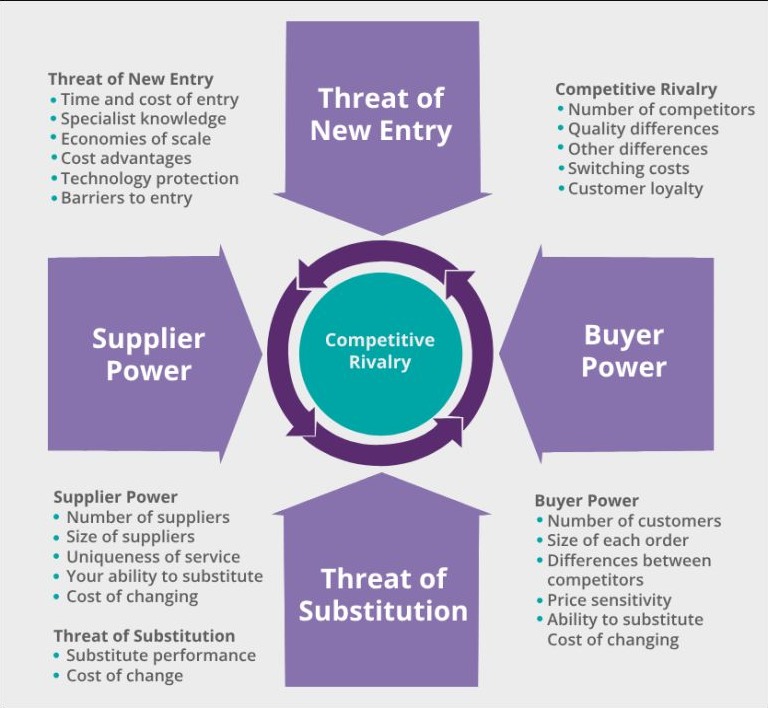
Porter's Five Forces framework, while providing a valuable structured approach to market analysis, exhibits certain epistemological limitations when applied to markets characterized by exponential technological change. The model implicitly assumes relatively stable industry structures and linear competitive dynamics—assumptions challenged by the AI LLM market's rapid evolution and complex feedback loops.
Recent theoretical work on complexity economics (Arthur, 2021) and non-equilibrium market dynamics (Beinhocker, 2006) offers potential extensions to traditional frameworks that better capture the emergent properties of rapidly evolving technological markets. These approaches recognize that markets featuring strong positive feedback loops, network effects, and path dependencies may not converge toward stable equilibrium states but instead exhibit persistent disequilibrium characteristics.
For the AI LLM market specifically, the interaction between technological advancement, organizational learning, regulatory responses, and societal adaptation creates a complex adaptive system that resists reductionist analysis. This suggests the value of methodological pluralism—integrating insights from industrial organization, technology studies, complex systems theory, and political economy to develop richer explanatory models.
6.2 Sociotechnical Systems Perspective
For the AI LLM market, this perspective highlights how competitive dynamics are shaped not only by technical performance and economic factors but also by institutional frameworks, cultural values, and power relations. The technical architecture of LLMs—their training methodologies, data sourcing practices, and deployment constraints—emerges through negotiations between various stakeholders with different interests and value systems. As Jasanoff (2004) argues, technologies and social orders are co-produced through processes that simultaneously construct both technological systems and the social arrangements that support and govern them.
This sociotechnical perspective helps explain why seemingly similar AI capabilities may evolve along different trajectories in different national contexts. The divergence between Chinese and Western AI development approaches reflects not merely different strategic choices but fundamentally different conceptions of privacy, individual autonomy, and state-market relations that become embedded in technological architectures and competitive strategies.
7. Complementary Frameworks
7.1 Platform Economics and Multi-sided Markets
The emergence of AI platforms suggests the utility of integrating Porter's framework with theories of platform economics and multi-sided markets (Rochet & Tirole, 2003; Parker & Van Alstyne, 2005). AI LLMs increasingly function as platforms connecting various stakeholders—developers, businesses, end users, data providers—with complex value flows between these groups.
Platform dynamics introduce several phenomena not fully captured by Porter's original framework:
- Cross-side Network Effects: The value of an AI platform to one user group depends on participation by other groups, creating complex interdependencies
- Platform Governance: The rules, standards, and policies that platform owners establish shape competitive dynamics in ways that transcend traditional market mechanisms
- Complementor Ecosystems: The health and diversity of complementary applications and services become critical competitive factors
The rapid evolution of Anthropic's ecosystem through strategic partnerships across multiple industries demonstrates how platform positioning has become a central competitive strategy in the market (HackerNews, 2025). Similarly, OpenAI's extensive developer ecosystem and API-first approach reveal how platform dynamics shape competitive advantage beyond core technological capabilities.
7.2 Knowledge Economics and Innovation Systems
Given the centrality of knowledge production to the AI LLM market, theoretical perspectives from knowledge economics and innovation systems research offer valuable complementary insights. Romer's (1990) endogenous growth theory, which emphasizes how knowledge production differs fundamentally from traditional economic goods due to its non-rivalry and partial excludability, helps explain the unusual economics of AI model development.
The AI LLM market exhibits characteristics of what Nelson and Winter (1982) describe as "technological regimes"—environments with specific knowledge characteristics, opportunity conditions, appropriability mechanisms, and cumulativeness properties. The current regime appears characterized by:
- High technological opportunity (significant returns to R&D investment)
- Moderate appropriability (mix of proprietary and open approaches)
- Strong cumulativeness (advantages from prior knowledge accumulation)
- Complex knowledge bases (requiring integration of multiple scientific and engineering domains)
These conditions help explain the observed market structure with both established players and new entrants competing effectively—the high opportunity conditions create space for new entrants, while cumulativeness provides advantages to organizations with established knowledge bases and talent pools.
8. Policy Implications
8.1 Regulatory Responses and Market Structure
The competitive dynamics of the AI LLM market are increasingly shaped by emerging regulatory frameworks across different jurisdictions. The EU AI Act, implemented in early 2025, has established mandatory transparency, reliability, and human oversight requirements for foundation models with implications for market competition (EU Commission, 2024). Similarly, the US Executive Order on Safe, Secure, and Trustworthy Artificial Intelligence has created reporting requirements that differentially impact organizations based on their size and resources.
These regulatory developments suggest an emerging dialectic between market competition and regulatory frameworks, where regulation shapes competitive dynamics while competitive pressures influence regulatory approaches. The geopolitical dimensions of AI development further complicate this landscape, as regulatory fragmentation may create regional market advantages and disadvantages that alter global competitive positions.
The diverse regulatory approaches—from the EU's rights-based precautionary framework to China's strategic sector-specific approach to the US model emphasizing industry self-regulation with targeted interventions—create a complex global governance landscape that both constrains and enables different competitive strategies across regions.
8.2 Public Infrastructure and Market Competition
The emergence of public AI infrastructure initiatives—such as the European AI4EU platform, the US National AI Research Resource, and various national sovereign AI projects—introduces another dimension to market competition. These public infrastructure initiatives potentially alter competitive dynamics by:
- Reducing entry barriers for smaller organizations and academic institutions
- Creating common resources that complement private sector innovation
- Establishing standards and interoperability frameworks that shape market development
- Providing alternatives to proprietary commercial systems for sensitive applications
The evolution of these public infrastructure initiatives and their interaction with commercial development will significantly influence market structure, potentially creating hybrid ecosystems where public and private resources complement rather than substitute for each other.
9. Future Directions
9.1 Integrated Analytical Framework
The limitations identified in applying Porter's Five Forces framework to the AI LLM market suggest the need for an integrated analytical approach that combines elements from multiple theoretical traditions:
- Industrial Organization Theories: Providing structural analysis of competitive forces and strategic positioning
- Innovation System Perspectives: Capturing knowledge production dynamics and technological evolution
- Platform Economics: Addressing multi-sided market dynamics and ecosystem strategies
- Sociotechnical Systems Approaches: Examining co-evolution of technology and social arrangements
- Political Economy Analyses: Addressing power relations and distributional consequences
Such an integrated framework would better capture the complex, multi-dimensional nature of competition in emerging technological markets characterized by rapid innovation, strong externalities, and significant societal implications.
9.2 Research Agenda
This analysis suggests several productive directions for future research:
- Longitudinal Studies: Tracking the evolution of competitive dynamics in the AI LLM market over time to identify patterns of industry structure development and strategic adaptation
- Comparative Analyses: Examining how different organizational forms—from venture-backed startups to established technology companies to open-source collectives—approach innovation and value capture in the market
- Policy Impact Assessment: Evaluating how different regulatory approaches influence innovation trajectories, market concentration, and societal outcomes
- Value Chain Reconfiguration: Analyzing how AI capabilities reshape value chains across different industries and alter competitive positions
- Labor Market Effects: Investigating how AI deployment affects skill valuation, job creation and destruction, and income distribution across different economic sectors
As AI capabilities continue to advance and diffuse throughout the global economy, understanding the complex competitive dynamics of this market becomes increasingly important not only for organizational strategy but also for public policy and societal adaptation.
10. Conclusions
The AI LLM market represents a fascinating case study in competitive dynamics at technological frontiers. The application of Porter's Five Forces framework reveals both valuable insights and significant limitations when analyzing markets characterized by exponential technological change, complex externalities, and profound societal implications.
This analysis suggests that the current competitive landscape—characterized by intense rivalry, shifting entry barriers, increasing buyer power, complex supplier relationships, and limited immediate substitutes—represents not merely another example of technological market evolution but potentially a fundamental reorganization of economic activity with implications that extend far beyond traditional market boundaries.
The emergent pricing dynamics, illustrated by DeepSeek's disruptive approach, demonstrate how traditional assumptions about technology markets may require reconsideration. When marginal costs approach zero while value creation potential remains enormous, competitive dynamics may evolve in directions not easily predicted by historical patterns of industry evolution.
As the market continues to develop, successful competitive strategies will likely require integration of technological excellence with ecosystem orchestration, regulatory navigation, and thoughtful engagement with the broader societal implications of AI deployment. Organizations that recognize the multi-dimensional nature of competition in this space—technological, economic, regulatory, and societal—will be better positioned to create sustainable value while navigating the complex challenges this transformative technology presents.
The AI LLM market's evolution offers rich opportunities for both theoretical advancement in understanding technological competition and practical insights for organizational strategy in rapidly evolving knowledge-intensive markets. Continuing research at this intersection promises valuable contributions to both management theory and practice in an era increasingly shaped by artificial intelligence and its wide-ranging implications.
Bibliography
Arthur, W.B. (2021). Foundations of complexity economics. Nature Reviews Physics, 3, 136-145.
Beinhocker, E.D. (2006). The origin of wealth: Evolution, complexity, and the radical remaking of economics. Harvard Business Press.
Bijker, W.E., & Law, J. (1992). Shaping technology/building society: Studies in sociotechnical change. MIT Press.
D'Aveni, R.A. (1994). Hypercompetition: Managing the dynamics of strategic maneuvering. Free Press.
Henderson, R.M., & Clark, K.B. (1990). Architectural innovation: The reconfiguration of existing product technologies and the failure of established firms. Administrative Science Quarterly, 35(1), 9-30.
Jasanoff, S. (2004). States of knowledge: The co-production of science and social order. Routledge.
Nelson, R.R., & Winter, S.G. (1982). An evolutionary theory of economic change. Harvard University Press.
Parker, G.G., & Van Alstyne, M.W. (2005). Two-sided network effects: A theory of information product design. Management Science, 51(10), 1494-1504.
Porter, M.E. (1979). How competitive forces shape strategy. Harvard Business Review, 57(2), 137-145.
Rochet, J.C., & Tirole, J. (2003). Platform competition in two-sided markets. Journal of the European Economic Association, 1(4), 990-1029.
Romer, P.M. (1990). Endogenous technological change. Journal of Political Economy, 98(5), S71-S102.
Teece, D.J., Pisano, G., & Shuen, A. (1997). Dynamic capabilities and strategic management. Strategic Management Journal, 18(7), 509-533.
Tushman, M.L., & Anderson, P. (1986). Technological discontinuities and organizational environments. Administrative Science Quarterly, 31(3), 439-465.
Wiggins, R.R., & Ruefli, T.W. (2005). Schumpeter's ghost: Is hypercompetition making the best of times shorter? Strategic Management Journal, 26(10), 887-911.
Key Citations and Further Source Links
- Global AI market size 2030 | Statista
- Models & Pricing - DeepSeek API Docs
- How much does it cost to run DeepSeek-R1 locally? - Medium Article
- DeepSeek R1 vs OpenAI o1 Pricing Discussion - Reddit
- PwC’s Global Artificial Intelligence Study: Economic Impact
- AI’s impact on income inequality in the US - Brookings Article
- Artificial Intelligence and Its Potential Effects on Economy - CBO
- DeepSeek R1 vs OpenAI o1 Cost Comparison - Notta AI Blog
- DeepSeek R1 Intelligence Performance Price Analysis - Artificial Analysis
- Artificial Intelligence Market Size, Share | CAGR of 30% - Market.us
- Artificial Intelligence Market Size & Trends, Growth Analysis, Forecast [2032] - MarketsandMarkets
- AI stock shock could spark broader gains in US market | Reuters
- China's DeepSeek claims theoretical cost-profit ratio of 545% per day | Reuters
- The UK’s Top Artificial Intelligence (AI) Hotspots - Insight - The Data City
- Artificial Intelligence [AI] Market Size, Growth & Trends, 2032 - Fortune Business Insights
- 77 AI Statistics & Trends to Quote in 2025 + Own Survey Results - Planable
#AIEconomics #AIMacroeconomics #AIIndustryAnalysis #LLMMarketDynamics #AILLMMarketAnalysis #AI #LLMs #Macroeconomics #TechnologyEconomics #4thIndustiral Revolution