Podcast Overview: https://notebooklm.google.com/notebook/f56b6317-1280-4ec2-ba83-760bab0305bb/audio
The new transformative capabilities of advanced AI models in 2025 like OpenAI’s o1/o3 Series, Gemini 2.0 and Claude's Agentic 3.5 Next are rapidly reshaping the landscape of research and innovation. For Ph.D. researchers and postdoctoral scholars, these tools open unparalleled opportunities to generate insights, develop novel methodologies, and drive interdisciplinary breakthroughs. By marrying the depth of human expertise with the expansive processing and generative abilities of AI, researchers can reimagine the paradigms of discovery in ways previously unimaginable.
The Interdisciplinary Imperative
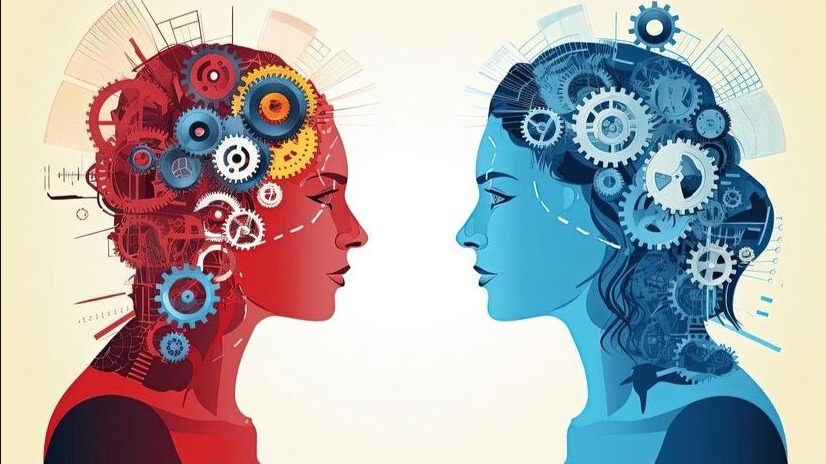
Innovation thrives at the intersections of disciplines. A Ph.D. researcher, trained in a specific domain, often carries deep expertise in one two or even three disciplinary domains deeply but may lack exposure to all of the adjacent fields or methodologies surrounding each of these that may be very useful in discovery and innovation. AI models, with their ability to synthesize vast corpora of knowledge across domains, act as bridges between these silos and open rich worlds of knowledge for capitalization of research worlds that were just out of grasp but now readily available. Co-intelligence with AI means working together synergistically capitalizing on both human and AI strengths so that the sum of parts synthesized together results in massive augmentation of human abilities and strengths used properly.
Human Expertise and AI Strengths
 Human Strengths                   AI Strengths
Deep critical thinking             Massive data synthesis
Tacit domain knowledge              Speed and scalability
Ethical reasoning                 Pattern recognition
Creativity                       Multimodal integration
The overlapping intersectional space where human and AI meet and are able to intersect with skills and strengths represents the co-intelligence space, where interdisciplinary synergy occurs.
Examples of Possible Types of Interdisciplinary Thinking and Breakthroughs
- Neuroscience + Computer Vision + Philosophy + Psychology: A neuroscientist integrating AI-generated pattern recognition abilities with the historical body of philosophical theories of consciousness to model neural imaging data more appropriately and also understandable to humans.
- Art History + Generative AI + Material Science + Chemistry: An art historian or preservation archivist at museums worldwide Using AI to reimagine the history and chemistry of painting techniques with novel new materials for modern art preservation and home and building design.
- Ecology + Behavioral Economics + AI: + Data Visualization A Social scientist predicting and influencing human responses to climate policies using behavioral modeling interfused with ecosystem simulations and new data appearing globally in the current media to quantify, trace and influence.
This interdisciplinarity is not merely additive; it’s synthetic exponential and now pragmatic. It is also easily communicated through larger online global networks. By leveraging AI's powerful abilities, human researchers can better work independently but also more dynamically partner with other disciplines and researchers to form AI centered research teams to cross-pollinate ideas, generating and identifying deeper synergistic connections and analogies that can result in great discovery and insight that independent human cognition previously had to overlook.
Throughout history, Nobel laureates and other groundbreaking figures have also exemplified the highest transformative power of interdisciplinary innovation but this higher level of research necessarily was relegated to more isolated unique geniuses and within a larger historical timeline and slower pace. For example, in the early 20th century, the mathematician John von Neumann, a polymath whose work spanned mathematics, physics, computer science, and economics, laid the foundations for game theory and modern computing. In the later 20th century, the heterodox interdisciplinary thinker Candace Pert’s pioneering discoveries in neuropeptides bridged the fields of neuroscience, immunology, and pharmacology, offering profound insights into the mind-body connection. Earlier, Leonardo da Vinci, a Renaissance visionary, seamlessly integrated art, engineering, anatomy and medicine to revolutionize our understanding of science, medicine, engineering and creativity. Later, figures such as Marie Curie, bridged the new physics and chemistry with materials to pioneer radioactivity research, and Herbert Simon, whose work spanned economics, psychology, and computer science, demonstrate how cross-domain thinking leads to groundbreaking discoveries.
More recently in 2024, the Nobel Prizes in physics and chemistry reflected a new AI ethos with computer scientists Demis Hassabis and Geoffrey Hinton were recognized for their groundbreaking contributions at the confluence of artificial intelligence, neuroscience, and quantum physics, while John Hopfield’s work combining biology, computational science, and physics further underscored the immense potential of interdisciplinary collaboration to drive transformative discovery. Currently, the new AI models released are breaking all records for Ph.D. level benchmark IQ tests from hardcore STEM Engineering, Math and Computer Science Coding to deep reservoirs of Social Science and Humanities data piles in their models that can be synthesized in previous ways thought unimaginable. This becomes especially interesting with the educated domain specialist and human in the loop and co-intelligence synthetic directions possible with AI.
Methodological Synergies: Human Expertise + AI Power
Ph.D.-level research emphasizes rigor, originality, and precision—qualities AI complements through its speed, adaptability, and scale. Initial very high level human rigor, originality, and precision can become amplified and augmented to unprecedented levels when paired with AI’s capacity for uncovering hidden patterns, generating novel hypotheses, and rapidly iterating on complex gathered datasets from experiments and past data, enabling researchers to transcend traditional boundaries and explore uncharted intellectual territory when also synthesizing disparate datasets on multivariate (multi-variable levels) previously impossible.
Our foundational human qualities are also exponentially enhanced when paired with AI’s unparalleled speed, adaptability, and scale. AI tools can uncover hidden patterns, follow researcher intuitions to the next level, propose novel hypotheses, and enable rapid iteration and experimentation with and on complex datasets, allowing researchers to push beyond previous conventional boundaries which were just to complex to enter into without AI. Together, these attributes forge a dynamic synergy and expand the field for exploration of 'solution' spaces, empowering researchers to explore uncharted intellectual interdisciplinary and multidisciplinary territories and achieve transformative discoveries.
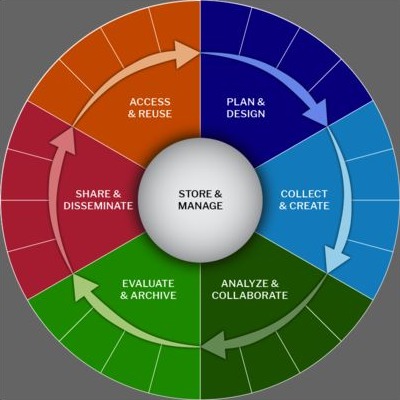
The Research Lifecycle Expanded with AI
1. Literature Review Synthesis (Not Summary)
Traditional literature reviews demand substantial time and effort, often constrained by the limits of human cognition and prone to biases in selection and interpretation. Advanced AI models like GPT-O3 significantly enhance this process by providing powerful tools for synthesis and analysis, enabling researchers to uncover deeper insights from vast bodies of work.
Capabilities of GPT-O3
- Synthesize Emergent Trends: By analyzing and clustering themes across thousands of scholarly papers, GPT-O3 can reveal overarching trends and identify cutting-edge developments in a research area.
- Identify Gaps and Contradictions: AI can pinpoint inconsistencies or underexplored niches in the literature, directing researchers toward novel questions and uncharted territories.
- Visualize Co-Citation Networks: Through sophisticated mapping, AI identifies which papers are frequently cited together, uncovering thematic relationships and foundational works that bridge disciplines.
Visualization: Literature Map
A literature map is a dynamic, interactive graph where:
- Nodes represent individual papers, color-coded by discipline or thematic area.
- Edges indicate citation relationships, showing how works are interconnected.
- Clusters highlight emergent research trends, such as intersections between previously unrelated fields.
For example, a map focusing on "neuroplasticity" might:
- Reveal clusters at the intersection of psychology (e.g., behavioral studies), machine learning (e.g., AI models of neural adaptation), and pharmacology (e.g., drug interventions).
- Identify isolated nodes, pointing to groundbreaking studies that have yet to be integrated into mainstream discourse.
- Highlight connections to unexpected disciplines, such as philosophy, where ethical implications of neuroplasticity research are debated.
Example
GPT-O1 might produce a heatmap for neuroplasticity research showing:
- Areas of intense activity where psychology and machine learning overlap, such as models simulating cognitive recovery post-injury.
- Emerging fields like AI-designed drugs that target neural adaptability.
- Underrepresented areas, such as long-term effects of environmental changes on neuroplasticity, suggesting future research opportunities.
This capability not only accelerates the literature review process but also transforms it into a generative exercise, fostering interdisciplinary breakthroughs and new lines of inquiry.
2. Experimental Design and Optimization
AI models excel at modeling complex systems and suggesting experimental parameters. For example:
- A chemist developing novel materials could use AI to predict molecular stability.
- A biologist could simulate genetic pathways for CRISPR experiments.
3. Multidisciplinary Integration
This list below illustrates the transformative potential of combining expertise across multiple domains. Interdisciplinary approaches not only address complex challenges but also create synergistic innovations that are greater than the sum of their parts. By breaking down traditional silos, researchers and practitioners can pioneer solutions that are adaptable, scalable, and impactful across various industries and societal contexts.
Four Discipline Multidisciplinary Integration (Examples)
- Genomics + Data Science + Ethics + AI Artificial intelligence enhances data synthesis in genomics, identifying patterns across datasets to predict treatment outcomes. Ethical frameworks guide responsible data use.
- Linguistics + AI + Cultural Studies + Blockchain Blockchain ensures transparent, verifiable records of endangered languages, while AI and cultural studies ensure tools respect linguistic diversity and cultural context.
- Neuroscience + Computer Vision + Psychology + Biomechanics Biomechanical insights improve the design of brain-machine interfaces, tailoring them to individual needs for physical and cognitive rehabilitation.
- Art History + Generative AI + Material Science + AR AR applications allow users to interact with recreated artworks, combining generative AI with eco-friendly materials for sustainable and immersive experiences.
- Climate Science + Behavioral Economics + Urban Planning + GIS GIS integrates environmental, economic, and behavioral data to design cities resilient to climate change, optimizing resource allocation and urban layout.
- Robotics + Cognitive Science + Education + NLP NLP allows robots to process and respond to nuanced student communication, enabling personalized learning experiences that are both engaging and adaptive.
- Quantum Computing + Cryptography + National Security + Ethics Quantum encryption systems incorporate ethical oversight to ensure equitable global access and avoid misuse in sensitive geopolitical contexts.
- Sociology + Social Media Analytics + Ethics + ML Machine learning analyzes social trends and misinformation, creating tools that respect ethical principles while enhancing digital literacy and public discourse.
- Medicine + VR + Bioinformatics + Systems Biology Systems biology integrates molecular data with VR simulations, enabling clinicians to visualize complex biological interactions for more precise treatments.
- Ecology + ML + Logistics + IoT IoT devices provide real-time ecological data, while ML optimizes logistics for conservation efforts, ensuring sustainable and effective resource use.
Insights from Multidisciplinary Integrative Research
Multidisciplinary research vastly amplifies the depth, precision, scalability and most importantly possibilities of research outcomes. This approach fosters a systems-thinking mindset, enabling solutions that tackle complex multifaceted multivariate problems with greater insight. By integrating domains and tools like blockchain, AR, or IoT, these intersections expand possibilities for discovery, application, and pragmatic societal impact. Each discipline enriches the other, ensuring that innovation is both practical and transformative, analysis and Interpretation. These types of new affordances if implemented on institutional levels have the potential to transform both the still currently dominant paradigm of the 19th-20th Industrial revolution 'university' and 20th century corporation into completely revitalized institutions through a massive creative and revolutionary paradigm shift through the upcoming potential of AI.
Whether analyzing terabytes of genomic data or deciphering social media sentiment, new AI models may provide:
- Multimodal analysis integrating text, video, images, object and numerical data.
- Real-time hypothesis generation, testing and new product prototyping and production.
4. Dissemination of Findings
The challenge of translating complex research into accessible knowledge also remains one of academia's most persistent hurdles. While researchers excel at advancing their fields, the impact of their work often remains constrained by communication barriers. AI tools are transforming this landscape by enabling dynamic content adaptation across audiences while preserving scientific rigor. Amazing new AI tools like Notebook LLM can adapt technical content into:
- Plain English summaries, Audio Overviews and Podcasts of Complex Content for public stakeholders.
- Infographics for policymakers.
- Interactive visualizations for conference presentations.
Ethical Considerations
The integration of AI into research methodology demands a fundamental rethinking of research ethics. Traditional frameworks focused primarily on human subjects and data integrity must expand to encompass the unique challenges posed by AI systems. Ethical integration of AI into research must now consider:
- Bias Mitigation: outputs must undergo rigorous empirical validation.
- Transparency: Clear attribution of AI contributions to ensure accountability.
- Equity: Ensuring global accessibility to advanced AI tools.
- Research Integrity: Ensuring reproducibility.
- AI Accountability: Addressing biases.
- Public Trust: Transparent communication.
Conclusion
The integration of AI into research and development in academic and business globally represents more than just a technological advancement - it marks a fundamental paradigm shift in how we approach scientific inquiry, discovery, innovation, invention and product and service development. By enabling researchers to finally transcend their traditional and outdated 19th century disciplinary boxes and methodological constraints, AI tools and wider multidisciplinary depth are opening new possibilities for interdisciplinary work and complex problem-solving on levels previously unimaginable. However, the true promise of this transformation lies not in the tools themselves, but in their potential to enhance and accelerate human/ai co-intelligence creativity, insight and discovery to horizons yet unseen .
As we move forward, success will depend on finding the right balance between technological capability and human judgment and getting our best and brightest researchers on board with these new paradigms and paradigm shifts presently occurring. The most significant advances will likely come not from replacing traditional research methods, but from finding novel ways to combine AI capabilities with human expertise in the 21st century and new co-intelligence that should be our new default. This suggests a future where the role of the researcher evolves from pure investigation to orchestrating a complex interplay between human insight and artificial intelligence, potentially revolutionizing both the process and outcomes of research towards shores yet unseen.
#Research, #AI, #GPTo3, #Gemini2, #AnthropicMCP, #AIDiscovery, #AIResearch, #AIInvention, #Innovation, #Interdisciplinarity