Raymond John Uzwyshyn, Ph.D.
Ask a question in 2026 — any question, about anything — and the answer arrives before the asking is over. It appears in clean sans-serif font, fluent, confident, unsigned, synthesized from sources you never see, assembled by a statistical engine, trained on a substantial fraction of everything humanity has ever written. The answer cites no author. It points to no archive. It carries no marks, no institutional vetting, no scars of scholarly dispute, no fingerprints or human hands that produced the knowledge, it casually compresses. It simply appears — authoritative, ambient, everywhere.
More than a billion people now receive their first encounter with knowledge this way. Google's AI Overviews surface on roughly a third of all searches; sixty percent now end without a single click to an external source. OpenAI's ChatGPT has surpassed twenty-five billion dollars in annualized revenue. Anthropic approaches nineteen billion. A handful of organizations — less than ten worldwide, perhaps fewer — possess the computational resources, the proprietary data, and the specialized talent to build the systems that increasingly mediate between most of what may be called 'the civilized' planet and everything it thinks this 'global civilization' knows.
Like it or not, this is our new empire, the new hegemons. Not an empire of territory or troops, but 'artificial intelligence — without asking for permission, an empire that controls what is known, who knows it, how it is known and and how it circulates and 'to whom'. And if those phrases sounds grandiose, it is worth noting that a late political economist named Harold Adams Innis spent the last decade of his life arguing, with precision, that all empires have al-ways been built this way.
I. Two Biases, and the Weight of the World
Innis published Empire and Communications in 1950, and The Bias of Communication in 1951. He was fifty-six years old. He had already rewritten an odd economic history of Canada through the lens of the beaver pelt. He would be dead of cancer within a year. The two books, dense and allusive and written in a prose style that one admirer described as containing "a small library on each page," advanced a thesis so compressed it could be stated in a sentence and so consequential it reshaped an entire discipline.
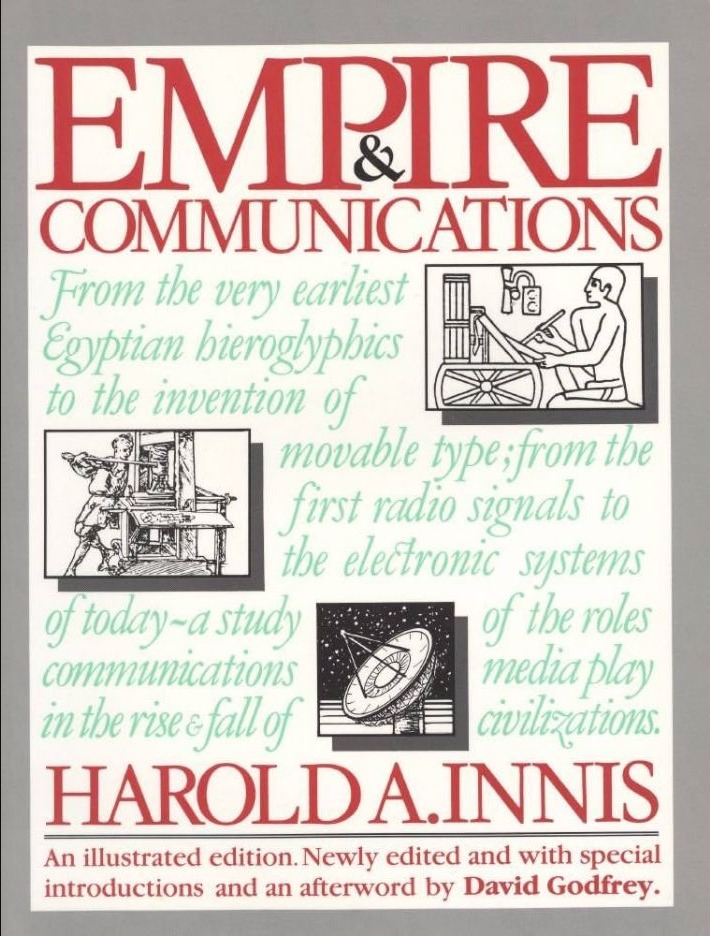
The thesis: every medium of communication has a material bias — toward preservation across time, or toward transmission across space — and the fate of civilizations depends on which bias prevails.
The word "bias" here is crucial, and it is not what a contemporary reader would assume. Innis did not mean ideological slant or political partiality. Innis meant something closer to the textile 'fabric' term from which he borrowed: the diagonal grain of woven cloth, the structural 'fabrication' tendency woven into the material itself that determines how the material drapes, how it falls, how it behaves when fit and cut. A medium's bias is not a choice someone makes. It is a property of the physical substance — the stone, the papyrus, the parchment, the paper, the recording medium — through which knowledge moves and must dress, be 'embodied' so to speak.
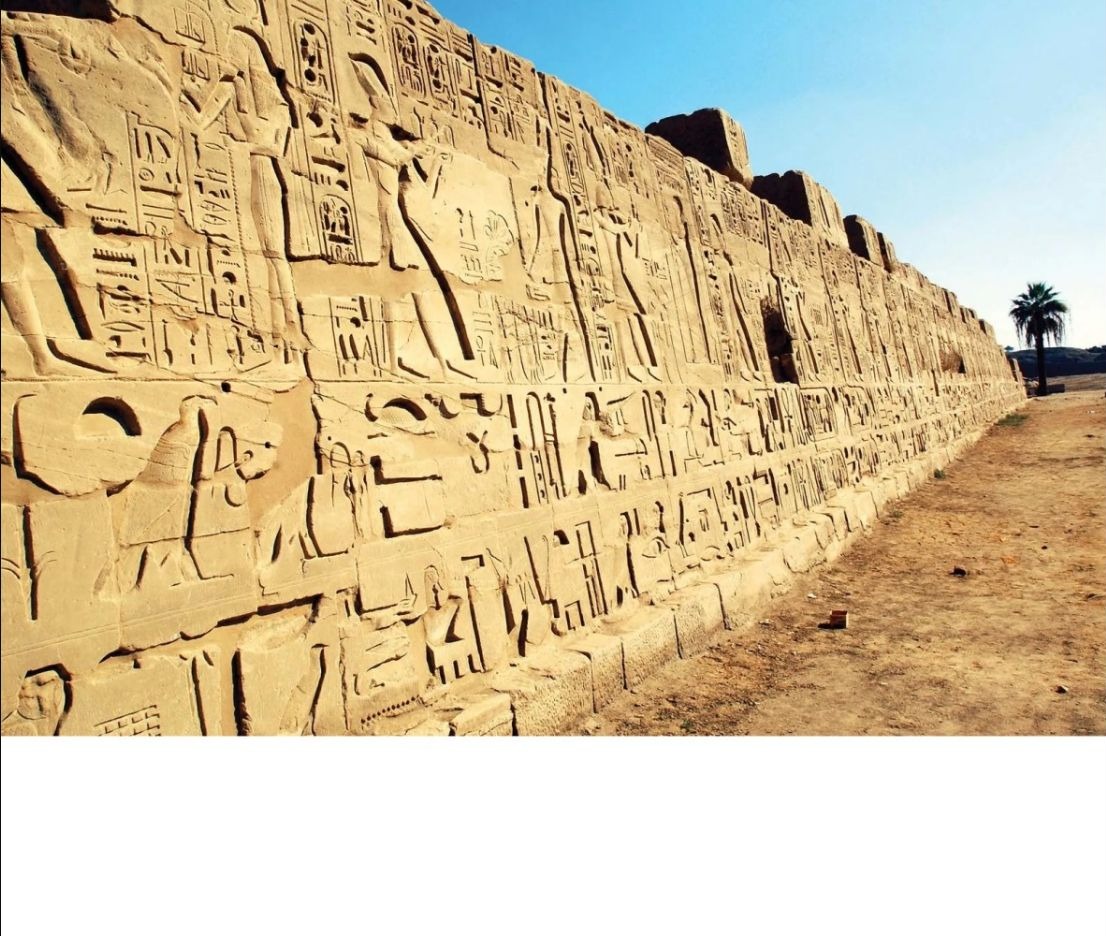
Consider first stone. A hieroglyphic inscription carved into the wall of an Egyptian temple is almost indestructible. It will endure for millennia. It binds knowledge to time — anchoring it across generations, preserving sacred formulas and royal genealogies and astronomical calculations against the erosions of century upon century. But stone is immovable. You cannot send a stone tablet to a provincial governor three hundred miles upriver. You cannot distribute a stone decree across an empire. Stone is durable but local, permanent but trapped.
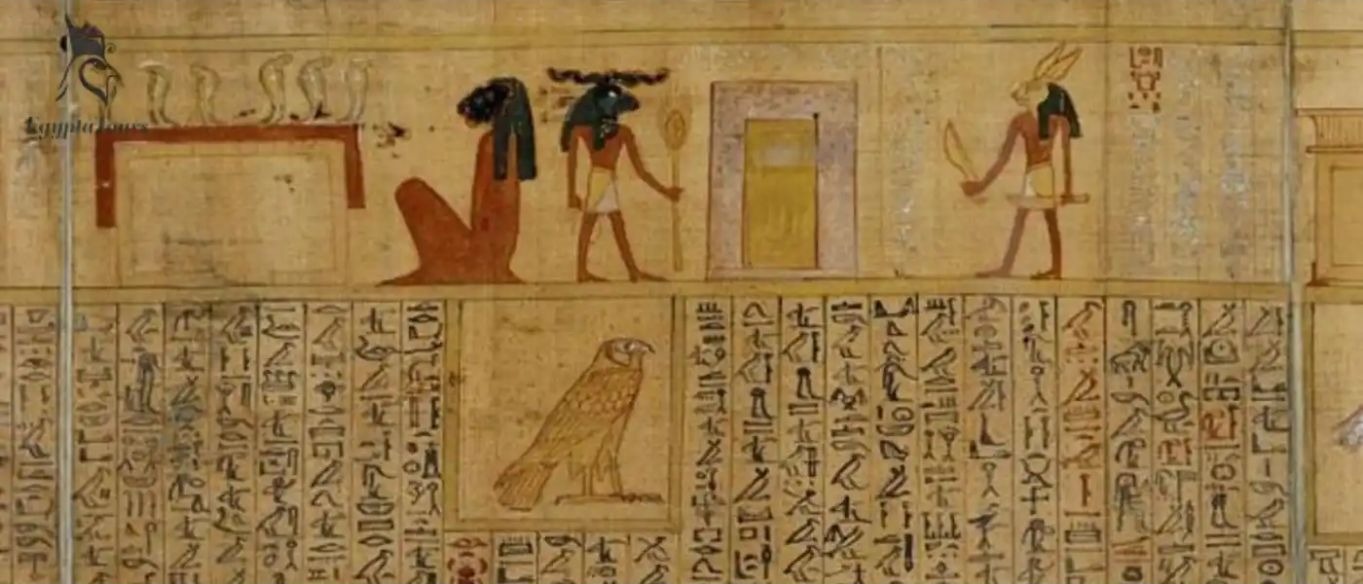
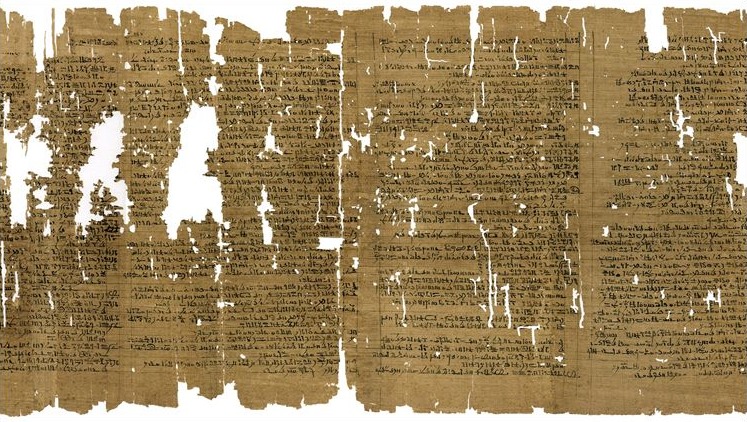
Now consider papyrus. A scroll made from the pith of the Cyperus papyrus plant of the Nile delta is featherweight compared to stone. It can be rolled, carried, shipped by boat, copied by scribes in distant cities. It binds knowledge to space — projecting administrative orders, legal codes, commercial records across vast distances. An empire can govern a continent with papyrus. But papyrus crumbles. Insects eat it. Moisture destroys it. The lightness that makes it portable is the same quality that makes it perishable. It reaches far but does not last.
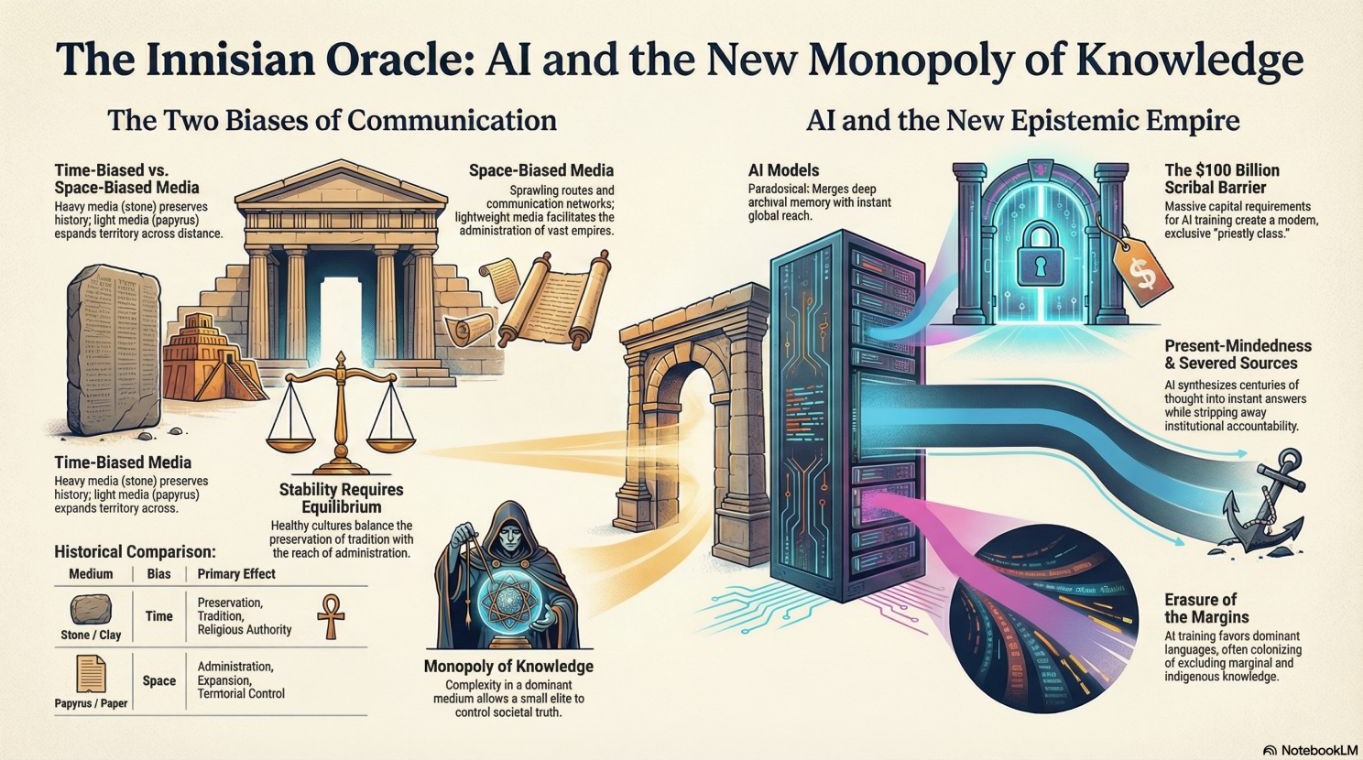
This is the distinction Innis built a theory of civilization upon. "Media which emphasize time," he wrote, "are those which are durable in character such as parchment, clay, and stone." They foster continuity, tradition, religious authority, the long view. "Media which emphasize space are apt to be less durable and light in character such as papyrus and paper." They foster administration, expansion, territorial control, the immediate reach of power. And the central claim — the one that earned Innis his reputation as a prophet and, among those who have not read him carefully, his reputation as an eccentric — was that the shape of power in any civilization is determined less by its armies or its wealth than by whichever of these two biases dominates its communication.|Put differently: empires are not primarily built with swords or wars but with words and the media on which the word sare built. And consequently they also collapse when the medium that sustains them goes unchecked.
II. Healthy Cultures, Doomed Ones
What did Innis mean by "going unchecked"? This is where his framework acquires its diagnostic edge — and where, for a reader in 2026, it begins to feel less like antiquarian media theory and more like a clinical description of the present.
Innis argued that the healthiest civilizations are those that maintain equilibrium between time-biased and space-biased media. They possess institutions that preserve knowledge across generations and mechanisms that distribute it across territory. They honor 'the archive' and the administration, the temple and the trade route, the priest and the postman. "They have tended to flourish," Innis wrote, "under conditions in which civilization reflects the influence of more than one medium and in which the bias of one medium toward decentralization is offset by the bias of another medium towards centralization."
But balance, in Innis's history, is the exception. Imbalance is the rule. "Only at rare intervals are the biases offset by the influence of another medium and stability achieved." And when a single medium dominates — when one bias overwhelms its counterweight — the civilization in question does not merely decline. It loses the capacity to understand its own predicament. The dominant medium becomes invisible, as water is invisible to fish. Its assumptions become naturalized. And the institutions that might have preserved the other dimension — the monasteries that kept manuscripts alive in the post-Roman chaos, the oral traditions that sustained cultures too complex to be written down — wither from neglect.
The doomed civilizations, in other words, are not the ones that lack knowledge. They are the ones that lose the ability to maintain different kinds of knowledge in productive tension. They mistake the reach of their dominant medium for wisdom. They confuse the speed of transmission with the depth of understanding. They produce, as Innis put it with devastating concision, "enormous improvements in communication" that "have made understanding more difficult."
That sentence was published in 1951. It might have been written yesterday.
III. The Nile, the Scribe, and the Sacred Monopoly
Innis was not a philosopher who illustrated abstractions with historical vignettes. He was a historian — meticulous, archival, almost obsessively empirical — who built his generalizations from the ground up, case by laborious case. To understand what he means by "monopoly of knowledge," it is necessary to follow him into Egypt.
The Nile Valley was, for Innis, the first great laboratory of communication and power. The river itself was an organizing principle — "a principle of order and centralization" that "necessitated collective work, created solidarity, imposed organizations on the people, and cemented them in a society." The pharaoh's authority rested not on military force alone but on astronomical knowledge. Egyptian priests had calculated a sidereal year, predicting the annual flooding of the Nile with a precision that made the priestly class indispensable to agricultural survival. They had reconciled lunar months with the solar year, adopting a calendar possibly as early as 4241 BC that, Innis wrote, "marked the imposition of the authority of Osiris and Ra." Knowledge of the heavens was knowledge of the harvest. Knowledge of the harvest was political power.
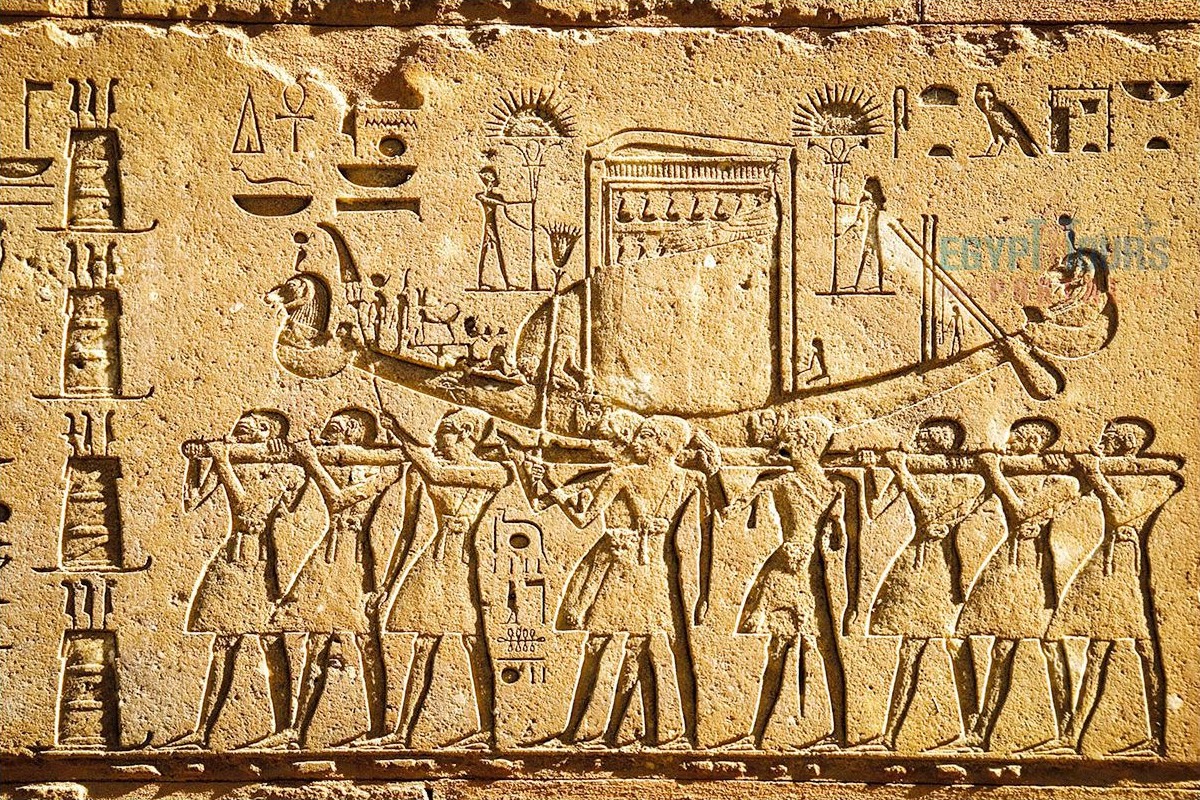
And the medium that preserved and transmitted this knowledge was stone. The pyramids — built around 2850 BC, during the Old Kingdom — were the ultimate time-biased artifacts: monumental, immovable, designed to endure not for decades or centuries but for eternity. The hieroglyphics carved into temple walls were simultaneously decorative and scriptural; there was, Innis noted, no essential difference between ornament and inscription, because both served the same purpose: binding sacred knowledge to permanent material. The god Thoth was "Lord of the Divine Word," keeper of the divine book. The scribe who mastered the complex hieroglyphic system — "a difficult and specialized art requiring long apprenticeship" — was credited with possessing "mysterious and potent knowledge," the power to bring "into being what was not." Scribes stood alongside kings, priests, and generals in the social hierarchy.
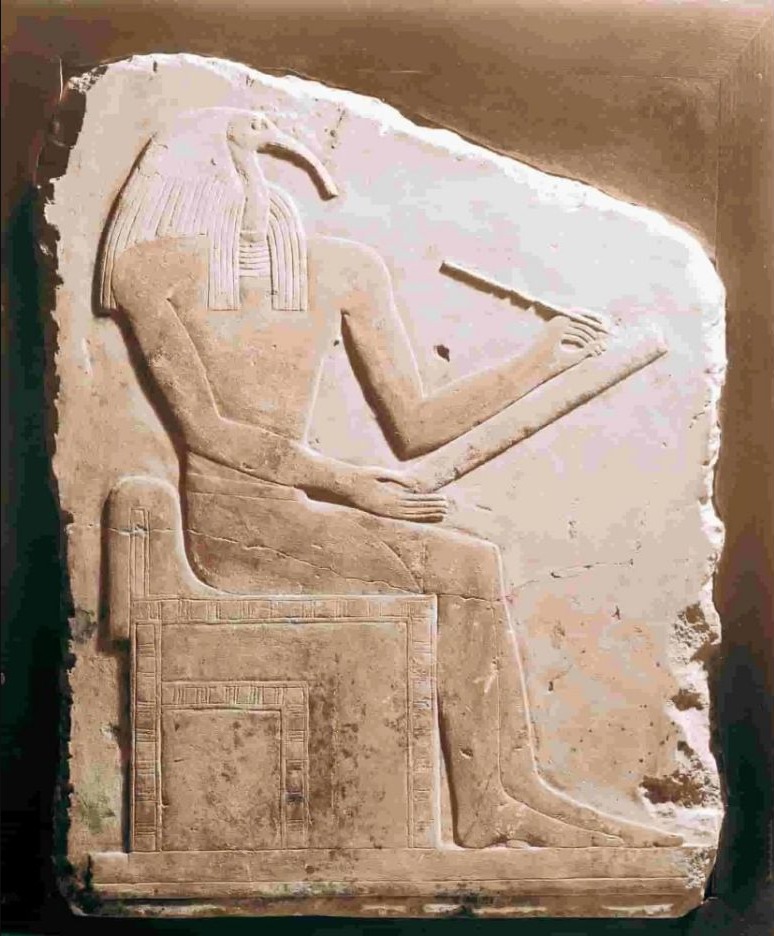
Here is the monopoly in its clearest form. The complexity of the medium creates the exclusivity of the class. Because hieroglyphics required years of training to master, only a priestly elite could read and write. Because only the priestly elite could read and write, they controlled the interpretation of sacred texts, the administration of the calendar, the recording of royal decrees, the very architecture of knowledge. The medium and the monopoly were one and the same. You could not challenge the scribes without challenging the stone.
Then papyrus entered the picture — and cracked the system wide open. After 2540 BC, Innis wrote, "the profound disturbances in Egyptian civilization involved in the shift from absolute monarchy to a more democratic organization coincides with a shift in emphasis on stone as a medium of communication or as a basis of prestige, as shown in the pyramids, to an emphasis on papyrus." Papyrus was light. It permitted cursive "hieratic" writing instead of formal carved hieroglyphs. "By escaping from the heavy medium of stone," Innis wrote in a line that hums with compressed implication, "thought gained lightness. All the circumstances arouse interest, observation, reflection." By 2000 BC, literacy had spread beyond the priestly caste: "the central administration employed an army of scribes, and literacy was valued as a stepping-stone to prosperity and social rank."
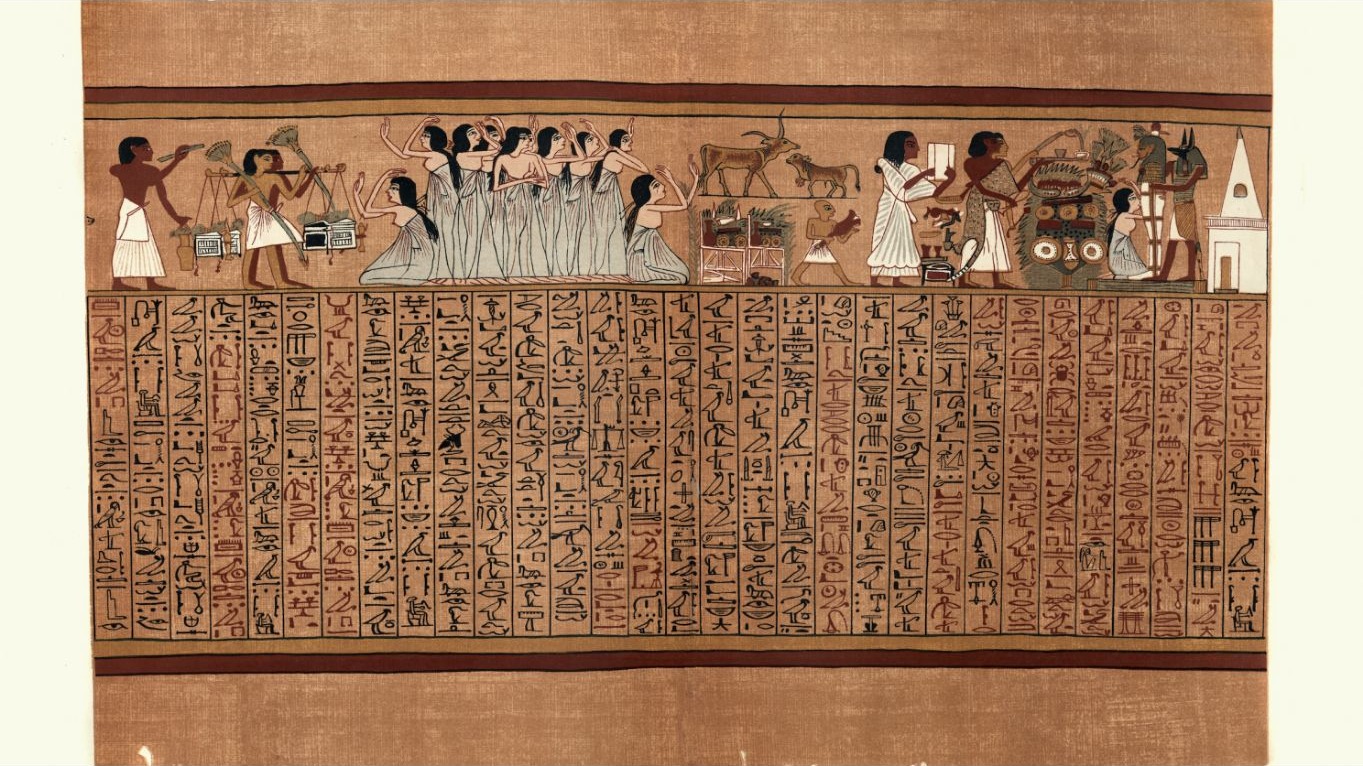
But the shift from stone to papyrus did not bring utopia. It brought instability. A space-biased medium had disrupted a time-biased monopoly, but the old system's structures persisted — hieroglyphic complexity survived even on papyrus, because the priestly class had every interest in maintaining the difficulty of the writing system. The twenty-four consonant signs that could have simplified into an alphabet never did, because "monopoly over writing supported an emphasis on religion and the time concept, which defeated efforts to solve the problem of space." Egypt could not adapt. "The shift from dependence on stone to dependence on papyrus and the changes in political and religious institutions imposed an enormous strain on Egyptian civilization." The Hyksos invaded around 1660 BC with bronze weapons, horses, and chariots — and Egypt, caught between one medium and another, unable to balance either, fell.
This is the pattern Innis traced across every civilization he examined. A dominant medium creates a monopoly of knowledge. The monopoly grows rigid. A new medium emerges from the margins, disrupting the old order. The new medium creates its own monopoly. The cycle begins again. "Each medium," Innis wrote, "has its significance for the type of monopoly of knowledge which will be built and which will destroy the conditions suited to creative thought and be displaced by a new medium with its peculiar type of monopoly of knowledge."
IV. Phoenicians, Papyrus, and the Alphabet that Broke the Scribes
If Egypt illustrated the mechanics of monopoly, the Phoenician alphabet illustrated the mechanics of disruption — and it remains, across Innis's entire body of work, the single most dramatic example of a new medium shattering an established order.
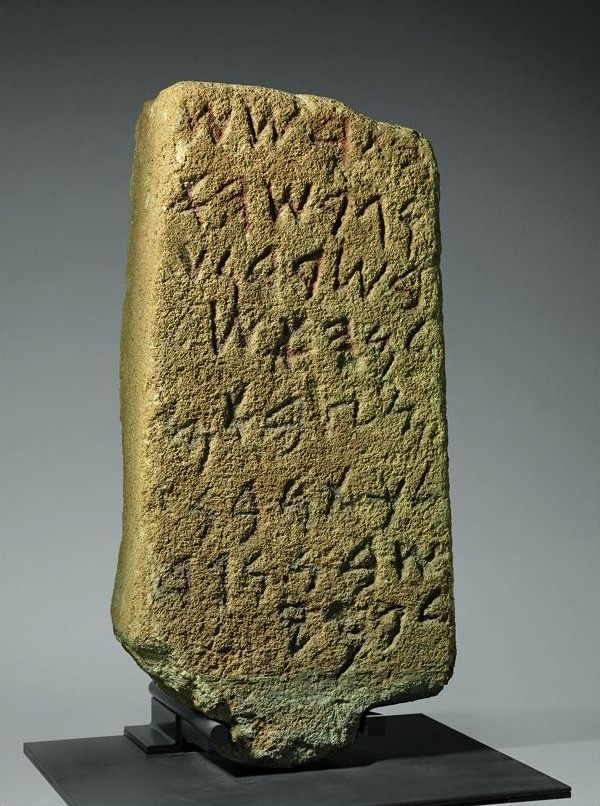
The Phoenicians were traders. They sailed the Mediterranean from their coastal cities — Tyre, Sidon, Byblos — buying and selling across cultures that used mutually incomprehensible writing systems: Egyptian hieroglyphics, Babylonian cuneiform, Hittite scripts. They needed, as Innis put it, "a swift and concise method of recording transactions." What they developed, around 1050 BC, was a consonantal alphabet of roughly twenty-two letters — radically simple compared to the hundreds of hieroglyphic signs or the hundreds of cuneiform wedge-marks that preceded it. The Phoenician alphabet "undermined the elaborate hieroglyphic and cuneiform scripts overseen by priestly elites in Egypt and Babylonia." Where those scripts required a lifetime of specialized training, the alphabet could be learned in weeks. "Commerce and the alphabet were inextricably interwoven, particularly when letters of the alphabet were used as numerals."
The consequences were civilizational. A simple writing system meant that literacy was no longer confined to a special class. The scribal monopoly — the arrangement by which access to written knowledge was controlled by a trained elite — was broken. Not immediately, not everywhere, not without resistance. But structurally and irreversibly. The alphabet was the original democratizing technology. And when the Greeks adopted it, adding vowel signs that permitted "the expression of fine distinctions and light shades of meaning," the results were extraordinary. Greek civilization — the civilization that produced Socrates, Plato, Aristotle, Athenian democracy, tragedy, comedy, philosophy, and the Western intellectual tradition — flourished precisely because it balanced a powerful oral tradition with this new, accessible written medium. "The flexibility of an oral tradition," Innis wrote, "enabled the Greeks to work out a balance between the demands of concepts of space and time in a city state." The Greeks, crucially, "had no Bible with a sacred literature attempting to give reasons and coherence to the scheme of things, making dogmatic assertions and strangling science in infancy." They had no scribal priesthood guarding sacred texts. They had Homer, recited aloud from memory, and Socrates, teaching through question and answer, and the newly simplified alphabet, permitting anyone with basic literacy to participate in the culture of written thought.
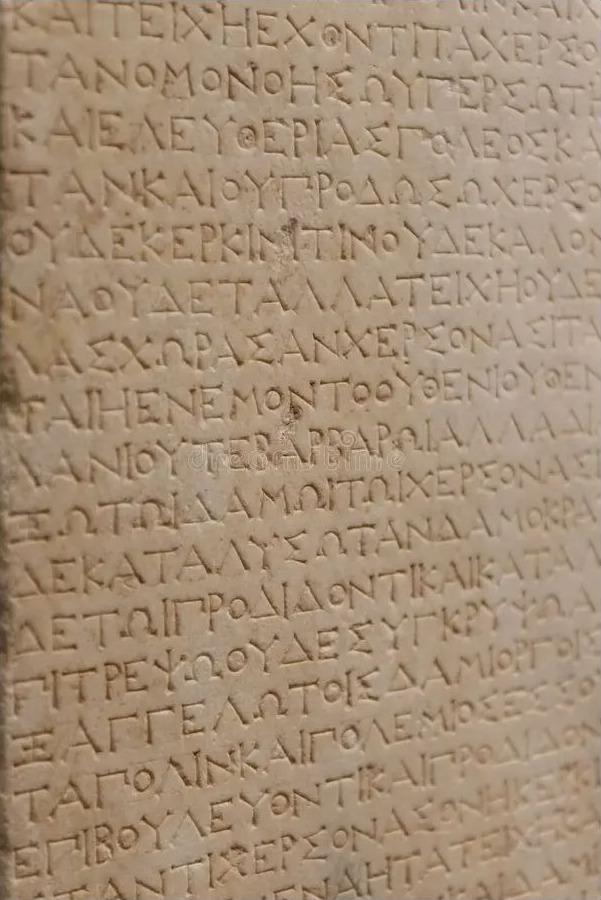
This was Innis's golden age: the brief, brilliant century in which Athens maintained equilibrium between the spoken and the written, the traditional and the innovative, time and space. "The power of the oral tradition in Greece which checked the bias of a written medium," he wrote, "supported a brief period of cultural activity such as has never been equalled." And then, as always, the balance tipped. Writing expanded. The oral tradition weakened. Athens fell to Sparta in 404 BC. Socrates — "the last great product and exponent of the oral tradition" — was executed in 399 BC. The medium shifted, the monopoly shifted with it, and an era ended.
V. What Gutenberg Did, and What It Portends
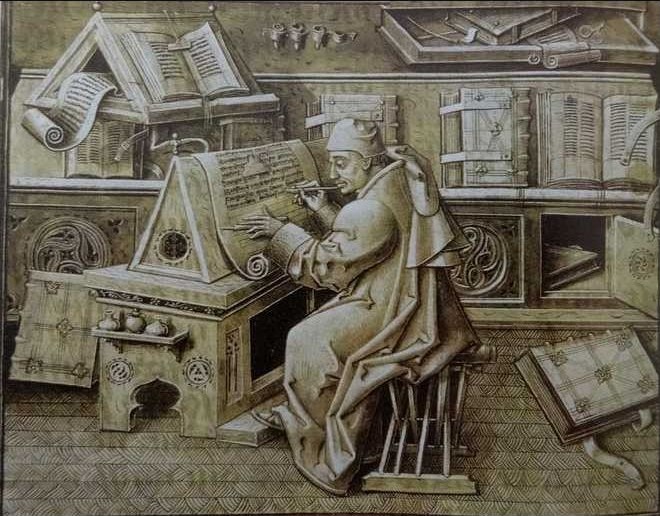
Fast forward two thousand years. Medieval Europe, in Innis's telling, was dominated by parchment and the Church. Parchment — durable, locally produced wherever livestock were raised, well suited to careful manuscript copying — was a time-biased medium that "gave a bias toward ecclesiastical organization." The Church controlled parchment production, Latin literacy, and manuscript reproduction. The monopoly was total: an illiterate laity depended entirely on a literate clergy for access to scripture, theology, law, and most forms of recorded knowledge.
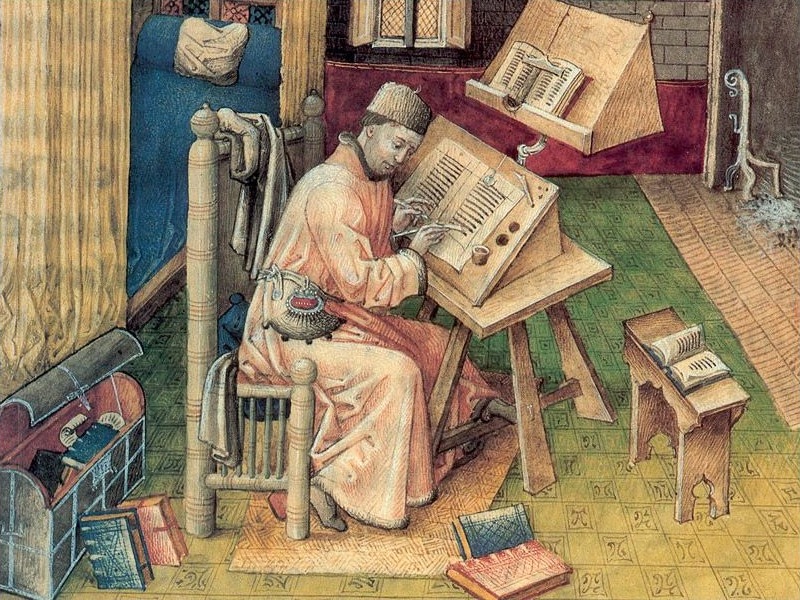
Then paper arrived from China, via the Arab world. And then, in the 1440s, Gutenberg built his press.
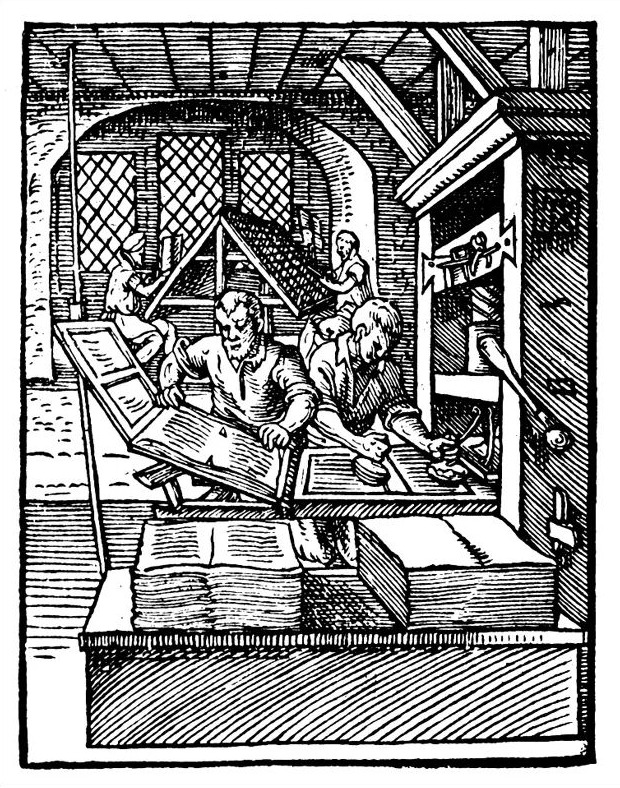
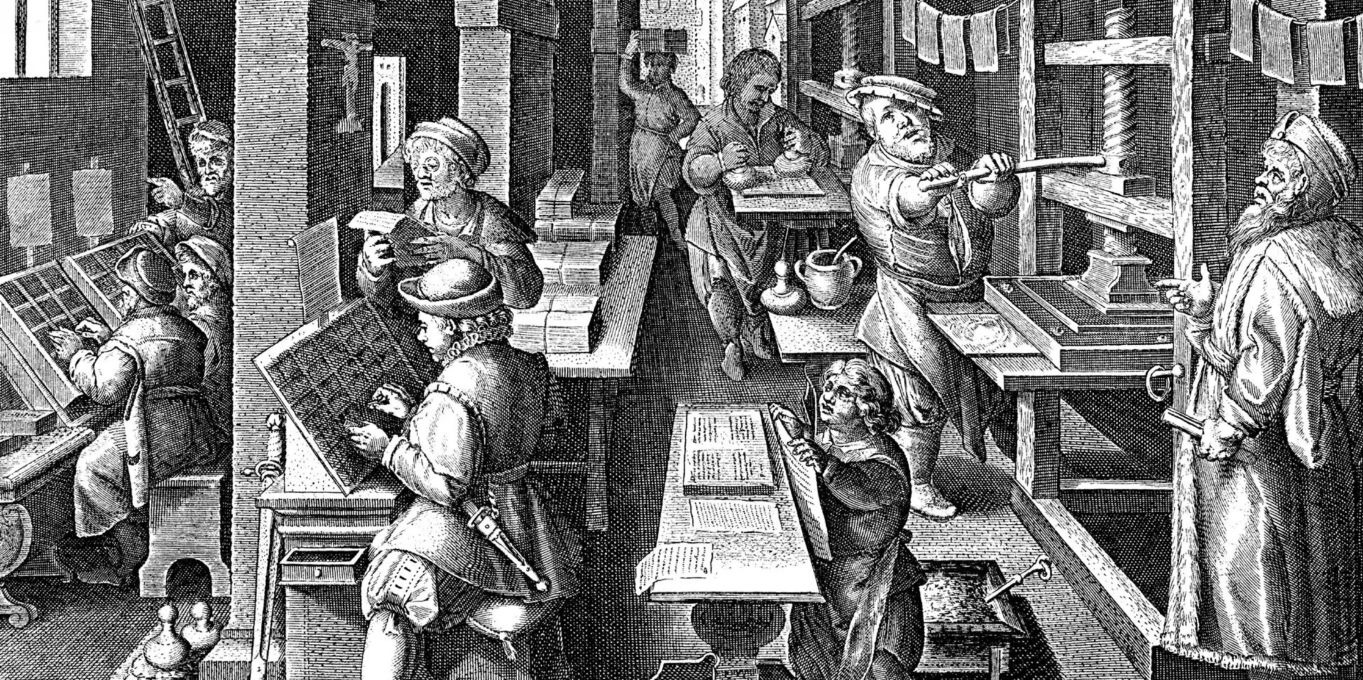
Innis's analysis of the printing press deserves slow attention, because it is the closest historical analogue to what is happening with AI. The press was, above all, a space-biased technology: it made text cheap, portable, reproducible on a previously unimaginable scale. A single press could produce hundreds of identical copies of a text in the time a monk would need to produce one. The result was an explosion of spatial reach — and a corresponding collapse of the ecclesiastical time-biased monopoly. "Paper supported the growth of trade and cities and of education beyond the control of the monasteries, and in turn of the Church and the cathedrals." Print "implied the beginning of a return to a type of civilization dominated by the eye rather than the ear" and "gradually undermined the authority of religion and enabled the rise of science, facilitating Reformation, Renaissance and Revolution, political, industrial and commercial."
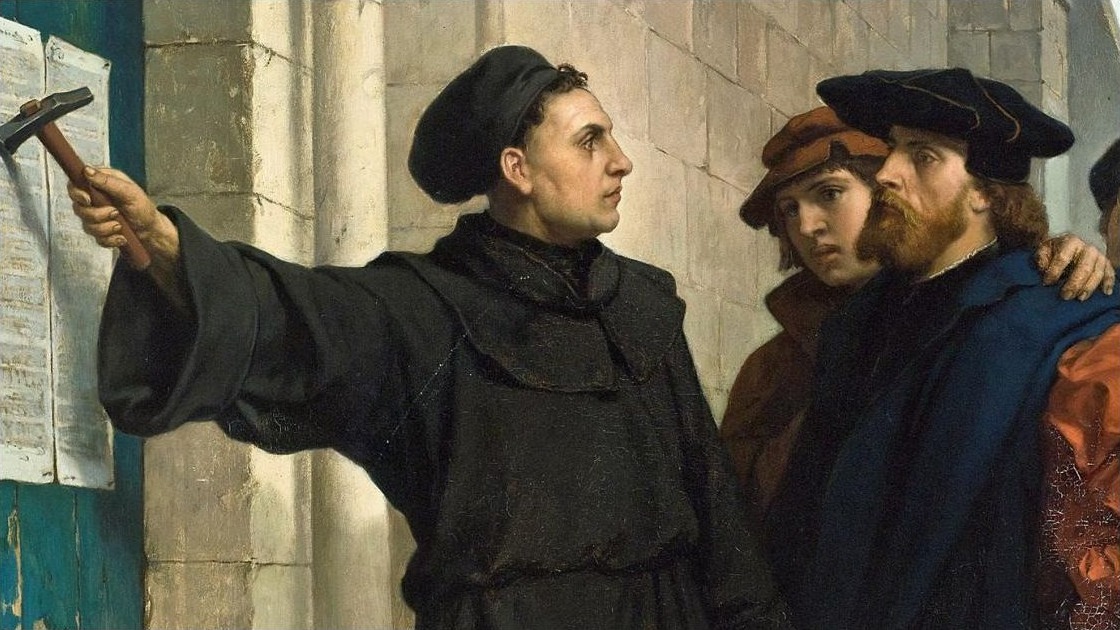
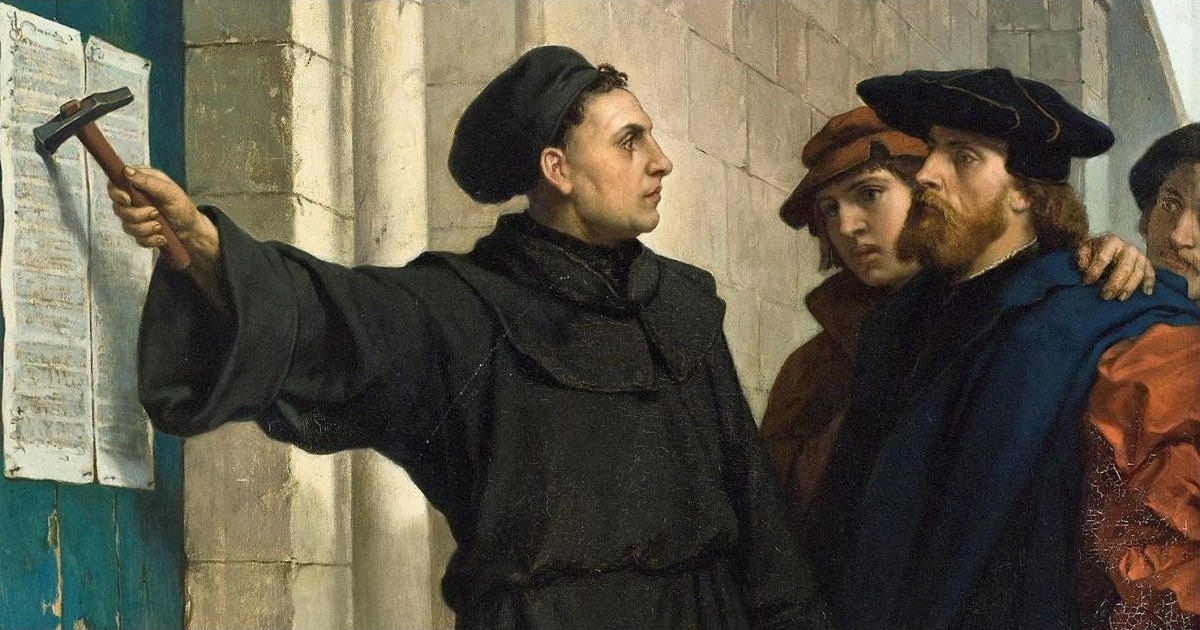
Martin Luther grasped the implications immediately. "Protestantism," Innis observed, "was also the first movement of any kind, religious or secular, to use the new presses for overt propaganda and agitation against an established institution." And the press did not merely spread Protestant ideas — it restructured the very possibility of national identity. "With printing, paper facilitated an effective development of the vernaculars and gave expression to their vitality in the growth of nationalism." Before the press, Latin united a literate elite across national borders; after the press, vernacular languages — German, English, French, Italian — became the vehicles of distinct national cultures. The medium didn't just distribute new content. It reorganized the political geography of knowledge.
VI. A Plea for Time, Delivered on the Eve of Television
All of these historical cases — the Egyptian scribe, the Phoenician trader, the Greek agora, the Gutenberg press — converge in a single late address that Innis delivered March 30, 1950. He called it "A Plea for Time." his paper," His argument: Western civilization had surrendered almost entirely to space-biased media, and the consequences were approaching catastrophe. "I am concerned rather with the change in attitudes toward time which precede the modern obsession with present-mindedness and which suggest the balance between time and space has been seriously disturbed with disastrous consequences to Western civilization."
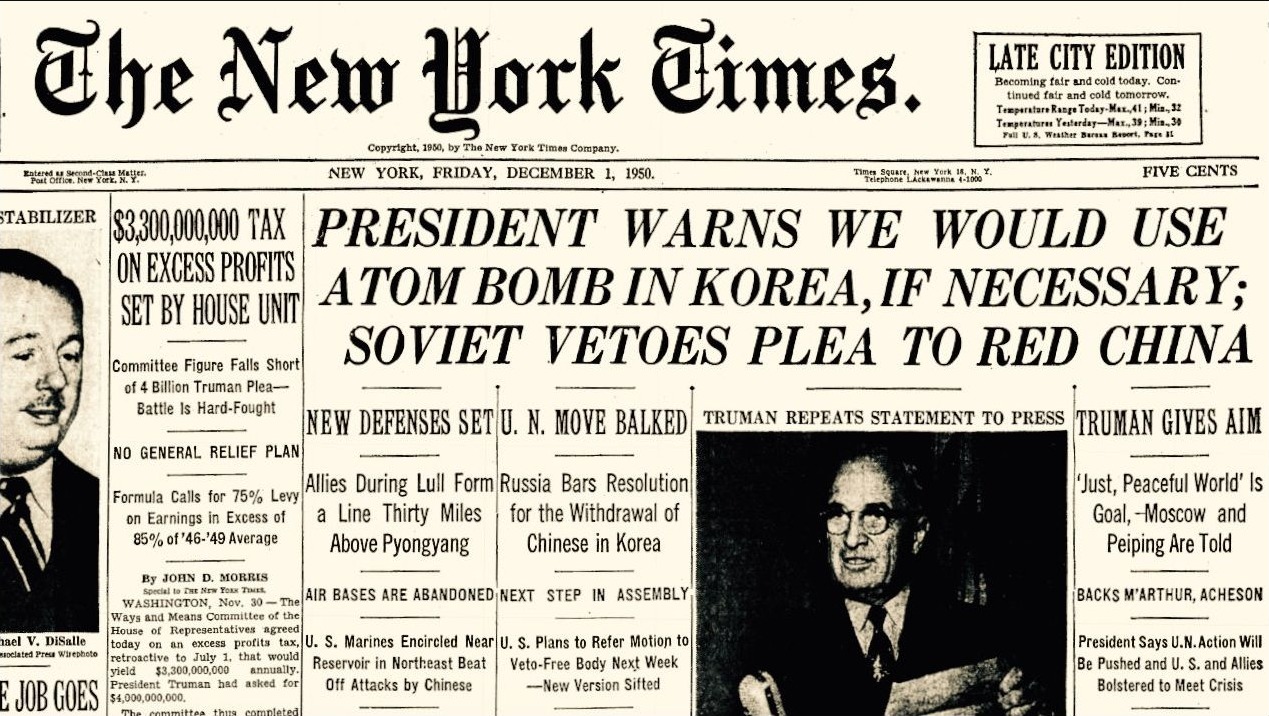
The newspaper was his primary exhibit. Mass-circulation papers, printed on cheap wood-pulp stock, were the purest space-biased medium yet invented. "Time has been cut into pieces the length of a day's newspaper." The commercial logic was self-reinforcing: larger print runs required more advertising; more advertising required larger circulation; larger circulation required more exciting content; more exciting content meant novelty at the expense of continuity. Innis quoted the elder Bennett of the New York Herald — "I bring the paper out every day" — and added, with acid precision, "he was consistent in inconsistency." Even more devastating: "Advertisement lives in a one day world."

Radio was worse. "The radio appealed to vast areas, overcame the division between classes in its escape from literacy, and favoured centralization and bureaucracy." A single voice could reach millions: "In Europe an appeal to the ear made it possible to destroy the results of the Treaty of Versailles as registered in the political map based on self-determination. The rise of Hitler to power was facilitated by the use of the loud speaker and the radio." Broadcasting was the ultimate space-biased technology: instantaneous, centralized, ephemeral, annihilating distance while annihilating duration.
"Present-mindedness" was his name for the civilizational pathology this produced — the inability to maintain any meaningful relationship with past or future because the dominant media are oriented exclusively toward the now. "The steadying influence of the book as a product of sustained intellectual effort was destroyed by new developments in periodicals and newspapers." The result was a culture "characterized by an enormous increase in the output of mechanized knowledge with the newspaper, the book, the radio and the cinema" that "has produced a state of numbness, pleasure and self-complacency perhaps only equalled by laughing-gas." His formulation — quoting Wilde — strings: "we have sold our birthright for a mess of facts."
His prescription was a recovery of the oral tradition as a counterweight to mechanized communication. He meant this not nostalgically but structurally: the oral tradition was inherently dialogical, requiring human presence, resisting mechanical reproduction, forcing knowledge into the form of living relationship rather than dead text. "The oral tradition implies freshness and elasticity." Socrates, not Gutenberg, was his model. "We must somehow escape on the one hand from our obsession with the moment and on the other hand from our obsession with history. In freeing ourselves from time and attempting balance between the demands of time and space we can develop conditions favourable to an interest in cultural activity."
And then, in the final pages of Empire and Communications, published the following year, a sentence so dark it stops the reader cold: "Concern with the position of Western civilization in the year 2000 is unthinkable. Each civilization has its own methods of suicide."
VII. Parameters, Predictions, and the Planetary Medium
Innis died on November 8, 1952. He never saw television saturate the culture. He never saw the internet. He never saw a language model. But the framework he left behind — the bias of communication, the monopoly of knowledge, the oscillation between time and space, the margin disrupting the center — has not aged. It has accelerated. Because what artificial intelligence represents, in Innisian terms, is something genuinely unprecedented: a medium that has simultaneously swallowed the archive and become the broadcast, absorbing the time-biased dimension of civilization into the space-biased infrastructure of planetary distribution.
Let the strangeness of this register. Every previous medium in Innis's typology was either time-biased or space-biased. Stone preserved but did not travel. Papyrus traveled but did not preserve. Parchment endured in monastic libraries; print scattered across continents. The balance Innis sought was always a balance between media — the monastery alongside the market, the archive alongside the newspaper, the slow institution offsetting the fast network.
A large language model occupies both positions simultaneously. Its training process is the most ambitious act of temporal accumulation in the history of communication: the ingestion, parsing, and statistical encoding of books, articles, legal codes, scientific papers, encyclopedias, correspondence, poetry, code repositories, and billions of web pages spanning centuries of literate output. The model contains, in compressed probabilistic form, more of humanity's textual heritage than any library, any archive, any university has ever held under one roof. This is the time-biased dimension — the deep archive, folded into mathematical weights, carried forward from the past.

But the output of this process — the chatbot response, the AI-generated summary, the search overview that reaches a billion users — is radically space-biased. It is instantaneous, ephemeral, infinitely replicable, geographically unbounded, and stripped of every contextual marker that once identified the origin, the authority, and the institutional accountability of a piece of knowledge. The model remembers everything and attributes nothing. It synthesizes centuries and delivers the result in the register of casual conversation.
Innis would have recognized this as a monopoly of knowledge more comprehensive than any he described — and more paradoxical. The archive of civilization has been compressed into a handful of corporate artifacts, trillions of statistical based parameters and unembodied, unsituated and unsourced or cited statistical embeddings. The organizations that build, train, and deploy these models — OpenAI, Anthropic, Google DeepMind, Meta, and perhaps five or six others worldwide — constitute a new scribal class and priestly elite who can both dine, disagree and argue with presidents, generals, senators and ministers of war with much higher ranking than Egyptian priestly scribes or Gutenberg printers or Hearst or Murdoch or Maxwell type newspaper tycoons whose monopoly rests not on the complexity of hieroglyphics or print and media empires to control nation states but on the staggering cost of computation and elite training on the machine learning expertise required. Training a frontier model now runs to approximately eight hundred million dollars in hardware alone. Anthropic's CEO has acknowledged costs approaching a billion dollars for a single training run, with ten-billion and 100 billion dollar runs on the horizon. A RAND Corporation study has documented natural monopoly conditions in the foundation model market. The barrier to entry is not knowledge of sacred scripts. It is capital, measured in tens of billions and whispered now in trillions— a barrier as impassable, in its way, as the lifetime of training required to become an Egyptian scribe.
VIII. The Oracle Problem
But the Innisian diagnosis goes deeper than market concentration. What makes AI genuinely dangerous — in Innis's framework, not merely in the framework of antitrust economics — is what it does to the relationship between knowledge and authority.
In every previous communication regime, the form of the medium carried implicit signals about the status of its content. A hieroglyphic inscription carved in temple stone announced itself as sacred and permanent. A hand-copied manuscript bore the marks of institutional commitment — the labor of the monastery, the resources of the patron, the imprimatur of the religious order. A peer-reviewed journal article carried the weight of disciplinary vetting: anonymous reviewers, editorial boards, the slow, contentious, self-correcting machinery of scholarly consensus, review and high walls of human credentialled referees. Even a newspaper editorial, for all its biases, was traceable to a named author and a masthead with an address. These formal markers were imperfect, often exclusionary, sometimes corrupt. But they constituted a legible system of epistemic accountability. You could argue with a source because you could see the source.
AI-generated text has no such markers. It arrives fluent, confident, unembodied and unsigned. Its authority derives not from institutional verification but from stylistic plausibility — from the sheer persuasiveness of well-formed prose and the ambient assumption that a system trained on everything probably knows something. When Google's AI Overviews condense a research question into a paragraph-length answer and sixty percent of users never click through to the underlying sources, what has happened is not merely a change in user interface design. It is a structural transformation in the way knowledge meets its audience. The provenance has been severed and emasculated. The context has been consumed. The answer exists in an eternal present, untethered from the centuries of accumulation that produced it.
Innis's term for this condition was "present-mindedness" — but in his day it described a culture addicted to newspapers and radio bulletins. In 2026, present-mindedness has been re-engineered into the architecture of the dominant knowledge medium itself. A language model is, by design, a machine for converting temporal depth and 'situated knowledge' into global unsituated, largely untransparent and unembodied spatial availability: it takes the slow accretions of centuries and serves them as instant, context-free output. It performs what might be called temporal extraction without temporal commitment — mining the past while serving only the present, with no genuine continuity, no tradition, no ongoing relationship with the sources it has absorbed.
The scholar who grasped this first was not an Innis specialist but a memory theorist. Writing in Cambridge University Press's Memory, Mind & Media, Andrew Hoskins argued that "the generative model that emerges from the AI training process is an extension of the past (the data) into the present. A model is, in the end, a product of its training data... the 'ingredients' are remnants of the past, and the model serves as a channel or medium through which these fragments are given voice and agency." The model is an archive performing as an oracle. It wears the mask of the present while speaking with the voice of the dead.
IX. Whose Knowledge, Whose Empire
Innis was acutely sensitive to the question of whose knowledge monopolies preserve — and whose they erase. His attention to margins was one of the most generative elements of his thought. Empires, he observed, are most creative at their peripheries. The center consolidates; the margin innovates. The Phoenician alphabet emerged at the edge of established empires, not at their core. The printing press transformed Europe from the margins of manuscript culture, not from the monasteries that dominated it. Oral traditions persisted most vigorously in communities the literate center had dismissed.
The AI landscape of 2026 inverts this pattern in a way Innis would have found grimly familiar. The center of the current AI regime is geographically narrow — a corridor from San Francisco to Seattle, with satellite nodes in London, Beijing, and a scattering of university labs on the palms of two hands. It is institutionally concentrated: a half-dozen technology corporations and their associated research divisions. And it is linguistically particular: English-dominant, trained overwhelmingly on English-language data. A Stanford study found that large language models work well for the 1.52 billion English speakers on the planet but underperform drastically for the 97 million Vietnamese speakers, and catastrophically for the 1.5 million speakers of Nahuatl. Only about seven percent of the world's roughly seven thousand languages are reflected in the published online material that constitutes training data. A Johns Hopkins study found that multilingual models build "information cocoons" — when no source material exists in a user's language, the model generates answers from English-language sources, imposing what the researchers called "American perspectives" on speakers of low-resource languages.
Innis would have called this a colonial extraction pattern. He had seen it before. His first major work, The Fur Trade in Canada (1930), traced how the economics of a single commodity — beaver pelts — organized an entire continental geography: trade routes, Indigenous alliances, imperial rivalries between France and England, the shape of what would become the Canadian nation-state. The raw material was harvested at the periphery, processed and profited from at the center. The scholar Menahem Blondheim traced Innis's intellectual migration: "the flow of staples could chart political, economic, social, and even cultural links. He then switched his perspective: rather than focusing on the staples, he zeroed in on the networks and interfaces themselves."
The staple, in 2026, is knowledge itself — the digitized textual output of millennia of human intellectual labor, scraped from the open web, compressed into model weights, and served back to the world as a proprietary product. The epistemic fur trade of the twenty-first century operates at a scale that would have staggered Innis, who was not easily staggered. Over seventy copyright infringement lawsuits have been filed against AI companies. The New York Times v. OpenAI moves toward summary judgment, with a federal judge ordering OpenAI to produce twenty million anonymized ChatGPT logs. The U.S. Copyright Office has concluded that where generative AI systems "compete with or diminish licensing opportunities for original human creators," fair use is unlikely to apply. But the extraction has already occurred. The model has already been trained. The archive has already been consumed. The legal question is whether the consumption was lawful; the Innisian question is what kind of civilization results from a medium that feeds on its own cultural heritage and outputs something that looks like knowledge but has been severed from every institution that produced it.
X. The Counter-Monopoly, and Its Limits
Innis's history is not only a story of monopoly. It is also a story of disruption — of new media emerging from the margins to shatter established orders. The Phoenician alphabet broke the scribal priesthood. Papyrus broke the monopoly of stone. The printing press broke the monastery's grip on literacy. Each disruption was partial, temporary, and eventually generative of its own new monopoly. But the disruptions were real, and they mattered.
In 2026, the counter-monopoly takes the form of open-source AI. DeepSeek's R1 model, released in January 2025 under a permissive license, matched OpenAI's frontier reasoning capabilities while reportedly costing only six million dollars to train — a fraction of a percent of what the leading proprietary models require. The event was seismic: Nvidia lost five hundred and eighty-nine billion dollars in market capitalization in a single day. Alibaba's Qwen models, Moonshot AI's Kimi, and a growing ecosystem of open-weight systems have rapidly closed the gap with proprietary alternatives. Inference costs have dropped roughly tenfold per year.
The Innisian reading of this development is double-edged. On one hand, open-source models represent exactly the kind of marginal disruption that Innis identified as civilization's recurring, if always temporary, salvation — a challenge to the established monopoly from outside its institutional boundaries. On the other hand, the pattern Innis described is cyclical, not progressive. New media disrupt old monopolies and then consolidate their own. And the signs of consolidation are already visible. Meta, the largest corporate champion of open-source AI through its Llama series, has reportedly begun pivoting toward proprietary models after the failure of its Llama 4 Behemoth system — the counter-monopoly retreating into monopoly, the margin absorbed by the center. By the Open Source Initiative's strict definition — requiring open training data, code, and weights — almost no popular "open" model qualifies. The weights are open; the training data is not. The surface is transparent; the substrate is opaque.
Innis would not have been surprised. The printing press democratized literacy, and then the newspaper industry concentrated it again. Radio democratized the spoken word, and then broadcasting monopolies captured it. The alphabet broke the scribal monopoly, and eventually a new class of literate elites reconsolidated control. Every disruption creates a window of possibility — and every window, eventually, closes.
XI. The Institutions That Remain
But Innis was not fatalistic. His pessimism was diagnostic, not nihilistic. He believed that recognizing the bias of a medium was itself a form of resistance — that seeing the monopoly was the first step toward breaking it. And his prescription, translated into the idiom of 2026, points directly at the institutions that AI is most aggressively positioned to disintermediate.
Libraries. Universities. Archives. Scholarly societies. These are the time-biased institutions of modern civilization — the organizations whose purpose is not to distribute knowledge faster or farther but to preserve, contextualize, and contest it across generations. The research library, which for five centuries served as the primary infrastructure for organizing recorded knowledge, now competes with a system that can synthesize its holdings faster, more fluently, and more accessibly than any human reference librarian. The university, which for eight centuries served as the institutional guarantor of disciplinary expertise, watches its graduates turn first to a chatbot and second to a syllabus. The archive, which preserved the documentary record against the erosions of time, discovers that its collections have already been ingested, stripped of metadata, and recombined into a probabilistic output that tastes like knowledge but contains no fiber.
These institutions are not obsolete. In Innisian terms, they are more necessary than ever — precisely because they embody the time-biased values that AI, in its current configuration, cannot provide: provenance, context, contestation, the slow and painstaking work of interpretation, the maintenance of dissenting and marginal and non-digitized knowledge. A language model trained on the open web systematically underrepresents oral traditions, Indigenous knowledge systems, unpublished manuscripts, restricted archival collections, and any form of knowledge that has not been digitized and made available for scraping. The library holds what the model cannot see. The archive preserves what the model has not ingested. The university teaches the skills of critical evaluation that the model's seamless fluency is designed to bypass.
Innis's "Plea for Time" was, at its core, a plea for these institutions — or rather, for the function they serve: the maintenance of temporal depth in a civilization addicted to spatial reach. "We must somehow escape on the one hand from our obsession with the moment and on the other hand from our obsession with history," he wrote. "In freeing ourselves from time and attempting balance between the demands of time and space we can develop conditions favourable to an interest in cultural activity." He saw the university as the institution best positioned for this work — but only if it resisted becoming, as he acidly put it, "a congeries of hardened avid departments obsessed with an interest in funds in which the department which can best prove its superficiality or its usefulness is most successful."
He also issued a startling methodological warning — the kind of self-reflexive move that separates genuine thinkers from ideologues: "It is suggested that all written works, including this one, have dangerous implications to the vitality of an oral tradition and to the health of a civilization." The theorist of media bias acknowledged his own medium's bias. The man who wrote books admitted that books were part of the problem.
XII. The Student Who Got the Fame
A word about McLuhan, because the story of Innis's legacy is inseparable from the story of his most famous reader.
Marshall McLuhan arrived at the University of Toronto in 1946, an English professor from Manitoba encountering a political economist who was already rewriting the foundations of communication theory. The encounter was electric. McLuhan dedicated The Gutenberg Galaxy (1962) to Innis and declared him "the first person to hit upon the process of change as implicit in the forms of media technology." In his introduction to the 1964 edition of The Bias of Communication, McLuhan described Innis's sentences as compressed monographs — "he includes a small library on each page" — and called reading "Minerva's Owl" one of the most exciting intellectual experiences of his life.
What McLuhan took from Innis was the foundational insight: that media themselves, independent of their content, reshape the structure of civilization. This became "the medium is the message" — the most famous sentence in communication theory, and the one that made McLuhan a global celebrity.
What McLuhan left behind was everything political. The American media scholar James W. Carey defined the difference with lapidary precision: "Both McLuhan and Innis assume the centrality of communication technology; where they differ is in the principal kinds of effects they see deriving from this technology. Whereas Innis sees communication technology principally affecting social organization and culture, McLuhan sees its principal effect on sensory organization and thought. McLuhan has much to say about perception and thought but little to say about institutions; Innis says much about institutions and little about perception and thought."
McLuhan turned Innis's political economy into perceptual aesthetics. He turned Innis's alarm into wonder. He turned Innis's pessimism about monopoly into optimism about the "global village." He got the television appearances and the Playboy interview and the cameo in Woody Allen's Annie Hall. Innis got the footnotes.
But it is Innis — not McLuhan — whose framework also illuminates the AI landscape of 2026. Because the question is not how AI changes perception (McLuhan's question) but how it reorganizes power (Innis's question). The question is not whether the medium is the message but who controls the medium. The question is not what AI does to our senses but what it does to our institutions — to the libraries that preserve context, to the universities that train judgment, to the archives that hold the knowledge the model has not seen, to the oral traditions that resist compression, to the forms of knowing that cannot survive the journey through a statistical engine and emerge intact.
Coda: Methods
Harold Adams Innis was born in 1894 on a farm near Otterville, Ontario. He served in the First World War, was wounded at Vimy Ridge, studied at McMaster and the University of Chicago, and spent his career at the University of Toronto, where he became the most influential Canadian social scientist of the twentieth century. His early work on the fur trade and the cod fisheries established the staples thesis that shaped a generation of Canadian economic history. His late work on communication and empire — written in a compressed, allusive, often maddeningly opaque prose style — established the intellectual tradition that his student McLuhan would popularize and his student's student Walter Ong would extend.
He died on November 8, 1952, in Toronto, at the age of fifty-eight. He left behind a body of work that his contemporaries found brilliant but bewildering — too economic for the humanists, too humanistic for the economists, too Canadian for the Americans, and too pessimistic for almost everyone.
Seventy-four years later, in a civilization where the dominant medium of knowledge is a statistical model trained on the sum of digitized human expression and controlled by a handful of corporations whose combined market capitalization exceeds the GDP of most nations, Innis's questions remain unanswered. They remain, for the most part, unasked. What happens when a single medium absorbs both the archive and the broadcast, the memory and the message, the stone and the papyrus? Who governs the governors of knowledge? What becomes of the institutions that once maintained the tension between time and space — the libraries, the universities, the archives, the living oral traditions — when a faster, shinier, more agreeable alternative renders them invisible? And what kind of civilization builds its cognitive infrastructure on a medium that extracts temporal depth and delivers spatial reach, consuming the past to serve the present, remembering everything and understanding in the main the statistical generalizations with all of their internal weights and biases but now with the statistical erasure or at the least bell curve effacement of the longer tails of knowledge?
The empire is epistemic, algorithmic and digital now. The future will no longer be televised but played as a game or asked of a chatbot or mulltimodal world model yet uncapitalized fully to prepare for the IPO. The Nile still flows, but a much more slender group of scribes have new tools and the system cards and parameter counts are not transparent so this parallels previous esoteric knowledge systems and their peculiar rites of initiation and entrance to these new mystery schools elites. The priests of these new magic algorithms sit not in pyramids or Mayan temples but higher in skyscraper suites in San Francisco and speak in quarterly earnings calls and of societies of abundance instead of sacred rites of Spring and Harvest. But the pattern Innis described — communication, control, empire, monopoly, rigidity, disruption, reconsolidation, return —continues to turns with the wheel of time .
"Each civilization," Innis wrote, "decides its own methods of suicide."
The question for ours is whether we can see the method and details before it can act on us without any response or rebuttal.