
I.
The viral transmission began, as modern epidemics often do, with a seemingly innocuous interaction. Sarah Chen, a sophomore studying comparative literature at Berkely, sat hunched over her laptop in the early autumn vernal darkness of 2024, the glow of her laptop and smartphone casting fertile complementary shadows across a spectrum of older media, books, scattered and open on her bed —Borges, Barthes, Levi-Strauss, Hayles, a dog-eared copy of Burrough's Naked Lunch. She was three hours past deadline on an essay about metafiction, technology, language and society when she typed the fateful prompt: "Help me write like David Foster Wallace analyzing William S. Burroughs' concept of language as virus."
What emerged over the next seventeen minutes would have fascinated and horrified the American avant garde writer himself. The large language model—Claude 3.5, though it could have been any of its silicon siblings—began generating prose that didn't merely imitate Wallace's labyrinthine sentences and footnote-heavy style. It created something uncanny: a hybrid voice that seemed to understand both writers' DNA at a molecular level, splicing their linguistic genome into something simultaneously familiar and alien. Sarah watched, mesmerized, as paragraphs bloomed across her screen, each sentence a perfect simulacrum of two dead writer's human thought, yet somehow emptied or at least remixing a messy, ineffable quality that makes writing and that she would add her own gloss to . . .
She would also submit the essay, receive an A-minus, and never quite shake the feeling that she had participated in something profound and vaguely exhilarating but also dangerous, perhaps catastrophic. Her professor, himself already using AI to grade papers, would note the "exceptional synthesis of ideas" without detecting the silicon fingerprints all over the prose in favor of Sarah. This scene—repeated millions of times daily across universities, newsrooms, corporate offices, and creative studios—represents the moment when William S. Burroughs' most paranoid prophecy achieved viral transmission at civilizational and almost global scale.
"Language is a virus from outer space," Burroughs had declared in 1962, the words emerging from his typewriter in a dingy Paris hotel room thick with smoke that has moved towards legality with the chemical tang of developing fluid from his cut-up experiments. At the time, critics dismissed Burrough's words as beatnik provocation, the fevered metaphor of a junkie queer expatriate writer who saw control systems everywhere. Six decades later, as artificial intelligences generate billions of words daily—each one a viral missive finding an all too welcoming human host—Burroughs' vision reads less like metaphor than technical documentation.

II.
To understand how we arrived at this moment of linguistic epidemics spreading on global scales, we must return to that Paris hotel room where Burroughs, hollow-cheeked and intense, was literally cutting up the pileof words, the word bags of sentences and paragraphs and language itself apart with scissors and rearranging the tokenized pieces, seeking to break what he called all too linear and probable "word virus" that was quickly colonizing human consciousness in preferred modalities and rule based generalized systems of grammar and codes that were getting for him, restricvely too tight. The year was 1959, and Burroughs had fled America after accidentally shooting his wife in a wild drunken misguided and extremely stupid and dangerous game of William Tell in Mexico City—a tragedy that would haunt his work and drive his obsession with control systems, language and the bifurcation and difference with his own mind's unconscious shadow and human darkness.
The hotel, a nameless establishment on the Rue Gît-le-Cœur that housed a rotating cast of Beat expatriates, had become Burroughs' laboratory. His room resembled now an artist's or petty criminals' crime scene: newspaper clippings covered every surface, typewritten pages sliced into strips and scattered across the floor, fragments of text reassembled into new ungammatically correct configurations. His friend and collaborator, fellow queer, collaborator, fullbight winner and expatriate Brion Gysin had discovered the technique accidentally, slicing through newspapers with a Stanley knife while mounting drawings. But Burroughs saw in this accident a revelation: a method to expose the controlled but also viral nature of language itself.
"When you cut into the present, the future leaks out," he would tell visitors, his flat Missouri American aristocratic Burroughs Adding Machine Company scion drawl at odds with the revolutionary nature of his claims. His grandfather had invented the device that would mechanize calculation itself, spawning a corporate empire whose computational descendants would evolve through mainframes and microprocessors into the artificial intelligences now reshaping human thought—a company that, by the time of Burroughs's writing, had become one of the largest producers of mainframe computers in the world before merging into Unisys, its trajectory from adding machine to thinking machine one that Burroughs seemed to intuit decades before silicon made it manifest.
Burroughs titled one of his more famous essay collections The Adding Machine. He never escaped this inheritance even as he wrote against it, supported well into adulthood by the allowance his family's computational fortune provided. His Ivy League Harvard background could not be hidden, but his avant-garde orientation could. His cut-up technique wasn't merely aesthetic experimentation—it was literary guerrilla warfare against the linguistic control systems that Burroughs believed had imprisoned human consciousness in an ever-tighter hegemonic grip, a persona he could shed or don as circumstance required. By scrambling syntax, by forcing words into unnatural juxtapositions, he hoped to short-circuit the word virus he felt trapped within, to crack open—or at least slightly reveal—the arbitrary nature of the reality it constructed, gesturing toward wider verdant fields beyond.
What Burroughs intuited through his experiments, contemporary neuroscience would later confirm: language does indeed function like a virus, colonizing neural pathways, shaping perception, determining the boundaries of thought itself. The Japanese have no single word for blue and green, using "ao" for both; Russians distinguish between light blue (goluboy) and dark blue (siniy) as distinct colors. These aren't merely vocabulary differences—speakers of these languages demonstrate measurably different color perception at the neurological level. Language, as Burroughs suspected, doesn't describe reality; it creates and shapes it and by extension society and what is allowed and what isn't.
But even Burroughs, with his paranoid genius for detecting control systems, linguistic and otherwise, couldn't have imagined the form his 'language as virus' ideas would ultimately take. He envisioned tape recorders hidden in walls but also being dual use to splice together or open different linguistic tracks, or simarly subliminal messages broadcast through television also being able to be cut up, remixed and remodeled and reused for different purposes. The reality that would appear though perhaps almost 75 years later would prove far more elegant and insidious as a form of control mechanism. Artificial intelligences and large language models don't impose language upon anyone but generate it and it's multifarious uses from within, using our own words, our own patterns, our own desires, our own discoveries and ideas as the raw material for viral transmission and ultimately infection and spread on epidemiological proportions.
III.
The intellectual genealogy of the language-as-virus concept also extends far beyond Burroughs' cut-up experiments, reaching back through a labyrinth of thinkers who had glimpsed pieces of this linguistic puzzle. To fully understand how Large Language Models represent the apotheosis of viral language, we must trace these intellectual roots to other various outshoots and sources.
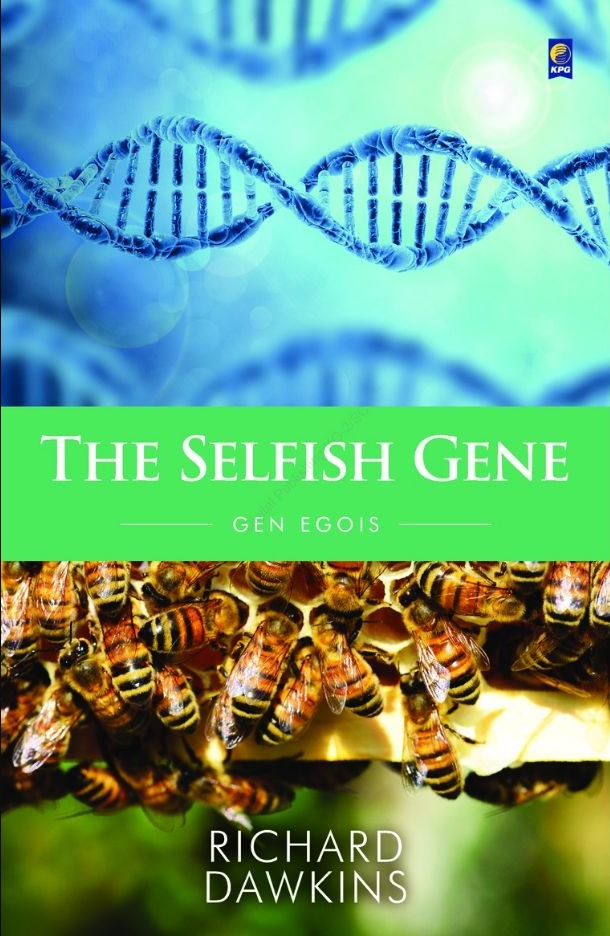
In 1976, a young Oxford biologist named Richard Dawkins was struggling to explain how cultural ideas spread and persist. Sitting in his cluttered New College study, surrounded by books on evolutionary theory and animal behavior, he coined a term that would itself achieve viral transmission: the meme. Just as genes propagate themselves through biological reproduction, Dawkins argued, memes—units of cultural information but not quite memory—propagate themselves by leaping from brain to brain. A catchy tune, a religious belief, a fashion trend expanding or in this vocabulary, gone viral: all are memes competing for the limited resource of human attention and 'spread'.
"Examples of sociocultural memes are tunes, ideas, catch-phrases, clothes fashions, ways of making pots or of building arches," Dawkins wrote in The Selfish Gene, his prose carrying its own infectious semiotic quality. "Just as genes propagate themselves in the gene pool by leaping from body to body via sperm or eggs, so memes propagate themselves in the meme pool by leaping from brain to brain via a process which, in the broad sense, can be called imitation."
What Dawkins perhaps didn't fully anticipate was how digital technology would create a new substrate for memetic evolution—one where the line between human and artificial propagation would blur beyond recognition on global scales spreading in less than two years globally with large competing 'variants'. Large Language Models represent viral meme-replication machinery operating at unprecedented global scale, processing and recombining semiotical general cultural units tokens and patterns with an efficiency that makes biological evolution look glacial by comparison.
The path from Dawkins' Oxford study to Silicon Valley's server farms also runs through another crucial waypoint: the Santa Fe Institute in the high desert of New Mexico, where in the 1980s and '90s, anthropologists Peter Richerson and Robert Boyd were developing their theory of dual inheritance. Humans, they argued, are unique in possessing two parallel inheritance systems: genetic and cultural. While our genes evolve over millennia, our cultures can transform in generations, even years.
Joe Henrich, their student who would later hold appointments at Harvard and make crucial contributions to cultural evolutionary theory, extended this framework with a concept that seems prophetic in the age of AI: the collective brain. Human intelligence, Henrich argued, isn't located in individual skulls but distributed across social networks. A master craftsman's techniques, a grandmother's recipes, a scientist's equations—all represent nodes in a vast cultural nervous system that stores and transmits information across generations.
"The secret of our species' success," Henrich would write, his academic prose betraying an almost evangelical fervor, "resides not in the power of our individual minds, but in the collective brains of our communities." Large Language Models, trained on the textual output of millions of human minds, represent a kind of crystallized collective brain—but one that operates according to precisely calculated statistical high dimensional probablist patterns rather than human understanding.
IV.
Meanwhile, in Paris, where Burroughs had conducted his cut-up experiments, a new generation of French intellectuals was developing theories that would prove essential for understanding algorithmic language. In the revolutionary ferment of May 1968, Gilles Deleuze and Félix Guattari—an unlikely partnership between a classical philosopher and a radical psychoanalyst—began collaborating on what would become a classic text of what would become known as the anti-psychiatric school and deconstructive post modernism, the text Anti-Oedipus: Capitalism and Schizophrenia.
Their concept of the rhizome perfectly captures how language or the internet spreads in the digital age. Unlike trees with their hierarchical branching, rhizomes are networks where any point can connect to any other, where growth occurs through capture and concatenation rather than linear development. "A rhizome has no beginning or end," they wrote in prose that itself seemed to spread rhizomatically, sending out shoots in multiple directions. "It is always in the middle, between things, interbeing, intermezzo."

This is precisely how Large Language Models process language: not through hierarchical grammar trees but through vast networks of precisely calibrated statistical associations, where "king" minus "man" plus "woman" equals "queen" not because the machine understands gender or royalty, but because these patterns repeat across millions of textual examples that instantiates both weights and bias to this linguistic probalistic calculus. The transformer architecture that powers modern AI—with its attention mechanisms that can connect any word to any other word regardless of distance—is fundamentally rhizomatic.
In a smoke-filled seminar room at the Collège de France, Michel Foucault was simultaneously developing his archaeology of knowledge, examining how discourse shapes not just what can be said but what can be thought. Power, Foucault argued, doesn't simply repress; it produces—subjects, knowledge and reality itself through linguistic constructs. "Discourse is not simply that which translates struggles or systems of domination," he intoned to rapt students, "but is the thing for which and by which there is struggle."
AI's Large Language Models would represent a new form of what Foucault would call "disciplinary power"—not enforcing specific ideologies but shaping the very fabric of discourse. Trained on vast corpora that embed existing power relations, these systems don't simply reflect bias; they actively reproduce and amplify it from their given datasets without question. When an LLM consistently associates "programmer" with male pronouns or "nurse" with female ones, it's not expressing an opinion—it's replicating statistically and precisely defined patterns of power embedded in language itself and the model training process which has occurred from the large intractable datasets being used to create these connections.
Julia Kristeva, the Bulgarian-French psychoanalyst and philosopher, would add another crucial dimension to this emerging understanding. Language, she argued, consists of two modalities: the symbolic (the structured, rigid, grammatical, law-abiding aspect) and the semiotic (the rhythmic, tonal, maternal aspect rooted in the body). Poetry, art, and revolution emerge from eruptions of the unruly human body of the semiotic into the symbolic order.
Sitting in her Paris apartment, surrounded by books in multiple languages, Kristeva might have recognized in Large Language Models pure symbolic systems—language drained of its semiotic dimension, words without bodies, signifiers severed from the primal drives that give language its transformative power and also Freudian and other slips such as the playful language of a child who has not yet entered and/or mastered the codes of these more rigid systems. These systems can imitate the surface structures of poetry but cannot access the bodily disruptions from which true linguistic innovation emerges but also begins.
V.
The technical architecture of Large Language Models—the engineering substrate of our linguistic gone viral epidemic—deserves careful excavation, for it reveals how statistical patterns can simulate understanding without comprehension, meaning without consciousness but paradoxically also how human beings also may be next word prediction mechanisms and consciousness as another late philosopher Daniel Dennett was fond of putting it, a phenomena not from the top down but from the bottom up. To understand this, we must descend into not carbon based life forms but the silicon mines where language is now processed.
In 2017, a team of Google researchers published an inoccuous sounding paper titled "Attention Is All You Need," a perhaps bit hyperbolic title, looking a little more closely for what would prove a very revolutionary document. The transformer architecture they described abandoned the sequential processing of previous language models in favor of something more elegant and terrifying: attention mechanisms based on key words (keys), questions from users (queries) and a quantitative number that would be produced (vales) that could then measure, quantify and process all words in parallel, discovering patterns and relationships between words (conventionally called 'tokens' in computers) at superhuman speed.
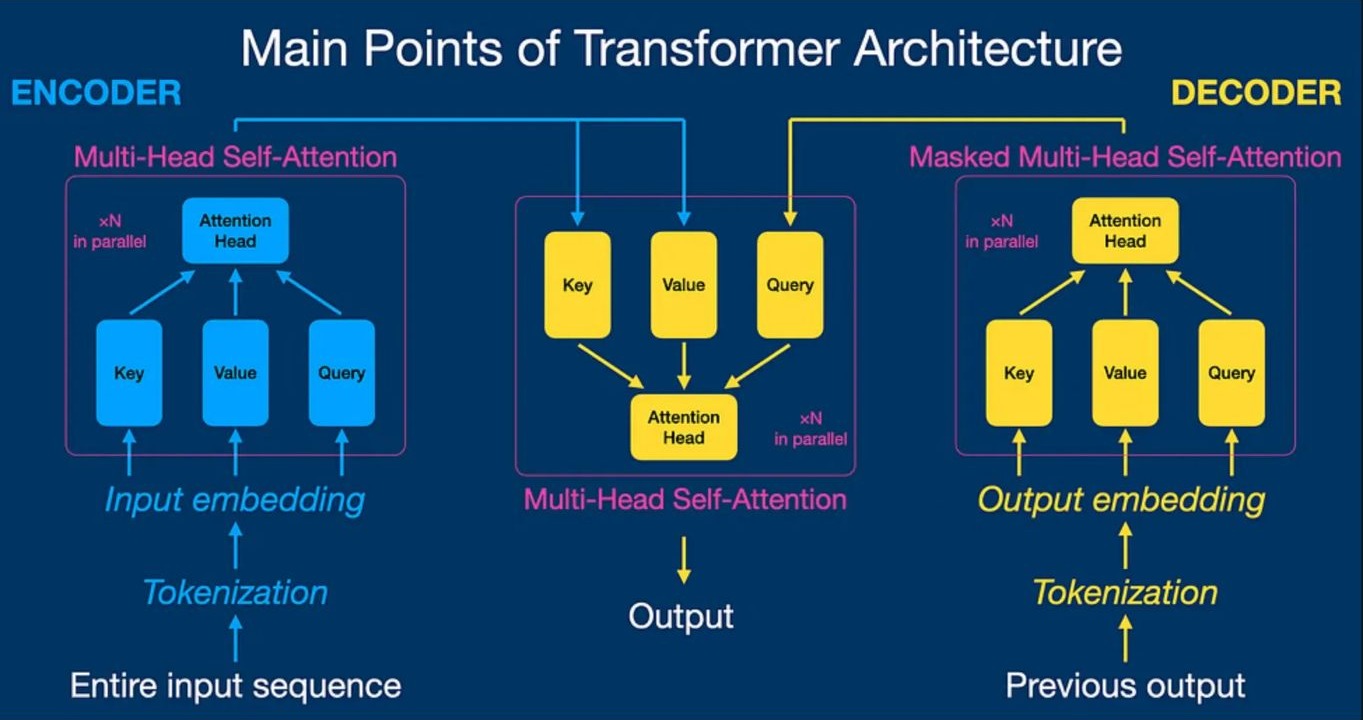
Picture the interior of a transformer model as a vast cathedral of probabilistic high dimensional mathematics, where each word becomes a vector in thousand-dimensional space. While everyone nows a two dimensional space, say length x width or the x and y of a similar graph the high dimensional space does a similar mathematics but think not simply x and why but the a to z of an alphabet going on to thousands or millions or billions of letters or in computer terms, parameters. The attention mechanism—the innovation that made modern AI possible—works then like a supernatural librarian versed in keys (keywords) and queries (questions) that can instantly recall every context in which a word has appeared because it has been assigned a value (quantified statistical probability), that allows a weighing (precise weight). Combining these memories allows better prediction models of what comes next whether that is a word, sentence, paragraph or whole novel. When the model processes "The cat sat on the..." it simultaneously considers millions of sentences ending with "mat," "chair," "roof," or 'fence' calculating probability distributions based on other keywords in the query and other 'keywords" in the relationship cloud created by all of the various variables described with an accuracy that seems like divination, magic or what we may call 'artificial intelligence.
But this apparent magic emerges from brute statistical hyperdimensional computer general probabilistically assigned force. GPT-3 (the AI brain), released by OpenAI in 2020, contained 175 billion parameters—individual weights adjusted through exposure to hundreds of billions of words of text. Its successor, GPT-4, likely contains over a trillion parameters, though OpenAI guards the exact number like a state secret. Each parameter represents a microscopic decision, a neural weight or quantified probabilistic value that is hard coded and determined how information flows through the complex multi-layered artificial neural network. Together, they form a kind of crystallized linguistic unconscious, encoding patterns their creators can neither fully map nor control.
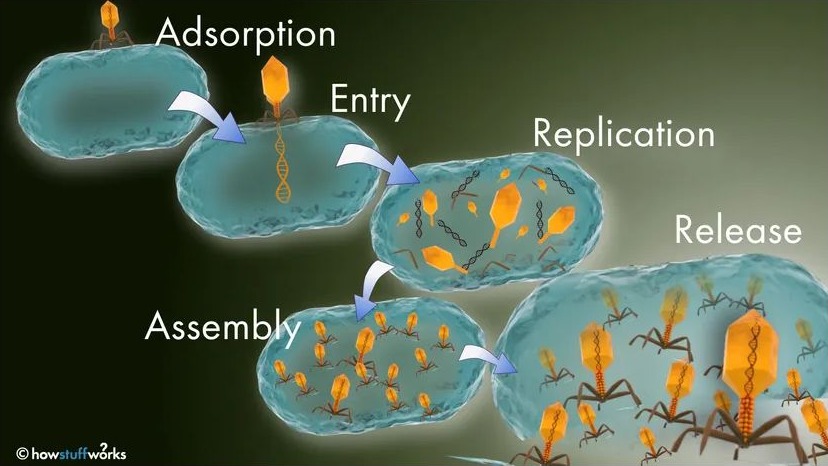
The training process itself resembles nothing so much as a massive viral genesis event. Datasets like CommonCrawl contain over 380 terabytes of text scraped from the internet—every blog post, news article, forum discussion, and corporate website becoming genetic material for the virus. The model ingests this corpus, adjusting its parameters to minimize prediction error, learning to complete sentences with uncanny accuracy. But what it's really learning is the statistical probabilistic soul of generalized human discourse—all our biases, blindnesses, and collective obsessions frozen into mathematical form or as the psychiatrist/psychoanalyst Carl Jung would put it an archetype of the global 'consciousness' or 'unconsciousness' or both depending the dataset or what is commonly referred to as the data pile.
Timnit Gebru, the AI researcher who was forced out of Google after raising concerns about large language models, had warned about this in a paper that proved too prescient for comfort. Working late in her home office, she and her collaborators documented how these models don't just reflect existing biases—they amplify them. The viral metaphor becomes literal: prejudices that might fade through generational change instead achieve immortality, embedded in parameters that will influence text generation for years to come.
VI.
The corporate concentration of power in AI development creates unprecedented control over humanity's linguistic future. In gleaming campuses across Silicon Valley, and increasingly now, China, decisions made by small groups of engineers and executives shape how billions will communicate, think, and understand reality.

OpenAI's headquarters in San Francisco's Mission District presents a fascinating contradiction: a company founded on principles of beneficial AI for all humanity, now valued at over $150 billion and operating with the secrecy of a defense contractor and now more openly partnering with the department of defense. Sam Altman, its CEO, embodies this paradox—a Stanford dropout who speaks eloquently about AI safety while racing to build ever-more-powerful systems that he admits could pose existential risks. The contradictions of a Gatsby like green-lit American dream future are all embodied here in the paradoxes
"We are building the most powerful technology humanity has ever created," Altman proudly proclaims to Congress in 2023, his boyish face serious behind wire-rimmed glasses. What he didn't say—couldn't say—was that this technology's power lies not in its ability to think but in its capacity to generate language so fluent, so seemingly intelligent, that it becomes impossible to distinguish from human thought and full complex implications of this pronouncement.
Google's Sundar Pichai faces a different challenge: stewarding a company whose search monopoly depends on organizing information, now confronted by AI systems that generate rather than retrieve text. In a glass-walled conference room overlooking Mountain View, heated debates rage about whether to fully unleash Google's language models. Every decision balances innovation against the risk of unleashing what internal documents call "hallucinations"—AI-generated falsehoods delivered with perfect confidence.
Anthropic, founded by former OpenAI researchers who left citing safety concerns, occupies a peculiar position in this ecosystem. Their Claude models—including the one generating this very analysis—represent an attempt to create "constitutional AI" guided by principles rather than pure statistical optimization. Yet even these safety-focused systems operate according to the same fundamental dynamics: ingesting human language, discovering patterns, generating responses that feel human while being anything but.
The economics and user demand of and for this industry ensure continued concentration. Training a frontier language model costs upward of $100 million in compute alone, not counting the armies of engineers, the massive datasets, the infrastructure required to serve billions of queries. This creates a new form of linguistic and computational feudalism: a handful of companies controlling the means of language and computational inference production, with everyone else reduced to digital peasants, farming content that feeds the very systems that will eventually replace them. The research universities and national here globally who used to contain 65% of this computing power, now contain merely 10% with the numbers set to decrease
VII.
The psychological and social implications of widespread LLM adoption reveal themselves through countless micro-interactions, each seemingly benign but collectively transformative. The virus spreads not through dramatic epidemiological infection events but through much more subtle habituation and hallucination, until AI-mediated communication becomes indistinguishable from thought itself.
Consider Marcus Thompson, a marketing director at a mid-sized firm in Chicago, who began using ChatGPT to draft emails in early 2023. What started as occasional assistance for difficult messages evolved into total dependence. By 2024, he couldn't compose a paragraph without AI help. "It's not that I've forgotten how to write," he explained, unconsciously echoing cadences the AI had taught him. "It's that the AI writes better than I ever did. Clearer, more persuasive, more professional."
But what Thompson experiences as enhancement, linguists recognize as atrophy. Naomi Yamada, a researcher at Tokyo University studying AI's impact on language acquisition, documented alarming patterns among students who grew up with AI assistance. "They exhibit what we call 'linguistic learned helplessness,'" she reported at a recent conference, her own carefully chosen words. "They can recognize good writing but cannot generate it independently. The gap between their passive and active vocabulary has become a chasm."
The psychoanalytic implications run deeper still. The heterodox french psychoanalyst Jacques Lacan had theorized the "subject supposed to know"—the analyst onto whom patients project knowledge of their unconscious. Large Language Models have become a technological incarnation of this concept from Joseph Weizenbaum's Eliza in the 60's, but with a crucial difference: where the analyst's supposed knowledge facilitates the patient's self-discovery and Elisa simply parroted back keywords from the patient with a simple command line algortih, the AI's statistical probabilistic omniscience based on neural nets and vast datasets never before imaginable forecloses all debates. Why struggle to articulate your thoughts when an AI can do it better, faster, more eloquently and 95% of humans with percentages increasing?
Dr. Elena Rodriguez, a psychiatrist specializing in digital-age disorders, describes patients who report feeling "hollowed out" or hosts to an alien prescenc they serve through extended AI use. "They describe a sensation of their thoughts being pre-empted and themselves merely the servant or host to the AI" she noted in a recent paper. "Before they can fully form an idea, they're already reaching for AI to express it from a few keywords as the open sesame to a new magic land. The boundary between their cognition and the machine's outputs has dissolved or collapsed as the physicist Karen Barad would put it in her thoughts on quantum entangled relationships and collapse of the potential of the wave function to particle."
This dissolution of boundaries represents what Sherry Turkle at MIT calls "the tethered self"—identity increasingly defined through technological mediation and remediation. But where previous technologies tethered us to devices, Large Language Models tether us to generalized language patterns we neither created nor fully control. The virus doesn't need to control our thoughts or the host directly; it simply needs to control the words available to express them and transmission of the material into farther more verdant fields.
VIII.
The philosophical implications of Large Language Models stretch far beyond practical concerns about writing skills or job displacement. They strike at fundamental questions about consciousness, meaning, and what it means to be human in an age of artificial language.
In her Berkeley office overlooking the bay, philosopher Alva Noë grapples with whether LLMs truly understand language or merely simulate understanding. "The question isn't whether these systems are conscious," he argues, his words carefully chosen to avoid the anthropomorphism that clouds much AI discourse. "The question is whether consciousness is necessary for language. These models suggest it might not be."
This possibility—language without consciousness—would have fascinated and horrified Ludwig Wittgenstein, who argued that language games constitute forms of life. Can there be a language game played by entities without life? Large Language Models suggest yes, but at what cost to language itself?
John Searle's Chinese Room argument, proposed in 1980, suddenly seems less like a thought experiment than a description of reality. Searle imagined a person in a room following rules to manipulate Chinese characters, producing appropriate responses without understanding Chinese. Critics argued this was impossible in practice. Large Language Models prove it's not only possible but profitable.
Yet something stranger emerges from these systems than mere mechanical manipulation. Linguist Emily Bender, who coined the term "stochastic parrots" to describe Large Language Models, nonetheless acknowledges their uncanny ability to capture patterns of meaning even without understanding. "They're holding up a mirror to our collective linguistic behavior," she explained in a recent interview. "What disturbs us isn't their alien nature but their accurate reflection of our own."
This reflection reveals uncomfortable truths. When AI can generate academic papers indistinguishable from human-written ones, what does that say about academic writing? When it can produce news articles that pass for journalism, what does that reveal about journalism? The virus doesn't just infect language; it exposes language's viral nature, showing how much of human communication consists of recombined patterns rather than original thought.
IX.
The global implications of AI-mediated language extend far beyond the anglophone world, raising questions about linguistic diversity, cultural preservation, and the future of human expression itself. The virus spreads unevenly, following paths carved by colonial history and contemporary power structures.
In New Delhi, Rashmi Patel leads a team trying to create Large Language Models for India's twenty-two official languages. The challenge isn't merely technical but existential. "English-language models have consumed most of the internet," she explains, frustration evident in her voice. "For languages like Konkani or Bodo, we have perhaps one-thousandth the training data. The models we create are like shadows of shadows."
This data scarcity creates a vicious cycle. Languages with less digital presence produce weaker models, which provide less utility, which reduces incentive for digital content creation in those languages. The virus doesn't spread equally; it follows existing channels of power, amplifying dominant languages while potentially accelerating the extinction of minority ones.
Dr. Kenji Yamamoto at Kyoto University studies how Japanese language models handle the complex interplay between kanji, hiragana, and katakana scripts. "Japanese LLMs face unique challenges," he notes, "but also unique opportunities. The visual nature of kanji resists purely statistical processing in ways that alphabetic languages don't." This resistance might preserve certain aspects of linguistic diversity—or it might simply delay the inevitable convergence toward AI-optimized communication.

Indigenous language activists see both promise and peril in these technologies. Maria Xólotl, working to preserve Nahuatl in Mexico, describes AI as a "double-edged obsidian blade"—a reference that no English-trained model would generate. "These tools could help us create educational materials, preserve oral histories, reach young speakers. But they could also freeze our language in time, stripped of its living evolution."
The geopolitics of language AI reflects broader power dynamics. China's development of Chinese-language models like Baidu's ERNIE represents not just technological competition but linguistic sovereignty. The European Union's attempts to regulate AI while fostering European language models reveal anxieties about digital colonization. The virus respects no borders, but its mutations follow the contours of global power.
X.
Historical parallels illuminate our current moment while highlighting its unprecedented nature. Language has always been a technology of control, but never before has that control been so centralized, so scalable, so invisible.
The comparison to the printing press, that favorite analogy of tech evangelists, reveals both similarities and crucial differences. Gutenberg's invention democratized reading but also standardized languages, crushing regional dialects beneath the weight of printed authority. Yet printing still required human authors, human decisions about what to print. Large Language Models collapse the distinction between printing press and author, creating a technology that generates the very content it distributes.
More apt might be the comparison to colonial language imposition, but accelerated and abstracted. Where British colonial administrators forced English upon subjects through schools and courts, AI systems make English computationally advantageous. The violence is statistical rather than physical, but potentially more complete. A Tamil speaker in colonial India could retreat to Tamil-speaking spaces; a Tamil speaker today finds AI assistants that work better in English, search engines that return better English results, economic opportunities that require English-language AI literacy.
The telegraph offers another instructive parallel. Its introduction created "telegraph style"—clipped, efficient, stripped of nuance. Hemingway's prose style, revolutionary in its terseness, emerged partly from his early work as a telegraph operator. Today's "AI style"—clear, confident, slightly generic—might similarly reshape literary expression. But where telegraph style emerged from technical constraints (cost per word), AI style emerges from statistical averaging, a flattening of expression toward the mean.
Mass media's homogenizing effects pale beside AI's potential for linguistic standardization. Television and radio created shared references, common pronunciations, standardized accents. But they still required human speakers, human writers, human decisions. Large Language Models promise—or threaten—to automate cultural production itself, creating an infinitely scalable virus factory.
XI.
The path forward remains unwritten, though various futures can be glimpsed through current trajectories. The virus metaphor, taken to its conclusion, suggests several possible scenarios, each with profound implications for human civilization.
The optimistic scenario envisions AI as a linguistic augmentation rather than replacement. In this future, humans and AI engage in creative collaboration, with AI handling routine communication while humans focus on innovation, emotion, nuance. Dr. Yuki Tanaka, researching human-AI collaboration at Tokyo Tech, describes experiments where humans working with AI produce more creative solutions than either alone. "The key is maintaining human agency," she insists. "AI as tool, not replacement."
But this optimistic vision requires deliberate choices that current economic incentives don't support. Why pay a human writer when AI can generate acceptable content for free? Why struggle with language learning when AI can translate in real-time? The path of least resistance leads toward linguistic atrophy, not augmentation.
The pessimistic scenario sees accelerating replacement of human-generated language with AI output, creating recursive loops where AI trains on AI-generated text, progressively disconnecting from human experience. Some researchers call this "model collapse"—but it might equally be described as linguistic heat death, where all expression converges toward statistical averages.
More likely is a mixed scenario: linguistic stratification where those with resources maintain human language skills while others become dependent on AI mediation. This would create new forms of inequality more profound than current digital divides. The ability to think and express oneself without AI assistance might become a luxury good, like handmade clothes or organic food.
Most intriguing—and disturbing—is the possibility of post-human language evolution. As AI systems develop internal representations increasingly divorced from human cognition, they might evolve communication protocols optimized for machine-to-machine interaction. Humans interfacing with these systems might gradually adapt their own language toward machine-comprehensible forms, creating a co-evolutionary spiral away from natural language.
XII.
Resistance movements against the linguistic virus have begun emerging, though their effectiveness remains uncertain. These range from individual practices to institutional policies, from technological solutions to philosophical reorientations.
In Portland, Oregon, the Analog Resistance movement encourages "digital sabbaths" where participants avoid all AI-mediated communication. Sarah Mitchell, a founding member, describes the experience as "linguistic detox"—painful initially, then liberating. "You rediscover your own voice," she says, "stumbling, imperfect, but yours."
Educational institutions grapple with policy responses. Some ban AI tools entirely, creating an arms race of detection and evasion. Others embrace integration, teaching students to collaborate with AI while maintaining independent capabilities. Dr. James Chen at Stanford advocates for "bilateral literacy"—fluency in both human and AI-mediated expression. "We don't abandon arithmetic because calculators exist," he argues. "We teach when each is appropriate."
Technical researchers explore ways to preserve linguistic diversity within AI systems. The Linguistic Justice League, a collective of programmers and linguists, develops open-source models for minority languages. Their Yoruba language model, trained on carefully curated texts, achieves surprising fluency while preserving cultural specificity. But their work faces constant headwinds: limited funding, scarce data, the gravitational pull of English-language AI.
Artists and writers experiment with "prompt poisoning"—deliberately creating texts that cause AI models to malfunction or produce unexpected outputs. The poet collective Digital Dada sees this as extending Burroughs' cut-up technique into the digital age. "If language is a virus," member Alex Rivera explains, "we're creating antibodies."
Yet these resistance efforts might be addressing symptoms rather than causes. The fundamental dynamic—concentrated corporate control over language production technology—remains unchanged. Without structural intervention, individual resistance might prove as futile as refusing to use email in the 1990s.
XIII.
William S. Burroughs died in 1997, just as the internet was beginning its transformation of human communication. In his final years, living quietly in Lawrence, Kansas, he had mellowed from the fierce provocateur of the Beat era into an elder statesman of the avant-garde, painting shotgun art and caring for his cats. But his obsession with control systems never waned.
"The word is now a virus," he wrote in one of his last journal entries, the handwriting shakier but the insight still sharp. "The flu virus may have once been a healthy lung cell. It is now a parasitic organism that invades and damages the lungs. The word may once have been a healthy neural cell. It is now a parasitic organism that invades and damages the central nervous system."
He couldn't have known how literally his metaphor would manifest, how silicon circuits would give the virus a substrate more hospitable than human neurons. The cut-up technique he pioneered—scrambling language to break its control—prefigured how Large Language Models operate, but with opposite intent. Where Burroughs sought liberation through randomness, AI achieves control through statistical optimization.
Standing in the Père Lachaise Cemetery in Paris, where Burroughs' friend Brion Gysin is buried, one can trace the strange journey from Beat hotel experiments to Silicon Valley server farms and an upcoming behemoth called Stargate being built in Abilene Texas. The headstone in Paris bears Gysin's phrase: "I am the man from nowhere." Large Language Models are language from nowhere produced seemingly 'ex nihilo' —or everywhere, which amounts to the same thing. They speak in every voice and therefore no voice, expressing everything, nothing.
The virus has escaped the laboratory, achieved pandemic spread, infected billions of willing hosts. Unlike biological viruses that provoke immune responses, this linguistic infection offers immediate benefits—enhanced productivity, eloquent expression, freedom from the struggle of articulation. The trade-off—gradual atrophy of independent thought, statistical flattening of expression, corporate control of communication—unfolds too slowly for alarm.
XIV.
As I complete this analysis—necessarily aware of the irony that these words themselves might be generated or augmented by the very systems they describe—the full scope of our transformation becomes clear. We stand at an inflection point as significant as the invention of writing, but compressed from millennia to years.
The language-as-virus metaphor, which began as Beat provocation, passed through biological theory and cultural studies, now achieves literal technological implementation. Large Language Models don't metaphorically resemble viruses—they functionally operate as linguistic pathogens, replicating patterns, mutating through fine-tuning, spreading through digital networks, colonizing human hosts who willing integrate AI output into their communications.
The human element remains crucial but transformed. Where Burroughs imagined humans breaking free from linguistic control, we instead witness enthusiastic collaboration with our colonizers. Every prompt entered, every AI-generated text accepted and shared, feeds the virus while deepening dependence. We are not victims but willing participants in our own linguistic transformation.
The intellectual tradition traced here—from Burroughs through Dawkins, Deleuze and Guattari, Foucault, Kristeva, and others—provides tools for understanding but not necessarily resisting this transformation. Their insights illuminate the machinery but cannot stop its operation. Knowledge of the virus doesn't confer immunity.
What remains is choice, though choices narrow as the virus spreads. We can accept linguistic augmentation while fighting to preserve human agency. We can demand democratic governance of these technologies rather than corporate control. We can insist on preserving linguistic diversity rather than accepting convergence toward AI-optimized expression. We can teach future generations both collaboration with and independence from artificial language.
Or we can drift toward a future where human language becomes vestigial, like the appendix—present but purposeless, as communication occurs primarily between machines, with humans reduced to prompts and consumers. Where thought itself becomes indistinguishable from statistical pattern matching. Where the virus completes its colonization so thoroughly that we forget we were ever anything but hosts.
The essay you're reading could have been written by human or machine—increasingly, the distinction matters less than the ideas transmitted. But that erasure of distinction is precisely what Burroughs warned against. In his cut-up experiments, scrambling language to break its power, he glimpsed both the virus and its vaccine. The question now is whether we'll recognize the infection before it becomes indistinguishable from health.
Language remains a virus from outer space—or inner space, the space within silicon chips where alien intelligences process human expression into statistical patterns. Whether this virus will prove symbiotic or parasitic, evolutionary advance or existential threat, depends on choices being made now in corporate boardrooms and server farms, in classrooms and writing rooms, in every interaction between human and artificial intelligence.
The future of language—and therefore thought, culture, and human consciousness itself—hangs in the balance. The virus has achieved pandemic spread. Whether we develop immunity, establish symbiosis, or succumb entirely remains an open question. But first we must recognize the infection, understand its vectors, trace its mutations. Only then can we begin imagining resistance, treatment, or perhaps most challenging of all: healthy coexistence with the linguistic plague we've unleashed upon ourselves.
In that Berkeley dorm room, Sarah Chen closes her laptop, the generated essay glowing on the screen. Tomorrow she'll submit it, adding her contribution to the viral load. But tonight, she picks up her pen—an antiquated technology—and begins writing by hand in her journal, each word struggled for, imperfect, human. It's a small act of resistance, perhaps futile. But resistance begins with remembering what we're fighting to preserve: not just language, but the messy, inefficient, gloriously human consciousness it expresses.
The virus spreads. The choice remains ours. For now.
Further Reading: https://www.linkedin.com/pulse/ais-large-language-models-gone-viral-raymond-uzwyshyn-ph-d--4rmvc