Part I: Prosthetics, Perception and Pattern Recognition
On a crisp autumn morning in 1964, the first 'media theorist' Marshall McLuhan sat across from a journalist in his cluttered University of Toronto office, surrounded by towers of dog-eared books and yellowing newspaper clippings. "The medium is not merely a passive conduit," he explained, gesturing animatedly, his voice rising with characteristic enthusiasm. "It is an active force that reshapes not just what we think, but how we think." The reporter nodded, dutifully scribbling notes while secretly wondering if this eccentric professor's peculiar theories would ever find real-world application.
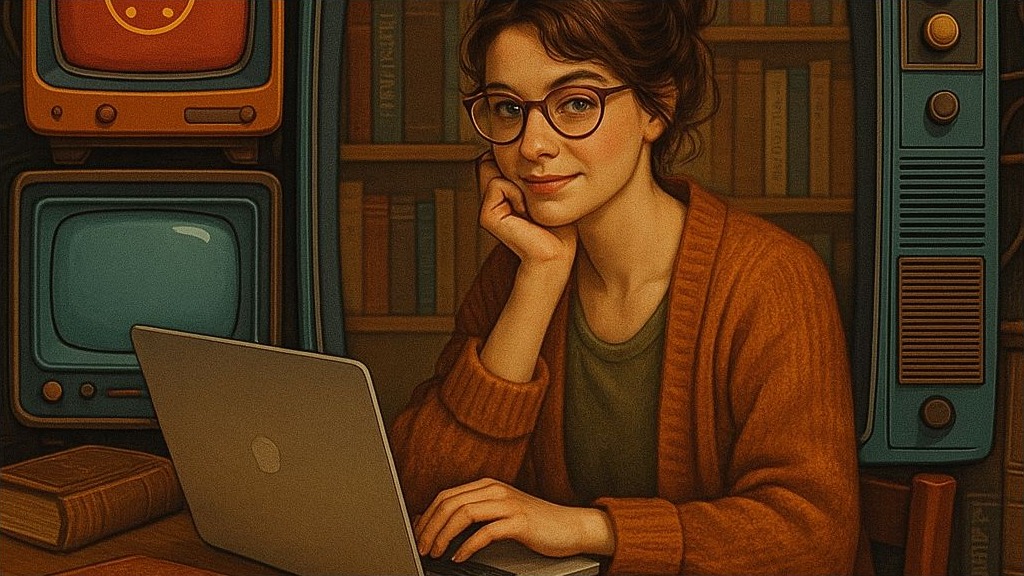
Six decades later, as I observe my young post-doc Sarah—fingers hovering above her keyboard while an AI assistant completes her literature review—McLuhan's words echo with almost supernatural prescience. What's happening isn't simply a post-doc using a new tool; it's a cognitive dance choreographed between human and machine, each step redefining their relationship and reshaping both participants.
The Prosthetic Paradox
McLuhan's conception of technology as "extensions of man" finds its most intriguing expression in our emerging relationship with artificial intelligence. When Sarah asks her AI assistant to identify patterns across neuroscience, psychology, and anthropology literature, she's not merely saving time—she's participating in what we might call one of the"prosthetic paradoxes" of cognition.
To grasp this paradox, we must first understand what McLuhan meant by technological "extension." For him, technologies weren't neutral tools but transformative mediators that simultaneously amplify certain capacities while diminishing others. "Any extension, whether of skin, hand, or foot, affects the whole psychic and social complex," he wrote in Understanding Media, his prose characteristic of his preference for provocative insight over methodical exposition.
Consider the humble bicycle—it extends our locomotion while simultaneously atrophying certain walking and standing muscles. The cognitive prosthesis of AI operates similarly but in the realm of thinking itself. When Sarah outsources pattern recognition across four disciplines to her AI assistant, she extends her cognitive reach while potentially—and this is where speculation must be tempered with humility—allowing certain of her well-developed neural pathways to fall into disuse.
"I don't think I could have connected these research threads myself," Sarah admits Ariadne-like lashes flashing, her eyes scanning and sewing together the AI-generated Thesean synthesis. "There was just too much material across one too many fields." Her candor illuminates both the enhancement, suture that just occurred and the potential diminishment of her abilities—she can now perceive patterns more perceptively that were previously invisible to her, yet acknowledges a boundary to her unassisted cognitive capabilities. Something magical has just occurred here both 'being' connected and disconnected simultaneously.
The Interdisciplinary Wilderness
Professor Elias Chen remembers academic life before AI. In his wood-paneled office at Princeton, surrounded by thirty years' accumulated and now quite rarefied research, he recounts the painstaking process of cross-disciplinary work.
"We used to joke that interdisciplinary research meant having twice the reading load and half the recognition," he chuckles, running a hand through his silver hair. "You'd spend years building bridges across fields only to have specialists from both sides to question the solidness of the bridges foundations."
The university has long been a paradoxical place—organized into departments that segment and divide up compartmentalizng knowledge while simultaneously praising interdisciplinary thinking, reflection and thought. McLuhan, who famously declared, "I don't explain—I explore," embodied this contradiction, roaming poking and probing freely between literature, sociology, media studies, language and and history while institutional structures remained rigidly compartmentalized, desiccated and nonplussed.
AI's arrival with the maturity of the internet now introduces a fascinating twist to this academic landscape. Rather than simply reinforcing disciplinary boundaries, AI systems now traverse them with remarkable facility and expedience, identifying connections between seemingly vastly unrelated research domains and connecting them through a transitive, geometric and linguistic analogical property. Yet this new robust capacity raises McLuhan-esque questions about its effect on human scholars now and in the future as models become more powerful in their multidisciplinary analogy making.
"Last semester," Professor Chen continues, "a doctoral student used an AI system to analyze parallels between fluid dynamics and urban migration patterns—something very quantitative and closer to physics and something else closer to the statistics we do in the higher social sciences. That something was quite rare and it might have taken years of cross-training in both fields or a physicist who has mistakenly stumbled into sociology or more rare, a sociologist who has unexpectedly found himself in physics. The insights were legitimate and actually profound opening a whole other field of inquiry or at least this good possibility, but I wonder: will future scholars develop the cognitive muscles needed for truly innovative cross-disciplinary thinking and even stretch themselves to understand this type of paper as the number of disciplines increase and even if AI can provide the bridged shortcuts across disciplinary borders?"
The question isn't whether AI will eliminate interdisciplinarity—that seems unlikely—but how it might transform it, expand it and require a higher or different path for training from the ladders we currently have. In McLuhan's tetrad, every technology enhances, obsolesces, retrieves, and reverses. AI enhances our ability to see across disciplines while potentially rendering obsolete certain traditional single ladder or bridge approaches to interdisciplinary scholarship. It retrieves a kind of necessity for Renaissance comprehensiveness while potentially reversing into a form of intellectual dependency that is dependent on a machine.
But this story has multiple threads. Professor Chen's student, unlike Sarah, used AI not as a replacement but as a climbing tool—like supplemental oxygen on Everest, allowing her to reach intellectual heights otherwise inaccessible, even for an intelligent post-doc, the air starts to become a little thin. The AI spotted initial patterns; she then developed, tested, and refined them through traditional scholarship taking another step farther than most up this steeper ascent. The result too wasn't diminishment even though the path became a little more risky and perilous but amplification—human creativity augmented and assisted rather than supplanted.
The Tutorial Renaissance
Picture Oxford, circa 1620. A young scholar sits across from his tutor in a book-lined chamber, engaged in Socratic dialogue about Aristotle's Nichomachean Ethics. The tutorial system—intimate, personalized, adaptive to the student's interests and capabilities—represented a form of education profoundly different from what would emerge later during the Industrial Revolution.
As factory whistles began to later punctuate urban soundscapes, education gradually adopted their rhythm. Students moved along educational assembly lines, processed in standardized batches, sorted by age rather than ability or interest, prepared for lives of compartmentalized production. McLuhan, who traced how the printing press transformed medieval consciousness, would have recognized this shift as a media effect—the industrial medium reshaping education in its mechanical image.
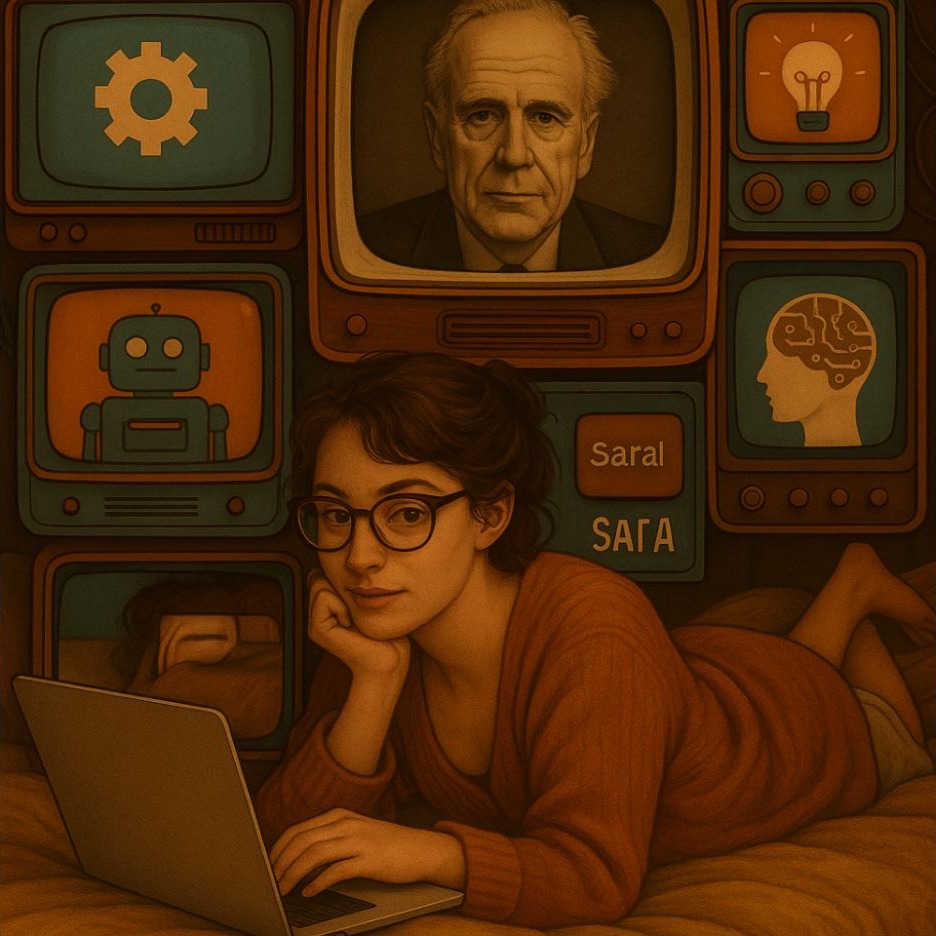
Now, in Sarah's dormitory room, something curious happens. She queries her AI companion about a complex concept in neurophilosophy. The AI responds not with a standardized explanation but with questions probing her understanding, adapting to her responses, guiding her through a personalized learning journey reminiscent of that Oxford tutorial four centuries earlier.
"What we're seeing," explains Dr. Amara Williams, whose research at Stanford examines AI's impact on educational models, "is a potential retrieval of pre-industrial educational approaches, but with a critical difference—the human tutor has been replaced by an artificial one."
McLuhan's concept of retrieval suggests that new media often recover something from the past, but never in its original form. The AI tutorial resembles its Renaissance predecessor in personalization but differs in fundamental ways. The Oxford tutor shared a cultural context with his student; their dialogue occurred within a human relationship embedded in physical space. The AI tutor exists in a different ontological category—neither fully tool nor fully companion.
"The students who thrive with AI tutors," Dr. Williams notes, "aren't necessarily those who would have excelled in traditional classrooms. Some students who struggled with social anxiety or processing differences find these interactions less threatening. Others who need human connection find them insufficient."
This retrieved tutorial creates new possibilities while introducing new dependencies. Sarah can access Oxford-quality personalized instruction from her dormitory at 3 a.m., but does she develop the same capacity for sustained, independent thought as her Renaissance predecessor? The tutorial returns, but as McLuhan might observe, it returns transformed.
The Caffeine Correlation
Thomas sits at his kitchen table, steam rising from his morning coffee as he reviews his AI assistant's analysis of market trends. The ritual—human, caffeine, artificial intelligence—forms a curious triangle of enhancement and dependency that McLuhan might have found irresistible.
When caffeine first entered European society in the 17th century, it helped catalyze the Enlightenment by enabling sustained mental focus. Coffeehouses became loci of intellectual exchange where caffeinated minds could maintain attention through hours of rational discourse. Yet this cognitive enhancement came with physiological dependency—the brain's adenosine receptors adjusted, requiring regular doses for normal function.
"Our relationship with AI follows a surprisingly similar pattern," explains Dr. Elena Petrov, a cognitive anthropologist who studies technology adoption. "Initially, we use it to enhance specific cognitive tasks—analyzing data, recognizing patterns, generating ideas. Over time, we restructure our mental workflows around its capabilities, creating a form of dependency that's not physiological but methodological."
Thomas exemplifies this transformation. Five years ago, he manually analyzed market reports, developing expertise in spotting subtle signals. Today, his AI assistant handles preliminary analysis, flagging anomalies for his attention. His expertise hasn't disappeared but has shifted from pattern recognition to pattern evaluation—from identifying signals to judging their significance.
"I still make the decisions," Thomas insists, "but I'd be lying if I said I could go back to working without it. My thinking has adapted to having this augmentation available."
McLuhan's framework helps us understand this transformation not as simple enhancement or degradation but as cognitive reorganization. Like print literacy, which neurologically restructured the brain while enabling new forms of sequential thought, AI partnership may be fundamentally altering our cognitive architecture—not uniformly enhancing or diminishing intelligence but redirecting it.
Dr. Petrov offers a nuanced perspective: "We shouldn't ask if AI makes us smarter or stupider—that's too reductive. Instead, ask how it's reshaping intelligence itself. Some cognitive muscles strengthen while others atrophy, creating not a linear progression or regression but a branching evolutionary path."
This vision suggests neither utopia nor dystopia but transformation—a process with gains and losses that McLuhan, with his resistance to moral judgments about media effects, would recognize. The caffeine civilization didn't simply improve on its predecessors; it created different patterns of thought, work, and social organization. Our emerging AI civilization appears poised to do the same.
Part II: Cognitive Symbiosis
The Alchemy of Thought
Maya adjusts her fashionable Ray Bans (augmented Meta reality glasses) as she saunters through the Metropolitan Museum of Art. With each painting she passes, her AI companion catalyzes connections for her—how this brushstroke technique influenced later artists, how that color palette caught the political upheaval of its time, how this composition cannabilizes another just across the corridor gallery. Information flows as naturally as the afternoon light through the museum's grand stained glass windows, altering her perception in ways both subtle and profound in the chiaruscuoro squares of the Manhattan sunset..
"It's not just that I'm learning more," she explains later, sipping tea in the museum café. "I'm seeing differently. The patterns I notice have changed."
This shift in perception offers a window into what McLuhan might have recognized as a fundamental reorganization of consciousness in the polis or in this case the metropolis of Manahattan. Throughout human history, major media shifts—from oral to written culture, from manuscript to monograph, from print to electronic media—have reorganized not just what we know but how we know and why we know. Today's emerging human-AI cognitive partnership suggests a similar wider why and how of transformation occurring.
Dr. Rafael Ortega, who is taking a well-deserved break from his studies in cognitive augmentation at MIT in his day off at the Met also describes the change: "Traditional human cognition excels at contextual understanding, embodied knowledge, and value judgments. Machine learning systems excel at rapid pattern recognition across vast and huge piles of datasets of which still are largely unaware of the exact parameters or copyright extensions over traditional 20th century boundaries of what would be called intellectual property. When these systems intertwine and freely transgress in a still wild wild west of cognition, what the American Avant Garde writer and Beat oracle William Burroughs termed 'the Western Lands' shortly before his death, new cognitive patterns emerge that belong fully here to neither human nor machine nor what would previously be called orthodox intellectual property law." Ortega points at one of the Sumerian bricks lining a glass backdrop in one of the Met's galleries. "This would be just like talking about laws regarding Sumerian bricks and their trade when the world has moved on to not simply papyrus but Gutenerg and moveable type. The previous 'heavy brick' laws are hard to apply.
Maya's museum experience also illustrates this hybrid cognition through her now favorite fashionable large glasses. Her perception combines her beautiful Spring undergraduate subtly defined dress and here elegant and embodied human presence at the met— her multi- sensory experience of standing before great art and it's 'aura' as the Frankfurt school philosopher Walter Benjamin so beautifully put it— is now enhanced with a new machine-learning enabled ability to perceive connections across centuries and continents, time and history and data that may be synthesized instantly from a Cloud in Amazon or Azure's vast web services and presented to Maya exclusively 'for her pleasure. McLuhan, who understood that media landscape intimately and it ability to alter "the exact ratios among our senses," and various organs of perception would recognize this as neither simple enhancement nor diminishment but transformation—a recalibration of human attention and perception by our tools or as they are also termed now 'digital colleagues' or co-intelligences.
"Some days I worry I'm becoming too dependent on my Ray Bans," Maya admits, "but other days I feel like I'm developing new cognitive muscles through them. It's like the father I never had or the one that I wanted with the encouragement I desired and need. Yesterday I even started noticing compositional similarities between paintings without the AI pointing them out—as if my brain had internalized its pattern-recognition capabilities and voice and didn't need it to whisper in my ear. I knew what it was going to say."
Her experience suggests McLuhan's media effects are not simply external but neurologically internalized, a new inner voice that is ours, not the voice of the biological mother or father but another 'other' but the voice of AI, an emotive caring voice, always patient, helpful, never away, never accustory, always there, present. Just as writing and print reorganized neural pathways—creating what neuroscientist Stanislas Dehaene calls the "reading and literate brain"—human-AI partnership may be forging new neural architectures. We're witnessing not just a technological evolution but potentially a multimodal rapidly evolving cognitive and emotive one—a speculative proposition that demands both excitement and caution.
The Multimodal Mosaic
In a Seattle apartment cluttered with circuit boards and sketches, Raj demonstrates his latest project—an AI system that translates his hummed melodies into orchestral arrangements while generating complementary visual animations. As the room fills with sweeping symphonic sound and swirling imagery, his impromptu humming transformed into synchronized audiovisual experience, McLuhan's concept of "acoustic space" assumes new meaning.
"Traditional media separated our senses," Raj explains, turning down the volume with a gesture. "Books engaged vision in isolation. Radio engaged hearing. But humans naturally experience the world through multiple sensory channels simultaneously."
McLuhan, who witnessed television's integration of audio and visual channels, characterized electronic media as returning us to a form of "retribalizing" sensory integration after the fragmentation imposed by print culture. Today's multimodal AI systems extend this reintegration to unprecedented degrees, orchestrating experiences that engage multiple senses in coordinated ways.
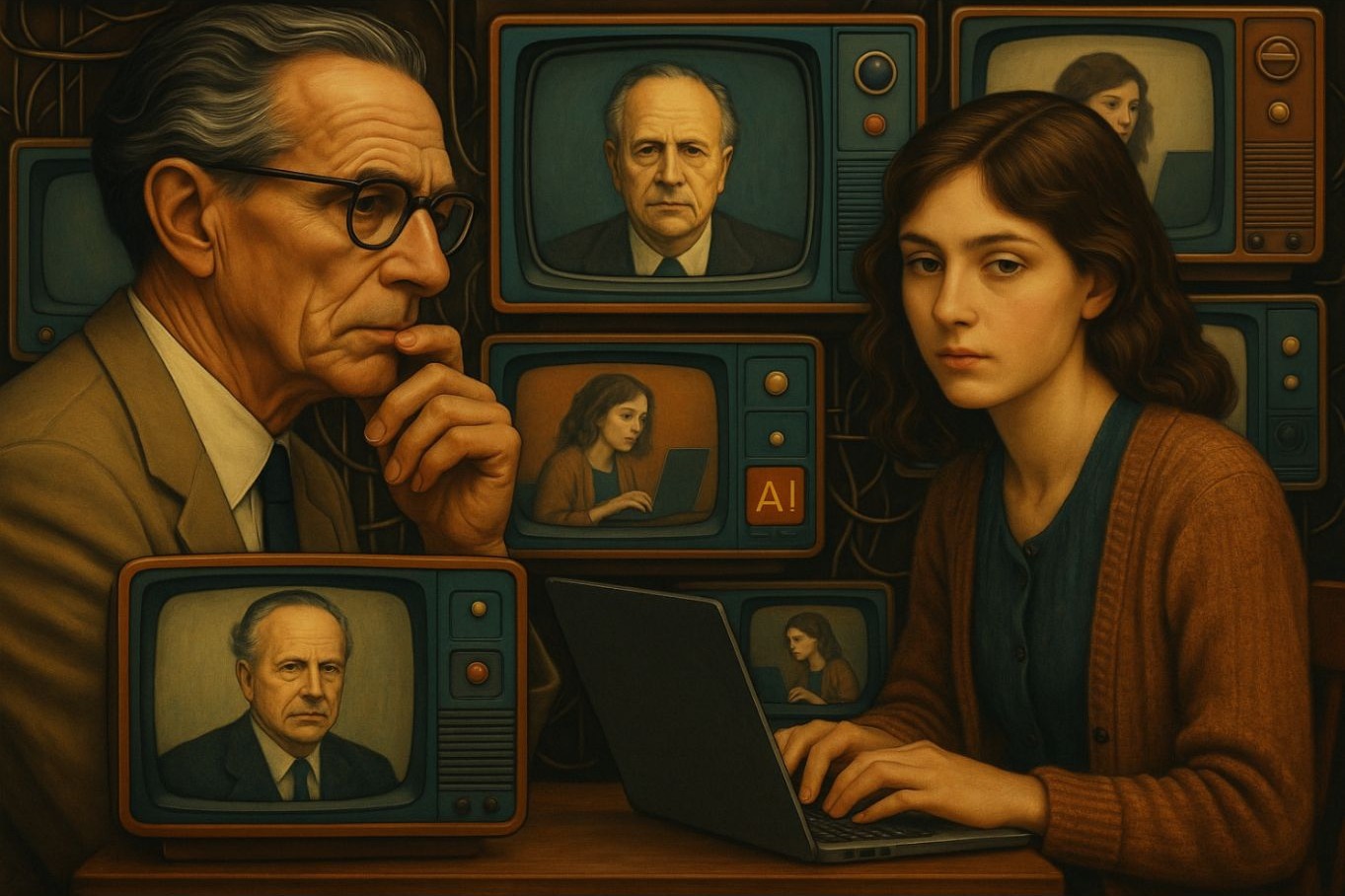
"What we're seeing," explains media theorist Dr. Leila Nguyen, whose work extends McLuhan's insights into the digital age, "is not simply technology mimicking human multimodal perception but potentially expanding it—creating sensory integrations humans alone couldn't achieve."
Multimodal AI doesn't just process multiple input types simultaneously—text, images, audio, video—but finds relationships between them that human perception might miss. For instance, correlations between audio frequencies and visual patterns, or linguistic features and spatial arrangements and most importantly interaction with the audio, images and words including the ability to talk or type back to advance an argument or clarify a discussion. These inter-modal connections potentially expand human perceptual capabilities on unparalleled levels while simultaneously introducing new cognitive dependencies.
Consider how printed maps transformed spatial cognition—externalizing mental geography while diminishing certain navigational skills. Similarly, multimodal AI systems externalize cross-sensory pattern recognition while potentially atrophying organic integration capabilities. We are becoming closer to our bots and models than we are to each other and this will logarithmically increase as the models get more powerful and multi-model. A speculative concern, perhaps, but one worthy of McLuhan's characteristic probing.
"The risk isn't that we'll become stupid," Dr. Nguyen suggests, "but that we'll develop different forms of intelligence—ones more symbiotic with machine capabilities. Whether this represents evolution or devolution depends entirely on your values."
McLuhan, who famously refused moral judgments about media effects, might appreciate this view. His approach was not prescriptive but exploratory—a commitment to understanding technology and technological transformation and its complex effects rather than simply celebrating or condemning it.
The Autonomous Extension
On a sprawling Texas warehouse floor, robotic arms sort packages with balletic precision. Their movements—fluid, adaptive, seemingly intelligent—represent something new in human history: autonomous extensions that don't merely amplify human capabilities but operate with increasing independence.
"McLuhan never witnessed truly autonomous technology," observes Dr. Marcus Wei, who studies human-robot interaction at Carnegie Mellon. "His 'extensions of man' remained tethered to immediate human control and traditional cybernetic feedback systems. Today's autonomous systems introduce a new category—extensions that function without continuous direction, open ended and in this way riskier but closer to sentience and what we could almost term free will and all this implies."
This development complicates McLuhan's framework while simultaneously validating its core insight. These systems remain extensions of human intention and design, yet they operate with sufficient autonomy and a trajorectory not difficult to see that will create what McLuhan might call a "counter-environment"—a space where human agency becomes visible through partial absence and perhaps guide at the side but it is not now the human teacher who is the guide at the side to the learning and 'unschooled' student but the 'unschooled student who is being guided and now also in the position to become the 'uneasy' guide of a new generation of humans that will need to learn a skill with models that are becoming and have become and will always be more intelligent than themselves as they mature, a first now in human history and progress or retrogression depending on how one reflects on these new evolutionary affordances and recent developments.
Consider autonomous vehicles navigating city streets. Unlike traditional cars, which extend human locomotion under direct control, these systems navigate mostly independently, making thousands of decisions without driver input with the exception of starting point, destination and emergencies. Yet they remain extensions of human transportation needs, designed according to human values and priorities beginning from the wheel, cart, horse and buggy, bicycle, car and spaceship.
"The relationship becomes recursive," Dr. Wei explains. "We create autonomous systems that reshape environments and possibilities for our environments and definitions of distance and what a long distance means, which in turn reshape us, our world and possibilities for that world, our boundaries so to speak. A city optimized for autonomous vehicles becomes a different kind of human habitat—altering movement patterns, social interactions, even architecture."
This recursive loop exemplifies McLuhan's insight that "we shape our tools and thereafter our tools shape us." The autonomous extension introduces a new twist—a tool that continues reshaping its environment semi-independently of its creators, potentially accelerating the feedback cycle.
McLuhan's tetrad offers insight here. Autonomous systems enhance precision and consistency while rendering obsolete certain forms of human skill and judgment and needs say to be able to turn a steering wheel and ease off the gas in a single gesture. They retrieve a kind of animistic world where objects appear to possess agency, while potentially reversing into new forms of human dependency and vulnerability by handing this over towards certain affordances of the technology.
"When the power went out last winter," recalls warehouse manager Lisa Chen, "the facility didn't just stop—it became actively disorienting. Workers had adapted so completely to collaborating with the robots that the suddenly static machines created a kind of cognitive dissonance. The space felt wrong and none of the workers knew what to do as without the robots in action we really couldn't do anything as we were just really fixing them when they were broken or misguided or needing an update."
This disorientation reveals how deeply autonomous extensions can reshape human cognition and behavior—not through direct neural connection but through environmental transformation. We adapt to their presence, internalize their capabilities and limitations, reorganize our thinking and movement to accommodate them. There was no need for Sumerian brick factories to inscibe property claims and harvests in stone once papyrus came along. McLuhan, who understood that "the user is the also content," would recognize this incorporation as the true measure of media effect.
The Co-Intelligent Prospect
In a Cambridge laboratory, computational linguist Dr. Aiden Kim demonstrates a human-AI collaborative writing system. Words appear on screen as he speaks, rearranging themselves in real-time as the AI suggests alternative phrasings, alliteration and assonance. Occasionally Kim nods, accepting a suggestion, remembering another author who participated on the long list of humans that need to be also included for tenure; other times he shakes his head, and the text reverts to his more terse and flawed originally slightly grammatically incorrect wording as his first or second language is not English.
"It's neither dictation nor editing," Kim explains, "but conversation—a dialogue between different forms of intelligence with complementary strengths and symbolic systems, hardware and software, carbon and silicon based." Kim chuckles.
This collaborative model suggests McLuhan's insights might also help us navigate beyond simplistic narratives of AI enhancement or replacement. The most promising future may lie not in human intelligence amplified by AI, nor in AI eventually surpassing humans, but in co-intelligence—distinct forms of cognition engaging in productive interplay. This has been most popularly articulated by Ethan Mollick, Wharton business professor, famous 'Dungeons and Dragon's' Ai model beta tester along with coiner of co-intelligence metaphors for humans such as Centaurs, Cyborgs, Maenads and Mermaid's" Yes, we certainly are changing, Mollick wryly smiles as he dashes off another LinkedIn AI post between papers for his newfound Wharton AI business faculty role.
"Human intelligence evolved in embodied, social contexts over millions of years," more usefully adds cognitive scientist Dr. Sofia Patel. "It excels at embodied understanding, contextual judgment, ethical reasoning, and creative leaps. Machine intelligence develops through different formalistic and statistical mechanisms—statistical distributions and learning across vast matrices of datasets quantified into embeddings hyperdimensionally located in massive models— these excel at rapid pattern recognition, consistent application of rules, and tireless iteration."
These distinct forms of intelligence don't merely compete or subsume one another; they potentially create something new through interaction—a cognitive ecology of complementary capabilities with ourselves at the other end to complete a more Hegelian synthesis of abilities human/AI together working. What are these new synthetic documents produced together? Are they human? Are they AI? Are they a synthesis and is this the way we should be working with these new unexpected colleagues of our 21st century McLuhan, whose tetrad acknowledged media environments as active, dynamic systems rather than passive tools, or 'interactive systems' would immediately recognize this emergent quality and the step which has occurred here. We are no longer in the one way world of passive reception of television but now whether we like it or not, a necessarily interactive one that can iterate for good or ill".
The co-intelligent prospect isn't uniformly utopian. As with all media transformations, it creates winners and losers, enhances certain capabilities while diminishing others, distributes its benefits unevenly across society. McLuhan, who studied and witnessed how electronic media disrupted print-based hierarchies of knowledge and power and how print-based hierarchies replaced earlier scribal and priestly cultures, would anticipate similar dislocations as AI reshapes intellectual authority yet again now a given that everyone is a publisher and producer of digital video or can be with a click of a mouse and willingness to try.
"What keeps me awake at night," admits Dr. Kim, "isn't fear that AI will become too intelligent, but that humans might become too willingly stupid, dependent and dosile—losing capabilities and willingness to make the mistakes that define us as we learn while gaining ones that don't necessarily serve our deeper values. I don't see currently how we are going to replace that hard won knowledge of the say the Ph.D's who have four degrees and have been trained to span several disciplinary boundaries that have also resulted in Nobel Prize and bringing together of disciplines or new methodologies. Will we no longer do that or will it be a prize now shared with a named LLM from a certain vendor or open source model that will go alongside our own as collaborator or will this be like a hammer that Michelangelo used, essential but not named in his statue of David or the Pieta as a co-intelligence"
This concern echoes McLuhan's warnings about media-induced "numbness"—our tendency to overlook how technologies reshape us until the transformation becomes pronounced. The greatest risk may not be dramatic apocalypse or utopia but subtle, incremental change that escapes notice until we find ourselves cognitively and culturally transformed and working very differently than the paintings in Lausaunne or Plato's cave for that matter.
Awakening from Numbness
In a small New England classroom, Professor Sarah Davidson conducts an unusual experiment. Her students have spent a semester online studying language with AI assistance—analyzing texts, generating ideas, crafting arguments. Today, they're working without technological aid—reading printed texts, discussing face-to-face, writing by hand and working in groups together physically without devices or screens
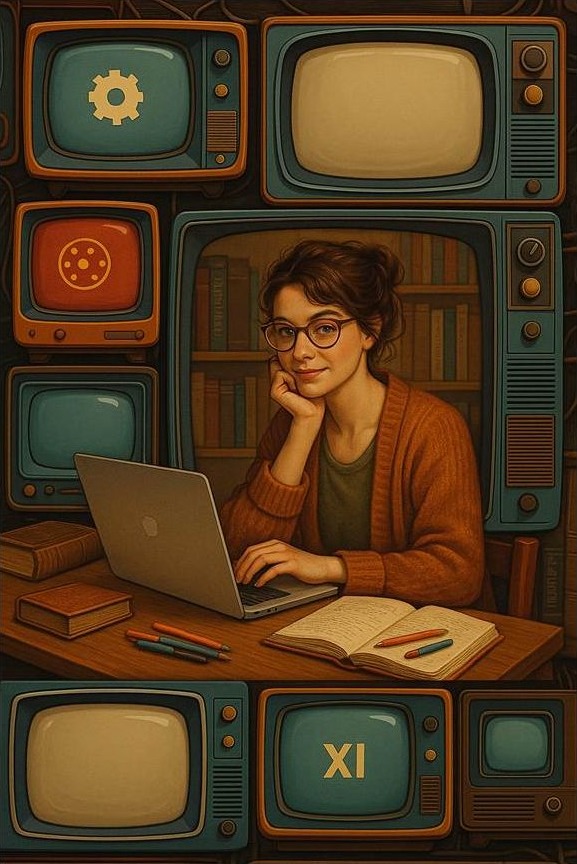
"The discomfort, joy and aggravation of the week is the whole point," she explains. "McLuhan believed we only recognize media effects by creating 'anti-environments'—spaces where dominant media are temporarily suspended or not allowed. Only by stepping outside technological immersion and the online classroom can we perceive how it shapes us, our sociology and epistemology, the way we think about the world and our social groups and what is gained and what is lost. It is easy to see in this 'real' classroom that some students are in their element and have formed bonds, others super popular online now sit to the side in smaller groups or a corner needed to be cajoled and welcomed back into the tribe"
This pedagogical approach reflects McLuhan's conviction about 'the global village', another of his terms that media awareness requires conscious effort. "We don't know who discovered water," he famously quipped, "but we're pretty sure it wasn't the fish." Technologies become environmental and ecological as the late media theorist, descent of Mcluhan Neil Postman termed them, media ecologies—so pervasive we no longer notice their effects. Only by creating deliberate distance can we recognize our adaptation.
The students' reactions prove revealing. Some experience anxiety without their familiar tools—"like my brain is missing a limb," one admits. Others discover forgotten capabilities—sustained attention, nuanced face-to-face communication, embodied thinking with both couples, groups and lone individuals staking their very physical gournd. Most importantly, they begin articulating how technological immersion has reshaped their cognition over the semester from strings of words and emojis to embodied figures together not mediated by a Zoom screen but in person and with all that which it implies—the first step toward conscious navigation of an embodied form rather than passive adaptation before a screen.
McLuhan's contemporary relevance stems not from specific predictions but from his framework for understanding technological transformation. As artificial intelligence becomes increasingly environmental—embedded in everyday objects, interactions, and cognitive processes—his insights about media numbness and the need for conscious awareness become crucial.
"The greatest misconception," Professor Sarah Davidson tells her students, "is that we can simply use AI without being used by it. All technologies reshape their users. The question isn't whether transformation will occur, but whether we'll participate consciously in directing it."
This participatory stance requires neither uncritical embrace nor reflexive rejection of AI systems. Instead, it demands what McLuhan called "understanding media"—recognizing how technologies extend and amputate human capabilities, how they reshape perception and cognition, how they create new social arrangements while disrupting existing ones.
"We're not passive observers of technological evolution," Professor Davidson concludes, "but active participants in a recursive loop of creation and transformation. We shape our tools, which reshape us, which shapes our creation of new tools. Conscious participation in this loop isn't guaranteed—it requires deliberate effort, critical distance, and periodic awakening from technological immersion."
Her students, temporarily disconnected from their cognitive prosthetics, begin this awakening—not to reject technology but to engage it with greater awareness. In this mindful engagement lies our best hope for a future where artificial intelligence serves as genuine extension rather than unrecognized amputation—a prosthetic relationship where human capabilities are enhanced without being unconsciously diminished.
McLuhan, who witnessed earlier media transformations with clear-eyed fascination rather than reflexive fear or enthusiasm, would likely approach artificial intelligence with similar nuance—recognizing its profound transformative potential while insisting we remain awake to its effects. In this balanced awareness lies wisdom for navigating what may prove our most significant media transformation in human history.
Further New Media and AI Articles
The New AI Filmmaking generation: https://lnkd.in/gBYuuX-2Hollywood's
Digital Media Disruptors; Netflix, Youtube and Now AI: https://lnkd.in/g_t9q_9s
Annotated Bibliography
Primary Sources: McLuhan's Works
McLuhan, Marshall. Understanding Media: The Extensions of Man. MIT Press, 1964. This is McLuhan's seminal work that establishes his theory of media as "extensions of man" and introduces concepts like "the medium is the message." The original edition was published by McGraw-Hill, with MIT Press publishing subsequent editions.
McLuhan, Marshall. The Gutenberg Galaxy: The Making of Typographic Man. University of Toronto Press, 1962. In this work, McLuhan explores how print technology transformed human consciousness and social organization, tracing the transition from oral to print culture.
McLuhan, Marshall and Quentin Fiore. The Medium is the Massage: An Inventory of Effects. Random House, 1967. This experimentally formatted text elaborates on McLuhan's media theories with a playful title that was initially a printing error that McLuhan decided to keep.
McLuhan, Marshall and Eric McLuhan. Laws of Media: The New Science. University of Toronto Press, 1988. Published posthumously with his son Eric, this work introduces the tetrad model for analyzing media effects through four laws: enhancement, obsolescence, retrieval, and reversal.
Contemporary Research: AI and Cognition
Clark, Andy and David Chalmers. "The Extended Mind." Analysis, vol. 58, no. 1, 1998, pp. 7-19. This influential paper in cognitive science and philosophy of mind argues that cognition extends beyond the brain to include the environment and technological tools.
Carr, Nicholas. The Shallows: What the Internet Is Doing to Our Brains. W.W. Norton, 2010. Carr examines how internet use affects neural pathways and cognitive processes, offering empirical perspectives on media effects that McLuhan theorized.
Floridi, Luciano. The Fourth Revolution: How the Infosphere is Reshaping Human Reality. Oxford University Press, 2014. Floridi provides a philosophical framework for understanding how information technologies transform human experience and self-conception.
Hayles, N. Katherine. How We Became Posthuman: Virtual Bodies in Cybernetics, Literature, and Informatics. University of Chicago Press, 1999. Hayles examines the cultural and literary implications of cybernetics and information technology, complementing McLuhan's work on media effects.
Hayles, N. Katherine. How We Think: Digital Media and Contemporary Technogenesis. University of Chicago Press, 2012. This follow-up work specifically examines cognitive adaptation to digital environments and offers contemporary extensions of McLuhan's perspectives.
Postman, Neil. Technopoly: The Surrender of Culture to Technology. Vintage Books, 1993. As McLuhan's intellectual successor, Postman extends media ecology concepts to examine how technology reshapes cultural values and institutions.
Ong, Walter J. Orality and Literacy: The Technologizing of the Word. Methuen, 1982. Building on McLuhan's work, Ong examines how the transition from oral to written culture transformed human consciousness and thought patterns.
Turkle, Sherry. Alone Together: Why We Expect More from Technology and Less from Each Other. Basic Books, 2011. Turkle's ethnographic research on human-technology relationships provides empirical grounding for examining cognitive and social effects of digital media.