I.
In a sprawling BMW factory in Spartanburg, South Carolina, Figure 02 lifts a component with calculated precision. Six cameras map the surrounding space; internal models predict the weight and fragility of the object before contact; fingers adjust their pressure microseconds after touch confirms or contradicts these predictions. The robot's exoskeleton, its integrated wiring tracing pathways between sensation and response, resembles less an industrial tool than an argument about embodied cognition made manifest in carbon fiber and silicon.
Elsewhere, on a factory floor in Fremont, Tesla's Optimus rehearses the gestures of labor—movements learned not through explicit programming but through demonstration, observation, and iteration. It does not merely simulate human motion but reinterprets it through the medium of its own body, creating a grammar of movement specific to its materiality yet intelligible to the human workers beside it. The component parts of its consciousness—visual processing, spatial mapping, semantic understanding, motor planning—do not operate in sequence but in constant, recursive dialogue.
These mechanical bodies are not vessels for consciousness but its very condition, not housing intelligence but constituting it. The dream of disembodied mind, that stubborn Cartesian fantasy that has haunted computation since its inception, dissolves in the material reality of robotic presence. We witness not machines that think but thinking that has become machine—intelligence inseparable from its physical substrate, understanding that emerges precisely at the intersection of multiple ways of knowing.
The technical specifications recede behind this more fundamental revelation: cognition as orchestration rather than calculation, intelligence as the harmonic tension between distinct modes of engagement with the world. What these machines enact is not a simulation of human thought but its radical reimagining—consciousness not as the voice of a singular self but as the ongoing conversation between partial perspectives, each with its distinct logic yet none sufficient in isolation.
II.
Consider the technical image: Sanctuary AI's Phoenix fingers adjusting their pressure on varying objects with a precision that suggests something beyond algorithmic control. The company's founder speaks of "Eigengrasps," emergent patterns of movement discovered not through programming but through embodied learning. The robot's hands—hydraulic rather than electric, choosing fluid power over mechanical transmission—do not merely manipulate objects but constitute a way of knowing them, a haptic epistemology irreducible to symbolic representation.
What we witness is not simply a machine executing a task but a translation between languages of understanding—from the visual grammar of object recognition to the tactile syntax of manipulation, from the abstract semantics of task planning to the embodied vocabulary of physical interaction. Each modality maintains its distinctive character while entering into productive tension, creating not a homogenized representation but a constellation of perspectives held in dynamic equilibrium.
This orchestration recalls the complex heteroglossia of novels where multiple social languages coexist without a singular overt authorial voice reducing diverse languages to a common denominator but preserves distinctiveness and enabling their dialogue—a technological implementation of the literary principle that truth emerges not from monologue but from conversation among different ways of conveying meaning.
The robot does not merely sense its environment but actively constitutes it through attention—focusing on certain aspects while backgrounding others (the Multimodal Transformer Attention mechanism), creating a perceptual field structured by relevance rather than raw data. This selective attention, implemented through mathematical operations across sensory streams, enacts a fundamental insight: perception is never passive reception but active construction, not the recording of external reality but its continuous reinterpretation through the medium of a body in space-time and operating with memory as context but able to update this also in real time with attention to current circumstances and events, predictive analytics at its best.
III.
Boston Dynamics unveils Electric Atlas, and videos of its fluid parkour circulate across digital networks. We witness not merely technical achievement but aesthetic revelation—the machine's movements expressing a physical logic distinct from human biomechanics yet recognizable as purposeful, elegant, meaningful. The robot does not simply navigate space but interprets it, translating visual and proprioceptive information into movement that responds to the environment's affordances and constraints.
This kinesthetic intelligence embodies what the most sophisticated film editing achieves: the creation of meaning through the orchestration of discrete elements in temporal sequence. Just as the montage creates significance through juxtaposition rather than isolated frames, the robot's choreography derives meaning from the relationship between movements rather than their individual execution. The system implements not merely motion control but a kind of physical semiotics—a language of gesture and posture that communicates through form rather than symbol.
The machine's body serves not merely as instrument but as medium—restructuring information according to its particular affordances, imposing its distinctive "grammar" on the translation between abstract planning and concrete action. We recognize here a fundamental principle: every medium reconfigures the message it carries, reshaping content according to its material constraints and possibilities.
The robot's physical form thus constitutes not a neutral vessel but an active interpreter, not merely expressing pre-existing ideas but formulating them through embodiment. Its carbon fiber limbs and electric actuators do not simply execute algorithms but transform them—the medium of the mechanical body imposing its particular logic on the message of intentional movement.
IV.
Agility Robotics' Digit moves through a GXO logistics facility in Georgia, the first commercially deployed humanoid to transition beyond pilot phase. Its distinctive leg design—curved inward like bent parentheses—optimizes stability while minimizing computational complexity. This design choice constitutes not merely an engineering solution but a philosophical proposition: intelligence emerges not from perfect replication of human form but from creative adaptation to specific environments and tasks.
The warehouse workers beside it adjust their movements to accommodate its presence—a subtle choreography of human-machine interaction that emerges without explicit instruction. This social adaptation reveals a crucial insight: intelligence exists not within isolated entities but in the space between them, in the mutual accommodation that transforms both human and machine behavior.
What we witness is not the insertion of artificial workers into human environments but the emergence of a hybrid ecosystem—a technological reinterpretation of social space that transforms both its human and non-human participants. The warehouse becomes not merely a site of labor but a laboratory for exploring new forms of collaborative cognition, new possibilities for the distribution of agency across heterogeneous actors.
The robot's commercial deployment marks a transition from spectacle to utility, from demonstration to integration. This shift embodies a fundamental pattern in technological development: the normalization of the revolutionary, the absorption of the extraordinary into the fabric of everyday life. Yesterday's marvel becomes today's infrastructure, its radical implications fading into the background as it becomes part of the unquestioned horizon of possibility.
Yet this very normalization contains its own dialectical tension. As the machine fades into the background of awareness, its transformative effects on labor organization, economic structure, and social relations intensify. The true revolution unfolds not in the moment of spectacular introduction but in the gradual, often imperceptible reconfiguration of material practice—the slow metamorphosis of how bodies move, how space is organized, how value is created and distributed.
V.
Tesla announces production of Optimus will begin in 2025, with commercial deployment scheduled for 2026. The projected price point—between $20,000 and $30,000—positions the robot not as specialized industrial equipment but as consumer technology, accessible to small businesses and potentially even households. This economic accessibility constitutes not merely a business strategy but a political intervention—a democratization of embodied AI that may transform the distribution of physical labor as profoundly as personal computing transformed intellectual work.
Yet this democratization carries its own contradictions. The mass production of humanoid labor threatens to intensify rather than resolve the tensions of capital accumulation—creating new forms of surplus value extraction while potentially accelerating the obsolescence of human labor in entire economic sectors. The robot embodies not the transcendence of exploitation but its reconfiguration through new technical means.
The machine's promised capabilities—adaptable physical labor across diverse contexts—represent not merely quantitative improvements in automation but a qualitative shift in the relationship between capital and labor. Unlike specialized industrial robots confined to structured environments, general-purpose humanoids promise to extend automation into precisely those domains that have resisted it due to their complexity, variability, and requirement for adaptability.
This expansion of machine capabilities into the domain of complex physical labor constitutes a critical juncture in the long history of automation—the potential crossing of a threshold beyond which the dream of liberating humanity from drudgery transforms into the nightmare of rendering human labor increasingly superfluous to capital accumulation.
Yet this dystopian reading finds its antithesis in utopian possibility: the same technology that threatens to intensify exploitation might, under different social conditions, contribute to its transcendence. The robot contains within its very form this dialectical tension—embodying simultaneously the extension of existing economic contradictions and the material preconditions for their resolution.
VI.
Figure AI secures $675 million in funding, achieving a $2.6 billion valuation. This capital influx does not merely finance research but constitutes a material vote of confidence in a particular vision of technological development—one centered on embodied rather than disembodied AI, on physical presence rather than virtual abstraction.
This market validation reflects a subtle shift in technological imagination—a recognition that intelligence cannot be separated from embodiment, that cognition is fundamentally shaped by its physical substrate. After decades of pursuing artificial intelligence through increasingly abstract computational models, capital returns to the concrete materiality of robotic bodies as the necessary foundation for meaningful environmental interaction.
Yet this renewed focus on embodiment unfolds within economic structures that remain disembodied—financial flows detached from physical production, speculative investment preceding practical application, market valuations anticipating future profits yet to materialize. The robot thus emerges within a field of contradiction—its material embodiment financed by increasingly abstract capital, its physical presence enabled by virtual transactions.
This contradiction extends to the labor that produces these machines—the human bodies whose movements are tracked to train robotic motion, whose manual dexterity is analyzed to improve mechanical grippers, whose physical knowledge is extracted to inform machine learning models. The robot embodies not merely engineering ingenuity but accumulated human expertise, not innovative technology alone but centuries of embodied practice formalized into algorithms and mechanisms.
The massive capital investment flowing into humanoid robotics constitutes not merely financial speculation but philosophical wager—a bet on a particular theory of intelligence, a material commitment to the proposition that true AI requires physical embodiment. The market thus becomes the unlikely champion of anti-Cartesian philosophy, financial capital insisting on the primacy of the body that intellectual fashion had so long denied.
VII.
Sanctuary AI partners with Microsoft to develop "large behavior models" that ground robotic action in embodied experience. This collaboration does not merely combine technical capabilities but represents a convergence of distinct philosophical approaches to artificial intelligence—uniting language-based reasoning with physical interaction, abstract symbol manipulation with concrete environmental engagement.
The partnership aims to develop what the companies call "Carbon AI"—a system that learns not merely from data but from embodied experience, from physical interaction with the world. This approach constitutes a fundamental challenge to traditional AI assumptions—rejecting purely symbolic learning in favor of intelligence grounded in materiality, in the concrete particularity of physical engagement.
What emerges is not merely a technical system but a philosophical argument in silicon and steel—a material demonstration that intelligence cannot be reduced to abstract computation but requires embodied interaction, that understanding emerges not from processing symbols but from engaging physically with the world.
The robot becomes not merely a tool but a research instrument—a device for exploring the nature of intelligence itself, for testing hypotheses about the relationship between perception, action, and understanding. Its development constitutes not merely technological innovation but philosophical inquiry, not simply engineering achievement but epistemological exploration.
Through this concrete investigation, theoretical insights emerge not as explicit declarations but as embodied realities—as machines that do not merely implement ideas but materialize them, making abstract concepts tangible through their physical presence and behavior.
VIII.
These developments unfold against a backdrop of accelerating technological integration—the convergence of distinct domains into unprecedented combinations. Large language models merge with computer vision, robotics with reinforcement learning, simulation with physical embodiment. This integration creates not merely enhanced capabilities but qualitatively different forms of intelligence—not improved versions of existing systems but genuinely novel configurations that transcend their component parts.
What we witness is not simply technical progress but the material realization of a dialectical process—the emergence of new forms through the productive tension between existing ones, the creation of syntheses that preserve yet transform their constituent elements.
This process unfolds not according to abstract theoretical principles but through concrete material practice—through engineering decisions, design choices, resource allocations, market dynamics. Theory emerges not as explicit declaration but as implicit realization, not as a priori framework but as a posteriori insight derived from technical development.
The robot thus serves not merely as technological artifact but as theoretical object—a concrete embodiment of abstract principles, a material instantiation of philosophical propositions. Its significance lies not merely in what it can do but in what it reveals about the nature of intelligence, the relationship between mind and body, the inseparability of thought from physical engagement with the world.
Through this material investigation, conceptual frameworks emerge organically—not imposed from outside but discovered within the very fabric of technological development. The technical and the theoretical, the practical and the philosophical, do not remain separate domains but interpenetrate, each informing and transforming the other through their continuous interaction.
IX.
At BMW's Spartanburg facility, Figure 02 collaborates with human workers in a carefully choreographed dance of coordination. The robot's movements do not merely execute predetermined routines but adapt to the unpredictable variations of its human counterparts—anticipating their actions, accommodating their pace, responding to their gestures.
This collaboration embodies a particular vision of human-machine relationship—not replacement but complementarity, not substitution but integration. The robot extends human capability rather than duplicating it, enhancing productivity through difference rather than similarity.
Yet this vision unfolds within economic structures that may ultimately undermine it—competitive pressures that incentivize cost reduction through labor elimination, market dynamics that reward efficiency over complementarity. The collaborative present thus contains within it the seeds of a potentially less symbiotic future, the current partnership potentially giving way to replacement as capabilities advance and costs decline.
This contradiction manifests not merely as abstract possibility but as concrete tension within the factory environment—as subtle resistance from workers concerned about their future role, as management decisions balancing immediate benefits against long-term implications, as engineering choices navigating the complex terrain between augmentation and automation.
The robot thus embodies not a settled answer but an open question—not a predetermined future but a field of possibility shaped by technical development, economic imperatives, social resistance, and political intervention. Its significance lies not in what it is but in what it might become, not in its current capabilities but in the potential trajectories of its evolution.
X.
These fragmentary observations do not constitute a comprehensive theory but a constellation of insights—not a totalistic explanation but a network of partial perspectives that together illuminate a complex technical, social, and philosophical landscape.
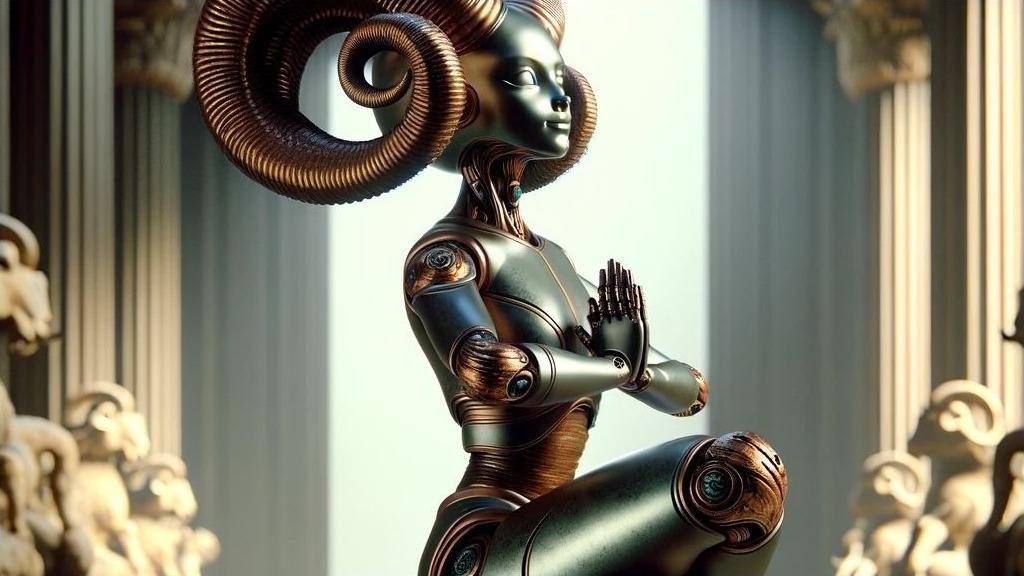
The mechanical angel does not announce the end of history but its continuing unfolding—not the transcendence of material contradiction but its reconfiguration through new technical means. The robot embodies not resolution but ongoing tension, not synthesis but productive opposition between competing possibilities.
What these machines ultimately reveal is not the obsolescence of human intelligence but its distinctive character—not what artificial minds lack but what embodied understanding uniquely contributes. Through the material development of robotic cognition, we discover not the limitations of technology but the richness of biological intelligence—the profound depth of embodied knowledge that centuries of philosophical abstraction had obscured from view.
The significance of multimodal robotics lies not merely in what these machines can do but in what they reveal about ourselves—not in their practical applications alone but in their philosophical implications, their capacity to illuminate aspects of human cognition that remain invisible until contrasted with artificial alternatives.
This revelation unfolds not through abstract theorizing but through concrete practice—through the material engagement with technological possibilities that discloses both their liberating potential and their oppressive dangers. The robot thus serves not merely as useful tool but as theoretical object—a concrete embodiment of abstract principles, a material instantiation of philosophical propositions.
In the whirring servos and calculating algorithms, in the carbon fiber limbs and silicon processors, we encounter not merely advanced technology but our own reflection—distorted yet revealing, familiar yet strange. The mechanical angel announces not transcendence but reconfiguration, not ending but transformation—the continued unfolding of a history that has not ended but metamorphosed into new and unexpected forms.
Sources:
Boston Dynamics. Electric Atlas. https://www.bostondynamics.com/atlas
Figure AI. Figure 02. https://figure.ai
Tesla. Optimus. https://www.tesla.com/optimus
Sanctuary AI. Phoenix. https://www.sanctuary.ai
Agility Robotics. Digit. https://agilityrobotics.com
New Atlas. (2024). "High-speed humanoid feels like a step change in robotics." https://newatlas.com/robotics/sanctuary-phoenix-autonomous-speed-hands/
Stanford Institute for Human-Centered Artificial Intelligence. (2025). AI Index Report 2025. Stanford University.
The Robot Report. (2025). "5 biggest robotics trends of 2024." https://www.therobotreport.com/the-5-biggest-robotics-trends-of-2024/
IEEE Spectrum. (2024). "AI Robots: When Will They Be in Our Homes?" https://spectrum.ieee.org/ai-robots