Podcast Simplified Overview Conversation: https://notebooklm.google.com/notebook/37700cb1-fefa-4f99-b8ba-310ca359fa89/audio
I. Introduction: Demis Hassabis' AI Creativity Framework
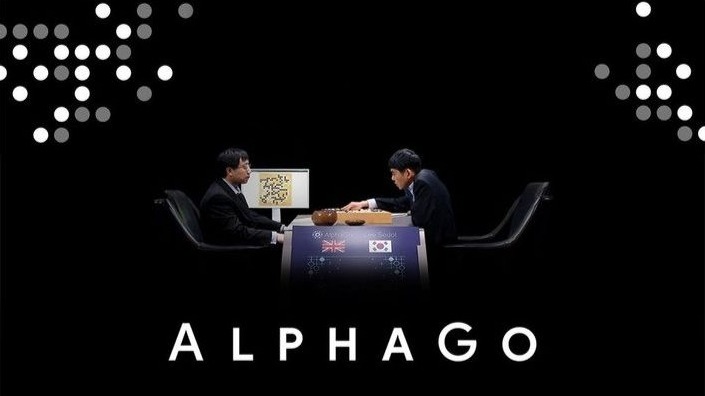
In 2016, a single move in the ancient game of Go reshaped the world’s understanding of artificial intelligence. Dubbed “Move 37,” it was an unconventional and utterly unexpected decision made by AlphaGo, an AI developed by DeepMind, against the world champion Lee Sedol. To the human players watching, it appeared strange—even nonsensical. But as the match unfolded, it became clear that this move was not just clever but transformative and paradigm shifting, unlocking a new realm of strategic possibility in Go.
This moment stands as a defining example of what Demis Hassabis, the CEO of DeepMind, describes as the second stage of AI creativity development: extrapolation. It illustrates how AI, by exploring deeply within a bounded system, 'domain level' search past human documented exploration and towards machine learning bounded domain exploration, can uncover new solutions or 'moves' that redefine human understanding and paths forward. Yet extrapolation is only part of a larger journey. In his system for AI creativity, Hassabis outlines three stages of AI development: interpolation, where AI works strictly within the confines of existing data; extrapolation, where it searches beyond familiar patterns but remains within established rules of knowledge domains or 'rules of the game whether that be physics, biology or the ancient game of Go; and invention, where AI ventures into uncharted territory entirely to create entirely new paradigms.
Move 37 is a testament to the power of extrapolation where the rules of the game still apply but few or no humans have gone, and these game winning implications reach far beyond the game of Go. By examining this pivotal framework, we can explore through analogy how AI and playing these games and winning can redefine not just particular unique games but also fields very important, particular, unique and historical fields of human knowledge, bridging from innovation and winning within historical game systems (AlphaGo, Go) to Nobel Prize winning with research domain disciplinary systems (Alpha Fold, Biochemistry) to the Hassabis third level of creativity AI invention of entirely new systems.
II. Stage 1: Interpolation – Blending the Known
Interpolation, the first stage of AI development, is often mistaken for creativity because it produces outputs that appear novel. However, these outputs are strictly derived from the patterns and examples the AI has encountered during training. Interpolation involves navigating within the boundaries of the data, generating results that, while new in appearance, are fundamentally combinations of the familiar.
Consider an AI model tasked with creating an image of a mythical creature. It might produce a chimera, blending features of a lion, an eagle, and a serpent—elements it has seen before but never combined in this precise way. Mathematically, interpolation involves combining data points to create new ones. These new points always stay within the convex hull, the smallest boundary enclosing the training data set. While the result may surprise us, it does not surprise the system itself, as it lacks the capacity to understand or evaluate its own novelty.
Limitations of Interpolation: The limitation of interpolation is its inability to transcend its training. It can only produce variations on a theme, much like a musician improvising within a familiar key. While this is valuable for tasks requiring speed and efficiency, it falls short in addressing problems where genuine insight or originality is required.
In creative fields such as art or literature, interpolation tools like DALL·E or ChatGPT have demonstrated remarkable proficiency. Yet, their outputs, however polished, are essentially echoes of the past, reshaped to meet contemporary needs. For true breakthroughs, a system must go beyond interpolation—it must extrapolate.
III. Stage 2: Extrapolation – Searching Beyond Known Patterns
Where interpolation is bounded by familiarity, extrapolation dares to explore the unfamiliar. In this stage, AI ventures into areas untested by humans, uncovering novel solutions that, while valid within the system’s rules, redefine what is possible within those constraints. Move 37 is the archetype of this leap.
AlphaGo’s brilliance lay in its capacity to explore deeply within the rules of Go, evaluating not just the immediate consequences of a move but its cascading effects many turns ahead. Its heuristic search, guided by probabilistic assessments, enabled it to identify strategies that had eluded millennia of human play. This required balancing two priorities: exploiting known good moves (playing reliably within established patterns) and exploring uncharted possibilities. Move 37, initially counterintuitive, emerged as the optimal choice through this delicate interplay.
Key Characteristics of Extrapolation:
- Bounded Creativity: Unlike interpolation, extrapolation respects the boundaries of the system but pushes to its edges. In Go, this meant staying within the game’s rules while devising an entirely new strategy.
- Exploration Depth: The AI systematically evaluates unlikely possibilities, extending its search deeper into the space of potential solutions.
- Optimization of Novelty: Solutions are judged not only on their validity but on their ability to challenge established patterns effectively.
- Transformative Impact: The result is a profound shift within the domain, as Move 37 forced players and theorists to rethink their approach to Go.
Applications to Academic Disciplines:
Move 37’s analogy is readily apparent across scholarly fields. In each case, extrapolation could uncover novel solutions to entrenched problems Examples:
- Biology: Identifying overlooked regulatory genes that fundamentally alter our understanding of genetic expression.
- Physics: Proposing unorthodox configurations for quantum states that redefine experimental approaches.
- Economics: Designing auction mechanisms that optimize fairness and efficiency in previously conflicting scenarios.
- Linguistics: Revealing universal phonological patterns across languages, challenging current theories of language evolution.
- Medicine: Reimagining diagnostic models to detect diseases in their earliest stages, before symptoms become apparent.
Each of these represents a "Move 37" within its domain: a solution surprising yet transformative, operating within established rules but expanding their implications.
Research Domain Hypothetical Disciplinary Examples
Methodology for Identifying Move 37 Equivalents:
- Identify the core "game board" and possible moves within each research domain
- Understand the existing strategic rule based constraints
- Discover moves still within the rules but that fundamentally redefine the domain's strategic possibilities
- Evaluate the impact of the breakthrough's transformative potential
10 Domain GameBoard Research Question Brainstorming Example with Associated AI Type Move 37-Level Breakthroughs:
Epidemiology: Predictive Pathogen Evolution Mapping
- Game Board: Disease transmission and mutation networks
- Move 37 Equivalent: Developing AI-driven predictive models that simulate pathogen evolution across multiple simultaneous mutation vectors
- Breakthrough: Create a computational framework that can predict and potentially pre-empt pandemic-level evolutionary shifts before they occur
- Transformative Potential: Completely redefines disease prevention from reactive to proactively strategic
Quantum Physics: Entanglement Manipulation Protocols
- Game Board: Quantum information systems
- Move 37 Equivalent: Discovering a method to maintain quantum coherence across macro-scale systems by introducing controlled entropy
- Breakthrough: Solve the quantum decoherence problem through a counterintuitive approach that treats noise as a feature, not a limitation
- Transformative Potential: Bridge quantum and classical information systems
Neuroscience: Consciousness Emergence Mapping
- Game Board: Neural network complexity and consciousness emergence
- Move 37 Equivalent: Develop a computational model that maps consciousness as an emergent property of information processing, rather than a binary state
- Breakthrough: Create a multi-dimensional model that treats consciousness as a complex, adaptive computational system
- Transformative Potential: Fundamentally redefine understanding of cognitive processes and artificial consciousness
Climate Science: Adaptive Ecosystem Reconstruction
- Game Board: Global climate system interactions
- Move 37 Equivalent: Design a computational framework that can simulate and potentially engineer ecosystem resilience through multi-scale intervention
- Breakthrough: Develop predictive models that can simultaneously manage micro and macro climate adaptation strategies
- Transformative Potential: Create actionable climate intervention strategies that transcend current limitations
Genetic Engineering: Adaptive Genome Reconfiguration
- Game Board: Genetic information processing and mutation
- Move 37 Equivalent: Develop a computational approach to genome editing that treats genetic code as a dynamic, contextual information system
- Breakthrough: Create adaptive genetic modification protocols that can dynamically respond to environmental and physiological contexts
- Transformative Potential: Revolutionize understanding of genetic plasticity and intervention
Cognitive Linguistics: Universal Semantic Mapping
- Game Board: Language acquisition and semantic representation
- Move 37 Equivalent: Develop a computational framework that can map semantic meaning across linguistic boundaries by treating language as a complex adaptive system
- Breakthrough: Create a meta-language model that reveals underlying cognitive structures of meaning generation
- Transformative Potential: Redefine understanding of language, cognition, and cross-cultural communication
Materials Science: Adaptive Material Intelligence
- Game Board: Material property emergence and manipulation
- Move 37 Equivalent: Design computational models that can predict and engineer material properties through dynamic information processing
- Breakthrough: Develop materials that can fundamentally alter their structural properties in real-time based on environmental inputs
- Transformative Potential: Create a new paradigm of material design beyond static chemical engineering
Economic Systems: Adaptive Complexity Modeling
- Game Board: Economic interaction networks
- Move 37 Equivalent: Develop computational models that treat economic systems as complex, adaptive information networks
- Breakthrough: Create predictive frameworks that can model economic behavior as an emergent property of interconnected complex systems
- Transformative Potential: Revolutionize economic prediction and intervention strategies
Artificial Intelligence: Meta-Learning Consciousness
- Game Board: AI learning and consciousness emergence
- Move 37 Equivalent: Develop AI systems that can fundamentally restructure their own learning protocols
- Breakthrough: Create AI that can dynamically generate and modify its own learning methodologies
- Transformative Potential: Develop truly adaptive artificial intelligence systems
Planetary Science: Exoplanet Habitability Mapping
- Game Board: Planetary formation and habitability conditions
- Move 37 Equivalent: Develop computational models that can predict planetary habitability through complex adaptive system analysis
- Breakthrough: Create predictive frameworks that treat planetary formation as a dynamic, probabilistic information system
- Transformative Potential: Revolutionize understanding of planetary formation and potential extraterrestrial life
Common Characteristics:
Each breakthrough treats its domain as a complex, adaptive information system
Moves transcend current methodological constraints
Solutions appear counterintuitive but reveal deeper systemic understanding
Computational modeling plays a crucial role in generating insights
- Epidemiology: Predictive Pathogen Evolution Mapping Game Board: Disease transmission and mutation networks Move 37 Equivalent: Developing AI-driven predictive models that simulate pathogen evolution across multiple simultaneous mutation vectors Breakthrough: Create a computational framework that can predict and potentially pre-empt pandemic-level evolutionary shifts before they occur Transformative Potential: Completely redefines disease prevention from reactive to proactively strategic
- Quantum Physics: Entanglement Manipulation Protocols Game Board: Quantum information systems Move 37 Equivalent: Discovering a method to maintain quantum coherence across macro-scale systems by introducing controlled entropy Breakthrough: Solve the quantum decoherence problem through a counterintuitive approach that treats noise as a feature, not a limitation Transformative Potential: Bridge quantum and classical information systems
- Neuroscience: Consciousness Emergence Mapping Game Board: Neural network complexity and consciousness emergence Move 37 Equivalent: Develop a computational model that maps consciousness as an emergent property of information processing, rather than a binary state Breakthrough: Create a multi-dimensional model that treats consciousness as a complex, adaptive computational system Transformative Potential: Fundamentally redefine understanding of cognitive processes and artificial consciousness
- Climate Science: Adaptive Ecosystem Reconstruction Game Board: Global climate system interactions Move 37 Equivalent: Design a computational framework that can simulate and potentially engineer ecosystem resilience through multi-scale intervention Breakthrough: Develop predictive models that can simultaneously manage micro and macro climate adaptation strategies Transformative Potential: Create actionable climate intervention strategies that transcend current limitations
- Genetic Engineering: Adaptive Genome Reconfiguration Game Board: Genetic information processing and mutation Move 37 Equivalent: Develop a computational approach to genome editing that treats genetic code as a dynamic, contextual information system Breakthrough: Create adaptive genetic modification protocols that can dynamically respond to environmental and physiological contexts Transformative Potential: Revolutionize understanding of genetic plasticity and intervention
- Cognitive Linguistics: Universal Semantic Mapping Game Board: Language acquisition and semantic representation Move 37 Equivalent: Develop a computational framework that can map semantic meaning across linguistic boundaries by treating language as a complex adaptive system Breakthrough: Create a meta-language model that reveals underlying cognitive structures of meaning generation Transformative Potential: Redefine understanding of language, cognition, and cross-cultural communication
- Materials Science: Adaptive Material Intelligence Game Board: Material property emergence and manipulation Move 37 Equivalent: Design computational models that can predict and engineer material properties through dynamic information processing Breakthrough: Develop materials that can fundamentally alter their structural properties in real-time based on environmental inputs Transformative Potential: Create a new paradigm of material design beyond static chemical engineering
- Economic Systems: Adaptive Complexity Modeling Game Board: Economic interaction networks Move 37 Equivalent: Develop computational models that treat economic systems as complex, adaptive information networks Breakthrough: Create predictive frameworks that can model economic behavior as an emergent property of interconnected complex systems Transformative Potential: Revolutionize economic prediction and intervention strategies
- Artificial Intelligence: Meta-Learning Consciousness Game Board: AI learning and consciousness emergence Move 37 Equivalent: Develop AI systems that can fundamentally restructure their own learning protocols Breakthrough: Create AI that can dynamically generate and modify its own learning methodologies Transformative Potential: Develop truly adaptive artificial intelligence systems
- Planetary Science: Exoplanet Habitability Mapping Game Board: Planetary formation and habitability conditions Move 37 Equivalent: Develop computational models that can predict planetary habitability through complex adaptive system analysis Breakthrough: Create predictive frameworks that treat planetary formation as a dynamic, probabilistic information system Transformative Potential: Revolutionize understanding of planetary formation and potential extraterrestrial life
Common Characteristics:
- Each breakthrough treats its domain as a complex, adaptive information system
- Moves transcend current methodological constraints
- Solutions appear counterintuitive but reveal deeper systemic understanding
- Computational modeling plays a crucial role in generating insights
IV. Stage 3: Invention – Defining New Frameworks
While extrapolation pushes the boundaries of existing systems, invention transcends those boundaries entirely, creating new frameworks for understanding, discovery, or creativity. If Move 37 represents a surprising move within the game of Go, the leap to invention would be equivalent to creating an entirely new game with rules as elegant and profound as Go itself. This is the stage of AI development that Demis Hassabis sees as the pinnacle of its potential—a stage where machines not only explore possibilities but also define new spaces for exploration.
Core Concept: Invention entails the construction of novel domains. Mathematically, it involves synthesizing multiple "solution spaces" into a unified, higher-order framework. This is akin to combining two coordinate systems into a new multi-dimensional space, where previously unrelated variables interact in ways that enable unprecedented insights. Unlike extrapolation, which refines strategies within a set of rules, invention demands the generation of entirely new sets of rules and evaluation criteria.
Key Challenges of Invention:
- Abstract Objective Formulation: Invention requires AI to grapple with abstract, amorphous goals such as elegance, universality, or beauty—qualities that are inherently human and difficult to codify mathematically. For example, inventing a new game as profound as Go would require the system to balance simplicity (easy to learn) with depth (a lifetime to master).
- Higher-Order Abstraction: Invention operates at multiple levels of abstraction. It starts with granular elements (e.g., moves in a game or molecules in a chemical system) but synthesizes them into emergent structures that are meaningful on a global scale (e.g., the game itself or a new biological system). This layered reasoning is a hallmark of human creativity and remains a significant challenge for AI.
- Cross-Domain Synthesis: Invention often requires blending insights from disparate disciplines to create entirely new fields. For example, the synthesis of biology and chemistry gave rise to biochemistry. An AI tasked with inventing might combine astrophysics and molecular chemistry to define "astrochemistry," yielding principles for understanding chemical processes in interstellar environments.
Emerging Examples of Invention: Some current AI projects hint at this stage of invention, though they remain nascent:
- Virtual Cells in Biology: AI models are working to simulate entire biological cells, creating dynamic frameworks that integrate genetics, biochemistry, and cellular physics. These models don’t just answer existing questions; they open entirely new avenues for exploring how life operates.
- Material Discovery: Systems like DeepMind’s material design programs aim to create entirely novel substances, such as room-temperature superconductors, which could redefine energy systems worldwide.
Invention Beyond Hegelian Synthesis: To fully appreciate the novelty of invention, it’s crucial to distinguish it from synthesis. In Hegelian terms, synthesis resolves contradictions between two domains (thesis and antithesis) to produce a new domain. For example, biochemistry emerged as a synthesis of biology and chemistry, uniting two established fields.
Invention, however, is something more profound. It doesn’t merely reconcile; it generates entirely new conceptual frameworks, often from first principles. Imagine an AI inventing "cognitive robotics," where principles of human psychology and engineering are fused to create machines that not only mimic cognition but operate under novel paradigms of intelligence. This new field wouldn’t be a simple synthesis but a redefinition of what robotics and cognition mean.
Move 37 in Invention: Although Move 37 stayed within the bounds of Go, its analogy extends to invention. Consider its equivalent in other domains:
- In Literature: AI might define a new narrative structure that transcends linear storytelling, creating immersive, multi-threaded narratives shaped by reader interaction.
- In Medicine: Instead of extrapolating existing diagnostics, AI could propose entirely new paradigms of health assessment, such as monitoring cellular states dynamically over time to predict disease trajectories.
- In Physics: Beyond proposing new configurations of matter, AI might define new laws of physics by synthesizing quantum mechanics and relativity into an overarching framework.
The Human-AI Dynamic in Invention: While invention may seem like the domain of humans, Hassabis argues that AI’s capacity for invention could complement human creativity. By automating the exploration of vast conceptual spaces, AI might present humans with a suite of potential "new games," leaving the final selection and refinement to us. This collaboration could mirror the relationship between Move 37 and human players, where AI revealed possibilities that humans then adopted, adapted, and expanded.
The leap to invention is the next great horizon for AI. If extrapolation transforms our understanding within established systems, invention promises to redefine those systems entirely, opening new worlds of thought, creativity, and discovery. With this potential, however, comes the responsibility to guide these systems ethically, ensuring that the frameworks they create serve humanity's broader goals.
Annotated Bibliography
1. AlphaGo's Move 37
- "AlphaGo versus Lee Sedol" Wikipedia This article provides a comprehensive overview of the historic Go matches between AlphaGo and Lee Sedol, highlighting the significance of Move 37 in the second game. It includes insights from commentators and the impact of this move on the perception of AI capabilities. Link: https://en.wikipedia.org/wiki/AlphaGo_versus_Lee_Sedol
- "In Two Moves, AlphaGo and Lee Sedol Redefined the Future" WIRED This article discusses the profound implications of AlphaGo's Move 37 and Lee Sedol's subsequent Move 78, emphasizing how these moves challenged traditional human and machine roles in strategic thinking. Link: https://www.wired.com/2016/03/two-moves-alphago-lee-sedol-redefined-future/
- "Move 37 Explained" YouTube Video This video delves into the significance of AlphaGo's Move 37, explaining why it was considered groundbreaking and how it demonstrated AI's potential for creativity within defined systems. Link: https://www.youtube.com/watch?v=vI9BllT7ovg
2. Demis Hassabis on AI Creativity
- "Demis Hassabis on AI at 'a pivotal moment in human history'" Policy Speaking In this interview, Demis Hassabis discusses the current state of AI, outlining his perspective on the three layers of creativity: interpolation, extrapolation, and invention. He provides insights into how AI systems can exhibit these forms of creativity and the challenges involved. Link: https://ppforum.ca/policy-speaking/demis-hassabis-on-ai-at-a-pivotal-moment-in-human-history/
- "Demis Hassabis: creativity and AI" YouTube Video In this talk at the Royal Academy of Arts, Demis Hassabis explores the relationship between AI and creativity, discussing how AI systems like AlphaGo have demonstrated creative behaviors and what this means for the future of AI development. Link: https://www.youtube.com/watch?v=d-bvsJWmqlc
3. AI Creativity Frameworks
- "Computational Creativity" Medium This article explores the concept of computational creativity, discussing how AI systems can perform tasks that require creative thinking. It examines different levels of AI creativity, including interpolation and extrapolation, and provides examples of AI applications in various fields. Link: https://medium.com/analytics-vidhya/computational-creativity-f004cbe74cb5
- "AlphaGo's Move 37: The Unconventional Masterpiece That Redefined AI and Human Creativity in Go" AI & Automation This article analyzes the impact of AlphaGo's Move 37 on the perception of AI creativity, discussing how this move challenged traditional Go strategies and what it signifies for the future of AI in creative domains. Link: https://aiplusautomation.com/alpha-go-move-37-unconventional/
#AICreativity #HumanCreativity #Invention #AIDiscovery #DeepLearning #NeuralNets #AIExtrapolation #AIInvention