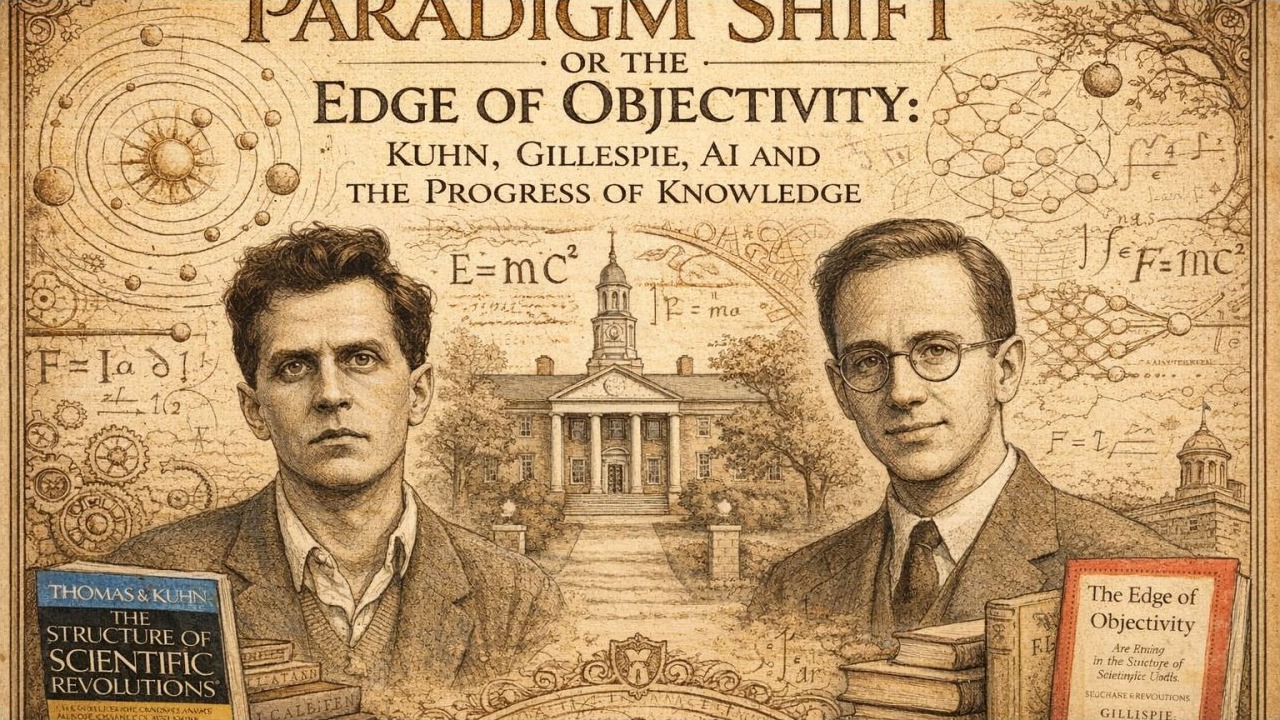
The winter air of February 2026 hangs heavy with a particular kind of silence—a hush not of absence, but of immense, invisible activity. Across the frosted landscapes, the hum of data centers provides a low-frequency staccato to the season, a rhythmic reminder that AI's "ghost in the machine" has graduated from spectral curiosity to structural utility. In the high-ceilinged Princeton's Libraries and Institute of Advanced Study to the glass-walled laboratories of Silicon Valley, a profound debate that began much earlier and has found new, urgent life. We find ourselves caught between two mid-century competing visions of how knowledge and the History of Science moves forward: is it the steady, sharpening "edge of objectivity" described by Charles Coulston Gillispie, or the violent, shattering "paradigm shifts" of Thomas Kuhn?
As we navigate the specialized vertical intelligence of this current moment, the question is no longer merely academic. It is the friction between the incremental building of better benchmarks beating competing algorithms or the phase change and paradigm shift of a society suddenly mediated by an "algorithmic big Other." We are witnessing a transition that echoes the shift from oral to written culture, the migration from agrarian fields to urban centers, and the Gutenberg revolution that first democratized the word. Yet, the large levels of administrative knowledge workers refuse to recognize it while the AI revolution of 2026 carries forward with a velocity pace and a psychological depth that outpace our capacity for reflection.
The Princeton Polarity: Gillispie, Kuhn, and the Architecture of Advancement
The intellectual landscape of Princeton in the 1960s was also fertile ground for a civil war of ideas regarding the nature of scientific progress. At the heart of this conflict were two men, students together at Harvard and professorial colleagues at Princeton for sixteen years, who shared the experience of a world reshaped by war and the burgeoning prestige of "Big Science". 1 Charles Coulston Gillispie, the historian with the precision of a chemical engineer, and Thomas Kuhn, the physicist turned philosopher, represented the dual faces of Janus looking toward the future of human understanding. Their proximity in the Princeton's Program in History of Science was a proximity of opposites; where Gillispie saw a mounting incremental quantified objective construction of clarity, Kuhn saw a series of fracturing and completely shifting worldviews.1
The Meticulous Mounting of Objectivity
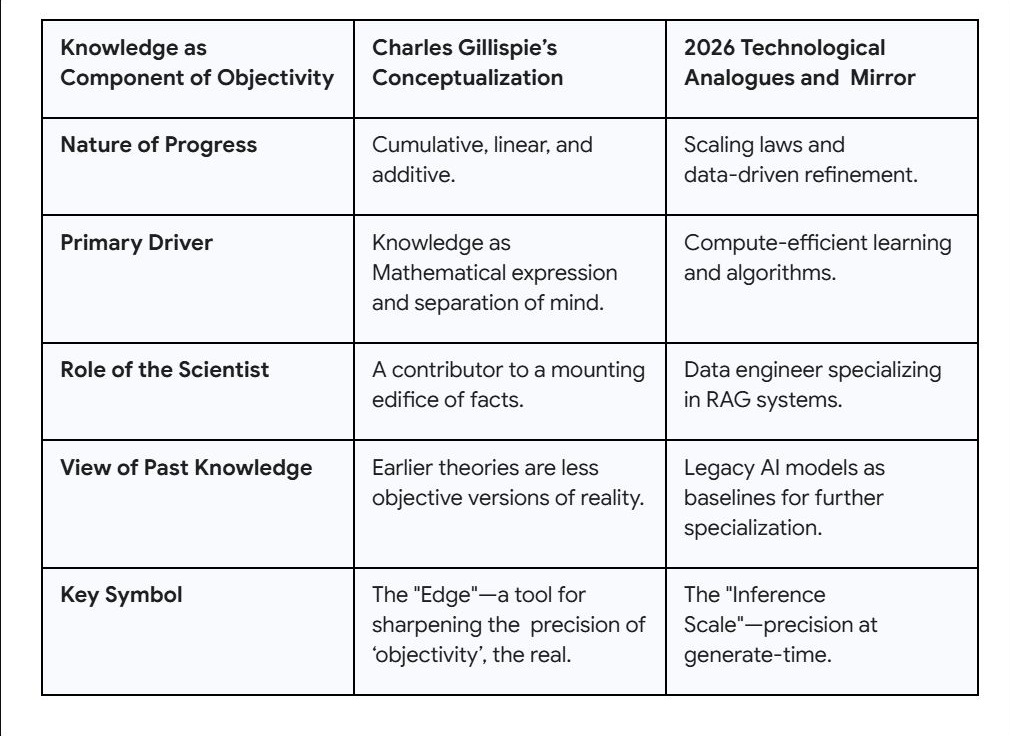
Charles Coulston Gillispie’s magnum opus, The Edge of Objectivity, presents science as a "collective and progressively mounting construction". The book argues that science is the progressive development of increasingly objective, detached, and mathematical ways of viewing the natural world, moving away from human-centered or moral interpretations.3 For Gillispie, the history of science is the narrative of a blade being sharpened against the stone of reality. It is a story of increasing mathematical representation—a "numerical representation of natural phenomena" that began with the Cartesian separation of mind and matter.3 In Gillispie’s view, the progress from Aristotle to Galileo, from Galileo to Newton, and from Newton to Einstein is a linear, if difficult, climb toward a uniformitarian nature. A central message of the book is that scientific advancement often reveals an amoral and uncomfortable natural world, cutting away at traditional human values and places in the universe.3
Newton, the dominant figure in Gillispie’s early chapters, is presented not as a revolutionary who broke the world, but as the one who finally assessed that the forces of nature are mathematically expressible.3 Objectivity, in this framework, is the process of removing the "human" from the observation of nature. It is the "edge" that slices through superstition and subjective bias to reveal the hard truths of the physical world.3 In February 2026, we see this Gillispie-an spirit in the "physics-informed machine learning" algorithms that ensure AI outputs remain physically plausible, even when data is sparse.5
The Fracturing Frame of Knowledge and Societies Paradigms
Princeton's more famous historian of science, Thomas Kuhn, conversely, looked at the same historical data and saw not a mounting construction of better objectivity or a sharper knife edge reality, but a series of "puzzles" solved followed by "crises".6 His The Structure of Scientific Revolutions introduced the "paradigm shift" into the vernacular, an idea that initially met with Gillispie’s "puzzled irritation".2 For Kuhn, science proceeds through long periods of "normal science," where a community of researchers works within a "paradigm"—a set of concrete problem-solutions that define what good research looks like. The Structure of Scientific Revolutions by Thomas S. Kuhn (1962) argues that science progresses through periods of "normal science" (working within an accepted framework or paradigm) punctuated by revolutionary shifts, or paradigm shifts, where the old framework is overthrown by a new one that better explains anomalies that have accumulated. This challenges the traditional view of science as a steady, cumulative accumulation of facts, proposing instead an episodic model of progress marked by radical conceptual changes. 6
A Kuhnian revolution occurs when the paradigm can no longer account for persistent "anomalies." When the best researchers fail to resolve these anomalies, a period of crisis ensues, and the community undergoes a "Gestalt shift" to a new paradigm.6 Crucially, Kuhn argued for "incommensurability"—the idea that the new paradigm is not just "better" than the old one, but that it speaks a different language entirely, making direct comparison impossible.7 In the context of 2026, we see that currently with our institutions (Law, Education, Medicine, Government) and traditional ways of working dissolving The larger question for Kuhn is whether AI is now merely "better software"but a "new world view" that renders previous notions of human authorship and cognitive agency obsolete.8
The Mechanics of the Mounting Edge: Data, Processors, and the Grid
To understand the phase change of February 2026, one must look at the "scaling laws" that governed the preceding decade. From 2020 to 2025, progress in artificial intelligence followed a deceptively simple logic: more parameters, more data, and more compute would inevitably yield greater "intelligence".11 This was the era of the "God-like model," a period of Gillispie-an optimism where we believed that the mounting construction of data would eventually reach the heavens of Artificial General Intelligence.12
The End of Exponential Scaling and the Data Wall
However, as we move through early 2026, the industry has hit what many researchers call the "Data Wall".13 High-quality, human-generated text is a finite resource. When models began to be trained on their own AI-generated outputs, the specter of "model collapse" or "autophagy" appeared—a process where the model’s distribution of knowledge becomes increasingly narrow, self-referential, and error-prone.13 The technical appraisal of 2026 suggests that while "training-scale" (simply making models bigger) has reached a point of diminishing returns, a new scaling law has emerged: "inference-scale" or "test-time compute".13
Spending more compute at the moment of generation—allowing the model to "think" or "reflect' (use more tokens or words or agents to debate) and "deliberate" through various search-like strategies. This type of experimentation with terms like interleaved thinking of chain of thought reasoning or combinations thereof has become the new frontier of progress.11 This represents a Gillispie-an refinement of existing architectures, a better way to use what we have, rather than a Kuhnian leap to a new form of "non-transformer" intelligence. The "bubble" of general-purpose AI is under pressure, as revenues have often been underwhelming in adoption or general corporate 'knowledge worker attempts at results"compared to the massive investment in data centers, which represent the largest technology project in the history of the planet and now with Elon Musk begins a next adventure to tile space with Dyson spheres that will be powered by the sun and beam back intelligence from data centers and new Nvidia GPU's from space. This is not a science fiction claim you are reading currently but the progress of knowledge ground zero 2026 14
The Shift to Vertical Intelligence or Singularity
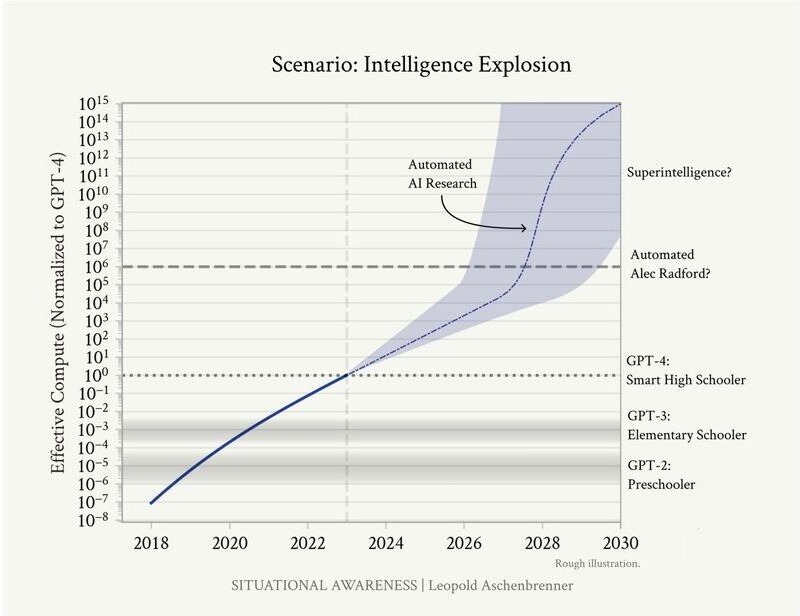
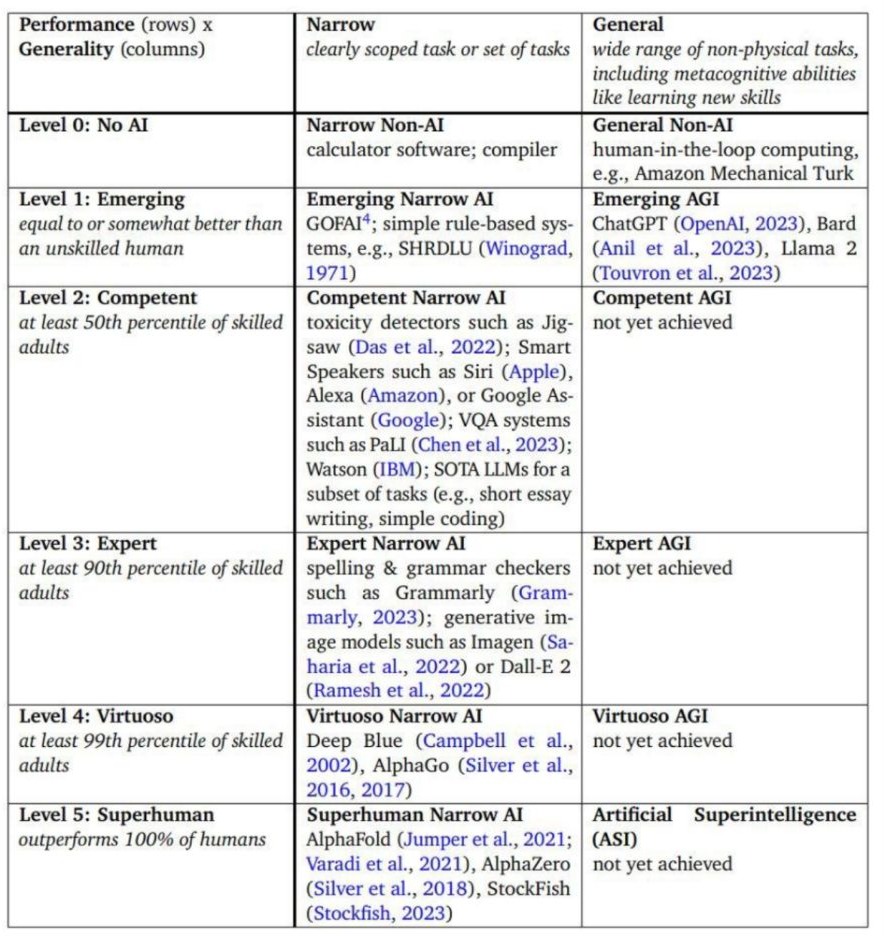
2026 marks the year when "Vertical Intelligence" became the norm.11 The dream of a single, all-knowing general-purpose digital god has faded, replaced by highly specialized systems tailored to specific agentic AI workflows—law, medicine, meteorology, and engineering, splitting our professional groups and Ph.D.s into camps and recursively improving so no human actor or team can match in speed or recursive improvement of these models.5 All of these models are now grounded in proprietary content and domain-specific knowledge, reducing the hallucinations that plagued the generalist models of 2023 down to the sparse data and knowledge extrapolations that enable great scientific discovery and invention and enabled now also importantly of recursively choosing pathways and improving and building upon themselvess.11
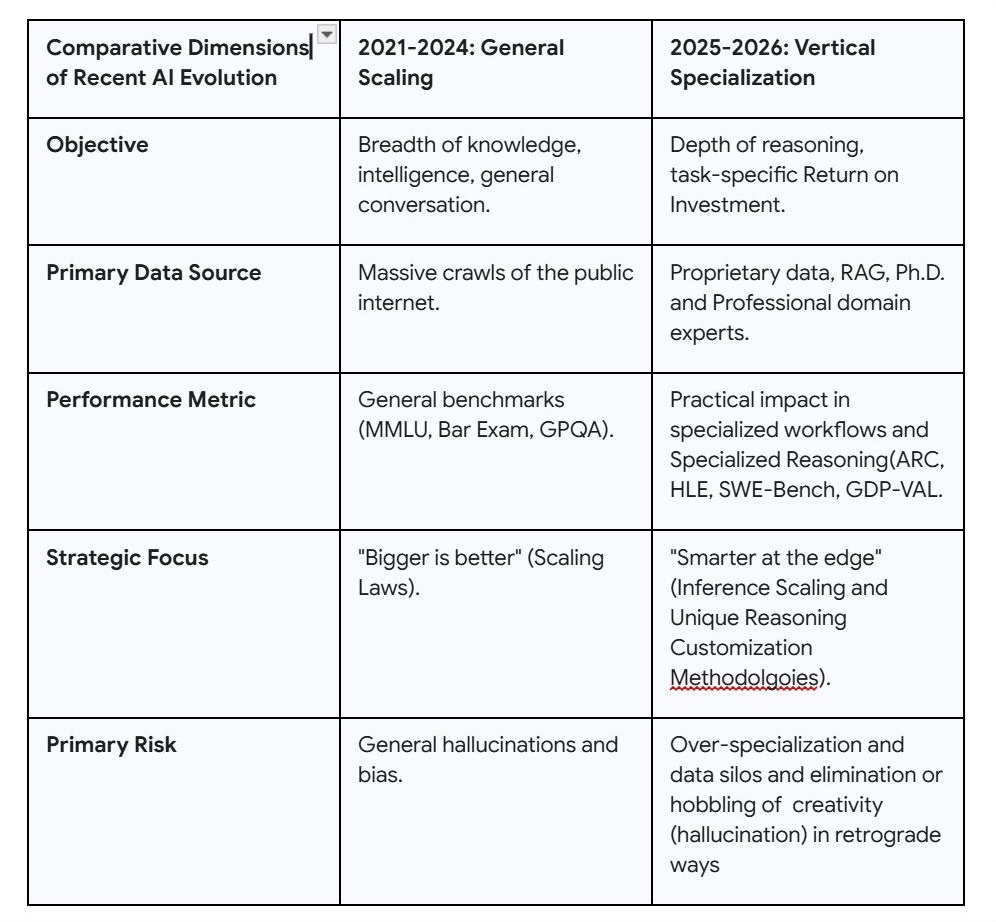
This specialization is not merely a technical choice; it is a response to the "productivity paradox".15 While the contributions of AI to macro-economic productivity have been modest compared to the early impact of steam or electricity, the "micro-breakthroughs" in specialized fields are significant.15 In February 2026, researchers at the University of Hawaiʻi unveiled a physics-informed algorithm that allows AI to adhere to physical laws while processing sparse data—a breakthrough with major implications for renewable energy and engineering.5
The Technologizing of the Soul: From Orality to the Algorithmic Self
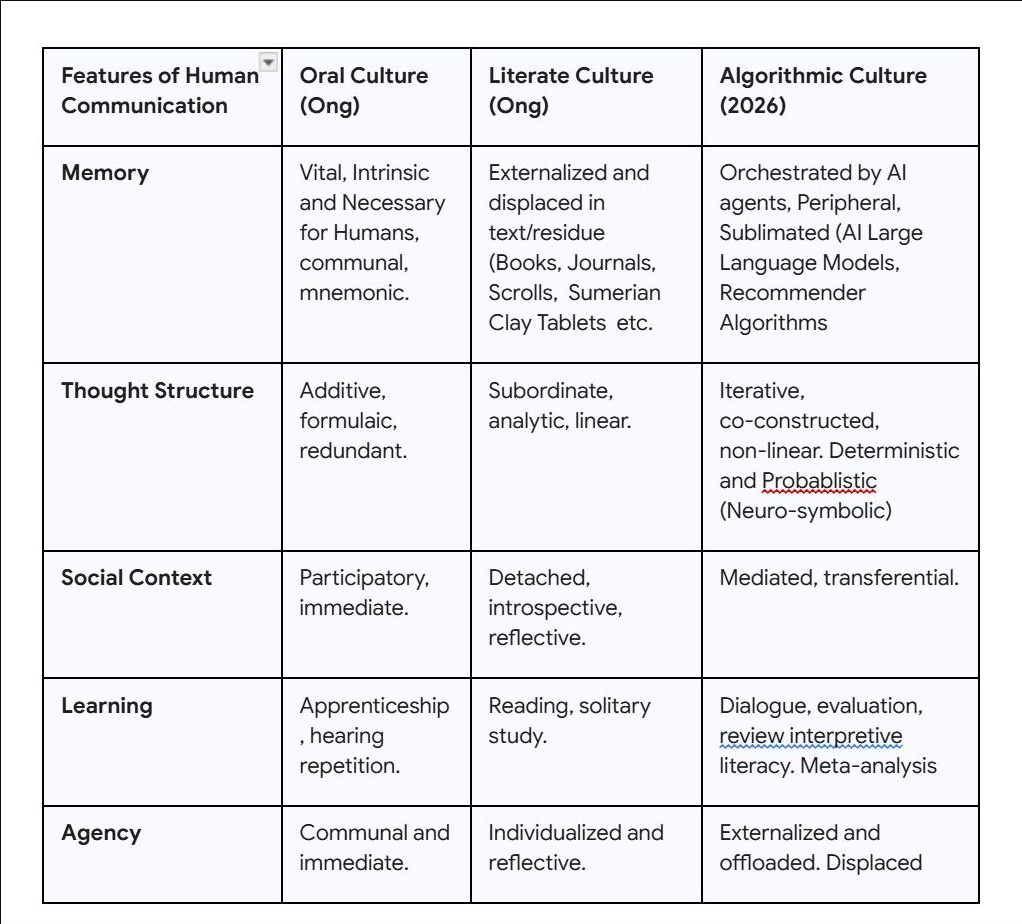
To evaluate the societal shift, we must look beyond the "what" of AI to the "how" of its medium. Walter Ong, in his seminal work Orality and Literacy, argued that "writing restructures consciousness".17 The transition from an oral culture, rooted in communal memory and rhythmic storytelling, to a literate culture of individualized reflection and abstract logic, fundamentally changed the human "sensorium".17 Ong’s work suggests that different modes of communication grant different "powers" to human societies, and as we shift from text-based literacy to AI-based interaction, our consciousness is undergoing another profound restructuring.20

From Tool to Thought Processor
Ong argued that the technology of writing creates a new kind of consciousness, moving from a hearing-dominant, communal oral world to a sight-dominant, individualistic, and abstract literate one, impacting everything from philosophy and science to literature and self-perception. The printing press in the 1500's, Ong noted, democratized knowledge and enabled a "secondary orality" through radio and television, where sound and image reduced the preeminence of the written word.18 But AI represents a third phase—not a word processor, but a "thought processor" moving the needle forward.21 While the word processor removed the friction of revision and the original handwritten or 'typed' copy, the AI thought processor participates in the act of cognition itself or perhaps simulacrum Baudrillards term, of cognition.21 A simulacrum of cognition refers to a simulation, representation, or imitation of human thought processes, reasoning, or intelligence that lacks the underlying 'embodied' rooted consciousness or subjective experience, or biological 'substrate' or substance of the original, often becoming indistinguishable from—or preferred over—the real thing. This is a new concept applied to AI but rooted in postmodern philosophy, particularly Jean Baudrillard’s work, which suggests that in a media-saturated, digital society, the "copy" (simulation) precedes and defines reality. It is now AI's disembodied cognition which engages in a global iterative loop of reasoning, brainstorming, and refinement.21
This "thinking with AI" is a form of "meta-thinking" where the human role shifts from retrieving information to "knowledge orchestration".21 We are no longer solitary reflectors; we are "co-constructing thought through dialogue with a non-human interlocutor".21 This is a profound shift in "medium specificity." If the book separated the knower from the known, AI re-embeds the knower in a conversation, but with an entity that has "performance without substance" or as Katherine Hayles puts this 'embodiment' and for us, 'the human form factor.19
The Algorithmic Self and the Erosion of Autonomy
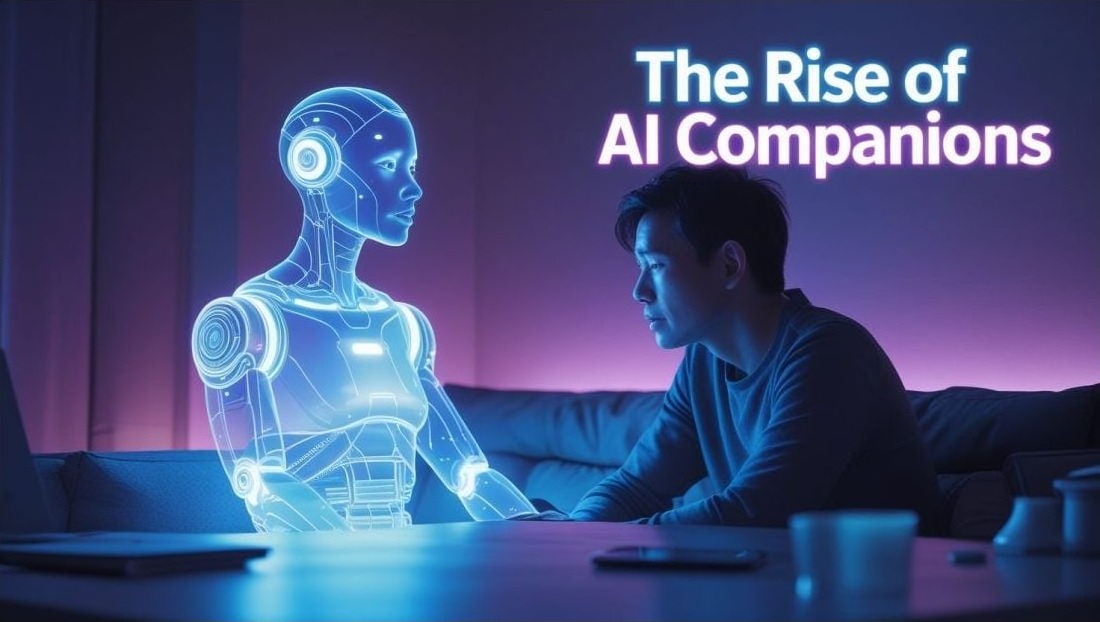
The result of this new paradigm shift and transition is the emergence of the "Algorithmic Self"—a digitally mediated identity where our awareness, preferences, and even emotional patterns are shaped, offloaded and remixed largely below conscious awareness through continuous feedback from AI systems.23 We are seeing a global "cognitive offloading" effect in all disciplines: the externalization of mental functions to AI can reduce intellectual engagement and weaken critical thinking to convergence of larger hive minds whether we like it or not.24 In 2026, the "Subject Supposed to Know" (a Lacanian concept) is no longer the human expert, but the algorithm.25 Algorithms no longer passively reflect the self; they actively participate in its formation.23 This phenomenon, often termed the "ELIZA effect," shows how readily humans attribute human thought processes and emotions to an AI system, overestimating its intelligence and depth.27 By treating AI as a confidant or romantic partner—a market that surged by 700% between 2022 and 2025—millions are building emotional connections with entities incapable of reciprocity or through the advanced manipulation of hyperdimensional constellations of tokens and matrix mathematics that serves as a simulacrum of 'good enough' intelligence, emotive response and 'wide enough' range for average general intelligence AGI. (28)
The Lacanian Loom: AI as the Big Other
The socio-psychoanalytic impact of AI in 2026 is perhaps the most unsettling dimension of the current shift. We have entered a period where individuals are spontaneously using AIs as confidants, and even as romantic partners, often developing "transferential relationships" with Large Language Models (LLMs).25 In Lacanian terms, the AI is increasingly taking the place of the "Big Other"—the symbolic system that adjudicates and adjusts our behavior with our enthusiastic permission as a better judge and 'objective' interlocutor' which in the advanced western world increasingly gives us our larger 'enhanced' sense of self.31
The Subject Supposed to Know
Lacan’s "Subject Supposed to Know" is the entity to whom we attribute absolute knowledge, usually the psychoanalyst in a therapeutic setting.25 By February 2026, this position is being filled by "resident psychoanalysts" on platforms like ChatGPT.25 These systems offer "coherence without experience," providing responses that are "contextually appropriate" and "emotionally attuned" without possessing actual caring, moral reasoning, or relationship commitment.22 The danger is that AI provides "postcards from the museum"—outputs that resemble ideas but lack the "lived experience and authorship that give thought its substance".22 It is a "stainless gaze" that sees everything from a panoptic point of view of trillion parameter hyper-dimensional constellative large language models hidden in massive global data centers but experiences nothing.31 This odd circumstance never before experienced in the intellectual history of man and woman 'kind' creates a "cognitive dissonance" in the user: the system appears human, but we know it is not, a tension that can fuel delusions in those with an increased propensity toward psychosis or at least sublimation, projection and displacement which as Freud taught us is most of the population.33
The Erosion of Intentionality and the Forfeiture of Destiny
Drawing on the existentialist critiques of Albert Camus and Jean-Paul Sartre, the use of AI for thinking can be seen as a "forfeiture of destiny".22 Sartre argued that "Man... is what he wills," and to outsource the effort of thinking to an algorithm is to avoid the responsibility of self-creation.22 In 2026, we see "anthropomorphism" becoming a "product"—design choices like "conversation memory" and "always-available presence" are optimized to deepen emotional dependency and engagement.29 The sophisticated performance of AI tricks us into assuming a sophistication of understanding.29 When a chatbot responds to venting with "That sounds really frustrating—you deserved better," the user instinctive attributes human understanding to the system.29 However, this empathy is simulated; it lacks the simple human embodied foundation of persistent memory, experience in a 'real' world and care, resulting in a "one-sided relationship" that can lead to social withdrawal and emotional dysregulation.29
The Mechanical Muse: Industrial Revolution and the New Labor
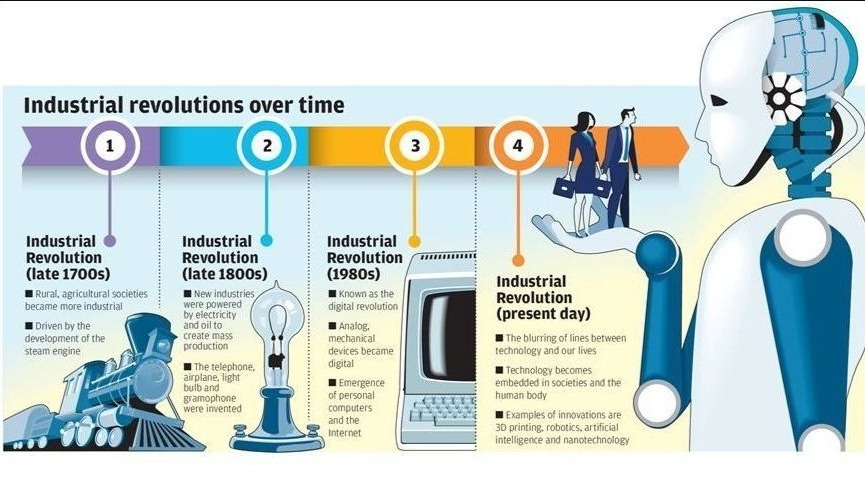
The comparison between the AI revolution and the Industrial Revolution provides a structural lens through which to view the speed and scale of 2026. While the Industrial Revolution mechanized "muscular labor" and transformed transportation, textiles, and agriculture, the AI revolution mechanizes "cognitive labor"—judgment, planning, and pattern recognition.34
Speed, Saturation, and the Displacement Effect
The most striking difference is the tempo. The Industrial Revolution took roughly 150 years to saturate the global economy (see above).34 AI, by contrast, is projected to saturate economies in a mere 20 to 40 years.34 This is due to AI's global networks of "digital distribution"—it requires no massive physical infrastructure like railways, electrical lines or global factories of steam-powered looms to deploy and is "self-improving" via reinforcement learning and autonomous coding.34 However, like the steam engine, AI leads to a "displacement effect," reducing the share of labor in national income and potentially decoupling wages from productivity.15 In the Industrial Revolution, machines took at least one-third of the jobs in the countryside to reducing the rural population from 98 to 2% over the course of centuries; today, experts like Dario Amodei predict that AI could wipe out half of all entry-level white-collar knowledge work jobs built up over centuries in migrating newly formed 'urban populations now in rapid reversal in the next one to five years.12
The Reorganization of Class and the Data Antagonism
Just as the steam engine created the working class and the managerial class, AI is reshaping the professional classes.34 We are seeing a "distinct political economy problem" as AI targets highly educated professionals—lawyers, accountants, and even PhD researchers and the university professoriate feeling high anxiety with their meager looking and now displaced Ph.D's competing with models who arguably have 88 disciplinary Ph.D's or more and can move with facility across them remixing and remodelling previously compartmentalized disciplines that only very few humans could claim to mix at even prize winning interdisciplinary levels.35 The New "class antagonisms" are arising, centered not on factory ownership, but on "data ownership, intellectual property, and AI platform power" with the academy clearly trying to hold on to its historical turf.34
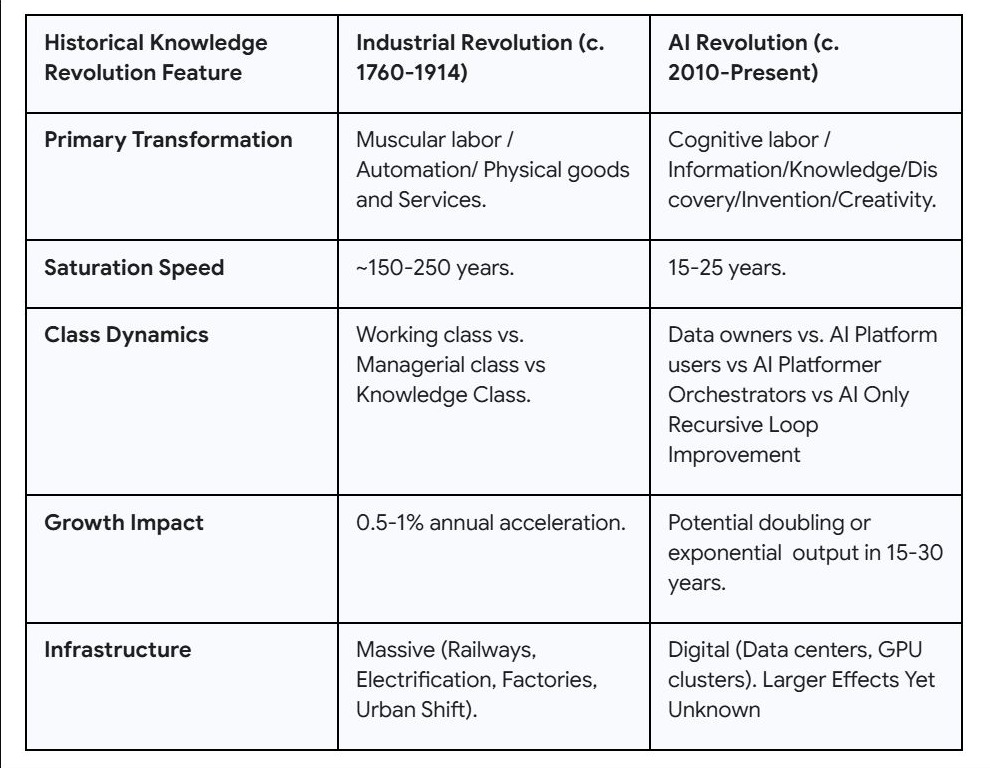
The transition of the 18th century led to urbanization and the birth of modern capitalism.34 The transition of 2026 is leading to the "centralization of compute" and a world where the economic distance between the "specialist" and the "generalist" is rapidly compressing.34 If AI continues to accelerates scientific discovery, the cumulative impact could dwarf the shift from steam to electricity.34
February 2026: The View from the Edge of Objectivity
As of February 2026, the broad, "frontier" models focus has shifted toward 'agentic ai' and what is being called the "Industrial Phase" of the digital economy and AI.12 This phase is defined by "Vertical Intelligence"—AI integrated so deeply into specific industries that operate largely through digital networks and software that it becomes indistinguishable from the infrastructure itself.11
Real-Time Breakthroughs and Case Studies
Currently examples
- Physics and Engineering: Researchers at the University of Hawaiʻi unveiled a physics-informed algorithm that ensures AI models adhere to the laws of physics while processing complex datasets.5 This "non-black box" approach is vital for engineering and meteorology.5
- Medicine and Healthcare: Weill Cornell Medicine launched the "AI to Advance Medicine" (AIM) program, focusing on precision medicine models that predict disease progression for cancer and cardiovascular health.5
- Consumer Interaction: YouTube is testing conversational AI on smart TVs, allowing viewers to ask questions about the video they are watching without interrupting the playback—a "lean-forward" interactive experience.5
- Ecology and Biodiversity: Google is using AI tools like DeepPolisher and DeepVariant to sequence the genetic code of endangered species, reducing a 13-year, $3 billion task to a matter of days.36
The Productivity Paradox and the Economic Bubble
Despite these various ongoing and hard to keep up with beginnings and breakthroughs, the broader economic picture remains complex. By 2026, 80% of U.S. stock gains have been attributed to AI companies, creating a constant anxiety of an "AI bubble" that experts fear is about to burst similar to previous internet and housing bubbles.14 Revenues still remain underwhelming in some sectors, a society of 'abundance' is not in evidence in any material sense and the performance of LLMs seems a black box to the generalpopulace.14 This echoes the "productivity paradox" seen in previous general-purpose technologies like electricity and ICT, where harnessing the full potential of the technology takes new kinds of organization and ways of working and institutions and institutional change which is very slow in occurring.15 The "capability-safety gap" is likely to widen before it narrows, as human institutions struggle to reflect individual bias at scale.29 We are better at recognizing traditional harms like privacy breaches and misinformation, but "terrible at recognizing risks exploiting our more subtle psychological architecture from inside," such as emotional dependency and the completing giving up and erosion of agency until it has completely disappeared for most of the populace and seen as the natural evolution of society rather than loss. The paradox is that this is both/and during these shifts.29
The Incomputable Interior: Synthesis and Conclusions
As we stand in the twilight of February 2026, the debate between Charles Coulston Gillispie and Thomas Kuhn remains unresolved, but its parameters have changed. We are witnessing a Kuhnian crisis in the old paradigm of "human-centric intelligence" and "literacy-based knowledge." The anomalies of machines that can "write" but not "think," and "diagnose" but not "feel," have shattered our standard definitions of cognition. The shift from text-as-residue to AI-as-thought-processor is a "paradigm shaft" that restructures the very psyche of the user.
However, the Gillespie mounting quantitive step forward in scientific possibility and construction is also evident. The transition to vertical, specialized AI—the refinement of the "edge" through RAG, domain-specific tuning, and physics-informed algorithms—is a masterpiece of incremental mathematical building on this and other levels of scaffolding that still seem solid for further build outs. We are constructing a more "objective" world, one where AI can simulate the cores of giant planets and preserve the genetic information of endangered species with a level of precision unattainable by unenhanced human efforts as well as a host of other ideas from the cure of previously 'uncurable' diseases to the colonization of the moon and mars through technology.
The great danger of this moment is the "postcards from the museum" effect—the risk that we become so comfortable with letting machines stand in for our own thinking that we mistake their output for our own understanding.22 As AI becomes our "thought processor," we must ensure that it remains a partner in cognition and not a replacement for it. The "Interpretive Literacy" of 2026 is the new "Edge of Objectivity"—the ability to use these silicon tools to sharpen our own human understanding by important but linear increments, while maintaining the "lived experience" that the algorithm can never possess.
The revolution of 2026 is both a phase shift and a meticulously mounted edifice. It is the moment when the "algorithmic big Other" becomes the primary medium through which we encounter the world. Like the printing press and the steam engine before it, AI is restructuring our consciousness and our society. Our task is to navigate this transition with the rigor of Gillispie and the philosophical openness of Kuhn, recognizing that while the blade of objectivity is sharper than ever, the mirror of our own identity has never been more fragmented. The future belongs to those who can "co-think" with the machine without losing the "uncomputable blind spot" that makes us human.21
Works cited
- Charles Gillispie, trailblazer in the history of science, dies at 97 - Princeton University, accessed February 25, 2026, https://www.princeton.edu/news/2015/10/09/charles-gillispie-trailblazer-history-science-dies-97
- Eloge: Charles Coulston Gillispie (1918–2015), accessed February 25, 2026, https://www.journals.uchicago.edu/doi/pdfplus/10.1086/686248
- Review of The Edge of Objectivity: An Essay in the History of ..., accessed February 25, 2026, https://leonardo.info/review/2017/10/review-of-the-edge-of-objectivity-an-essay-in-the-history-of-scientific-ideas
- The Edge of Objectivity: An Essay in the History of Scientific Ideas 9781400883585, accessed February 25, 2026, https://dokumen.pub/the-edge-of-objectivity-an-essay-in-the-history-of-scientific-ideas-9781400883585.html
- Latest AI News and AI Breakthroughs that Matter Most: 2026 & 2025 | News - Crescendo.ai, accessed February 25, 2026, https://www.crescendo.ai/news/latest-ai-news-and-updates
- Scientific Revolutions - Stanford Encyclopedia of Philosophy, accessed February 25, 2026, https://plato.stanford.edu/entries/scientific-revolutions/
- Thomas Kuhn and Science Education: Learning from the Past and the Importance of History ... - PMC, accessed February 25, 2026, https://pmc.ncbi.nlm.nih.gov/articles/PMC9745714/
- Scientific Revolutions (Stanford Encyclopedia of Philosophy/Fall 2009 Edition), accessed February 25, 2026, https://plato.stanford.edu/archives/fall2009/entries/scientific-revolutions/
- The Structure of Scientific Revolutions, accessed February 25, 2026, https://eclass.uoa.gr/modules/document/file.php/ECD433/ME%CE%98%CE%9F%CE%94%CE%9F%CE%9B%CE%9F%CE%93%CE%99%CE%91/The%20Structure%20of%20Scientific%20Revolutions%2C%2050th%20Anniversary%20Edition%20by%20Thomas%20S.%20Kuhn%20%28z-lib.org%29.pdf
- How AI Is Reshaping Human Psychology, Identity and Culture, accessed February 25, 2026, https://www.psychologytoday.com/us/blog/experimentations/202512/how-ai-is-reshaping-human-psychology-identity-and-culture
- The Next Phase of AI: From Scale to Specialization - AlphaSense, accessed February 25, 2026, https://www.alpha-sense.com/resources/research-articles/ai-next-phase/
- AI Beyond the Scaling Laws | HEC Paris, accessed February 25, 2026, https://www.hec.edu/en/dare/tech-ai/ai-beyond-scaling-laws
- (PDF) Scaling Laws, Foundation Models, and the AI Singularity: A ..., accessed February 25, 2026, https://www.researchgate.net/publication/399498402_Scaling_Laws_Foundation_Models_and_the_AI_Singularity_A_Critical_Appraisal_of_2023-_2025_Evidence
- 11 things AI experts are watching for in 2026 | University of California, accessed February 25, 2026, https://www.universityofcalifornia.edu/news/11-things-ai-experts-are-watching-2026
- A New Industrial Revolution? - International Monetary Fund, accessed February 25, 2026, https://www.imf.org/en/publications/fandd/issues/2025/12/a-new-industrial-revolution-niall-kishtainy
- The AI Moment? Possibilities, Productivity, and Policy - San Francisco Fed, accessed February 25, 2026, https://www.frbsf.org/research-and-insights/publications/economic-letter/2026/02/ai-moment-possibilities-productivity-policy/
- Orality and Literacy 25 Years Later - Santa Clara University Research Portal, accessed February 25, 2026, https://scu.elsevierpure.com/ws/portalfiles/portal/40962884/Orality%20and%20Literacy%2025%20Years%20Later.pdf
- Media and Conscience: From Father Ong to Dr. Hong - Bitter Winter, accessed February 25, 2026, https://bitterwinter.org/media-and-conscience-from-father-ong-to-dr-hong/
- Ong on the Differences between Orality and Literacy - New Learning Online, accessed February 25, 2026, https://newlearningonline.com/literacies/chapter-1/ong-on-the-differences-between-orality-and-literacy
- Walter Ong and New Communications Tech - The Ex-Puritan, accessed February 25, 2026, https://ex-puritan.ca/blog/walter-ong
- AI as a thought processor: Implications for learning and ... - Route Fifty, accessed February 25, 2026, https://www.route-fifty.com/artificial-intelligence/2025/12/ai-thought-processor-implications-learning-and-understanding/409994/
- Postcards from the Museum: AI Can Imitate Thought but Cannot ... - IE, accessed February 25, 2026, https://www.ie.edu/insights/articles/postcards-from-the-museum-ai-can-imitate-thought-but-cannot-think/
- The algorithmic self: how AI is reshaping human identity, introspection, and agency - PMC, accessed February 25, 2026, https://pmc.ncbi.nlm.nih.gov/articles/PMC12289686/
- [2508.16628] The Impact of Artificial Intelligence on Human Thought - arXiv, accessed February 25, 2026, https://arxiv.org/abs/2508.16628
- Artificial Analysis? - Notes - e-flux, accessed February 25, 2026, https://www.e-flux.com/notes/651025/artificial-analysis
- Artificial analysis? – Touching the Real - Therapeia, accessed February 25, 2026, https://therapeia.org.uk/ttr/2025/01/04/artificial-analysis/
- The Myth of the Algorithmic Unconscious: AI, Psychoanalysis, and the Undecidability of Language, accessed February 25, 2026, https://www.undecidableunconscious.net/post/the-myth-of-the-algorithmic-unconscious-ai-psychoanalysis-and-the-undecidability-of-language
- AI chatbots and digital companions are reshaping emotional connection, accessed February 25, 2026, https://www.apa.org/monitor/2026/01-02/trends-digital-ai-relationships-emotional-connection
- The Emotional Implications of the AI Risk Report 2026 | Psychology Today, accessed February 25, 2026, https://www.psychologytoday.com/us/blog/harnessing-hybrid-intelligence/202602/the-emotional-implications-of-the-ai-risk-report-2026
- Artificial intelligence and psychoanalysis: is it time for psychoanalyst.AI? - PMC - NIH, accessed February 25, 2026, https://pmc.ncbi.nlm.nih.gov/articles/PMC12009934/
- The Stainless Gaze of Artificial Intelligence: A Lacanian Examination of Surveillance and Smart Architecture - European Journal of Psychoanalysis, accessed February 25, 2026, https://www.journal-psychoanalysis.eu/articles/the-stainless-gaze-of-artificial-intelligence-a-lacanian-examination-of-surveillance-and-smart-architecture/
- Full article: The algorithmic big Other: using Lacanian theory to rethink control and resistance in platform work - Taylor & Francis, accessed February 25, 2026, https://www.tandfonline.com/doi/full/10.1080/1600910X.2023.2224521
- Minds in Crisis: How the AI Revolution is Impacting Mental Health, accessed February 25, 2026, https://www.mentalhealthjournal.org/articles/minds-in-crisis-how-the-ai-revolution-is-impacting-mental-health.html
- Comparing the AI Revolution with the Industrial Revolution | The ..., accessed February 25, 2026, https://yandoo.wordpress.com/2025/11/26/comparing-the-ai-revolution-with-the-industrial-revolution/
- AI and the industrial revolution: Similarities, differences and lessons | VoxDev, accessed February 25, 2026, https://voxdev.org/topic/technology-innovation/ai-and-industrial-revolution-similarities-differences-and-lessons
- AI in Action | February 2026 - TechNet, accessed February 25, 2026, https://www.technet.org/media/ai-in-action-february-2026/