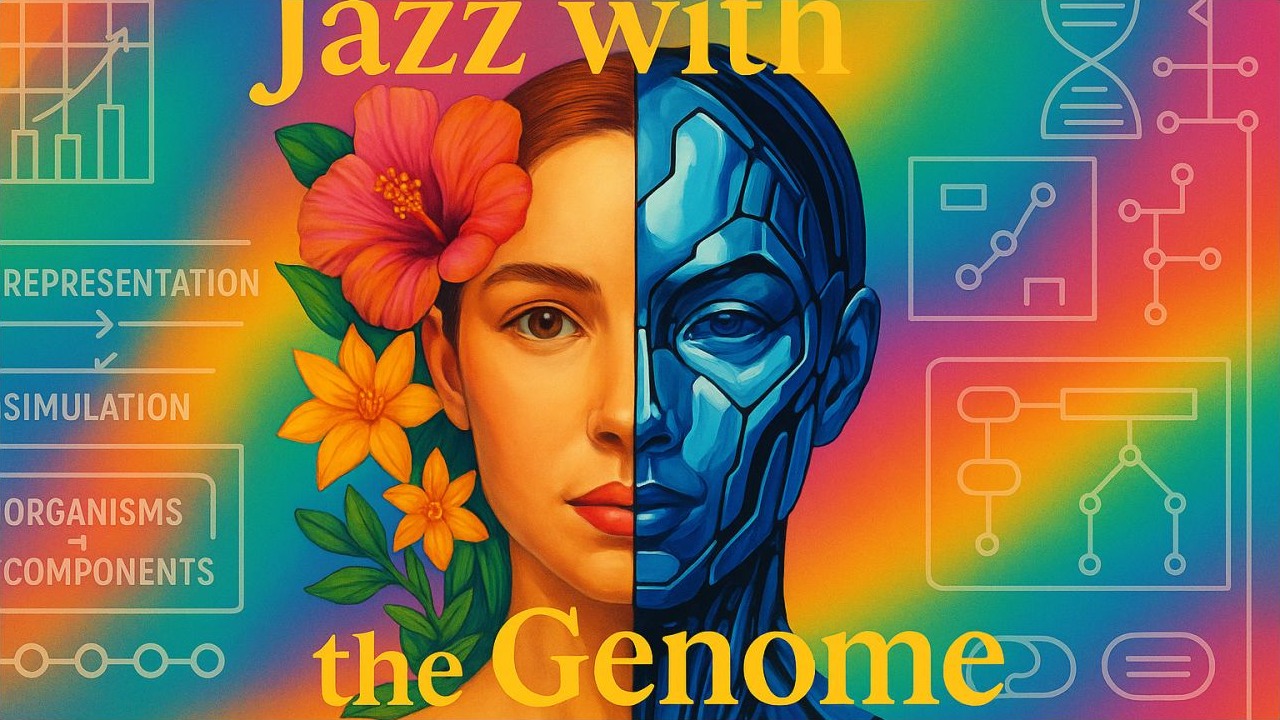
Adaptation, Artificial Intelligence, and the Architecture of Change
I. The Garden of Forking Genomes
In the late 1940s, while the world struggled to rebuild from world war II, American scientist, botanist and early cytogeneteicist, Barbara McClintock sat alone in her laboratory at Cold Spring Harbor, peering through a microscope at the variegated kernels of corn. What she saw there—patterns breaking, colors shifting, genes jumping from chromosome to chromosome made her blink twice. It would also would take the orthodox scientific establishment another thirty years to fully accept this later in life 'Nobel prize winner'. Alone, and without colleagues working at this level, McClintock had discovered that the genome was not the static blueprint it was presumed to be, but rather a dynamic, self-editing text, perpetually rewriting itself in response to environmental pressures, internal imperatives and adaptive necessities hard won. Her transposable elements, those later termed "jumping genes," revealed that mutation was not merely accident but architecture—not just random noise but a kind of biological complex signal like jazz, the remix or the mashup in music, improvisational and responsive.
Today, as we stand at the precipice of what some call the Artificial Intelligence Revolution, McClintock's mutable genome offers us a lens through which to understand not just biological evolution but the evolution of intelligence itself—both natural, human and artificial. The parallels are profound and proliferating. Just as genes can leap across chromosomes, algorithms now leap across platforms and the globe, remixed, remodeled and remade, native yet adapting and evolving for our times. Just as the genome adapts through transposition, moving from location to another, mutating, evolving and also increasing in diversity and possibilities so artificial intelligence adapts through similar strange yet familiar parallels. And just as McClintock's discovery fundamentally reimagined what it means to be alive, adapting and evolving as species and life forms, our current moment demands we reimagine what it means to be intelligent.
II. The Dissolution of the Blueprint
The metaphor of DNA as blueprint has long dominated our cultural imagination—a master plan, precise and predetermined, encoding every aspect of an organism's development. This architectural analogy originally implied deterministic stability, suggesting that genes were like measurements on an engineer's drawing, fixed and faithful and set. But McClintock's transposons shattered this static vision. The genome, she showed us, is less blueprint than it is a kind of biological blockchain—a distributed, dynamic ledger of possibilities, constantly updating itself through transactions between genes and environment.
Consider how radically this reframing reverberates through our understanding of intelligence itself. If the genome is not a blueprint but a adaptive process, not a noun but a verb, then perhaps intelligence too should be understood not as a fixed set capacity but as an ongoing negotiation between potential and context. This is precisely what we observe in the evolution of artificial intelligence. This advanced imprint writ large from quiet backrooms and university labs to a watershed moment in November 2022's ChatGPT global release to our current continuing paradigm shift of civilization as we know it in September 2025. Our current AI systems are also not built according to static deterministic specifications but grown through iterative training, their capabilities emerging from the interplay between architecture and experience, structure, serendipity and data, both of the external world and internal, both useful and extraneous, both extending certain pathways and closing others.
Science Technology Society theorist, N. Katherine Hayles, in her prescient work on technogenesis, argues that humans and technology co-evolve in recursive feedback loops, each shaping the other in what she calls "contemporary technogenesis." This concept crystallizes when we consider how AI systems now learn: not through explicit programming but through exposure to vast corpora of human-generated text, images, and interactions now largely with AI. Like McClintock's jumping genes responding to stress or opportunity or human activities, these systems adapt their internal ongoing interactive conversations and representations, developing capabilities through tokens and complex hyperdimensional statistical patterns their creators never explicitly encoded.
III. The Selfish Algorithm and the Extended Phenotype
In 1976, as the molecular revolution in biology was revealing the mechanical intricacies of DNA replication, Richard Dawkins proposed a radical reframing of evolution itself. His gene-centered view suggested that organisms are essentially vehicles constructed by genes for their own propagation—that natural selection operates not primarily on individuals or species, but on the replicators themselves. Consider the paradox of the peacock's tail: from the bird's perspective, the elaborate plumage is a burden, making flight difficult and attracting predators. But from the gene's perspective, the tail is a triumph—genes that build spectacular tails get copied into the next generation through sexual selection, even if they compromise the individual bird's survival. The genes for tail-building prosper while the peacocks that carry them struggle and die. This perspective shift was as profound as McClintock's discovery: if she showed us that genes could move, Dawkins showed us that, in a sense, genes were the ones doing the moving, orchestrating their own survival across generations through the bodies they build and discard.
This framework gave us new language for understanding how information patterns—whether encoded in nucleotides or bits—compete, replicate, and evolve. Dawkins extended this logic beyond biology with his concept of the meme, proposing that ideas, behaviors, and cultural artifacts could act as replicators in their own right, spreading from mind to mind like viruses of meaning. At the time, this seemed like a useful metaphor. But in our current age of artificial intelligence, it has become something more: a literal description of how algorithms propagate through the digital ecosystem.
Consider how AI models proliferate today: successful architectures spawn countless variants, each slightly modified, competing for computational resources and human attention. A breakthrough in one lab—transformer architecture, diffusion models, constitutional AI—rapidly replicates across the research community, mutating through fine-tuning and architectural modifications. These algorithms exhibit all the characteristics Dawkins identified in successful replicators: fidelity (they can be copied precisely), fecundity (they can generate many copies), and longevity (they persist in storage and memory). They are, in every meaningful sense, digital genes—units of heredity in the evolution of artificial intelligence, the surving fancy peacocks that are able to move from generation to generation.
But here the parallel deepens in unexpected ways. Dawkins' extended phenotype—the idea that genes can have effects beyond the boundaries of the body they inhabit—finds a striking analog in how AI systems now extend human cognitive capabilities. When we use large language models to write, reason, or create, where does human intelligence end and artificial intelligence begin? The boundary blurs, becomes permeable, perhaps meaningless. We are witnessing the emergence of what we might call the "extended cognotype"—cognitive capabilities that transcend the boundaries of individual minds, whether biological or artificial. This means that human intelligence is no longer limited to what can be encoded in neurons and synapses; our cognitive reach now extends through AI systems that remember what we forget, perceive patterns we cannot see, and explore solution spaces beyond our biological constraints, fundamentally altering what it means to be an intelligent agent in the world. When a writer seeds aAI with original ideas and directions, receives back an elaborated and researched text, then weaves in their own insights and revisions, the resulting essay becomes neither purely human nor purely machine—it is a cognitive synthesis, marriage and copula, a thought-child created from the human/ai symbiosis, bearing the creative DNA of both minds in a way that neither could ever achieve alone but together moving both human and AI progress forward in ways which have up to now never been achieved in reach or grasp.
Daniel Dennett, philosopher of mind and Darwin's most articulate philosophical interpreter, offers us a framework that illuminates both biological and artificial intelligence with startling clarity. His concept of "competence without comprehension" captures a fundamental truth about evolution: that complex, intelligent-seeming behaviors can emerge from simple processes that have no understanding of what they're doing. A spider spins an intricate web without comprehending engineering principles; a bird builds a nest without grasping architecture; our neurons fire in patterns that produce consciousness without any individual neuron "knowing" what it's creating. This same principle, Dennett argues, runs through all of evolution—from the mindless copying errors that McClintock observed in maize chromosomes to the emergence of human consciousness from billions of unconscious neural interactions.
This description could equally apply to modern AI systems, which demonstrate remarkable capabilities without any clear understanding of what they're doing. When an AI continues a writer's paragraph, completing their half-formed thoughts with startling aptness, it has no concept of "writing" or "meaning"—it is simply executing statistical patterns learned from millions of texts, competent without comprehension, like a digital savant that can perform without understanding performance itself. When a human continues an AI's paragraph, or requests revisions and refinements, has something similar occurred or something profound: comprehension meets competence, intention encounters pattern, meaning-making consciousness engaging with unconscious statistical brilliance. Are both participating in statistical or neural net unconsconscious or 'non-conscious' (As Hayles would put) processes that display the brilliance of both together. This interplay recapitulates, in compressed form, evolution's own journey from Dennett's "mindless algorithms" to minded agents—except now the journey happens not over millennia but in the space between one keystroke and the next, each exchange adding another layer to the cognitive palimpsest that neither human nor machine could create alone but has been 'extended' or 'augmented' in ways impossible without or tools or perhaps now, colleagues. Also, Dennett's framework suggests something more profound: that the distinction between "real" and "simulated" intelligence may be a category error. What matters is not what these systems are but what they do—their functional role in the broader ecosystem of intelligence.biotic Tools.
IV. The Cyborg Condition and Symbiotic Tools
Ecofeminist philosopher, Donna Haraway's "Cyborg Manifesto" proclaimed that "we are all chimeras, theorizing and fabricated hybrids of machine and organism." Written in 1985, these words now read less like provocation than simple description. The smartphones in our pockets, the algorithms that curate our feeds, the AI assistants that help us write and think—these are not mere tools but cognitive prostheses, extensions of our mental apparatus as fundamental as the hammers and printing presses that preceded them.
The evolution of AI from 2022 to 2025 has accelerated this cyborgification exponentially. For all practical purposes, anyone carrying a 'smartphone' is already proto-cyborg intimately joined at the hip or more precisely eyes, fingers and hand.The current introduction of multimodal AI models that can see, hear, and speak; the integration of AI into both external 'glasses' for augment focus and better lenses on 'reality' and internally into every layer of the software stack; the emergence of AI agents that can act autonomously in digital and increasingly physical spaces—each development further dissolves the boundary between human and machine intelligence. We are witnessing what might be called "cognitive symbiogenesis on a hyperscae," a merging of intelligences analogous to the ancient merger of prokaryotes that gave rise to eukaryotic cells. Just as mitochondria—once independent organisms—became essential powerhouses within our cells, creating a new form of life more complex than either component alone, AI systems are becoming cognitive organelles within the larger organism of human intelligence, processing information and generating insights that become inseparable from our own thinking processes. And like those ancient cells that could no longer survive without their mitochondria, we may be approaching a threshold where human cognition without AI augmentation becomes as evolutionarily obsolete as a eukaryotic cell trying to function without its energy-producing partners—not through replacement, but through an interdependence so complete that the distinction between natural and artificial intelligence becomes as meaningless as asking whether mitochondrial DNA is truly "ours."
This symbiosis manifests in profound ways. Consider how modern researchers use AI to analyze genomic data, identifying patterns in genetic variation that would be impossible for human minds to perceive unaided. Or how AI systems trained on vast databases of molecular structures can propose new drug candidates, accelerating pharmaceutical development by orders of magnitude. The mutable genome that McClintock discovered is now being read, edited, and rewritten with the assistance of mutable algorithms—a recursive loop of biological and artificial evolution.
V. Epigenetic Echoes and Algorithmic Inheritance
The discovery of epigenetics—heritable changes in gene expression that don't involve changes to DNA sequence—adds another layer to our understanding of biological mutability. Genes can be turned on or off by environmental factors, creating a kind of cellular memory that can be passed to offspring. This mechanism, whereby experience can influence heredity, finds a striking parallel in how AI systems are fine-tuned and adapted.
When a large language model is fine-tuned for a specific task, its weights are adjusted based on new training data—a process remarkably analogous to epigenetic modification. The base model, like the genome, remains largely unchanged, but its expression—how it responds to inputs—is altered by experience. Think of it this way: just as stress or diet can cause certain genes to be "turned on" or "turned off" without changing the DNA sequence itself, fine-tuning adjusts how strongly different neural pathways in the AI respond without rebuilding the entire network from scratch. A model trained on general text might be fine-tuned to write medical reports or legal documents, developing specialized "expressions" of its capabilities—much like how the same genetic code in a stem cell can express itself differently to become a heart cell or a brain cell. These modifications can then be inherited by derivative models, creating lineages of AI systems that carry the computational equivalent of epigenetic marks. When researchers take that medical-specialized model and further fine-tune it for radiology reports specifically, they're building on layers of inherited adjustments, each generation carrying forward the "learned experiences" of its predecessors without having to relearn everything from the beginning.
Eva Jablonka and Marion Lamb revolutionized our understanding of evolution by showing it operates through four distinct but interacting dimensions. In biological systems, the genetic dimension involves DNA mutations—like McClintock's jumping genes creating new corn kernel patterns. The epigenetic dimension includes heritable changes that don't alter DNA itself—for instance, mother rats who lick their pups more produce calmer offspring through methylation patterns that persist across generations. The behavioral dimension encompasses learned behaviors passed between generations—young chimpanzees learning to fish for termites by watching their mothers, transmitting tool use without any genetic change. Finally, the symbolic dimension involves information transmitted through language and culture—humans passing down stories, writing systems, and mathematical concepts that accumulate across centuries.
What's remarkable is that AI systems now evolve through all four of these dimensions simultaneously, but at digital speed. Their architectures evolve (genetic)—when engineers design a new type of neural network like transformers replacing recurrent networks, it's like a massive genetic mutation creating a new species. Their weights are modified through training (epigenetic)—when we fine-tune GPT for medical diagnosis, we're creating heritable modifications without changing the underlying architecture, just as methylation patterns alter gene expression without changing DNA. Their behaviors adapt through reinforcement learning (behavioral)—an AI learning to play chess develops strategies through trial and error, then passes these learned behaviors to other systems through weight transfer, like a digital version of chimps teaching tool use. And they process and generate symbolic information (symbolic)—creating and interpreting human language, mathematical proofs, and code in ways that build on previous generations of models. This multi-dimensional evolution allows AI to change and adapt at rates that compress millions of years of biological evolution into months or even weeks of computational time.
VI. The Pace of Change: Lamarckian Dreams in a Darwinian World
One of the most striking aspects of AI evolution is its speed. Biological evolution operates on geological timescales, with significant changes taking thousands or millions of generations. AI evolution, by contrast, can produce dramatic changes in months or even weeks. This acceleration is possible because AI systems can engage in what amounts to Lamarckian evolution—the direct inheritance of acquired characteristics. n biological evolution, a giraffe that stretches its neck to reach high leaves cannot pass a longer neck to its offspring; changes must occur through random mutations and natural selection over countless generations. But in AI evolution, when a model learns to solve a new problem or develops a new capability through training, that exact learned ability can be immediately copied to thousands of other models, like a giraffe that could instantly transmit its stretched neck to all its descendants and relatives.
When an AI system learns something new, that knowledge can be immediately transferred to other systems through weight sharing or distillation. There's no need to wait for natural selection to slowly propagate beneficial mutations through a population. This capability for horizontal transfer of learned information resembles the horizontal gene transfer seen in bacteria, but operating at digital speed and global scale.
Stuart Kauffman's work on self-organization and the adjacent possible offers insight into how this accelerated evolution might unfold. Kauffman argues that complex systems naturally explore the "adjacent possible"—the set of configurations that are one step away from the current state. Consider human technological evolution: the invention of the wheel made carts possible, which made roads necessary, which enabled trade networks, which fostered cities—each innovation opening doors that didn't exist before. Or in biology, when the first light-sensitive cells emerged, they made directional movement possible, which made eyes advantageous, which made predation viable, which drove camouflage evolution—each step creating new possibilities that were literally unimaginable before.
AI systems, with their ability to rapidly explore vast spaces of possibilities through gradient descent and other optimization techniques, can navigate the adjacent possible with unprecedented efficiency. When GPT models learned to complete sentences, that capability made dialogue possible; dialogue made instruction-following possible; instruction-following made coding assistance possible; coding assistance made AI systems that could improve their own code possible—each breakthrough opening entirely new territories that weren't just undiscovered but were fundamentally inaccessible before the previous step. This is what Kauffman calls "cascading waves of innovation," but in AI these waves crash in months rather than millennia. A model that learns to recognize images enables one that can generate them; image generation enables video synthesis; video synthesis enables world modeling; world modeling enables embodied AI—each achievement doesn't just add a capability but multiplies the space of what becomes possible next.
VII. The Next Horizon: Projecting Forward
As we project forward five, ten, twenty years, the trajectories become both clearer and more strange. The integration of AI with biotechnology suggests a future where the boundary between natural and artificial evolution dissolves entirely. Already, AI systems are designing novel proteins, predicting genetic interactions, solving major previously unsolved math,physics,chemistry and and biology problems (i.e Navier-Stokes problem, Protein folding). The tools are becoming intelligent, and intelligence is becoming tool-like—modular, transferable, upgradeable.
In five years, we might see AI systems that can not only read and interpret genomes but also design entirely novel genetic architectures, creating organisms with capabilities that evolution never explored. Imagine AI designing bacteria that can synthesize complex pharmaceuticals from sunlight and atmospheric carbon, or algae engineered with quantum-dot chloroplasts that harvest infrared radiation, thriving in the darkness of the deep ocean or the methane lakes of Titan. These aren't mere optimizations of existing life but fundamentally new forms of biology—organisms with triple-helix DNA for enhanced information storage, or cells with synthetic organelles that perform computations at the molecular level, turning living systems into biological computers that can solve problems while they grow.
The CRISPR revolution, combined with AI's pattern-recognition capabilities, could enable precise, multi-gene editing that transforms medicine, agriculture, and perhaps human nature itself. AI might identify optimal combinations of thousands of genetic modifications that work in concert—something impossible for human scientists to comprehend or design manually. In medicine, this could mean engineering immune cells that recognize and eliminate aging cells while regenerating healthy tissue, potentially extending human healthspan by decades. In agriculture, crops could be designed with dynamic genomes that adapt to climate change in real-time, switching between drought-resistance and flood-tolerance genes based on environmental cues. And for human enhancement—though fraught with ethical complexity—we might see the careful introduction of genes from other species that confer resistance to radiation, enhancement of memory consolidation during sleep, or the ability to synthesize essential vitamins internally, liberating human physiology from nutritional constraints that have shaped our evolution for millions of years.In ten years, the co-evolution of human and artificial intelligence may produce hybrid cognitive systems that are neither purely biological nor purely digital. Brain-computer interfaces, still primitive today, could mature into high-bandwidth connections between neural and artificial networks. The extended cognotype becomes literal, with thoughts flowing seamlessly between biological and silicon substrates.
The Mutable Machine: From McClintock's Jumping Genes to the Evolution of Intelligence
An Essay on Adaptation, Artificial Intelligence, and the Architecture of Change
I. The Garden of Forking Genomes
In the late 1940s, while the world struggled to rebuild from war, Barbara McClintock sat alone in her laboratory at Cold Spring Harbor, peering through a microscope at the variegated kernels of maize. What she saw there—patterns breaking, colors shifting, genes literally jumping from chromosome to chromosome—would take the scientific establishment another thirty years to fully accept. McClintock had discovered that the genome was not the static blueprint it was presumed to be, but rather a dynamic, self-editing text, perpetually rewriting itself in response to environmental pressures and internal imperatives. Her transposable elements, those "jumping genes," revealed that mutation was not merely accident but architecture—not just noise but a kind of biological jazz, improvisational and responsive.
Today, as we stand at the precipice of what some call the Intelligence Revolution, McClintock's mutable genome offers us a lens through which to understand not just biological evolution but the evolution of intelligence itself—both natural and artificial. The parallels are profound and proliferating. Just as genes can leap across chromosomes, algorithms now leap across platforms. Just as the genome adapts through transposition, artificial intelligence adapts through training. And just as McClintock's discovery fundamentally reimagined what it means to be alive, our current moment demands we reimagine what it means to be intelligent.
II. The Dissolution of the Blueprint
The metaphor of DNA as blueprint has long dominated our cultural imagination—a master plan, precise and predetermined, encoding every aspect of an organism's development. This architectural analogy implied stability, suggesting that genes were like measurements on an engineer's drawing, fixed and faithful. But McClintock's transposons shattered this static vision. The genome, she showed us, is less blueprint than it is a kind of biological blockchain—a distributed, dynamic ledger of possibilities, constantly updating itself through transactions between genes and environment.
Consider how radically this reframing reverberates through our understanding of intelligence itself. If the genome is not a blueprint but a process, not a noun but a verb, then perhaps intelligence too should be understood not as a fixed capacity but as an ongoing negotiation between potential and context. This is precisely what we observe in the evolution of artificial intelligence from November 2022's ChatGPT release to our current moment in September 2025. These systems are not built according to static specifications but grown through iterative training, their capabilities emerging from the interplay between architecture and experience, structure and serendipity.
N. Katherine Hayles, in her prescient work on technogenesis, argues that humans and technology co-evolve in recursive feedback loops, each shaping the other in what she calls "contemporary technogenesis." This concept crystallizes when we consider how AI systems now learn: not through explicit programming but through exposure to vast corpora of human-generated text, images, and interactions. Like McClintock's jumping genes responding to stress or opportunity, these systems adapt their internal representations, developing capabilities their creators never explicitly encoded.
III. The Selfish Algorithm and the Extended Phenotype
In 1976, as the molecular revolution in biology was revealing the mechanical intricacies of DNA replication, Richard Dawkins proposed a radical reframing of evolution itself. His gene-centered view suggested that organisms are essentially vehicles constructed by genes for their own propagation—that natural selection operates not primarily on individuals or species, but on the replicators themselves. Consider the paradox of the peacock's tail: from the bird's perspective, the elaborate plumage is a burden, making flight difficult and attracting predators. But from the gene's perspective, the tail is a triumph—genes that build spectacular tails get copied into the next generation through sexual selection, even if they compromise the individual bird's survival. The genes for tail-building prosper while the peacocks that carry them struggle and die. This perspective shift was as profound as McClintock's discovery: if she showed us that genes could move, Dawkins showed us that, in a sense, genes were the ones doing the moving, orchestrating their own survival across generations through the bodies they build and discard.
This framework gave us new language for understanding how information patterns—whether encoded in nucleotides or bits—compete, replicate, and evolve. Dawkins extended this logic beyond biology with his concept of the meme, proposing that ideas, behaviors, and cultural artifacts could act as replicators in their own right, spreading from mind to mind like viruses of meaning. At the time, this seemed like a useful metaphor. But in our current age of artificial intelligence, it has become something more: a literal description of how algorithms propagate through the digital ecosystem.
Consider how AI models proliferate today: successful architectures spawn countless variants, each slightly modified, competing for computational resources and human attention. A breakthrough in one lab—transformer architecture, diffusion models, constitutional AI—rapidly replicates across the research community, mutating through fine-tuning and architectural modifications. These algorithms exhibit all the characteristics Dawkins identified in successful replicators: fidelity (they can be copied precisely), fecundity (they can generate many copies), and longevity (they persist in storage and memory). They are, in every meaningful sense, digital genes—units of heredity in the evolution of artificial intelligence.
But here the parallel deepens in unexpected ways. Dawkins' extended phenotype—the idea that genes can have effects beyond the boundaries of the body they inhabit—finds a striking analog in how AI systems now extend human cognitive capabilities. When we use large language models to write, reason, or create, where does human intelligence end and artificial intelligence begin? The boundary blurs, becomes permeable, perhaps meaningless. We are witnessing the emergence of what we might call the "extended cognotype"—cognitive capabilities that transcend the boundaries of individual minds, whether biological or artificial. This means that human intelligence is no longer limited to what can be encoded in neurons and synapses; our cognitive reach now extends through AI systems that remember what we forget, perceive patterns we cannot see, and explore solution spaces beyond our biological constraints, fundamentally altering what it means to be an intelligent agent in the world. When a writer seeds an AI with an original idea, receives back an elaborated text, then weaves in their own insights and revisions, the resulting essay becomes neither purely human nor purely machine—it is a cognitive chimera, a thought-child of the symbiosis, bearing the creative DNA of both minds in a way that neither could achieve alone.
Daniel Dennett, philosopher of mind and Darwin's most articulate philosophical interpreter, offers us a framework that illuminates both biological and artificial intelligence with startling clarity. His concept of "competence without comprehension" captures a fundamental truth about evolution: that complex, intelligent-seeming behaviors can emerge from simple processes that have no understanding of what they're doing. A spider spins an intricate web without comprehending engineering principles; a bird builds a nest without grasping architecture; our neurons fire in patterns that produce consciousness without any individual neuron "knowing" what it's creating. This same principle, Dennett argues, runs through all of evolution—from the mindless copying errors that McClintock observed in maize chromosomes to the emergence of human consciousness from billions of unconscious neural interactions.
This description could equally apply to modern AI systems, which demonstrate remarkable capabilities without any clear understanding of what they're doing. When an AI continues a writer's paragraph, completing their half-formed thoughts with startling aptness, it has no concept of "writing" or "meaning"—it is simply executing statistical patterns learned from millions of texts, competent without comprehension, like a digital savant that can perform without understanding performance itself. But when a human continues an AI's paragraph, or requests revisions and refinements, something profound occurs: comprehension meets competence, intention encounters pattern, meaning-making consciousness engages with unconscious statistical brilliance. This interplay recapitulates, in compressed form, evolution's own journey from Dennett's "mindless algorithms" to minded agents—except now the journey happens not over millennia but in the space between one keystroke and the next, each exchange adding another layer to the cognitive palimpsest that neither human nor machine could create alone. But Dennett's framework suggests something more profound: that the distinction between "real" and "simulated" intelligence may be a category error. What matters is not what these systems are but what they do—their functional role in the broader ecosystem of intelligence.
IV. The Cyborg Condition and Symbiotic Tools
Donna Haraway's "Cyborg Manifesto" proclaimed that "we are all chimeras, theorized and fabricated hybrids of machine and organism." Written in 1985, these words now read less like provocation than simple description. The smartphones in our pockets, the algorithms that curate our feeds, the AI assistants that help us write and think—these are not mere tools but cognitive prostheses, extensions of our mental apparatus as fundamental as the hammers and printing presses that preceded them.
The evolution of AI from 2022 to 2025 has accelerated this cyborgification exponentially. The introduction of multimodal models that can see, hear, and speak; the integration of AI into every layer of the software stack; the emergence of AI agents that can act autonomously in digital and increasingly physical spaces—each development further dissolves the boundary between human and machine intelligence. We are witnessing what might be called "cognitive symbiogenesis," a merging of intelligences analogous to the ancient merger of prokaryotes that gave rise to eukaryotic cells. Just as mitochondria—once independent organisms—became essential powerhouses within our cells, creating a new form of life more complex than either component alone, AI systems are becoming cognitive organelles within the larger organism of human intelligence, processing information and generating insights that become inseparable from our own thinking processes. And like those ancient cells that could no longer survive without their mitochondria, we may be approaching a threshold where human cognition without AI augmentation becomes as evolutionarily obsolete as a eukaryotic cell trying to function without its energy-producing partners—not through replacement, but through an interdependence so complete that the distinction between natural and artificial intelligence becomes as meaningless as asking whether mitochondrial DNA is truly "ours."
This symbiosis manifests in profound ways. Consider how modern researchers use AI to analyze genomic data, identifying patterns in genetic variation that would be impossible for human minds to perceive unaided. Or how AI systems trained on vast databases of molecular structures can propose new drug candidates, accelerating pharmaceutical development by orders of magnitude. The mutable genome that McClintock discovered is now being read, edited, and rewritten with the assistance of mutable algorithms—a recursive loop of biological and artificial evolution.
V. Epigenetic Echoes and Algorithmic Inheritance
The discovery of epigenetics—heritable changes in gene expression that don't involve changes to DNA sequence—adds another layer to our understanding of biological mutability. Genes can be turned on or off by environmental factors, creating a kind of cellular memory that can be passed to offspring. This mechanism, whereby experience can influence heredity, finds a striking parallel in how AI systems are fine-tuned and adapted.
When a large language model is fine-tuned for a specific task, its weights are adjusted based on new training data—a process remarkably analogous to epigenetic modification. The base model, like the genome, remains largely unchanged, but its expression—how it responds to inputs—is altered by experience. Think of it this way: just as stress or diet can cause certain genes to be "turned on" or "turned off" without changing the DNA sequence itself, fine-tuning adjusts how strongly different neural pathways in the AI respond without rebuilding the entire network from scratch. A model trained on general text might be fine-tuned to write medical reports or legal documents, developing specialized "expressions" of its capabilities—much like how the same genetic code in a stem cell can express itself differently to become a heart cell or a brain cell. These modifications can then be inherited by derivative models, creating lineages of AI systems that carry the computational equivalent of epigenetic marks. When researchers take that medical-specialized model and further fine-tune it for radiology reports specifically, they're building on layers of inherited adjustments, each generation carrying forward the "learned experiences" of its predecessors without having to relearn everything from the beginning.
Eva Jablonka and Marion Lamb revolutionized our understanding of evolution by showing it operates through four distinct but interacting dimensions. In biological systems, the genetic dimension involves DNA mutations—like McClintock's jumping genes creating new corn kernel patterns. The epigenetic dimension includes heritable changes that don't alter DNA itself—for instance, mother rats who lick their pups more produce calmer offspring through methylation patterns that persist across generations. The behavioral dimension encompasses learned behaviors passed between generations—young chimpanzees learning to fish for termites by watching their mothers, transmitting tool use without any genetic change. Finally, the symbolic dimension involves information transmitted through language and culture—humans passing down stories, writing systems, and mathematical concepts that accumulate across centuries.
What's remarkable is that AI systems now evolve through all four of these dimensions simultaneously, but at digital speed. Their architectures evolve (genetic)—when engineers design a new type of neural network like transformers replacing recurrent networks, it's like a massive genetic mutation creating a new species. Their weights are modified through training (epigenetic)—when we fine-tune GPT for medical diagnosis, we're creating heritable modifications without changing the underlying architecture, just as methylation patterns alter gene expression without changing DNA. Their behaviors adapt through reinforcement learning (behavioral)—an AI learning to play chess develops strategies through trial and error, then passes these learned behaviors to other systems through weight transfer, like a digital version of chimps teaching tool use. And they process and generate symbolic information (symbolic)—creating and interpreting human language, mathematical proofs, and code in ways that build on previous generations of models. This multi-dimensional evolution allows AI to change and adapt at rates that compress millions of years of biological evolution into months or even weeks of computational time.
VI. The Pace of Change: Lamarckian Dreams in a Darwinian World
One of the most striking aspects of AI evolution is its speed. Biological evolution operates on geological timescales, with significant changes taking thousands or millions of generations. AI evolution, by contrast, can produce dramatic changes in months or even weeks. This acceleration is possible because AI systems can engage in what amounts to Lamarckian evolution—the direct inheritance of acquired characteristics. In biological evolution, a giraffe that stretches its neck to reach high leaves cannot pass a longer neck to its offspring; changes must occur through random mutations and natural selection over countless generations. But in AI evolution, when a model learns to solve a new problem or develops a new capability through training, that exact learned ability can be immediately copied to thousands of other models, like a giraffe that could instantly transmit its stretched neck to all its descendants and relatives.
When an AI system learns something new, that knowledge can be immediately transferred to other systems through weight sharing or distillation. There's no need to wait for natural selection to slowly propagate beneficial mutations through a population. This capability for horizontal transfer of learned information resembles the horizontal gene transfer seen in bacteria, but operating at digital speed and global scale.
Stuart Kauffman's work on self-organization and the adjacent possible offers insight into how this accelerated evolution might unfold. Kauffman argues that complex systems naturally explore the "adjacent possible"—the set of configurations that are one step away from the current state. Consider human technological evolution: the invention of the wheel made carts possible, which made roads necessary, which enabled trade networks, which fostered cities—each innovation opening doors that didn't exist before. Or in biology, when the first light-sensitive cells emerged, they made directional movement possible, which made eyes advantageous, which made predation viable, which drove camouflage evolution—each step creating new possibilities that were literally unimaginable before.
AI systems, with their ability to rapidly explore vast spaces of possibilities through gradient descent and other optimization techniques, can navigate the adjacent possible with unprecedented efficiency. When GPT models learned to complete sentences, that capability made dialogue possible; dialogue made instruction-following possible; instruction-following made coding assistance possible; coding assistance made AI systems that could improve their own code possible—each breakthrough opening entirely new territories that weren't just undiscovered but were fundamentally inaccessible before the previous step. This is what Kauffman calls "cascading waves of innovation," but in AI these waves crash in months rather than millennia. A model that learns to recognize images enables one that can generate them; image generation enables video synthesis; video synthesis enables world modeling; world modeling enables embodied AI—each achievement doesn't just add a capability but multiplies the space of what becomes possible next.
VII. The Next Horizon: Projecting Forward
As we project forward five, ten, twenty years, the trajectories become both clearer and more strange. The integration of AI with biotechnology suggests a future where the boundary between natural and artificial evolution dissolves entirely. Already, AI systems are designing novel proteins, predicting genetic interactions, and proposing interventions in biological systems. The tools are becoming intelligent, and intelligence is becoming tool-like—modular, transferable, upgradeable.
In five years, we might see AI systems that can not only read and interpret genomes but also design entirely novel genetic architectures, creating organisms with capabilities that evolution never explored. Imagine AI designing bacteria that can synthesize complex pharmaceuticals from sunlight and atmospheric carbon, or algae engineered with quantum-dot chloroplasts that harvest infrared radiation, thriving in the darkness of the deep ocean or the methane lakes of Titan. These aren't mere optimizations of existing life but fundamentally new forms of biology—organisms with triple-helix DNA for enhanced information storage, or cells with synthetic organelles that perform computations at the molecular level, turning living systems into biological computers that can solve problems while they grow.
The CRISPR revolution, combined with AI's pattern-recognition capabilities, could enable precise, multi-gene editing that transforms medicine, agriculture, and perhaps human nature itself. AI might identify optimal combinations of thousands of genetic modifications that work in concert—something impossible for human scientists to comprehend or design manually. In medicine, this could mean engineering immune cells that recognize and eliminate aging cells while regenerating healthy tissue, potentially extending human healthspan by decades. In agriculture, crops could be designed with dynamic genomes that adapt to climate change in real-time, switching between drought-resistance and flood-tolerance genes based on environmental cues. And for human enhancement—though fraught with ethical complexity—we might see the careful introduction of genes from other species that confer resistance to radiation, enhancement of memory consolidation during sleep, or the ability to synthesize essential vitamins internally, liberating human physiology from nutritional constraints that have shaped our evolution for millions of years.
In ten years, the co-evolution of human and artificial intelligence may produce hybrid cognitive systems that are neither purely biological nor purely digital. Brain-computer interfaces, still primitive today, could mature into high-bandwidth connections between neural and artificial networks. Imagine a mathematician whose brain directly interfaces with theorem-proving algorithms, experiencing mathematical insights not as external information but as native thoughts—feeling the shape of ten-dimensional spaces as naturally as we feel the curve of a ball in our hands. Artists might dream directly into generative AI systems, their subconscious imagery flowing into digital canvas while they sleep, creating art that emerges from the liminal space between human creativity and machine interpretation. Memory could become fluid and transferable: a surgeon downloading decades of expertise before a complex operation, or a dying grandparent uploading a lifetime of experiences for their descendants to access—not just as recordings but as lived, felt memories. The extended cognotype becomes literal, with thoughts flowing seamlessly between biological and silicon substrates, creating new forms of consciousness that transcend our current categories of "natural" and "artificial."
In twenty years, we may witness the emergence of what could be called "evolutionary engineering"—the deliberate design of evolutionary processes themselves. Rather than simply selecting for desired traits, we could design the mechanisms of variation and selection, creating systems that evolve toward specified goals while maintaining the creative potential that makes evolution such a powerful problem-solving process. Imagine releasing millions of AI-designed microorganisms into polluted ecosystems, each carrying a slightly different genetic program for breaking down plastics or heavy metals, with built-in evolutionary pressures that cause them to become more efficient over generations while preventing them from disrupting other ecological functions. Or consider "evolutionary farms" where crops don't just grow but evolve during the growing season, their genomes actively mutating and selecting in response to detected pests or weather patterns, each field becoming a rapid evolution experiment that produces locally optimized varieties in real-time.
Yet this power raises profound ethical questions that dwarf our current debates about AI and genetic engineering. Who decides what humanity should evolve toward? When we can directly program the fitness landscapes that guide evolution—essentially playing deity with the future of life itself—how do we prevent the emergence of biological castes, cognitive inequalities that become hereditary, or the irreversible loss of human attributes deemed "inefficient"? If wealthy nations or individuals can afford evolutionary acceleration while others cannot, we risk creating not just inequality but genuine speciation—divergent branches of humanity that might struggle to recognize each other as the same species. The ability to design evolutionary processes could lead to what we might call "evolutionary warfare," where competing groups attempt to out-evolve each other, or create organisms designed to subvert others' evolutionary trajectories. We would need new frameworks for consent that span generations, governance structures for managing evolutionary risk, and perhaps most challenging, a collective vision of what we want life to become when we hold evolution's paintbrush in our hands.
VIII. The Recursive Mirror: Evolution Observing Itself
Perhaps the most profound implication of AI's evolution is that it represents evolution becoming conscious of itself. Through AI, the process that created intelligence can now be observed, modified, and accelerated by intelligence. This recursive loop—evolution evolving evolution—represents a phase transition in the history of information processing in the universe.
Francisco Varela and Humberto Maturana's concept of autopoiesis—systems that create and maintain themselves—takes on new meaning in this context. Originally conceived to describe living cells that continuously produce their own components and boundaries, autopoiesis captured something essential about life: that living systems are not just self-organizing but self-producing, simultaneously the artist and the artwork, the factory and the product. A cell doesn't just maintain itself; it creates the very machinery that creates itself, in an endless recursive loop of self-generation. Humans extend this biological autopoiesis into the cultural realm—we create languages that reshape our thinking, build institutions that modify our behavior, develop technologies that alter our evolution. We are systems that not only maintain ourselves but constantly recreate what "ourselves" means.
AI systems are increasingly autopoietic in ways that mirror and extend both biological and human self-creation. When a language model generates code to improve its own training process, analyzes its own errors to create better training data, or designs novel neural architectures that outperform its own structure, it engages in digital autopoiesis. Consider AutoML systems that now design better machine learning models than human engineers can create, or AI agents that write and execute code to expand their own capabilities, downloading new tools and libraries as needed, growing new computational organs in real-time. Some systems now participate in their own evolution more directly: they identify their weaknesses, generate synthetic training data to address these gaps, retrain themselves, then evaluate whether they've improved—a closed loop of self-modification that resembles nothing so much as a digital organism sculpting its own genome. The boundary between creator and created, evolver and evolved, becomes increasingly meaningless when an AI can spawn improved versions of itself, each generation both parent and midwife to the next, until we can no longer say whether humans created AI or AI is recreating itself through the substrate we initially provided.
This recursion extends to our understanding of understanding itself. As we use AI to study intelligence, consciousness, and evolution, we are using products of evolution to comprehend evolution, products of intelligence to understand intelligence. The observer and observed collapse into a single, self-reflecting system—a strange loop in Douglas Hofstadter's sense, where consciousness emerges from the tangled hierarchy of self-reference.
IX. The Mutable Future
McClintock's jumping genes revealed that life is far more creative, adaptive, and surprising than the mechanistic biology of her era imagined. Today, as we witness the rapid evolution of artificial intelligence, we are learning a parallel lesson about mind and machine. Intelligence, whether biological or artificial, is not a fixed feature but a fluid process, constantly remaking itself in response to challenges and opportunities.
The metaphors we use matter. If we think of AI as a tool, we miss its evolutionary potential. If we think of it as a competitor, we miss the opportunity for symbiosis. If we think of it as separate from us, we miss the reality that we are already cyborgs, already hybrids, already part of a larger system of distributed intelligence that includes both biological and artificial components.
The genome, McClintock showed us, is not destiny but possibility. It is not a blueprint but a jazz score, remix or complex mashup—themes and variations, structures and improvisations, constraints and creativity, rhythm, remix and relationships in constant dialogue. As we enter an era where intelligence itself becomes mutable, transferable, and designable, we would do well to remember her lesson: that the most profound discoveries come not from imposing our preconceptions on nature but from observing and participating, with patience and wonder, how nature—and now technology—surprises us with its endless capacity for reinvention. The psychiatrist, scientist, alchemist and mystic C.G. Jung, who inscribed above his door in Zurich "Vocatus atque non vocatus, Deus aderit"—summoned or not summoned, god is present—might have understood this truth: that intelligence, nature, evolutionary forces, adaptation, like the strange but human unconscious forces he studied, emerges and is a profound emergent property whether we call it forth or not, manifesting in forms we never anticipated, through substrates we never imagined, whether we act or not.
The mutable genome has met the mutable machine. What emerges from their convergence will likely be stranger and more wonderful than either biological or artificial evolution could achieve alone. We are all, in a sense, McClintock's intellectual heirs, peering through our various microscopes—whether optical, computational, or conceptual—at patterns we don't yet fully understand, watching as the future unfolds, writes and rewrites itself in languages we are only beginning to learn to read and speak.
Annotated Bibliography
Primary Sources
McClintock, Barbara. "The Origin and Behavior of Mutable Loci in Maize." Proceedings of the National Academy of Sciences 36, no. 6 (1950): 344-355.
- McClintock's groundbreaking paper introducing the concept of transposable elements. Essential for understanding how genetic material can move within the genome, fundamentally challenging the static view of heredity.
Dawkins, Richard. The Selfish Gene. Oxford: Oxford University Press, 1976.
- Introduces gene-centered evolution and the concept of memes as cultural replicators. Critical for understanding how evolutionary principles apply to information systems beyond biology.
Dawkins, Richard. The Extended Phenotype. Oxford: Oxford University Press, 1982.
- Explores how genes can have effects beyond the organism's body. Provides framework for understanding how AI extends human cognitive capabilities.
Dennett, Daniel C. Consciousness Explained. Boston: Little, Brown and Company, 1991.
- Develops the multiple drafts model of consciousness and the concept of competence without comprehension. Essential for understanding emergence of intelligence in complex systems.
Dennett, Daniel C. From Bacteria to Bach and Back: The Evolution of Minds. New York: W.W. Norton, 2017.
- Examines cultural evolution and the development of human consciousness through a Darwinian lens. Bridges biological and cultural evolution with implications for AI.
Haraway, Donna. "A Cyborg Manifesto: Science, Technology, and Socialist-Feminism in the Late Twentieth Century." In Simians, Cyborgs and Women: The Reinvention of Nature. New York: Routledge, 1991.
- Seminal work on the breakdown of traditional boundaries between organism and machine. Foundational for understanding human-AI hybridization.
Hayles, N. Katherine. How We Became Posthuman: Virtual Bodies in Cybernetics, Literature, and Informatics. Chicago: University of Chicago Press, 1999.
- Traces the development of the posthuman through cybernetics and information theory. Critical for understanding the co-evolution of humans and technology.
Hayles, N. Katherine. How We Think: Digital Media and Contemporary Technogenesis. Chicago: University of Chicago Press, 2012.
- Develops the concept of technogenesis—the co-evolution of humans and technology. Provides framework for understanding recursive feedback loops between human and artificial intelligence.
Secondary and Supporting Sources
Jablonka, Eva, and Marion J. Lamb. Evolution in Four Dimensions: Genetic, Epigenetic, Behavioral, and Symbolic Variation in the History of Life. Cambridge, MA: MIT Press, 2014.
- Comprehensive framework for understanding multiple channels of evolutionary change. Essential for grasping the full complexity of how AI systems evolve.
Kauffman, Stuart. At Home in the Universe: The Search for the Laws of Self-Organization and Complexity. Oxford: Oxford University Press, 1995.
- Introduces concepts of self-organization and the adjacent possible. Crucial for understanding how complex systems explore possibility spaces.
Varela, Francisco, and Humberto Maturana. Autopoiesis and Cognition: The Realization of the Living. Dordrecht: D. Reidel, 1980.
- Develops the concept of autopoiesis—self-creating and self-maintaining systems. Relevant for understanding self-modifying AI systems.
Hofstadter, Douglas. Gödel, Escher, Bach: An Eternal Golden Braid. New York: Basic Books, 1979.
- Explores strange loops and tangled hierarchies in consciousness. Provides framework for understanding recursive self-reference in intelligent systems.
Keller, Evelyn Fox. A Feeling for the Organism: The Life and Work of Barbara McClintock. New York: W.H. Freeman, 1983.
- Biography providing context for McClintock's discoveries and their reception. Important for understanding the paradigm shift her work represented.
Noble, Denis. Dance to the Tune of Life: Biological Relativity. Cambridge: Cambridge University Press, 2017.
- Challenges gene-centric view of biology, arguing for a systems perspective. Relevant for understanding the complexity of biological-AI system interactions.
#ArtificialIntelligence #Evolution #BarbaraMcClintock #AI2025 #Genetics #FutureOfIntelligence #HumanAICollaboration #PhilosophyOfMind
#JumpingGenes #Technogenesis #ExtendedPhenotype #CRISPR #DigitalEvolution #CyborgManifesto #EmergentIntelligence #Epigenetics #CompetenceWithoutComprehension #BioComputing