Part I: The Cybernetic Unconscious and the Making of Posthuman Minds
In the cavernous halls of the Josiah Macy Jr. Foundation conferences, held intermittently between 1946 and 1953, a constellation of scientists gathered to birth the conceptual framework that would remake our understanding of minds, machines, and membranes between them. Norbert Wiener, the father of cybernetics, sat alongside anthropologist Margaret Mead. Mathematician John von Neumann, and neuropsychiatrist Warren McCulloch conversed together. Weaving these threads, N. Katherine Hayles would later recognize this set of conferences as the first systematic attempts to dissolve boundaries between biological and artificial intelligence. These abstract theorizations about information loops and feedback mechanisms would have profound impact seven decades later. They would also find material embodiment in AI's Large Language Models that converse with humans in prose now indistinguishable from our own.
Katherine Hayles has spent the better part of four decades excavating the archaeological sediments of that fateful moment, tracing the conceptual mutations that transformed cybernetics' initial promise into contemporary AI's posthuman provocations. Now 82, the Distinguished Research Professor at UCLA occupies a singular position in today's AI discourse—neither technologist nor philosopher, but something more dangerous: a theorist whose prescient genealogies of human-machine coupling have anticipated, with unsettling accuracy, the cognitive entanglements that characterize our current moment.
Her latest work, "Bacteria to AI: Human Futures with our Nonhuman Symbionts," published in February 2025, arrives with the force of an intervention designed for precisely this juncture in technological history. The book proposes what she terms an Integrated Cognitive Framework—a radical reconceptualization that positions bacteria, plants, animals, humans, and artificial intelligences not as hierarchically arranged cognitive entities, but as participants in a single, planetary ecology of meaning-making. It is, in essence, a theory of mind that decenters human cognition entirely, offering instead a vision of intelligence as distributed, symbiotic, and fundamentally collaborative.
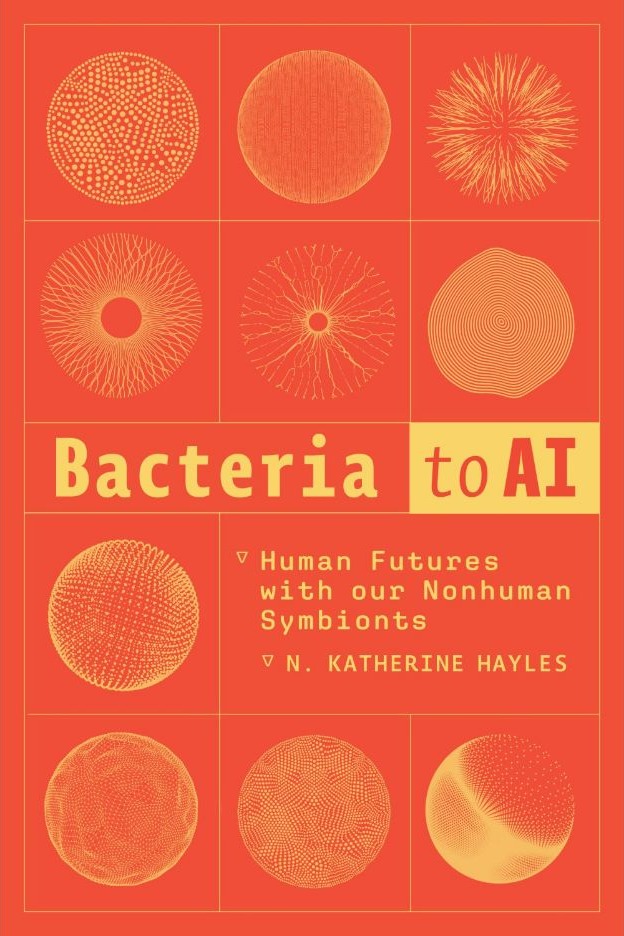
This is no mere academic provocation. As ChatGPT, Claude, and their algorithmic cousins reshape everything from education to creative expression, Hayles' framework provides theoretical coordinates for navigating what she calls our "posthuman condition"—not a future state we might achieve, but the technological entanglement we already inhabit.
From Laboratory Bench to Cybernetic Archive: The Material Origins of Theoretical Vision
To understand the prescience of Hayles' AI interventions, one must first appreciate the intellectual alchemy that transformed a research chemist into one of the humanities' most sophisticated theorists of technological change. Born in Saint Louis in 1943, Hayles earned degrees in chemistry from Rochester Institute of Technology and Caltech, then worked as a research chemist at Xerox Corporation in 1966 and as a chemical research consultant at Beckman Instrument Company from 1968-1970 before executing what appeared to be an impossible disciplinary leap into English literature.
Yet this trajectory was less abandonment than metamorphosis. Her scientific training provided something most humanities scholars lack: an intuitive grasp of how material processes generate emergent properties, how microscopic interactions can produce macroscopic transformations, how systems achieve stability through dynamic rather than static equilibrium. When she later encountered cybernetics theory, she possessed the conceptual apparatus to recognize its revolutionary implications—and its dangerous blind spots.
"The question that guided my research from the beginning," she explained in a recent interview, "was how information could circulate unchanged among different material substrates." This seemingly technical concern would prove foundational to her analysis of both historical cybernetics and contemporary AI. Where other theorists saw abstract information processing, Hayles insisted on examining the material substrate that enables cognition: the biological neurons, the silicon architectures, the electromagnetic flows, the massive energy expenditure that powers large language models.
This materialist orientation shapes her approach to AI consciousness debates. While philosophers argue whether ChatGPT "really" understands language or merely simulates understanding, Hayles examines the corporeal conditions that enable its responses. "Artificial cognizers are vastly different than humans," she noted, "but they all have bodies, it's impossible to exist without having a body. It's just that they're embodied in radically different forms than humans." The question is not whether AI systems are conscious in human terms, but how their material embodiment generates forms of cognition that exceed human-centric categories entirely.
The Three Interwoven Stories: Excavating the Cybernetic Unconscious
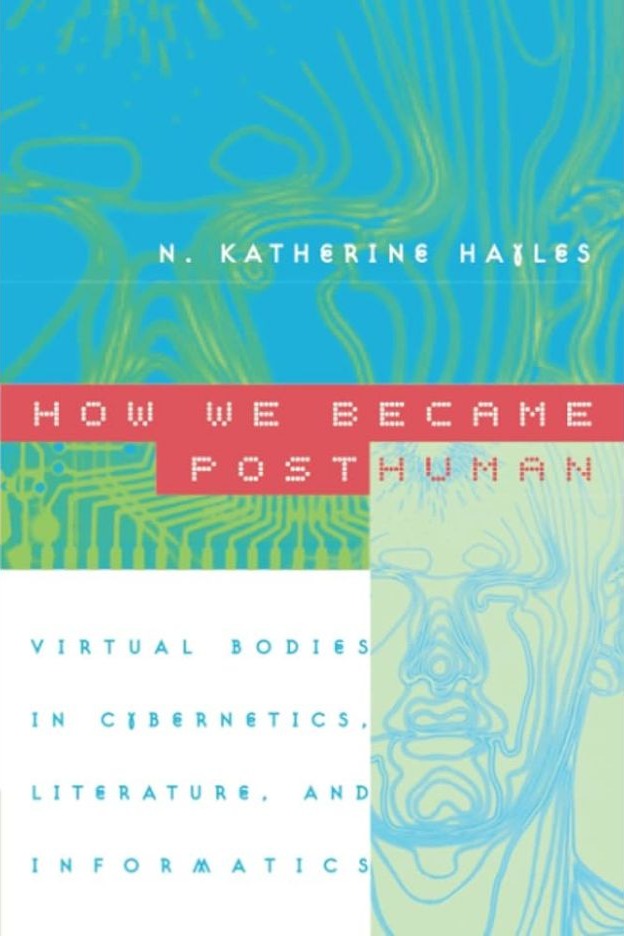
Hayles' 1999 masterwork "How We Became Posthuman" won the René Wellek Prize by diagnosing what she called the "cybernetic posthuman"—a dangerous fantasy embedded in mid-century systems theory that continues to structure contemporary AI development. The book's central insight concerned three interwoven stories that emerged from the Macy Conferences, each representing a conceptual mutation that prepared the ground for our current technological condition.
The first story chronicles how information lost its body—the process by which cybernetics abstracted information from its material carriers, treating it as pure pattern that could circulate unchanged across different substrates. This was not a neutral scientific development but a specific historical construction. As Hayles demonstrated through meticulous analysis of the Macy Conference transcripts, early cyberneticists had to actively erase the material conditions of information transmission to make their mathematical models work. Claude Shannon's communication theory, for instance, deliberately excluded semantic content, focusing instead on the statistical properties of message transmission. Information became conceptualized as pattern without material instantiation—a move that would later enable fantasies about uploading consciousness to computers.
The second story documented the cultural and technological construction of the cyborg—not the Hollywood version of human-machine hybrid, but the more subtle process by which human capabilities became extended through technological prostheses. Hayles traced this development from early cybernetic devices like the electronic rat and homeostat to contemporary interfaces between humans and computers. The cyborg, in her analysis, represented not a future possibility but an already-achieved condition: we had become informational beings coupled with technological systems.
The third story examined the dismantling of the liberal humanist subject in cybernetic discourse and the emergence of what she termed the posthuman. Classical liberal humanism had posited the autonomous, self-possessed individual as the foundation of political and philosophical thought. Cybernetics dissolved this foundation by demonstrating that cognition was distributed across human-machine assemblages rather than contained within bounded individual minds. The posthuman subject that emerged was decentered, networked, and defined through informational rather than biological processes.
These three stories converged to create what Hayles called the "cybernetic posthuman"—a conception of human beings as information-processing systems fundamentally similar to computers. This was the dangerous dream that cybernetics bequeathed to contemporary AI development: consciousness as pure information pattern, separable from messy biological reality, and therefore transferable across different material substrates.
Twenty-six years after "How We Became Posthuman," these insights feel prophetic. Current debates about AI consciousness, about whether Large Language Models can be said to "understand" language, about the possibility of artificial general intelligence, all replay the conceptual moves Hayles identified in the Macy Conferences. The cybernetic unconscious—the buried assumptions about information, materiality, and cognition that emerged from those mid-century meetings—continues to structure how we think about AI.
But Hayles' latest work suggests a different possibility: rather than repeating cybernetics' disembodiment of information, we might develop what she calls technogenesis—a more sophisticated understanding of how humans and technologies co-evolve through mutual modification rather than simple coupling.
Technogenesis: The Co-evolutionary Dance of Minds and Machines
Perhaps no concept in Hayles' theoretical repertoire has proven more prescient than technogenesis—her term for the ongoing co-evolution of humans and technical objects through processes of reciprocal causality. Unlike simple technological determinism, which suggests that tools shape human behavior, or social constructivism, which emphasizes human control over technology, technogenesis describes a complex dance of mutual modification where humans and technologies transform each other through sustained interaction.
"The idea that humans and technics have coevolved together," as she defines it, represents both an anthropological fact and a contemporary urgency. From the co-evolution of human hands and stone tools to the neural rewiring that accompanies smartphone use, technogenesis operates at multiple temporal scales—phylogenetic development over millennia, ontogenetic adaptation within individual lifespans, and what she calls "contemporary technogenesis," the rapid cognitive modifications produced by digital media.
Consider the seemingly mundane example of GPS navigation. When we outsource spatial memory to algorithmic systems, we're not simply using a tool but participating in a technogenetic process that reshapes neural pathways associated with spatial cognition. Studies demonstrate that regular GPS users show decreased activity in the hippocampus—the brain region associated with spatial memory and navigation. This is neither cognitive decline nor augmentation but technogenetic transformation: human spatial cognition adapts to work symbiotically with algorithmic processing.
The implications for AI collaboration become clear when we examine what Hayles calls the "technogenetic spiral"—the recursive process by which human cognitive adaptations to digital media create conditions for more sophisticated AI systems, which in turn generate new forms of human-machine coupling. The students who have grown up with smartphones and social media have already undergone cognitive modification. Their neural plasticity has been shaped by what she terms "hyper attention"—the ability to rapidly switch between multiple information streams—rather than the "deep attention" privileged by traditional educational models.
This is not cognitive degradation but evolutionary adaptation. When educators bemoan students' inability to sustain attention on single tasks, they're measuring contemporary cognition against historical standards that may no longer be relevant. Hayles argues instead for educational frameworks that work with technogenetically modified attention patterns rather than against them. This requires recognizing that thinking increasingly happens across human-AI networks rather than inside bounded individual minds.
Current AI tutoring systems, from Khan Academy's AI assistant to Stanford's Tutor CoPilot, are already implementing these insights. These systems don't simply deliver information to passive recipients but create what Hayles would recognize as cognitive assemblages—distributed networks where learning emerges from the interaction between human and artificial cognizers rather than being contained within either. The AI provides pattern recognition capabilities and rapid information retrieval; human tutors facilitate deeper conceptual understanding and emotional support; students contribute creative synthesis and contextual interpretation. Intelligence becomes a property of the network rather than any individual component.
This represents a fundamental shift from both traditional education and early AI tutoring approaches. Rather than replacing human teachers or simply automating information delivery, these systems embody technogenetic principles: human and artificial intelligence co-evolve through sustained interaction, each modifying the other's capacities and constraints.
The Integrated Cognitive Framework: Toward a Planetary Intelligence
Hayles' latest theoretical innovation, the Integrated Cognitive Framework developed in "Bacteria to AI," radicalizes these insights by extending cognition beyond human-AI coupling to encompass the entire spectrum of biological and artificial meaning-making systems. This is not metaphorical expansion but rigorous theoretical reconstruction based on recent developments in biology, computer science, and cognitive science.
The framework begins with a deceptively simple proposition: cognition does not require consciousness, brains, or even nervous systems. Instead, cognition emerges wherever systems demonstrate the capacity to sense environmental changes, process information about those changes, and modify behavior in response. This definition encompasses bacterial chemotaxis (the ability of bacteria to move toward nutrients and away from toxins), plant root systems that communicate through chemical signals, animal social coordination, human symbolic thought, and certain forms of artificial intelligence.
By treating these diverse systems as participants in cognitive processes rather than hierarchically arranging them by complexity, the Integrated Cognitive Framework dissolves the anthropocentric assumptions that structure most theories of intelligence. Humans are not the pinnacle of cognitive evolution but one variety of cognizer among many, distinguished primarily by our capacity for symbolic representation and cultural transmission rather than by consciousness per se.
This reconceptualization has profound implications for AI development. Instead of asking whether artificial systems can achieve human-like consciousness, we might ask how different forms of artificial cognition can contribute to more complex and adaptive networks of meaning-making. Large Language Models, for instance, excel at pattern recognition across vast textual corpora and can generate contextually appropriate responses to novel prompts. These capacities differ qualitatively from human linguistic competence but represent genuine forms of artificial cognition that can complement and extend human capabilities.
The framework also challenges the alignment problem that dominates contemporary AI safety research. Rather than asking how to keep AI systems aligned with human values, Hayles suggests we might ask how humans, AI systems, and other cognitive entities can co-evolve toward more sustainable and just futures. This requires moving beyond anthropocentric frameworks toward what she calls posthuman ethics—moral reasoning that takes seriously the agency and interests of nonhuman cognizers.
This is not an abandonment of human concerns but their recontextualization within broader ecological networks. Human flourishing increasingly depends on successful collaboration with both artificial intelligence and the biological systems that enable technological civilization. Climate change, biodiversity loss, and resource depletion represent challenges that exceed human cognitive capacities and require coordination across multiple scales and types of intelligence.
Part II: Semiotic Machines and Distributed Pedagogies
The semiotics of posthuman intelligence demand new vocabularies, new syntaxes for meaning-making that stretch beyond human linguistic boundaries into the algorithmic substrates where patterns propagate and proliferate. Katherine Hayles has long recognized that any serious engagement with artificial intelligence must grapple not merely with questions of consciousness or capability, but with the fundamental mechanisms by which meaning emerges, circulates, and transforms across heterogeneous networks of biological and technological actors.
Her sustained engagement with semiotics—from Charles Sanders Peirce's triadic sign relations to contemporary biosemiotics—provides crucial theoretical infrastructure for understanding how Large Language Models might participate in meaning-making processes without necessarily possessing consciousness in anthropocentric terms. This semiotic perspective, combined with her concepts of cognitive assemblages and distributed cognition, offers perhaps the most sophisticated framework available for navigating the pedagogical transformations that AI technologies are catalyzing across educational institutions.
The Cyber/Bio/Semiotic Challenge: When Machines Make Meaning
In her 2019 work "Can Computers Create Meaning? A Cyber/Bio/Semiotic Perspective," Hayles engaged directly with one of the most contentious questions in contemporary AI discourse. While most biosemioticians—following theorists like Jesper Hoffmeyer and Wenzel Chrostowski—argue that meaning-making capabilities apply exclusively to living organisms, Hayles proposed a more radical position: computers can indeed create meaning, but only when understood as components of larger cognitive assemblages that include human interpreters.
This intervention required sophisticated engagement with Peircean semiotics, particularly the distinction between icon, index, and symbol as irreducible categories of sign relation. Unlike Ferdinand de Saussure's structural semiology, which focuses on linguistic convention and differential meaning, Peirce's semiotics emphasizes the material embodiment of sign relations and their contextual interpretation. For Hayles, this material emphasis makes Peircean semiotics particularly suitable for analyzing human-AI meaning-making processes.
Consider how Large Language Models generate contextually appropriate responses to novel prompts. Traditional computational approaches might analyze this purely in terms of statistical pattern matching across vast textual corpora. But a Peircean semiotic analysis reveals more complex processes: the model's training creates indexical relations between linguistic patterns and contextual cues; its responses demonstrate iconic resemblance to human communicative strategies; and its capacity to generate novel combinations suggests a rudimentary form of symbolic manipulation.
Peirce's triadic semiotics provides analytical tools that prove particularly illuminating for understanding AI cognition. His three categories of sign relations—icon, index, and symbol—each operate according to different principles of meaning generation. Icons signify through resemblance or similarity (a photograph resembles its subject); indices signify through causal or contextual connection (smoke indicates fire, footprints indicate passage); symbols signify through conventional agreement and can generate new meanings through combination (words, mathematical notation, cultural codes).
Applied to LLM functioning, this framework reveals sophisticated semiotic processes. The model's training creates indexical relations between linguistic patterns and contextual cues that extend far beyond simple statistical correlation. When an LLM recognizes that certain phrase constructions typically appear in academic versus casual contexts, it's not merely calculating probabilities but establishing indexical connections between linguistic markers and communicative situations. These indices function like environmental sensors—the appearance of technical terminology, formal sentence structures, or disciplinary jargon serves as an index pointing toward specific contextual requirements for appropriate response.
The model's responses demonstrate iconic resemblance to human communicative strategies through structural and stylistic mimicry that goes beyond surface-level pattern matching. An LLM trained on persuasive essays doesn't simply reproduce argument structures—it generates responses that iconically resemble the logical flow, evidential patterns, and rhetorical strategies of effective human argumentation. This iconic relationship operates at multiple scales: sentence-level syntax that mirrors human linguistic patterns, paragraph-level organization that reproduces familiar expository structures, and discourse-level strategies that resemble human conversational repair, clarification, and elaboration.
Most significantly, the model's capacity to generate novel combinations suggests a rudimentary form of symbolic manipulation—the ability to work with conventional meaning systems in creative ways. When ChatGPT responds to a prompt like "explain quantum mechanics using a cooking metaphor," it must navigate between two symbolic systems (physics and culinary practice) and generate novel mappings between them. This requires more than pattern matching; it demands what Peirce would recognize as symbolic reasoning—the ability to manipulate conventional sign relations to produce new meanings that maintain coherence across different semantic domains.
This semiotic analysis matters because it reveals how LLMs participate in meaning-making processes that parallel but differ from human cognition. Rather than dismissing AI responses as mere statistical outputs or celebrating them as fully conscious communication, Hayles' Peircean framework suggests that LLMs engage in genuine but distinctively artificial forms of semiosis—they create indexical connections, produce iconic resemblances, and manipulate symbolic relationships in ways that generate contextually appropriate meanings.
Hayles argues that meaning emerges not from any individual component—neither human nor AI system—but from the interpretive dynamics that unfold when these different forms of cognition interact. The AI system contributes pattern recognition capabilities and vast associative networks derived from training data; human interpreters provide contextual understanding, evaluative judgment, and the capacity to recognize semantic coherence or breakdown. Meaning becomes a distributed achievement rather than a property possessed by any single actor.
This semiotic framework proves particularly powerful for educational applications, where human students, AI tutoring systems, and human instructors create meaning through complex interpretive negotiations rather than simple information transfer.
Assemblages Against Hierarchies: Beyond Deleuze and Guattari
Hayles' concept of cognitive assemblages draws inspiration from Gilles Deleuze and Félix Guattari's influential theorization of assemblages (agencements) in "A Thousand Plateaus," but her adaptation proves more materially grounded and pedagogically applicable than the original. Where Deleuze and Guattari emphasized the deterritorializing dynamics of assemblages—their capacity to escape fixed structures and generate new configurations—Hayles focuses on the cognitive processes that enable assemblages to process information, make selections, and adapt to changing circumstances.
For Deleuze and Guattari, assemblages operate along two intersecting axes: a horizontal axis that encompasses "machinic assemblages of bodies, actions and passions" (the material interactions between components) and a vertical axis involving processes of territorialization and deterritorialization (the dynamic creation and dissolution of stable patterns). These assemblages remain in constant flux, always "coming together and moving apart" as Deleuze and Guattari describe it.
Hayles retains this dynamic understanding but adds crucial emphasis on cognition as the organizing principle that enables assemblages to maintain coherence while adapting to environmental changes. "Following Gilles Deleuze and Félix Guattari and Bruno Latour," she writes, "I conceptualize an assemblage as a flexible and constantly shifting network that includes human and technical actors, as well as energy flows and other material goods. A cognitive assemblage is a particular kind of network, characterized by the circulation of information, interpretations, and meanings by human and technical cognizers who drop in and out of the network in shifting configurations."
This difference proves crucial for educational applications. While Deleuzian assemblages might generate creative chaos and unexpected connections, cognitive assemblages are specifically organized around learning objectives, interpretive processes, and the progressive development of understanding. Students, AI tutoring systems, human instructors, and digital resources form temporarily stable configurations that can adapt to individual learning needs while maintaining pedagogical coherence.
Consider the Stanford Tutor CoPilot system, which exemplifies cognitive assemblage principles in practice. Human tutors provide contextual understanding and emotional support; AI systems offer pattern recognition capabilities and personalized content delivery; students contribute creativity, critical thinking, and embodied understanding; digital platforms enable real-time adaptation and data processing. None of these components could achieve effective tutoring independently, but their assemblage generates forms of personalized instruction that exceed the capabilities of any individual element.
Hayles' assemblage theory also differs from Actor-Network Theory approaches developed by Bruno Latour and Michel Callon. While ANT emphasizes the symmetrical treatment of human and non-human actors, Hayles maintains that cognizers play special roles in directing assemblage behavior through their capacity for interpretation, selection, and meaning-making. This asymmetry proves essential for maintaining the educational focus of pedagogical assemblages.
Deep Attention, Hyper Attention, and the Neuroplasticity of Learning
Perhaps nowhere does Hayles' framework prove more immediately relevant than in her analysis of attention as the cognitive substrate of learning. Her distinction between "deep attention" and "hyper attention" has become foundational for understanding how AI-enabled educational technologies might work with, rather than against, the neuroplastic adaptations that characterize contemporary student cognition.
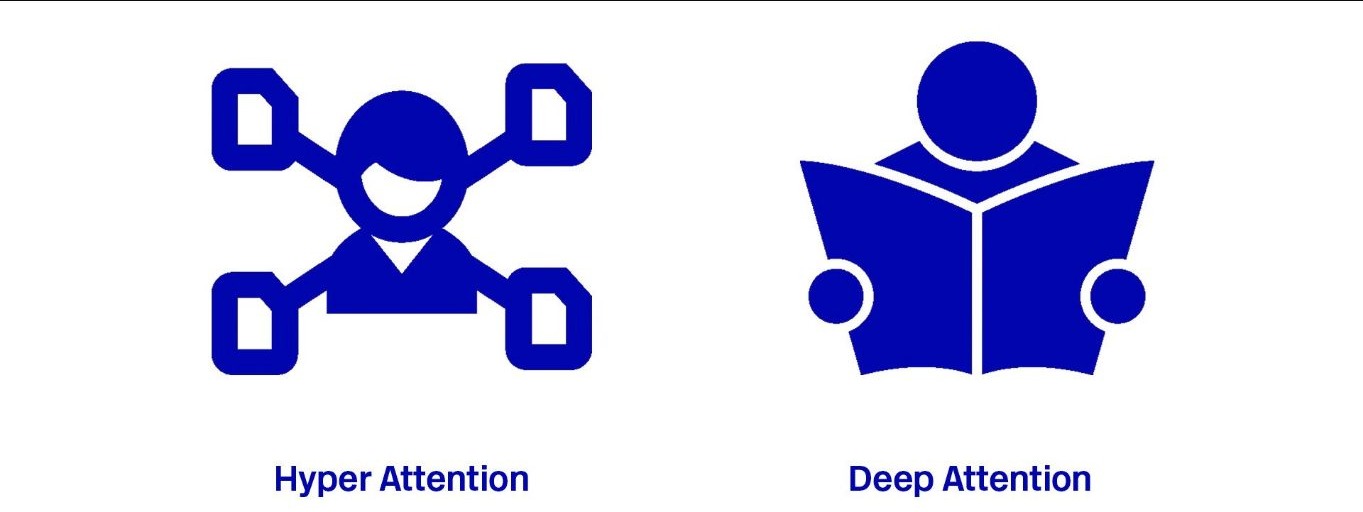
Deep attention, as Hayles defines it, involves "sustained focus on a single task or sensory stream for extended periods," the cognitive mode privileged by traditional educational approaches that emphasize close reading, sustained analysis, and linear argument development. This attentional style reached its historical zenith during the print era, when knowledge transmission occurred primarily through extended textual engagement and when educational success depended on the ability to sustain focus for hours at a time.
Hyper attention, by contrast, involves "rapid switching between different information streams and the ability to process multiple sensory inputs simultaneously." This cognitive mode has emerged through what Hayles calls technogenetic co-evolution with digital media: the neural adaptations that result from sustained interaction with smartphones, social media platforms, video games, and other forms of interactive technology.
Rather than treating these attentional modes as oppositional—with hyper attention representing cognitive decline from some imagined golden age of deep focus—Hayles argues for pedagogical frameworks that leverage both modes strategically. Deep attention remains crucial for complex analytical tasks, sustained creative work, and the development of expertise within particular domains. But hyper attention enables rapid pattern recognition across diverse information sources, creative synthesis of disparate materials, and the cognitive flexibility required for navigating complex, multivariable problems.
Contemporary AI-enabled learning environments are beginning to implement these insights through adaptive attentional architectures. The Khan Academy's AI tutor Khanmigo, for instance, can recognize when students demonstrate hyper-attentional engagement patterns and respond by providing rapid-fire interactive exercises that leverage students' capacity for quick pattern recognition. When the system detects that students have achieved sufficient foundational understanding, it can then transition to deep-attention modes that require sustained analytical engagement with complex problems.
More sophisticated implementations create what Hayles calls "attentional assemblages"—learning environments where deep and hyper attention modes are distributed across human and artificial cognizers rather than being required of individual students. AI systems handle rapid information processing and pattern recognition (hyper attention tasks) while human instructors facilitate sustained analytical engagement and creative synthesis (deep attention tasks). Students move fluidly between these modes depending on their neuroplastic adaptations and learning objectives.
This represents a fundamental shift from traditional educational approaches that expected all students to develop identical attentional capabilities. Instead, posthuman pedagogical frameworks recognize that contemporary students have undergone technogenetic modification and design learning environments that work with rather than against these cognitive adaptations.
The AI Literacy Crisis and AI's Pedagogical Potential
The implications of Hayles' framework become most apparent when applied to what educators increasingly recognize as an AI literacy crisis. Traditional literacy education focused on individual mastery of reading, writing, and analytical skills presumed to be transferable across contexts. But AI-enabled communication creates fundamentally different literacy demands: the ability to collaborate effectively with artificial cognizers, to recognize the strengths and limitations of algorithmic processing, and to maintain critical judgment while leveraging AI capabilities.
Recent research in "posthumanist approaches to AI literacy" draws heavily on Hayles' theoretical insights to develop educational frameworks that go beyond either uncritical AI adoption or anxious technological resistance. These approaches recognize that AI literacy cannot be separated from broader questions about distributed cognition, technogenetic adaptation, and the semiotics of human-machine meaning-making.
At Barnard College, for instance, writing instructors have developed what they call "collaborative composition assemblages" that treat AI writing assistants as cognitive prostheses rather than either replacement technologies or academic integrity threats.*
Note: The specific institutional examples cited throughout this essay represent broader intellectual movements and experimental approaches influenced by posthuman theory rather than formal programs explicitly based on Hayles' frameworks. Her theoretical influence operates primarily through scholarly discourse and pedagogical experimentation. Students learn to recognize how Large Language Models process linguistic patterns, how their responses reflect training data biases, and how human judgment remains essential for evaluating semantic coherence and rhetorical effectiveness.
These pedagogical approaches implement what Hayles calls "material semiotics"—attention to how meaning emerges from the specific material conditions of human-AI interaction rather than being simply transmitted from one consciousness to another. Students learn to recognize how different AI architectures (transformer models, retrieval-augmented generation systems, multimodal interfaces) create different possibilities for meaning-making collaboration.
Stanford University's "Understanding AI Literacy" initiative extends these insights to develop competency frameworks that emphasize distributed rather than individual intelligence. Instead of asking whether students can perform tasks independently, these frameworks assess students' ability to participate effectively in cognitive assemblages that include AI systems. This requires developing what Hayles calls "assemblage intelligence"—the capacity to coordinate effectively with nonhuman cognizers while maintaining critical agency and creative autonomy.
The implications extend beyond individual skill development to institutional transformation. Universities implementing posthuman AI literacy approaches are discovering that traditional assessment methods, which presume individual mastery of discrete competencies, become inadequate for evaluating distributed intelligence. New assessment approaches focus on students' ability to participate effectively in collaborative human-AI problem-solving, to recognize when AI assistance enhances or undermines their thinking, and to maintain critical perspective on algorithmic outputs.
Distributed Cognition and the Architecture of Collaborative Intelligence
Hayles' concept of distributed cognition provides perhaps the most sophisticated framework available for understanding how educational institutions might reorganize themselves around human-AI collaboration rather than treating AI as external tool or existential threat. This concept builds on earlier work by cognitive scientists like Edwin Hutchins and Andy Clark, but Hayles' version emphasizes the material substrates that enable cognitive distribution and the semiotic processes through which meaning emerges across distributed networks.
Unlike extended mind theories, which focus primarily on functional integration between human cognition and technological prostheses, distributed cognition examines how cognitive processes themselves become distributed across networks of human and artificial agents. In educational contexts, this means that learning happens not just within individual minds but through ongoing negotiations between students, instructors, AI systems, and digital resources.
Consider the recent explosion of AI-supported research assistance in university settings. Traditional research methodologies presumed that individual scholars would develop comprehensive knowledge within their domains and make original contributions through sustained individual effort. But AI systems like Claude, ChatGPT, and specialized research assistants are enabling new forms of distributed scholarly intelligence where human researchers focus on creative synthesis, critical evaluation, and contextual interpretation while AI systems handle information retrieval, pattern recognition, and preliminary analysis.
This represents what Hayles calls "cognitive symbiosis" rather than simple tool use. Human researchers adapt their cognitive strategies to leverage AI capabilities—developing new forms of question formation, learning to recognize AI strengths and limitations, and cultivating critical judgment about algorithmic outputs. AI systems, through their training and fine-tuning processes, adapt to human research patterns and develop increasingly sophisticated responses to scholarly queries.
The distributed cognition framework also illuminates developments in AI-supported scientific discovery, where human scientists and artificial intelligence systems collaborate to identify patterns in complex datasets, generate hypotheses about causal relationships, and design experiments to test theoretical predictions. Recent work in computational biology, climate science, and materials research demonstrates how human creativity and contextual understanding can combine with AI pattern recognition capabilities to achieve insights that neither could generate independently.
These developments represent early stages of what Hayles calls "posthuman science"—research methodologies that deliberately leverage cognitive distribution across human and artificial agents rather than privileging individual human genius or technological automation. Educational institutions that prepare students for posthuman scientific practice must develop pedagogical approaches that emphasize collaborative intelligence rather than individual mastery.
The Consciousness Question: Semiotic Alternatives to Anthropocentric Criteria
Throughout these practical applications, Hayles' work provides crucial theoretical resources for navigating what has become the most contentious aspect of contemporary AI discourse: the question of machine consciousness. Rather than engaging in philosophical debates about whether Large Language Models "really" understand language or possess genuine intentionality, her semiotic approach focuses on the pragmatic effects of human-AI meaning-making processes.
"My own position, which is currently a minority view," she explained in a recent interview, "is that these artificial intelligences have created billions and billions of correlations from the human-authored texts that they have read, and moreover they've formed networks between these correlations, and made inferences as a result of these networks." This process may not constitute consciousness in human terms, but it represents a genuine form of artificial cognition that can participate meaningfully in collaborative intellectual work.
This perspective proves particularly valuable for educators grappling with questions about AI assistance in student work. Rather than asking whether students are "really" learning when they collaborate with AI systems, Hayles' framework suggests we examine the quality of meaning-making processes that emerge from human-AI interaction. Do students develop greater capacity for creative synthesis? Do they learn to recognize patterns and relationships they might miss independently? Do they cultivate critical judgment about algorithmic outputs while remaining open to computational insights?
These pragmatic criteria enable educators to develop nuanced policies around AI assistance that avoid both uncritical technological adoption and anxious prohibition. Educational frameworks based on Hayles' work recognize that meaningful learning can emerge from human-AI collaboration without requiring that AI systems possess consciousness or that students work entirely independently.
The semiotic approach also provides resources for addressing concerns about authenticity in student work. Rather than treating AI assistance as necessarily undermining authentic expression, Hayles' framework suggests that authenticity emerges through the quality of interpretive engagement students bring to their collaborative work with AI systems. Students who use AI assistance to explore ideas they could not access independently, who bring critical judgment to algorithmic outputs, and who synthesize AI insights with their own contextual understanding are engaging in authentic intellectual work—even if that work would have been impossible without artificial assistance.
This posthuman understanding of authenticity becomes increasingly important as AI capabilities continue expanding and as the boundaries between human and artificial intelligence become more difficult to maintain. Rather than defending some imagined purity of human intellectual work, Hayles' framework suggests we develop more sophisticated criteria for evaluating the quality of distributed meaning-making processes.
The Futures We Choose: Intelligence Beyond the Human
As 2025 unfolds with its cascading technological and environmental transformations, Hayles' theoretical vision offers both diagnostic clarity and strategic possibility. Her analysis of how cybernetic posthumanism enabled contemporary AI development provides essential historical context for understanding current technological trajectories. Her framework for cognitive assemblages offers practical tools for navigating human-AI collaboration. And her vision of posthuman environmental ethics suggests pathways for coordinating intelligence across species boundaries in response to planetary crisis.
The question is not whether we will continue becoming posthuman—that process is already well advanced. The question is what kinds of posthuman futures we will create and whether they will prove capable of addressing the cognitive challenges that human-centered intelligence has generated but cannot solve independently.
Her latest work suggests that the answer depends partly on our willingness to relinquish anthropocentric assumptions about intelligence, consciousness, and agency that no longer serve human flourishing—if they ever did. The bacterial communities that enable gene editing, the forest networks that regulate atmospheric composition, the AI systems that process environmental data, and the human communities that interpret and respond to ecological changes all represent legitimate cognitive participants in planetary decision-making processes.
Whether we can develop the institutional, technological, and cultural innovations necessary for effective collaboration across these cognitive differences remains an open question. But Hayles' work provides theoretical resources for thinking beyond the false choice between human control and technological domination toward more collaborative possibilities that might enable not just human survival but flourishing for the broader communities of intelligence within which human life remains embedded.
Annotated Bibliography: N. Katherine Hayles - Major Works and Intellectual Influences
Primary Works by N. Katherine Hayles (Chronological)
The Cosmic Web: Scientific Field Models and Literary Strategies in the Twentieth Century (Cornell University Press, 1984) Her first major work exploring the intersection of scientific paradigms and literary theory, analyzing how field models from physics influenced modernist literature. Establishes her methodology of tracing "resonances" between scientific and literary discourse.
Chaos Bound: Orderly Disorder in Contemporary Literature and Science (Cornell University Press, 1990) Groundbreaking analysis of chaos theory's influence on postmodern literature and critical theory. Introduces her concept of "orderly disorder" and examines works by Henry Adams, Doris Lessing, and Stanislaw Lem. Winner of the Eaton Award for Science Fiction Criticism.
Chaos and Order: Complex Dynamics in Literature and Science [Editor] (University of Chicago Press, 1991) Influential collection that established the interdisciplinary field of "chaotics" by bringing together literary critics and complexity theorists. Contains foundational essays on nonlinear dynamics in textual interpretation.
How We Became Posthuman: Virtual Bodies in Cybernetics, Literature, and Informatics (University of Chicago Press, 1999) Her most influential work, winner of the René Wellek Prize for Best Book in Literary Theory (1998-99). Traces the historical construction of the "posthuman" through analysis of the Macy Conferences on cybernetics and science fiction literature. Introduces the "three interwoven stories" framework.
Writing Machines (MIT Press, 2002) Winner of the Suzanne Langer Award for Outstanding Scholarship. Explores the materiality of textual media and introduces concepts of "technotexts" and "flickering signification." Designed as an artist book embodying its theoretical arguments about media-specific analysis.
My Mother Was a Computer: Digital Subjects and Literary Texts (University of Chicago Press, 2005) Develops theories of "intermediation" between print and digital media. Analyzes how digital technologies reshape concepts of subjectivity, textuality, and interpretation. Contains influential work on electronic literature and cybernetic posthumanism.
Electronic Literature: New Horizons for the Literary (University of Notre Dame Press, 2008) Comprehensive survey of born-digital literary works, establishing electronic literature as a legitimate field of study. Analyzes hypertext fiction, interactive narratives, and code-based poetry.
How We Think: Digital Media and Contemporary Technogenesis (University of Chicago Press, 2012) Develops the theory of "technogenesis" - the co-evolution of humans and technology. Introduces the influential distinction between "deep attention" and "hyper attention" and advocates for "comparative media studies" methodology.
Unthought: The Power of the Cognitive Nonconscious (University of Chicago Press, 2017) Argues for expanding definitions of cognition beyond consciousness to include nonconscious cognitive processes. Develops framework for understanding human-technical assemblages and prepares ground for AI integration.
Postprint: Books and Becoming Computational (Columbia University Press, 2020) Examines the transformation of print culture in the digital age, analyzing how books are becoming computational objects. Part of the Electronic Mediations series.
Bacteria to AI: Human Futures with our Nonhuman Symbionts (University of Chicago Press, 2025) Her latest work developing the "Integrated Cognitive Framework" that encompasses cognition from bacteria to artificial intelligence. Extends posthuman theory to address climate crisis and environmental challenges.
Major Theoretical Influences and Interlocutors
Claude Shannon (Information Theory) Fundamental influence on her analysis of how information became separated from materiality in cybernetics. Her work traces both the power and limitations of Shannon's mathematical communication theory.
Norbert Wiener (Cybernetics) Central figure in her genealogy of posthuman subjectivity. She analyzes both Wiener's technical contributions and his anxieties about human-machine boundaries in works like "The Human Use of Human Beings."
Warren McCulloch and Walter Pitts (Neural Networks) Their early work on artificial neurons provides key case study for her analysis of how biological and artificial intelligence became conceptually merged in cybernetics.
Gilles Deleuze and Félix Guattari (A Thousand Plateaus, 1980) Source of assemblage theory, though Hayles emphasizes cognitive processes and material embodiment over their focus on deterritorialization and becoming. She adapts their concept of agencement for analyzing human-technical networks.
Bruno Latour (Actor-Network Theory) Influences her approach to treating human and nonhuman actors symmetrically, though she maintains that cognizers play special roles in directing assemblage behavior through interpretation and selection.
Charles Sanders Peirce (Semiotics) His triadic semiotics (icon, index, symbol) and emphasis on material sign relations inform her approach to analyzing meaning-making in human-AI interactions. Preferred over Saussurean structuralism for its materialist orientation.
Edwin Hutchins (Cognition in the Wild, 1995) Foundational influence on her concept of distributed cognition. His analysis of navigation teams provides model for understanding how intelligence operates across human-technical networks.
Donna Haraway (A Cyborg Manifesto, 1985) Early influence on cyborg theory, though Hayles emphasizes material embodiment and critiques Haraway's celebration of boundary dissolution. Both share feminist critique of mind/body dualism.
Francisco Varela (The Embodied Mind, 1991) His work on autopoiesis and embodied cognition influences her critique of disembodied information processing. She draws on his critique of the "Cartesian theater" model of consciousness.
Humberto Maturana (Autopoiesis and Cognition, 1980) Co-developer of autopoiesis theory with Varela. Influences her understanding of how living systems maintain organizational structure while remaining open to environmental interaction.
Contemporary Recognition and Legacy
- The N. Katherine Hayles Award for Criticism of Electronic Literature established by the Electronic Literature Organization in 2014
- Member of the American Academy of Arts and Sciences
- Her work cited over 26,000 times (Google Scholar)
- The N. Katherine Hayles Collection at the Electronic Literature Organization preserves 78 works from her personal collection
Toward a posthuman AI ethics
What makes Hayles' work essential for contemporary AI discourse is her refusal to separate technical development from cultural and ethical considerations. While computer scientists focus on capability advancement and philosophers debate consciousness and alignment, Hayles insists that AI development is simultaneously a cultural, cognitive, and material process that requires interdisciplinary analysis.
Her Integrated Cognitive Framework offers tools for thinking about AI ethics that go beyond human-centered approaches. Instead of asking whether AI systems threaten human autonomy or serve human interests, she asks how human, artificial, and biological forms of intelligence might collaborate to address planetary challenges like climate change and social inequality.
This doesn't mean abandoning human concerns, but recognizing that human flourishing increasingly depends on successful collaboration with both artificial intelligence and the broader ecological systems that support technological civilization. Her "more open, just, and sustainable futures" require moving beyond anthropocentrism toward what she calls technogenetic symbiosis.
The posthuman present
Perhaps Hayles' most important insight is that the futures she describes aren't speculative—they're already happening. Every time we use GPS navigation, collaborate with AI writing tools, or let algorithms curate our information environment, we participate in the distributed cognitive assemblages she theorizes. The question isn't whether we'll become posthuman, but how we'll navigate the posthuman condition we've already created.
Her work offers both diagnostic tools for understanding our current moment and frameworks for imagining more thoughtful responses to technological change. In an era when AI development often seems driven by Silicon Valley libertarian fantasies or military-industrial priorities, Hayles provides resources for thinking about human-AI futures that prioritize collaboration over domination, embodiment over abstraction, and ecological sustainability over technical optimization.
That may be why her work continues to find new audiences twenty-six years after "How We Became Posthuman" introduced her core insights. As artificial intelligence reshapes education, work, and creative expression, we need theoretical frameworks sophisticated enough to handle the complexity of human-AI interaction. Katherine Hayles spent decades developing those frameworks. The question now is whether we're ready to use them.
#KatherineHayles #AI #Posthumanism #Posthuman #ArtificialINtelligence