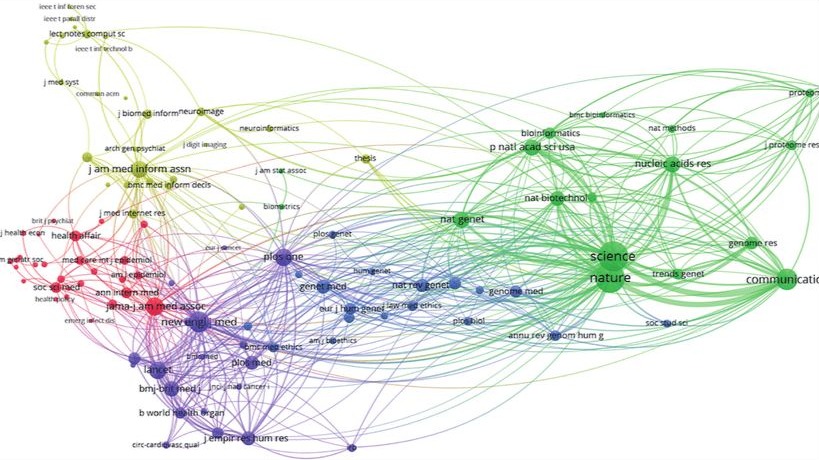
The most-cited papers of the 21st century span fields from artificial intelligence to molecular biology, reflecting the breadth of modern science. Among them are landmark AI models (ResNet, AlexNet, Transformers, Random Forests), foundational laboratory methods (PCR quantification, SHELX crystallography), and major public-health resources (Global Cancer Statistics). Together they illustrate a shift toward data-driven, computational approaches and global-scale thinking.
Scientific Impact
Machine Learning Breakthroughs. A large fraction of these citations come from machine‐learning innovations. AlexNet (2012) introduced deep convolutional neural networks to computer vision, achieving a winning 15.3% top-5 error on ImageNet, far better than the previous 26.2%.
ResNet (2016) demonstrated that very deep nets (up to 152 layers) could be trained by learning residuals (skipped connections. ResNet models won the ILSVRC 2015 competitions in image classification and object detection, vastly improving accuracy
“Attention Is All You Need” (2017) removed recurrence entirely, using self-attention to build the Transformer architecture; it achieved new state-of-the-art translation performance (e.g. 28.4 BLEU on English–German) with far faster training.
Leo Breiman’s Random Forests (2001) formalized an ensemble of decision trees with random feature selection, giving performance comparable to AdaBoost but more robust to noise; it also introduced built-in measures of variable importance.
- These papers share key impacts: state-of-the-art performance on benchmark tasks (ImageNet wins, translation records) and practical usability (fast training, robustness, feature importance).
- They have become ubiquitous tools: ResNet-style architectures underpin modern image and vision systems, Transformers power NLP and beyond, and Random Forests remain a go-to non‐deep model in many sciences.
- In sum, they catalyzed the AI/deep-learning revolution of the 2010s, turning theoretical ideas into widely used technologies. The success on real-world tasks also fueled a cultural fascination with “AI.”
Standardization of Methods and Knowledge.
Several highly cited works are method papers or reference standards. Livak & Schmittgen’s PCR paper (2001) introduced the 2^(-ΔΔCT) method for quantifying gene-expression changes by qPCR. This simple formula became the de facto standard for biological labs worldwide, cited in tens of thousands of experiments.
Similarly, Sheldrick’s “Short History of SHELX” (2007) recaps decades of the SHELX crystallographic software. It notes that “SHELXL is the most widely used program for small-molecule refinement” and that SHELX components remain staples of structure.
In psychology, Braun & Clarke’s “Using Thematic Analysis” (2006) codified a flexible method for qualitative data; they highlight that thematic analysis is “widely-used” yet was under-specified, and they offer clear guidelines for rigor. Each of these works provided a common toolkit or taxonomy that researchers globally adopted.
- DSM-5 (2013) is a special case: a clinical manual rather than a research paper, but it functions as a unifying reference. The DSM-5 (American Psychiatric Association) was the first major diagnostic overhaul since 1994. It has been called the “bible of psychiatry” for standardizing mental-health diagnoses across cultures. Its widespread adoption has profound cultural effects (defining disorders, insurance coverage, stigma) even as it remains controversial: critics point out it emphasizes symptom checklists over biological causes.
Global Health Metrics.
The two “Global Cancer Statistics” papers (2018, 2020) aggregate worldwide cancer incidence and mortality. For 2018, Bray et al. report estimates for 36 cancers in 185 countries, highlighting “large geographical diversity in cancer occurrence and ... variations in magnitude and profile”.
The 2020 update (Sung et al.) shows ~19.3 million new cases and 10 million deaths in 2020, with breast surpassing lung as most diagnosed and lung remaining the deadliest. They project a 47% rise in cases by 2040. These papers serve as baseline references for policymakers and researchers: virtually every epidemiological and public-health study of cancer cites them for context. Their impact is scientific (solidifying awareness of global burden) and practical (guiding funding and prevention efforts).
Collectively, these highly cited works have shaped their fields. The AI papers have driven new research directions; the methodology papers became community standards; and the cancer stats anchor global health discussions. Each introduced clear, usable advances (better models, formulas, diagnostic codes, or datasets) that spread rapidly through the literature.
Cultural Implications
The influence of these papers extends beyond the lab, touching education, public discourse, and culture.
In psychology and social science, Braun & Clarke’s thematic analysis paper helped legitimize qualitative methods by showing how to apply them systematically. It gave voice to patient narratives and interviews in fields (health, education, anthropology) where only quantitative data had dominated.
DSM-5’s revisions sparked debates in psychiatry and popular media: e.g. the removal of the “bereavement exclusion” for depression, and new categories (autism spectrum, binge-eating) that changed how people perceive mental health. The DSM-5’s cultural role is huge – it defines what counts as “mental illness” across the world.
In technology and society, the AI papers fed into the excitement (and fear) about machine learning. AlexNet and ResNet demonstrated that machines could recognize images almost like humans. This fueled consumer AI products and a sense of an “AI revolution.”
Transformers (Attention) led to breakthroughs in language (and now in images), spurring new applications (virtual assistants, translation, art generators). These technical papers also influenced art and design: for example, generative AI tools (like DALL·E and Midjourney) build on neural architectures and have ignited debates about creativity and authorship in the digital age.
In medicine and public health, the global-cancer data highlighted disparities between countries and eras. For instance, the 2020 report shows cancer incidence ~2–3× higher in high-income (transitioned) countries, but that mortality disparities are smaller – a sign of improving outcomes in wealthy regions. This global perspective has influenced health policy: governments and NGOs use these figures to prioritize screening and prevention. The unsplash image below, of a researcher at a microscope monitoring gene amplification, symbolizes how modern biology (spurred by methods like PCR) is deeply connected to societal goals like cancer control.
Overall, these works bridge science and society. They standardize how we diagnose illness (DSM, cancer stats), analyze data (thematic analysis, PCR), and build technology (AI models). As such, they shape education and communication: textbooks and news articles cite them (e.g. “according to GLOBOCAN 2020…”), and high school/college courses teach methods like 2^(-ΔΔCT). Culturally, they signal that 21st-century knowledge is collaborative, codified, and often mediated by large datasets.
Technological Trends
A clear thread tying half of these papers is the rise of data-intensive computation. Deep learning (ResNet, AlexNet, Transformers) thrives on vast labeled datasets (like ImageNet) and powerful hardware. These papers heralded a shift: instead of hand-crafted features, systems learn from raw data through end-to-end models. ResNet famously showed how to train hundreds of layers by adding “shortcut” connections, leading to architectures that underpin today’s autonomous vehicles, medical imaging AI, and more. The Transformer paper demonstrated that even sequential data (language) can be handled without recurrence, enabling far greater parallels. These innovations came during an era of exploding computational power (GPUs, TPUs) and large-scale datasets, making what was once “toy” experiments into industrial-scale AI.
In parallel, traditional algorithmic machine learning also grew: Breiman’s Random Forests (2001) anticipated the ensemble trend and remains widely used in bioinformatics, finance, and ecology due to its robustnesss. Such methods emphasize interpretability (variable importance) and have been paired with deep models for hybrid systems.
Meanwhile, in the laboratory and data-handling realm, standard tools became crucial. The 2^(-ΔΔCT) paper is an example of a computational method embedded in lab protocols. It turned quantitative PCR from a specialized skill into routine analysis. Crystallographers rely on SHELX code (described by Sheldrick) and routinely cite it when they solve structures. In these domains, the trend is automation and pipelines: labs today generate gigabytes of data (sequencing runs, imaging, high-throughput screening) and depend on software and statistical standards to turn that into insight.
Another trend is open, interdisciplinary data. The cancer statistics papers use the IARC’s GLOBOCAN databases, aggregating global registry information that is freely shared. Similarly, ImageNet and other public datasets democratized access to big data for researchers everywhere. This openness accelerates research and is a hallmark of 21st-century science.
In sum, these papers reflect a computational-technological era: software and algorithms are as important as physical experiments. The image below (Figure at left) of an AI-inspired 3D structure (from DeepMind’s Visualising AI project) underscores this: science is now as much about digital architectures and “data landscapes” as it is about telescopes or lab benches.
Historical Significance and the Spirit of 21st-Century Science
What does this collection reveal about modern science, especially compared to earlier eras? Three themes stand out:
- Collaboration over lone genius. Unlike the “Eureka!” lore of Newton or Einstein, the late-20th and 21st centuries have seen team science become the norm. Large-scale experiments and models require groups of specialists: ResNet had four authors at Microsoft, Global Cancer Stats have many co-authors across institutions. The leading paper on 21st-century science even argues that knowledge today is “co-produced through transactions among researchers or among researchers and public stakeholders”. In short, distributed cognition is replacing the solitary inventor model.
- Interdisciplinarity and linkage of fields. These top papers cross traditional boundaries. AI models are applied to medical imaging and biology; cancer papers blend epidemiology with computational modeling; thematic analysis marries psychology and qualitative sociology. This mirrors the broader trend of science in our century: problems (pandemics, climate, AI ethics) demand inputs from many fields. The cited 21st-century science commentary notes that “transdisciplinary teams… are better able to address complex challenges". By contrast, earlier centuries often had rigid disciplinary silos.
- Global and quantitative perspective. Previous eras focused on local experiments or national science agendas. The current era is global: cancer incidence is tracked worldwide, machine-learning models are trained on internet-scale datasets, and scientific communication is instant. Even DSM-5 incorporated international perspectives (WHO collaboration) more deeply than its predecessors. The map image below (a vintage Canada-US map) reminds us how 19th-century explorers charted geography; today we map diseases and data at a planetary scale.
Comparing with earlier science history, the speed and scale differ enormously. A key discovery in the 1800s might take years of solitary work; today breakthroughs often come from algorithms sifting huge datasets in days. The pervasive role of computation is new: 21st-century papers read like software manuals or databases (e.g. “our model achieves 28.4 BLEU”arxiv.org) alongside conceptual insights. Even the writing style reflects this shift: abstracts emphasize architectures, error rates, and statistical baselines, not just theoretical arguments.
Nevertheless, a continuum exists: basic scientific values (rigor, peer review) remain. What’s changed is how knowledge is produced. The emergent narrative is one of relational, participatory science. The cited commentary concludes that while we still admire the lone genius, the real engine of discovery now is collaborative networks and engagement with society.
Future Directions
Looking ahead, these trends suggest the 21st-century spirit will continue to deepen. The prominence of AI papers indicates that artificial intelligence and data science will keep driving innovation – for example, the Transformer model has already spawned GPT-like language models and is being adapted to biology (protein folding) and other domains. The interplay of AI with other fields is likely to increase (e.g. AI for drug discovery, climate modeling). The blending of art and science (as suggested by our DALL·E–style figures) may grow, with generative models creating new avenues in design and even guiding scientific intuition.
The methodological papers imply that standardization and open data will expand. We can expect more global database projects (like an expanded GLOBOCAN covering additional diseases, or international mental-health surveys informed by future DSM revisions). Efforts to refine standards – for example, next-generation sequencing diagnostics, or reproducible AI benchmarks – will echo the PCR and SHELX legacies. Importantly, the emphasis on teams and stakeholders suggests future science will be even more inclusive: we already see patient-advocate researchers, crowdsourced studies, and citizen-science platforms.
In public health and medicine, the cancer statistics show a sharpening of focus on health equity. The 2020 report warns that mortality from breast and cervical cancer is far higher in developing regions. Future research will likely target those gaps, using precision medicine and global policies together. The cancer papers also illustrate a trend of “forecasting” (projecting 2040 cases); this predictive, data-driven approach will spread to other fields (pandemic projections, environmental change, etc.).
Reflecting on centuries past, the new narrative of science – one of connected, accountable, and data-intensive inquiry – seems poised to continue. If the top-cited papers are any guide, the 21st-century scientific ethos values teamwork, interdisciplinarity, and social impact. We can anticipate that future landmark studies will similarly cut across domains (e.g. combining AI, genetics, and social data) and spark broader cultural shifts. In the end, these ten papers tell us that science today is as much about building bridges (between fields, cultures, and ideas) as it is about solitary breakthroughs – a direction very different from the old paradigm of isolated “Eureka!” moments, and one that shapes a more collaborative, connected future for knowledge.
Sources: Key statements above are drawn from the original papers and reviews, for example He et al. on ResNetarxiv.org, Livak & Schmittgen on PCRpubmed.ncbi.nlm.nih.gov, Braun & Clarke on thematic analysis uwe-repository.worktribe.com, Breiman on Random Forests stat.berkeley.edu, Vaswani et al. on Transformers arxiv.org, Krizhevsky et al. on AlexNet proceedings.neurips.ccproceedings.neurips.cc, Sheldrick on SHELX journals.iucr.org, the APA on DSM-5 pmc.ncbi.nlm.nih.gov, Kuriakose on DSM controversies biomedgrid.com, IARC on Global Cancer 2018 iarc.who.int, Sung et al. on Global Cancer 2020 pubmed.ncbi.nlm.nih.gov , and science-of-science analysis pmc.ncbi.nlm.nih.gov.
Citations
ImageNet Classification with Deep Convolutional Neural Networks
ImageNet Classification with Deep Convolutional Neural Networks
[1512.03385] Deep Residual Learning for Image Recognition
https://arxiv.org/abs/1512.03385
[1706.03762] Attention Is All You Need
https://arxiv.org/abs/1706.03762
https://www.stat.berkeley.edu/~breiman/randomforest2001.pdf
https://pubmed.ncbi.nlm.nih.gov/11846609/
(IUCr) A short history of SHELX
https://journals.iucr.org/paper?sc5010
https://uwe-repository.worktribe.com/preview/1043068/thematic_analysis_revised_-_final.pdf
The DSM-5: Classification and criteria changes - PMC
https://pmc.ncbi.nlm.nih.gov/articles/PMC3683251/
DSM 5: Controversial Acceptance and Ongoing Challenges
https://pubmed.ncbi.nlm.nih.gov/33538338/
https://pubmed.ncbi.nlm.nih.gov/33538338/
https://pmc.ncbi.nlm.nih.gov/articles/PMC4076783/