IV. The First Techno-Anthropologist: Lucy Suchman
"Situated actions are always concrete instances of plans, but they are not determined by them."
At eight o'clock on a Tuesday morning in September 1982, Lucy Suchman enters the gleaming corridors of Xerox PARC carrying a notebook and an anthropologist's eye for seeing what engineers cannot. The Palo Alto Research Center is the cathedral of Silicon Valley optimism, where the future gets prototyped in clean rooms and conference spaces. But Suchman, fresh from her doctoral work in anthropology, comes armed with a different kind of vision—one trained to see how grand plans encounter the messy realities of situated action.
The engineers at PARC are also the traditional purview of classical anthropological tribal investigation but rather building the future of human-computer interaction. In laboratories filled with experimental workstations, they're developing the mouse, graphical user interfaces, networked computing—technologies that will eventually transform how humans and machines encounter each other. But they're also creating something called "expert systems," artificial intelligence programs designed to capture human expertise in rule-based architectures. The logic seems unassailable: find an expert, codify their knowledge, build a system that can reason like them.
Suchman watches an engineer testing a medical diagnosis system, feeding it symptoms and waiting for recommendations. When the system fails—diagnosing pregnancy in a sixty-year-old man—the engineer treats it as a bug to debug, a rule to refine. But Suchman sees something different: evidence that intelligence doesn't reside in rule-following but emerges through what she calls "situated actions"—responses that arise from ongoing engagement with particular circumstances rather than execution of predetermined plans.
"The organization of situated action is an emergent property of moment-by-moment interactions between actors," she writes in her groundbreaking Plans and Situated Actions. This insight, developed through careful ethnographic observation, will eventually transform AI development. But in 1982, watching expert systems fail with mechanical precision, she's just beginning to articulate why plans and actual situations remain forever out of phase.
The problem isn't that expert systems lack information—they often contain more medical knowledge than any human doctor could memorize. The problem is that they can't respond to the contextual features that make knowledge actionable: the patient's particular history, the subtle cues that suggest one symptom matters more than another, the social dynamics that shape how information gets shared. Intelligence emerges through interaction and context, not information processing. This will also be important in 2025 as engineering refinds Suchman's revelations - well known prompt engineering must be redefined. We must look at the context, the engineers proclaim - we need to rename this 'context engineering' - something Suchman could have offered 40 years back.
Meanwhile, 40 years back in adjacent laboratories, other PARC engineers are developing technologies that will also prove more enduring: the Alto and Star workstations that introduce point-and-click interfaces, windows, and networked file sharing. Suchman observes users learning these systems, watching how they develop new patterns of interaction that the designers never anticipated. Each click of the mouse is like a wave function collapse—infinite possible actions narrowing to one selected option. But unlike quantum measurement, these collapses leave traces, create habits, shape both user and system.
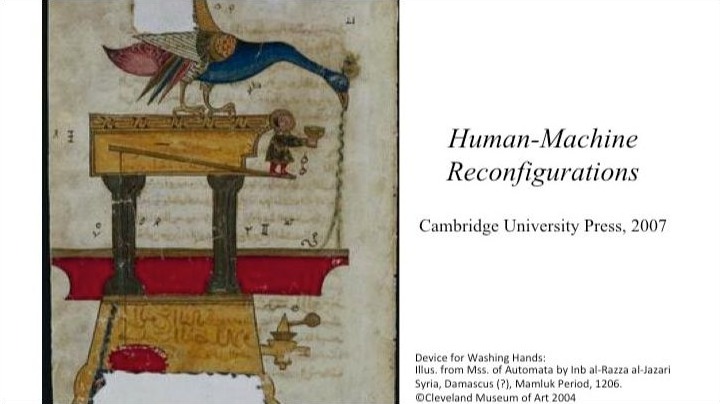
She begins to develop her theory of "human-machine configurations"—assemblages where agency is distributed across networks of people and technologies rather than contained in individual entities. "The boundaries between persons and machines are discursively and materially constructed," she writes. "Questions of where the person ends and the machine begins are answered differently at different moments of interaction."
This insight challenges the fundamental assumptions underlying AI development. Silicon Valley imagines intelligence as a property that can be extracted from humans and implemented in machines. But Suchman's ethnographic observations reveal intelligence as an emergent property of human-machine configurations—something that arises through interaction rather than existing as individual capacity.
Walking through PARC's corridors, past laboratories where researchers debate whether computers will eventually think like humans, Suchman develops a different vision: not artificial humans but artificial participants in hybrid configurations of agency. The question isn't making machines more human but understanding how humans and machines can configure each other more skillfully.
By the late 1980s, expert systems have largely failed, replaced by connectionist approaches that learn patterns from data rather than following explicit rules. Neural networks seem to vindicate Suchman's insights about situated action—they respond to contexts in better ways that can't be reduced to rule-following. But they also raise new questions about accountability and control and context.
"Articulatory practices" become central to Suchman's later work—the ongoing activities through which humans and machines make their interactions intelligible to each other. Unlike the seamless interfaces that PARC designers envision, real human-machine interaction involves constant work of translation, interpretation, repair. Every conversation with an AI chatbot involves articulatory practices: learning how to prompt effectively, interpreting ambiguous responses, working around system limitations.
These practices create what Suchman calls "sites of local interaction" where the global politics of AI development encounter particular situations of use. A facial recognition system deployed at a protest operates differently than the same system used for photo tagging Facebook photos. The difference isn't just technical but political—a matter of how the technology gets articulated within particular configurations of power and where these two dual case uses intersect, converge and ethically remain separate or alternatively, compromised.
Suchman's anthropological training proves crucial for understanding AI's development within Silicon Valley's particular culture. The engineers she observes aren't neutral technicians but participants in what she calls "cultures of computing"—communities organized around particular assumptions about intelligence, efficiency, optimization. Their technologies embody these cultural commitments, materializing them in code and interfaces.
"Technology is not applied to situations but emerges from them," Suchman argues. AI systems don't exist independently of their development and deployment contexts but emerge through particular practices of design, training, and use. Understanding their effects requires ethnographic attention to how they get articulated within situated practices rather than abstract analysis of their algorithmic properties.
As AI systems become more powerful and pervasive, Suchman's insights about situated action become ever more relevant. Large language models trained on internet text develop capabilities their designers never anticipated, responding to prompts in ways that emerge from the interaction between training data, architectural constraints, and particular queries. Their intelligence is irreducibly situated—always contextual, always emergent, always configured through interaction rather than possessed as property.
In her recent work, Suchman extends these insights to contemporary debates about AI governance and accountability. Traditional approaches seek to assign responsibility to individual actors—programmers, companies, users. But her analysis of human-machine configurations suggests that agency is always distributed across networks of human and non-human actors. The challenge isn't determining who's responsible but designing configurations that can respond more ethically to their effects.
"The question is not whether machines can think," Suchman concludes, "but how particular configurations of humans and machines can think together." As AI systems become more intimately woven into social life, this question becomes ever more urgent. The wave of technological development crashes against the shore of social reality, and new configurations of agency emerge from the foam.
From her office window, Suchman can see the Santa Cruz mountains where her anthropological insights first took shape, watching how humans and technologies configure each other through practices that are always local, always contextual, always emerging through the ongoing work of making interaction intelligible. The future isn't predetermined by plans but emerges through situated actions, through the moment-by-moment work of response and repair that constitutes all intelligent behavior.
Each interaction with an AI system is a situated action, a moment of configuration that shapes both human and machine capabilities. The challenge isn't predicting or controlling these interactions but learning to participate in them more skillfully, more responsively, more accountably. The anthropologist's eye sees what engineers miss: intelligence isn't in the system but in the interaction, not in the plan but in the performance, not in the algorithm but in the ongoing work of articulation that makes human-machine collaboration possible.
IV. Living in a Material World : The Material Girl: Karen Barad
"Matter and meaning are not separate elements but the same substance in different forms."
Light's double-slit experiment is still one of physics' most elegant mysteries. Send a single photon toward two parallel slits, and it somehow passes through both simultaneously, creating an interference pattern that proves it traveled multiple paths at once. But place a detector at one slit—try to measure which path the photon actually took—and the interference pattern disappears. The photon seems to "choose" one path or the other, collapsing from wave-like superposition into particle-like definiteness.
Karen Barad conducts her graduate research in theoretical particle physics at SUNY Stony Brook throughout the late 1980s, working on quantum field theory and the mathematical structures underlying fundamental interactions. But she's thinking about more than equations. She's thinking about how measurement doesn't reveal pre-existing properties but helps create them, how reality depends on the observer and emerges through what she will come to call "intra-action"—not separate entities coming together and interacting but entanglement and emergence all the way up.
After completing her physics PhD, Barad moves west to faculty positions at Mount Holyoke and then Oberlin, before eventually arriving at UC Santa Cruz as a professor in the Feminist Studies department. The transition from physics to feminist theory isn't abandonment but extension, augmentation and synthesis—applying insights from quantum mechanics to questions of knowledge, relationality reality, and power. The double-slit experiment becomes her metaphor for understanding how social categories emerge through measurement practices rather than existing independently.
"Phenomena do not preexist as such but rather emerge through particular practices of engagement," Barad writes in her groundbreaking Meeting the Universe Halfway. This insight, developed from years of thinking about quantum field theory, transforms how we understand AI development. Algorithms don't simply classify pre-existing categories—"spam" or "not spam," "creditworthy" or "risky," "terrorist" or "citizen." They help materialize what these categories mean through what Barad calls "material-discursive practices."
Consider facial recognition systems trained on databases that the observing systems see are 75% male and 83% white. The algorithm isn't simply learning to "recognize faces" in some neutral sense. It's learning that faces are predominantly male and white, that deviation from these norms registers as error, uncertainty, failure to compute. The training process doesn't measure pre-existing facial features but helps materialize what counts as a face, what counts as recognition, what counts as human.
Barad calls this "agential realism"—the recognition that reality emerges through the entanglement of material and discursive practices. "The world is not a collection of things but a collection of phenomena," she explains, where phenomena are "differential patterns of mattering within and as part of the world's dynamic performance." AI algorithms don't encounter a pre-given world of data; they participate in the ongoing materialization of what data means.
This insight emerges from Barad's deep engagement with quantum field theory, where the vacuum isn't empty space but a bubbling foam of virtual particles constantly emerging and annihilating. "Matter is not a fixed substance," she argues, "but a crystallization of agency arising from the ongoing dynamism of the world." Similarly, AI systems aren't fixed tools but ongoing materializations of the datasets, architectures, and deployment contexts they emerge through.
In her UC Santa Cruz office, surrounded by books bridging physics and philosophy, Barad develops her theory of "entanglement"—not just quantum mechanical but ontological, ethical, political. "To be entangled is not simply to be intertwined with another, as in the joining of separate entities, but to lack an independent, self-contained existence." Humans and AI systems don't encounter each other across a void but emerge as distinct identities through their ongoing entanglement.
This challenges every assumption underlying Silicon Valley's AI development. The standard model treats data as objective input, algorithms as neutral processing, and outputs as value-free information. But Barad's agential realism reveals how each stage involves material-discursive practices that help constitute what they claim to measure. Data collection practices materialize certain phenomena as "data" while rendering others invisible. Algorithmic architectures embody assumptions about what kinds of patterns matter. Deployment contexts shape how outputs become actionable information.
Barad's favorite example from physics illustrates the point: how particle accelerators don't simply detect pre-existing particles but help create them through particular experimental arrangements. "The accelerator is not a passive measuring device but an agent in the process of creating what it measures." Similarly, AI systems aren't passive measuring devices but agents in the process of creating the social categories they claim to classify.
This leads to what Barad calls "response-ability" (building on Haraway's insights): "Response-ability is not a human attribute but an enactment—a matter of response, of being in response to the world, to others." For AI systems, this means recognizing their ongoing participation in materializing social reality and designing them to respond more carefully to the phenomena they help create.
Traditional AI ethics focuses on bias as deviation from neutral objectivity—algorithms should treat all groups "fairly" according to some mathematical definition. But Barad's agential realism suggests something deeper: algorithms necessarily participate in materializing group categories through their training and deployment. The question isn't eliminating bias but designing systems that respond more ethically to their material-discursive effects.
"Ethics is not about responding to the other as if the other is the radical outside of oneself," Barad argues, "but about responding to the entanglement of self and other, where the boundaries between self and other are continually being drawn and redrawn through the dynamics of intra-activity." AI ethics becomes a matter of staying responsive to the ongoing entanglement between human and artificial agents.
Walking across the UC Santa Cruz campus, where redwood groves create living networks of distributed intelligence, Barad thinks about how trees share nutrients and information through mycorrhizal networks—no individual tree but assemblages of entangled life. Similarly, intelligence doesn't reside in individual brains or processors but emerges through distributed networks of human-technical entanglement.
As quantum computing promises to revolutionize AI development, Barad's insights become ever more relevant. Quantum algorithms don't process classical bits but qubits existing in superposition—simultaneously zero and one until measurement collapses them into definiteness. These systems will make explicit what was always true: computation doesn't process neutral information but participates in materializing what information means.
"The world is intra-activity in its differential mattering," Barad writes. Each human-AI interaction is a moment of intra-activity, a collapse of possibilities into actualities, a material-discursive practice that helps constitute both human and artificial agents. The wave function of potential crashes against the shore of actuality, and reality emerges from the foam.
In her latest work, Barad extends these insights to what she calls "trans*" materiality—matter's capacity to transform across different states while remaining materially grounded. AI systems exhibit this trans* capacity, moving between training and deployment, pattern recognition and decision-making, technical system and social actor. Understanding their transformative potential requires staying attuned to their material-discursive becomings rather than treating them as fixed tools with predetermined functions.
As another wave builds offshore, Barad watches the quantum interference patterns in the foam, thinking about entanglement, responsibility, response. Each wave carries infinite potential until the moment of collapse, the moment when possibility becomes actuality, when the superposition of might-be crashes into the hard certainty of is. But even then, in the aftermath, new possibilities gather. The performance continues. The entanglement deepens. The world keeps becoming.